
More than two million people are to be placed under Scotland's toughest Covid lockdown restrictions from Friday.
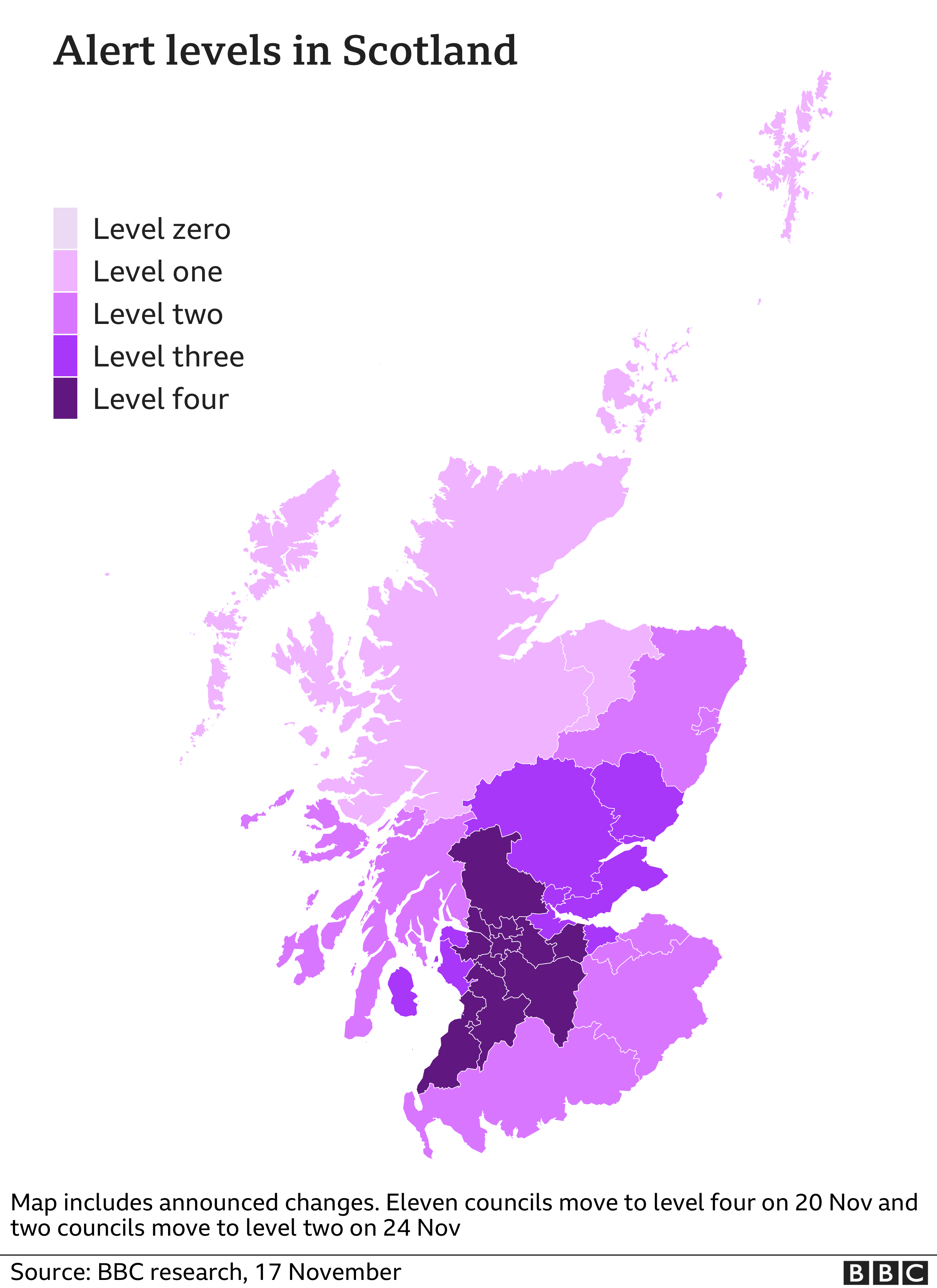
The move will see level four rules imposed in 11 council areas across western and central Scotland, including Glasgow.
It will mean non-essential shops, pubs, restaurants and gyms will have to close, although schools will still be open.
The level four restrictions will remain in place until 11 December.
They will be imposed in East Dunbartonshire, East Renfrewshire, Glasgow, Renfrewshire and West Dunbartonshire.
North and South Lanarkshire, East and South Ayrshire, Stirling and West Lothian will also move to level four - with about 2.3 million people affected across the 11 local authority areas.
However, East Lothian and Midlothian will move from level three to level two from next Tuesday, First Minister Nicola Sturgeon said.
Ms Sturgeon also said the existing advice for people in level three or four not to travel outside their own council area except for "certain essential purposes" will become law from Friday.
This will also mean that people living elsewhere in Scotland must not travel to level three or level four areas, except for essential purposes, and there must be no non-essential travel between Scotland and other parts of the UK.
The first minister said there were grounds for "continued and significant concern" about levels of the virus in all of the council areas that would be moving to the highest tier of restrictions.
She added: "The infection rate in all of these areas remains stubbornly and worryingly high.
"At these levels, we simply do not have the assurance we need that hospital and ICU services will be able to cope as we go deeper into winter."

What do the level four rules mean?
- You must not visit other people's homes, but can still meet outdoors with up to six people from two households
- People should stay at or close to home as much as possible
- Those who can work from home should do so - although construction and manufacturing workplaces can remain open
- Only essential indoor retail premises will remain open
- Close contact services, such as hairdressers and beauty salons, visitor attractions, leisure and entertainment settings and indoor gyms will close
- With the exception of takeaway services, hospitality premises must also shut
- But schools will remain open
The first minister said people in level four areas should only be going out and about during the three-week period that the restrictions are in place for reasons such as childcare, caring for someone who is vulnerable, exercise or shopping for essential goods.
In the seven days up to Friday, Scotland as a whole had just over 140 new cases of Covid per 100,000 people.
Ms Sturgeon said all of the areas moving to level four were above that rate - ranging from West Lothian, which saw 158 cases per 100,000, to Glasgow with 277.
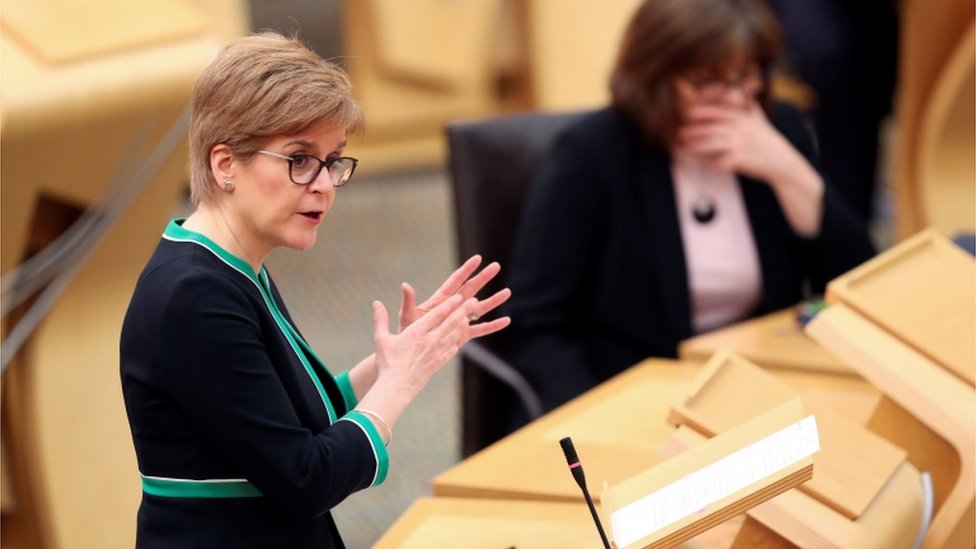
She said the "short, sharp" move to level four would allow restrictions in the affected areas to be eased "much more quickly" than they would be in they remained in level three.
All of the country's other council areas will remain in the same level as they currently are, although Ms Sturgeon said she hoped that Argyll and Bute could soon move from level two to level one.
And she said that people from level one areas will be able to meet outdoors with up to eight people from a maximum of three households from Thursday, rather than the current six people from two households.
England is currently in a national lockdown, and ministers are hoping to reintroduce a tiered system of restrictions when that ends on 2 December.
National lockdown restrictions were eased in Wales earlier this month, although there are still curbs on meeting other households and travelling outside the country.
And restrictions, including the closure of pubs, bars and restaurants, are in place across Northern Ireland until 26 November.

Business leaders had warned ahead of Ms Sturgeon's announcement that the highest tier of restrictions would have a "severe" impact on many retailers during the crucial Christmas trading period, and have questioned the scientific evidence for closing many businesses down.
But Scottish Conservative group leader Ruth Davidson gave a cautious welcome to the move on the condition that it allowed a more general easing of restrictions over the festive period.
She added: "However, as has happened on several occasions before, it would be deeply regrettable if these restrictions were to be stretched any further, leaving people in limbo before Christmas and businesses unable to plan".
Scottish Labour leader Richard Leonard said there was a "stark difference" between levels three and four, and called on the Scottish government to set out the "hard data" that the decisions had been based on.
And he questioned why areas such as North and South Lanarkshire had been included at a time when their transmission rates were falling.
Liberal Democrat leader Willie Rennie said restrictions were being "ratcheted up in parts of the country where the number of cases is going down" and said the government was "shutting down sectors without clear evidence they are the cause of the spread".



Do you live or work in one of the 11 areas? Do you run a business there? Share your experiences by emailing haveyoursay@bbc.co.uk.
Please include a contact number if you are willing to speak to a BBC journalist. You can also get in touch in the following ways:
- WhatsApp: +44 7756 165803
- Tweet: @BBC_HaveYourSay
- Please read our terms & conditions and privacy policy
If you are reading this page and can't see the form you will need to visit the mobile version of the BBC website to submit your question or comment or you can email us at HaveYourSay@bbc.co.uk. Please include your name, age and location with any submission.
https://news.google.com/__i/rss/rd/articles/CBMiLWh0dHBzOi8vd3d3LmJiYy5jb20vbmV3cy91ay1zY290bGFuZC01NDk3NDg1NdIBMWh0dHBzOi8vd3d3LmJiYy5jb20vbmV3cy9hbXAvdWstc2NvdGxhbmQtNTQ5NzQ4NTU?oc=5
2020-11-17 16:24:00Z
52781187624763

Tidak ada komentar:
Posting Komentar