Sabtu, 08 Januari 2022

Jack Dromey: Birmingham 'will not be the same' without the veteran MP - BBC News

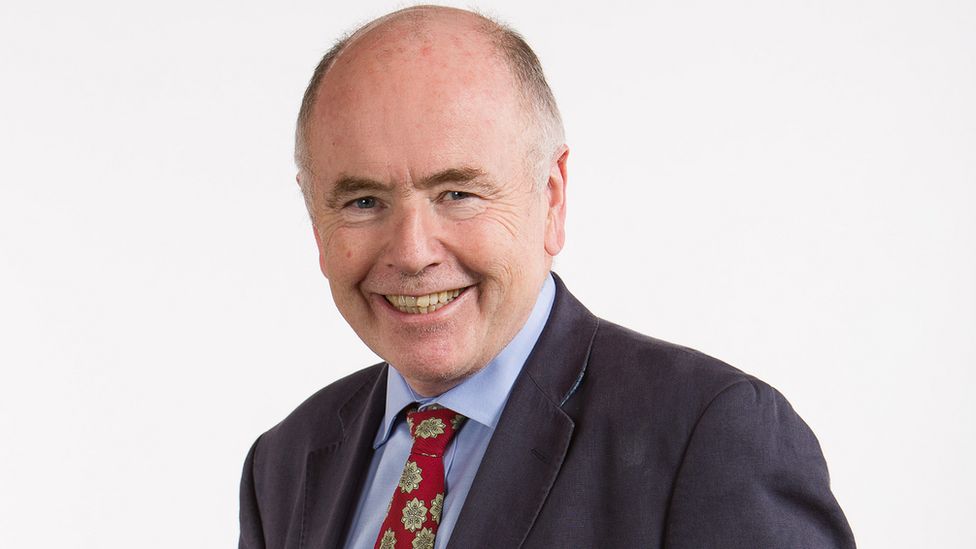
Jack Dromey
PA Media

Birmingham has "lost a dedicated servant" with the death of Jack Dromey and "will not be the same without him", politicians have said as tributes pour in for the veteran Labour politician.

The MP for Erdington died suddenly in his flat on Friday, the shadow minister's family said.

Politicians from across the political spectrum in the West Midlands have paid tribute to the 73-year-old.

"Jack was a man of the people," Perry Barr's Labour MP Khalid Mahmood said.

He added Mr Dromey was selected to stand for the Erdington seat in 2010 "purely because of his record for helping working people", winning him the respect of people across the country, from both sides of the political divide.

Fellow Birmingham MPs echoed the view of Yardley's Labour MP Jess Phillips, who tweeted his death had been a shock, adding the city would "not be the same without him".

His death came just hours after Mr Dromey had spoken in a Commons debate on Afghan refugees and soon after he had attended a speech on Tuesday by Sir Keir Starmer.

"He was a bundle of energy, he was always on to the next thing, he always had an idea," Selly Oak's Steve McCabe told BBC Radio WM, adding that Dromey had always "loved" his constituency.
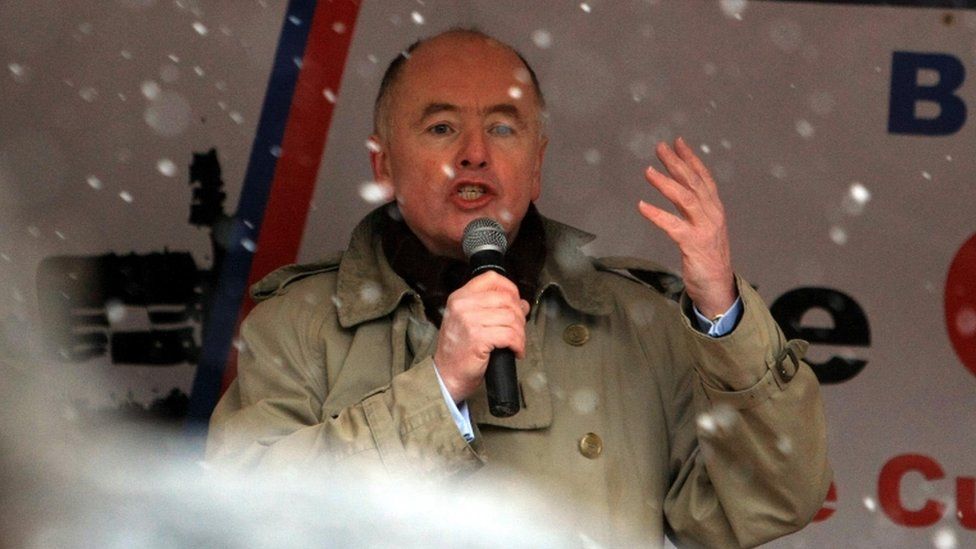
Jack Dromey addressing a Birmingham Council workers rally in 2010
PA Media

"A true Labour man," the leader of Birmingham City Council, Labour's Ian Ward tweeted, "who served the people of Erdington with passion and dedication".

The shadow minister is survived by his wife, fellow Labour MP Harriet Harman, and his three children.

He made his name in politics in the union movement before winning the Erdington seat nearly 12 years ago and going on to serve in several senior Labour Party roles.

Presentational grey line

Analysis - BBC News Correspondent, Phil Mackie

Jack Dromey represented everything good about a serving MP. He campaigned steadfastly for his constituents, whether they voted for him or not.

He happily worked alongside colleagues from other parties when they shared a common goal, whether to promote Erdington, Birmingham or the West Midlands.

Contrary to the general view that politicians are in it for themselves, he was not untypical. When I covered stories in which he was involved he was always honest, straightforward and helpful.

He was also a pro. When in need of a clip for an imminent news item, you could say, "Jack, could you sum that all up in 20 seconds?" - and after a brief pause he would, in exactly 20 seconds.

Presentational grey line

Andy Street, the Conservative West Midlands Mayor, described him as a "dedicated servant" of Birmingham and tweeted a statement describing Mr Dromey as "a true democrat".

The BBC is not responsible for the content of external sites.View original tweet on Twitter

Other Tory politicians in the West Midlands shared their tributes with Health Secretary and Bromsgrove MP Sajid Javid calling him "an incredibly compassionate, caring colleague".

Mr Dromey's passion for Birmingham and the West Midlands was remembered by The Wrekin's Conservative MP Mark Pritchard, who added he was "very popular across the House".

Tributes have also been paid by other figures in the region including the Chief Constable of West Midlands Police, Sir Dave Thompson, who called him "a good friend to policing".

Queensbury School in Erdington, which caters for pupils with special educational needs, tweeted: "Thank you for being such a voice for all Special School Students in the city over the years and especially Queensbury School. Giving a voice to those without."

Presentational grey line

Follow BBC West Midlands on Facebook, Twitter and Instagram. Send your story ideas to: newsonline.westmidlands@bbc.co.uk

Adblock test (Why?)


https://news.google.com/__i/rss/rd/articles/CBMiOWh0dHBzOi8vd3d3LmJiYy5jby51ay9uZXdzL3VrLWVuZ2xhbmQtYmlybWluZ2hhbS01OTkxNTg1NdIBPWh0dHBzOi8vd3d3LmJiYy5jby51ay9uZXdzL3VrLWVuZ2xhbmQtYmlybWluZ2hhbS01OTkxNTg1NS5hbXA?oc=5

2022-01-08 11:53:44Z
1246154793

Jumat, 07 Januari 2022

Boris Johnson apologises to Lord Geidt over secret texts in sleaze row - The Times

Boris Johnson has issued a “humble and sincere” apology to Lord Geidt, his ethics adviser, for withholding critical messages from an inquiry into the refurbishment of the prime minister’s Downing Street flat.

In a letter to Johnson released today Geidt said that it was “plainly unsatisfactory” that he had not been shown WhatsApp messages the prime minister had exchanged with the millionaire Tory donor Lord Brownlow of Shurlock Row. The messages, in which Johnson asked Brownlow to arrange for further money to do up the flat, which he said was “still a bit of a tip”, cast doubt on Johnson’s original claims to Geidt that he was unaware who was paying for the work.

They also revealed that the prime minister agreed to consider a

Adblock test (Why?)


https://news.google.com/__i/rss/rd/articles/CBMidGh0dHBzOi8vd3d3LnRoZXRpbWVzLmNvLnVrL2FydGljbGUvaS1kaWRudC1kaXNjbG9zZS10b3J5LWRvbm9yLXRleHRzLWJlY2F1c2UtaS1jaGFuZ2VkLW51bWJlci1zYXlzLWpvaG5zb24tcThqNzNqcG1j0gEA?oc=5

2022-01-07 09:45:00Z
1236691072

Rabu, 05 Januari 2022

COVID: Over 20 NHS trusts declare critical incident as health service 'stretched like never before' amid Omicron surge - Sky News

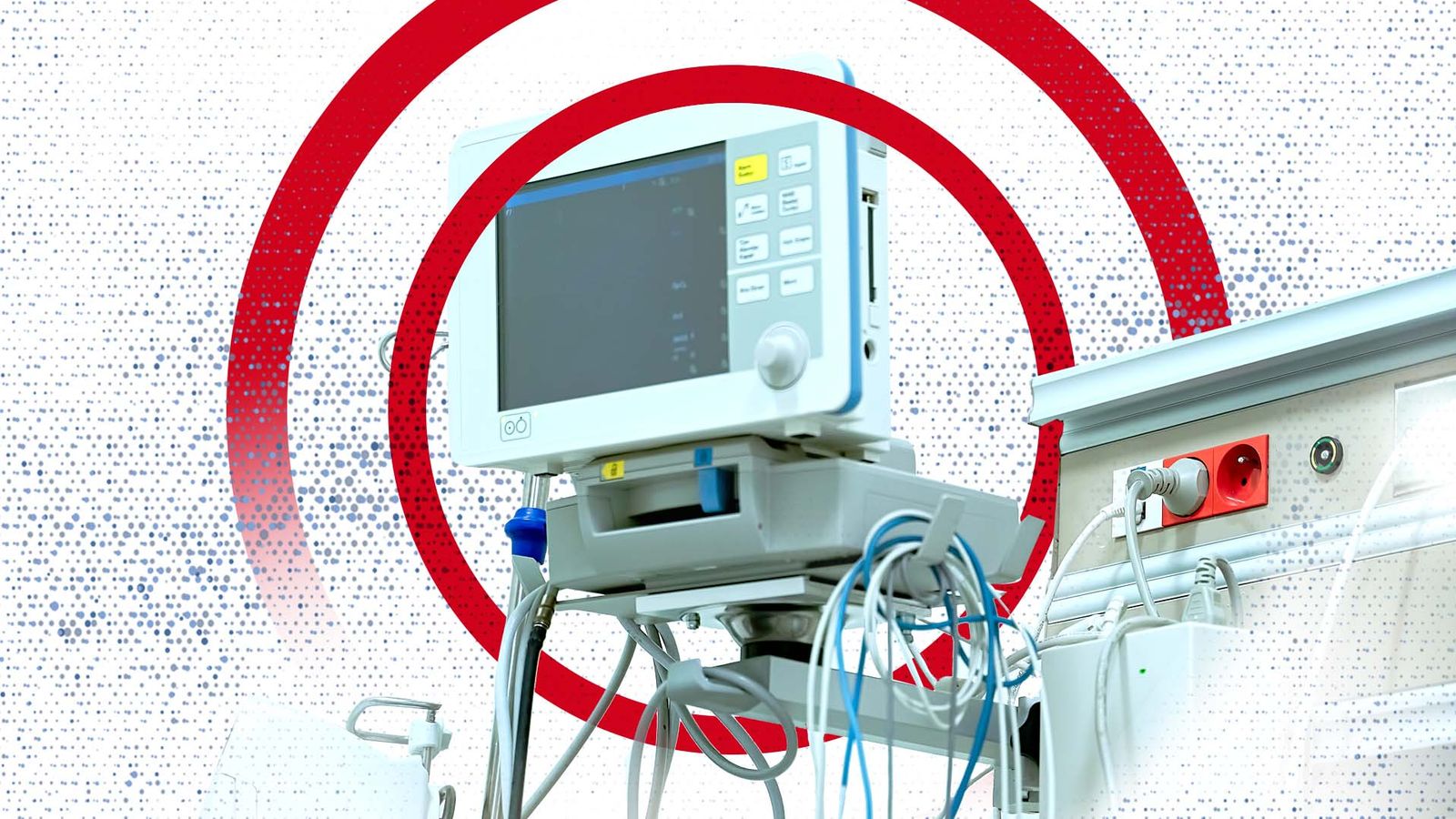
More than 20 NHS trusts have now declared a critical incident as the number of people in hospital with COVID hits the highest level since last February, amid rising pressure on health services from the surge in Omicron cases.

It comes as Chris Hopson, the head of NHS Providers, which represents trusts, warned coronavirus hospitalisations were "rapidly increasing outside London".

He tweeted that while the capital had the "lowest weekly growth rates", infections were now "fully hitting [the] older population and we still don't know the full effect of Xmas/New Year mixing & school return".

As of 4 January, a total of 17,276 people were in hospital in the UK with coronavirus. In comparison, during the second wave, the numbers in hospital peaked at 39,254 on 18 January 2021.

Please use Chrome browser for a more accessible video player

NHS 'hit with three challenges'

'Hospital admissions double every nine days'

Boris Johnson said on Wednesday that hospital admissions were "doubling around every nine days" and the country was "experiencing the fastest growth in COVID cases we've ever known".

Staff shortages due to self-isolation are also hitting the NHS. The quarantine period for people in Scotland is now being cut from 10 to seven days, bringing it broadly in line with the rest of the UK.

More on Covid-19

Another 194,747 coronavirus cases and 334 deaths have been reported in the latest daily UK figures.

The number of fatalities - the highest reported since 2 March - includes a backlog of some data from NHS England stretching back to New Year's Day.

No 10 said more than 20 trusts had reached the alert level where priority services may be under threat, but stressed it was "not a good indicator" of the pressures the health service was under.

The prime minister's official spokesman said: "It's worth understanding that critical incidents can last, in some certain circumstances, a matter of hours, a morning, or afternoon, a day… some of them can last longer than that."

But Mr Hopson said that declaring a critical incident is "an indication of serious pressure".

He added that it allowed trusts to "clearly flag an impending problem", seek help from staff and other agencies, and make swift decisions to redeploy staff or reprioritise services.

Please use Chrome browser for a more accessible video player

Omicron 'hard to outcompete' for future variants

NHS 'stretched like never before'

Mr Hopson told Sky News that absences are having a "massive impact" on the NHS, which is "really struggling in some places".

And he warned on Twitter that the health service is being "stretched like never before".

He wrote: "Pressure shifting from London to the rest of the country and rising significantly, at pace. Combination of three things at once: rising COVID hospitalisations and growing staff absences on top of large non-COVID pressure."

Mr Hopson continued: "Today's COVID hospitalisation data (5/1/22) shows COVID-19 hospitalisations rapidly increasing outside London. Over last seven days, hospitalisations up 85% in NE/Yorks. 82% in NW. 61% in Midlands. 52% in East of England. 40% in South West. 33% in South East. 23% in London."

He added that he had spoken to more than a dozen NHS trust bosses outside London over the last 24 hours. He said they had all "challenged the assumption" that the rest of the UK will follow the capital in the "shape and scale of, and ability to 'cope' with, pressure".

Data last month suggested 71% of COVID patients in hospitals in England were primarily being treated for the virus.

The remaining 29% were there "with COVID", suggesting they tested positive on arrival for another ailment or tested positive during their stay. Some medics are calling this latter group incidental COVID patients.

Are hospitals a hotbed for COVID transmission?

Follow the Daily podcast on Apple Podcasts, Google Podcasts, Spotify, Spreaker

One of the most recent organisations to declare a critical incident was Norfolk and Waveney Clinical Commissioning Group.

In Norfolk and Waveney, the three main hospitals are Norfolk and Norwich University Hospital NHS Foundation Trust, James Paget University Hospitals NHS Foundation Trust and the Queen Elizabeth Hospital King's Lynn NHS Foundation Trust.

Other critical incidents have been declared by Morecambe Bay NHS Trust, Blackpool Teaching Hospitals NHS Trust, University Hospitals Plymouth NHS Trust, United Lincolnshire Hospitals NHS Trust, Gloucestershire Hospitals NHS Foundation Trust and Great Western Hospitals NHS Foundation Trust.

Adblock test (Why?)


https://news.google.com/__i/rss/rd/articles/CBMilwFodHRwczovL25ld3Muc2t5LmNvbS9zdG9yeS9jb3ZpZC1vdmVyLTIwLW5ocy10cnVzdHMtZGVjbGFyZS1jcml0aWNhbC1pbmNpZGVudC1hcy1oZWFsdGgtc2VydmljZS1zdHJldGNoZWQtbGlrZS1uZXZlci1iZWZvcmUtYW1pZC1vbWljcm9uLXN1cmdlLTEyNTA5Nzkx0gGbAWh0dHBzOi8vbmV3cy5za3kuY29tL3N0b3J5L2FtcC9jb3ZpZC1vdmVyLTIwLW5ocy10cnVzdHMtZGVjbGFyZS1jcml0aWNhbC1pbmNpZGVudC1hcy1oZWFsdGgtc2VydmljZS1zdHJldGNoZWQtbGlrZS1uZXZlci1iZWZvcmUtYW1pZC1vbWljcm9uLXN1cmdlLTEyNTA5Nzkx?oc=5

2022-01-05 20:41:56Z
1207070451

COVID: Are hospitals a hotbed for transmission? - Sky News

The NHS is under pressure from COVID-19 hospitalisations, acute staff shortages and the normal strain from winter illnesses.

Data from NHS England shows that this crisis in the health service is being exacerbated by the number of patients catching the virus after being admitted for a different reason.

The percentage of patients in hospital with COVID-19 that tested positive after admission doubled over the course of December.

As of the start of this year, one in five COVID-positive patients tested positive between day one and seven of their hospital stay.

London has been the worst affected over the past month, with the proportion of patients testing positive after arrival peaking at more than 27% on Christmas Day.

The numbers in London have since started to decline, but other regions are still experiencing a steady increase.

Since the start of the year, the North West has had the highest levels of in-hospital transmission. According to the NHS England data, one in four COVID-positive patients in the region tested positive after admission.

This tracks with the overall infection rates, which are highest in the North West at almost 300 cases per 100,000 people.

This is not the first time that there have been such high transmission levels in hospitals.

The proportion of patients with COVID-19 testing positive after admission peaked in December last year. At that point, almost one quarter of patients caught the virus after being admitted for another illness.

However, unlike this time last year, new restrictions have not been introduced to curb the rampant spread of the virus.

As transmission within the community continues to rise, so too will the spread of COVID-19 within hospitals.

An NHS spokesperson said: "The ONS and other data conclusively demonstrates that the root cause of rising infection rates in hospitals is rising rates in the community and actually, analysis shows that COVID-19 hospital infection rates account for less than 1% of all cases since the pandemic began - with cases reducing significantly since the vaccination rollout.

"NHS staff rigorously follow UKHSA infection prevention control guidance, and weekly reports have consistently shown that outbreaks in hospitals are less common than in other settings."


The Data and Forensics team is a multi-skilled unit dedicated to providing transparent journalism from Sky News. We gather, analyse and visualise data to tell data-driven stories. We combine traditional reporting skills with advanced analysis of satellite images, social media and other open source information. Through multimedia storytelling we aim to better explain the world while also showing how our journalism is done.

Adblock test (Why?)


https://news.google.com/__i/rss/rd/articles/CBMiUWh0dHBzOi8vbmV3cy5za3kuY29tL3N0b3J5L2NvdmlkLWFyZS1ob3NwaXRhbHMtYS1ob3RiZWQtZm9yLXRyYW5zbWlzc2lvbi0xMjUwOTU5OdIBVWh0dHBzOi8vbmV3cy5za3kuY29tL3N0b3J5L2FtcC9jb3ZpZC1hcmUtaG9zcGl0YWxzLWEtaG90YmVkLWZvci10cmFuc21pc3Npb24tMTI1MDk1OTk?oc=5

2022-01-05 18:52:33Z
1214065659

How unrelenting and unsustainable pressure is sweeping the NHS - as COVID staff crisis intensifies - Sky News

Staff shortages because of COVID infections or isolation are driving the current crisis in the NHS.

And the emergency has been exacerbated by the record surge in COVID infections.

It is not just the rising numbers of patients being admitted but the difficulty in trying to manage bed capacity.

One NHS Trust leader told me his hospital still had beds available but that these could not be given to non-COVID patients as every other patient on the same ward had tested positive.

COVID news live: Boris Johnson to make coronavirus statement at 3.30pm - as new IHU variant discovered in France

He also said staff shortages had become so bad over Christmas and into the New Year that he was sending his staff home for a short break between shifts and asking them to return for a double shift to cover absent colleagues.

Hospital capacity is also being impacted by COVID outbreaks in care homes. Patients who might have been discharged into a community setting are having to stay longer in hospital.

More on Covid-19

The pressure is unrelenting and unsustainable. At least 12 NHS Trusts have declared a critical incident and 17 hospitals across Greater Manchester are pausing non-urgent care.

This is a devastating blow to long-suffering and long-waiting patients, and also to the healthcare staff.

Nobody wants this to happen. The only, very small, consolation is that some hospitals plan fewer non-urgent surgeries and procedures through the winter to help them better cope with seasonal pressure.

Follow the Daily podcast on Apple Podcasts, Google Podcasts, Spotify, Spreaker

Trusts will only declare a critical incident as a last resort. It means their hospitals are unable to function normally without compromising patient safety. A critical incident can be called at any time and there is no fixed duration.

People who test positive on lateral flow tests won't need follow-up PCR, govt to announce - as 'around a million' isolating

Over the peak of the pandemic, some Trusts were reporting critical incidents for less than 24 hours before de-escalating.

It sends a message to partner health agencies, primary care networks and Ambulance Trusts, that the hospital at that particular time is struggling to cope. The situation remains fluid and can change at any time.

Please use Chrome browser for a more accessible video player

NHS 'hit with three challenges'

Another Trust leader told me the timing of the decision was important. If the critical incident is declared in the late afternoon or evening that means it is more serious as it impacts emergency admissions, which are busier in the evenings and at night.

The prime minister is fond of his combat metaphors and his latest one describes the NHS as being on a "war footing". Exhausted frontline staff will agree with the battle analogy. They have been fighting for over two years.

Are we at a record level for critical incidents?

by Daniel Dunford, senior data journalist

Different trusts have different thresholds for what constitutes a critical incident.

Some trusts will only declare a critical incident because of an external event - Grenfell for example caused several London hospitals to declare critical incidents temporarily.

Unfortunately it’s difficult to compare year-on-year how many trusts had declared an incident due to winter demand because there is no central database.

Even Chris Hopson, chief executive of a membership organisation for NHS services and one the best sources for current information on trusts under pressure, doesn’t know exactly how many are declaring right now.

By doing a Google search for “NHS Trusts critical incident” and excluding recent results, you can see that there were at least 15 trusts declaring incidents due to "unprecedented demand" at this time seven years ago, according to research at the time from the Guardian.

At the moment we know about 12.

In terms of putting these incidents into context, it’s interesting that the A&E response times that sent the hospitals into critical measures seven years ago would be among the best in the country now.

They quote 88.8% of people arriving at A&E being seen within four hours as a record low, compared to the target of 95%.

In November 2021 it was 61.9%, more than three times as bad.

Adblock test (Why?)


https://news.google.com/__i/rss/rd/articles/CBMihAFodHRwczovL25ld3Muc2t5LmNvbS9zdG9yeS9ob3ctdW5yZWxlbnRpbmctYW5kLXVuc3VzdGFpbmFibGUtcHJlc3N1cmUtaXMtc3dlZXBpbmctdGhlLW5ocy1hcy1jb3ZpZC1zdGFmZi1jcmlzaXMtaW50ZW5zaWZpZXMtMTI1MDk0MzXSAYgBaHR0cHM6Ly9uZXdzLnNreS5jb20vc3RvcnkvYW1wL2hvdy11bnJlbGVudGluZy1hbmQtdW5zdXN0YWluYWJsZS1wcmVzc3VyZS1pcy1zd2VlcGluZy10aGUtbmhzLWFzLWNvdmlkLXN0YWZmLWNyaXNpcy1pbnRlbnNpZmllcy0xMjUwOTQzNQ?oc=5

2022-01-05 11:52:25Z
1207070451

Boris Johnson: We can ride this out without new Covid curbs - The Times

Boris Johnson has ruled out a lockdown as he said the country could “ride out” Omicron without further restrictions.

The prime minister will extend the plan B measures today but will not go further as he expressed hope of dealing with the surge “without shutting down our country once again” despite a record 218,724 cases reported yesterday and estimates that around one million people are self-isolating at present.

However, his scientific advisers warned that it was not clear when the peak would be or how many older people would end up in hospital. Health service leaders were also divided, with some saying that a surge of elderly patients was not materialising while others suggested that hospitals were starting to be overwhelmed.

Cause for optimism

Adblock test (Why?)


https://news.google.com/__i/rss/rd/articles/CBMiXGh0dHBzOi8vd3d3LnRoZXRpbWVzLmNvLnVrL2FydGljbGUvcG0td2UtY2FuLXJpZGUtdGhpcy1vdXQtd2l0aG91dC1uZXctY292aWQtY3VyYnMtMGs3N3RjaGgz0gEA?oc=5

2022-01-05 11:30:00Z
1228321941

Selasa, 04 Januari 2022

COVID-19: 100,000 critical workers to take daily tests in bid to ease Omicron shortages - Sky News

Key workers across several industries that keep the country running will be required to take COVID tests daily, the prime minister has announced.

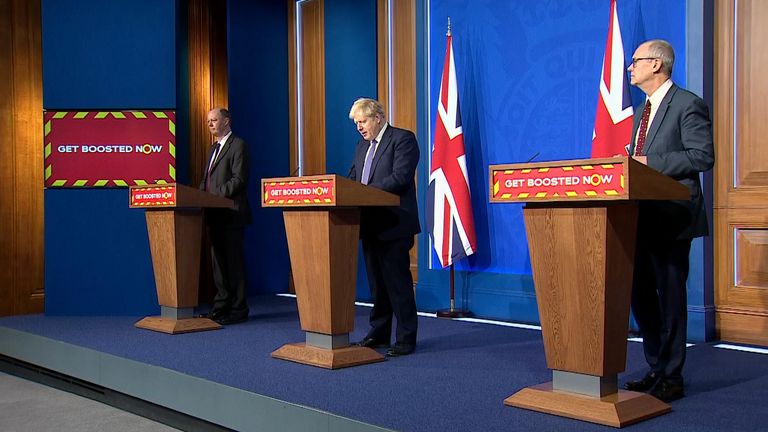
Boris Johnson said 100,000 workers in England, "from food processing to transport to Border Force", will have to test every day they are working from 10 January.

The government will send lateral flow tests to those industries directly and will help organise the logistics.

Its aim is to ensure infections are caught as early as possible to minimise spreading COVID to colleagues, which has been causing major staff shortages.

Follow live COVID updates from the UK and around the world

Boris Johnson Press Conference
Image: Boris Johnson held a news conference with Professor Sir Chris Whitty and Sir Patrick Vallance

'Ride out Omicron wave without shutting down'

Announcing the new testing measure at a Downing Street news briefing, the prime minister said that the UK "has a chance to ride out the Omicron wave without shutting down our country again".

More on Boris Johnson

Mr Johnson said despite record daily coronavirus cases over the past week he will keep plan B in place and not immediately bring in more restrictions in England.

England's Chief Medical Officer Professor Sir Chris Whitty said that last week one in 25 people - "extraordinarily high levels" - in England had COVID but there has been no surge in mortality, although there are now 15,000 daily hospital admissions for people with the virus.

Sir Chris added that data now show the booster jab has 88% efficacy against severe infection and there is now 50%-70% less chance of being admitted to hospital with Omicron than with previous variants.

Explainer: Why cutting self-isolation to five days would be 'counterproductive'

Please use Chrome browser for a more accessible video player

ICU cases 'flat' - Sajid Javid

Record cases but different position from previous waves

Mr Johnson said in previous waves cases have not reached more than 100,000 a day but today there were 218,000 cases.

The PM added: "This is a moment for the utmost caution but our position today differs from previous waves in two crucial aspects."

He said Omicron is milder and while hospital admissions are rising quickly, they are not translating into the same numbers being admitted to intensive care and the massive numbers of people who have had a booster means the UK will "find a way to live with the virus".

Mr Johnson added that it is "absolutely crazy" there are two million vaccine appointment slots this week "yet the majority of people in ICU for COVID are not vaccinated - 61%".

Omicron now reaching older people

Chief Scientific Adviser Sir Patrick Vallance said Omicron has been a "virus of the young" so far but is now reaching older people - however, we cannot say a peak has been reached until cases in older age groups come down.

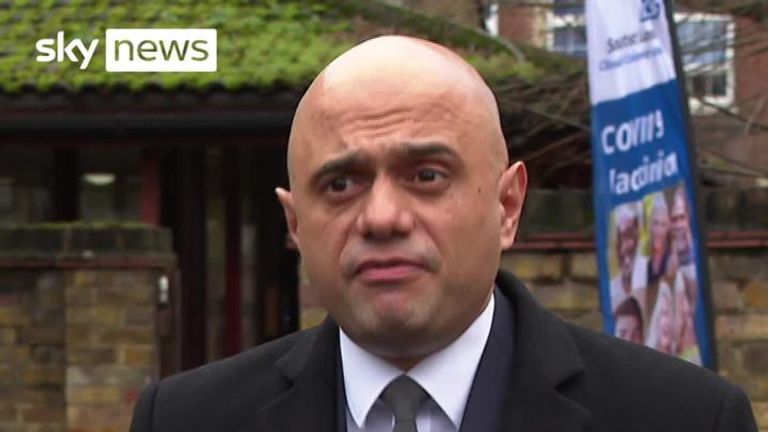
On Tuesday afternoon, Health Secretary Sajid Javid said the government is not looking at cutting the self-isolation period for those who test positive to five days.

Just before Christmas, the isolation period was cut to seven days if people test negative with a lateral flow on days six and seven - but must remain for 10 days if they test positive then.

There have since been calls to cut it further to five days, like the US, but the UK Health Security Agency explained the US starts counting the first day later than the UK so it would not be appropriate and is not a like-for-like comparison.

Please use Chrome browser for a more accessible video player

'Hospitalisations have begun to rise in over-50s'

Hospitals under pressure

Mr Javid also confirmed as of Tuesday morning, six hospital trusts had declared critical incidents over the past two days but it could be more as it "is a very fast-moving situation".

When asked if the military could help with staff shortages, Mr Javid said it is already helping in vaccination centres.

He added that volunteers are also helping with NHS deliveries, as well as an emergency list of workers developed during the pandemic.

The health secretary said they may call on retired clinicians and other NHS staff to "come back and help".

Adblock test (Why?)


https://news.google.com/__i/rss/rd/articles/CBMiemh0dHBzOi8vbmV3cy5za3kuY29tL3N0b3J5L2NvdmlkLTE5LTEwMC0wMDAtY3JpdGljYWwtd29ya2Vycy10by10YWtlLWRhaWx5LXRlc3RzLWluLWJpZC10by1lYXNlLW9taWNyb24tc2hvcnRhZ2VzLTEyNTA5MDQ00gF-aHR0cHM6Ly9uZXdzLnNreS5jb20vc3RvcnkvYW1wL2NvdmlkLTE5LTEwMC0wMDAtY3JpdGljYWwtd29ya2Vycy10by10YWtlLWRhaWx5LXRlc3RzLWluLWJpZC10by1lYXNlLW9taWNyb24tc2hvcnRhZ2VzLTEyNTA5MDQ0?oc=5

2022-01-04 19:11:37Z
1239569469