Belgian football fans are set to return to stadiums for top
league matches, though numbers will be strictly limited with social distancing.
It will be the fifth game of the new season for these clubs.
The action starts tonight in Eupen, a town near the German border, with the local
stadium welcoming up to 1,600 fans. Matches have been behind closed doors since
the March lockdown.
“Bring the passion back,” says a Flemish
football website headline.
On Sunday, more than 6,000 will be allowed into Anderlecht’s
stadium - way below its maximum capacity of 22,000.
Fans are urged to keep one metre apart, separated
by empty seats, and they must wear masks all the time.
Clubs hope gradually to increase the crowd numbers.
Anderlecht CEO Karel Van Eetvelt says a closed-door match loses
the club around €650,000 (£600,000). “This time, with about a third of our
fans, we hope to limit the loss to €350,000 to €400,000.”
Next week some German Bundesliga clubs will allow fans back
into stadiums, with strict rules as in Belgium.
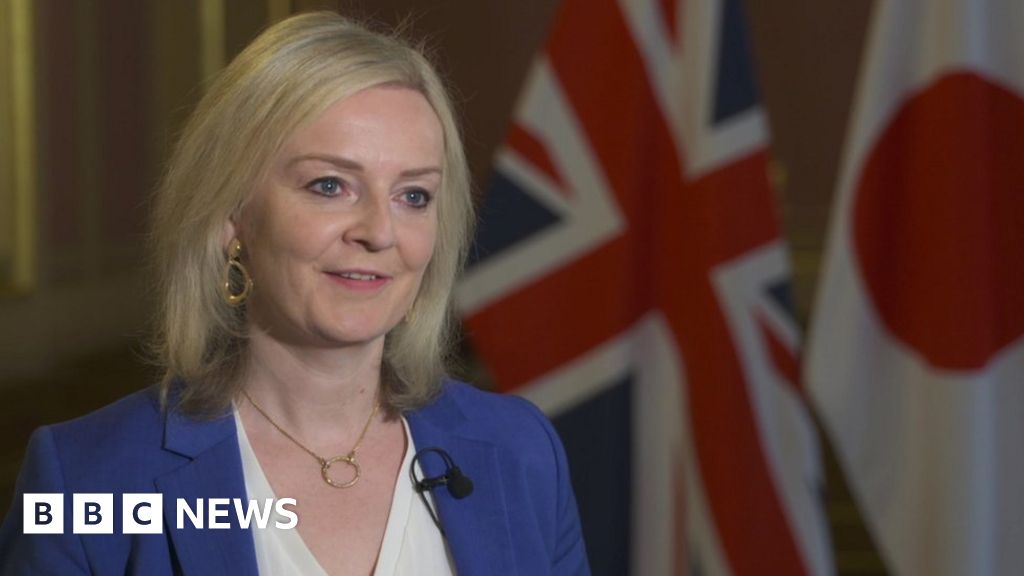
The UK has struck its first major post-Brexit trade deal after signing an agreement in principle with Japan which aims to boost trade by about £15bn.
International Trade Secretary Liz Truss said it was an "historic moment".
She said it would bring "new wins" for British businesses in manufacturing, food and drink, and tech industries.
Critics said while the deal may be of symbolic importance it would boost UK GDP by only 0.07%, a fraction of the trade that could be lost with the EU.
Friday's deal still needs approval by Japan's parliament. Trade representatives there forecast the agreement should get clearance by January.
Ms Truss said the UK-Japan Comprehensive Economic Partnership Agreement means 99% of exports to Japan will be tariff-free.
"The agreement we have negotiated - in record time and in challenging circumstances - goes far beyond the existing EU deal, as it secures new wins for British businesses in our great manufacturing, food and drink, and tech industries," she said.
"From our automotive workers in Wales to our shoemakers in the North of England, this deal will help build back better as we create new opportunities for people throughout the whole of the UK and help level up our country."
She added that, strategically, the deal was an important step towards joining the Trans-Pacific Partnership and placing Britain at the centre of a network of free trade agreements.
Major Japanese investors in the UK such as Nissan and Hitachi would benefit from reduced tariffs on parts coming from Japan and streamlined regulatory procedures, the UK's trade department statement said.
Prime Minister Boris Johnson has said Brexit gives Britain the freedom to strike trade deals with other countries around the world.
Business leaders welcomed the agreement, but stressed that securing a deal with the EU remained the most important goal.
The director general of the British Chambers of Commerce, Adam Marshall, called the announcement a milestone, but added: "Whilst this agreement is undoubtedly cause for celebration, securing a Free Trade Agreement with the EU remains critical to the future of businesses in the UK.
"We urge ministers to redouble their efforts to reach a comprehensive partnership with our largest trading partner at a crucial time in the negotiations."
The CBI also hailed the agreement, with director general Carolyn Fairbairn saying this "breakthrough moment" can be the first of many.
"It's a huge opportunity to secure new Japanese investment across a wider range of sectors and UK regions," she said.
A small step
You can almost hear the sighs of relief echoing around Westminster and within the business community.
After much wrangling, the first deal of the Brexit era has been struck, which ensures that 99% of British goods can enter Japan without tariffs, or extra charges.
But ultimately, this deal largely mirrors the agreement that already exists between the EU and Japan. And with trade with Japan accounting for just 2% of the UK's total, the expected boost to GDP - 0.07% or £1.5bn over the long term - is a tiny fraction of what the UK stands to lose by foregoing its existing relationship with the EU.
And while this deal has been struck in record time, it hasn't been quite as speedy as either side hoped.
The UK was keen to demonstrate that it can score added benefits from going it alone, while Tokyo was minded to show that it was not going to grant a more favourable deal to a single country than to a large trading bloc such as the EU.
The bumps may not bode well for other, more complex negotiations.
About 99% of exports between the two nations will be tariff-free under the deal, with a particular focus on the food and drink, finance and tech sectors.
Manufacturing parts coming from Japan will benefit from reduced tariffs, as will British pork, beef and salmon travelling in the opposite direction.
Japan's Foreign Minister Toshimitsu Motegi said: "It was a very tough negotiation, but we reached the agreement in principle in about three months, at an unusually fast pace.
"While maintaining the high levels of access to the British market under the Japan-EU EPA, we improved our access to the British market on train cars and some auto parts."
Boris Johnson is facing a potential parliamentary rebellion after angering both Conservative Remainers and Brexiteers by vowing to push ahead with plans to override key elements of the Brexit withdrawal deal.
Despite a demand by the EU to drop proposed legislation - and an accompanying threat of legal action from Brussels if the UK does not back down - the prime minister is ploughing ahead with the move to alter key elements of the UK's Withdrawal Agreement.
Mr Johnson himself struck the agreement last year before formally signing the deal in January. But he is now seeking, through the UK Internal Market Bill, to empower ministers to set it aside.
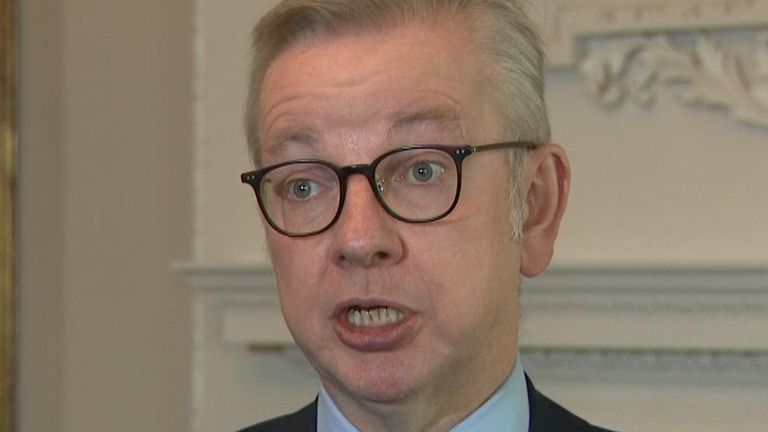
UK will not scrap controversial bill - Gove
The government - which has admitted the bill would break international law if passed - has argued the legislation is "critical" to ensuring the unfettered access for goods from Northern Ireland to the rest of the UK, and to protect the Good Friday Agreement.
But, as well as the fury from European capitals, Mr Johnson has also angered those within his own party ahead of the bill being voted on in the House of Commons.
Advertisement
Unhappy Tory MPs have tabled an amendment to the legislation that would try to block the government from overriding the Withdrawal Agreement without parliament's support.
Sir Bob Neill, who has tabled the amendment with the backing of fellow Tory former ministers Damian Green and Oliver Heald, told Times Radio: "I hope it's at least an indication as a government that really, you need to think very hard and carefully about going down this route.
More from Boris Johnson
"For heaven's sake, try and find some other way."
Sir Bob played down the prospect of Tory rebels, who are reported to number up to 30, losing the Tory whip by voting against the government's proposed legislation.
But he signalled he would be ready to be thrown out the Conservative parliamentary party if necessary.
Sir Roger Gale also indicated he is ready to lose the Conservative whip in order to vote against the bill.
"I shall do what I have to do on the basis of principle," he told Sky News.
"And the principle is that this United Kingdom keeps its word internationally."
Tory MP will vote against UK Internal Market Bill
Last year, Mr Johnson expelled 21 Conservative MPs from the parliamentary party for voting against his Brexit plans.
But it was not just among those Tories who campaigned to Remain in the EU that concerns were being raised about the Internal Market Bill.
Sir Bernard Jenkin, the leader of the European Research Group of Tory eurosceptics, told LBC Radio: "The prime minister should be more mindful of the reputational damage of playing such hardball when there's really no consensus from the country to go about breaking international agreements."
Mr Johnson, who enjoys an 80-strong Commons majority, could also face Tory opposition to his plans in the House of Lords after two senior Conservative peers expressed their displeasure at the prime minister's actions.
Lord Howard of Lympne became the third former Conservative leader - after Sir John Major and Theresa May - to criticise the government's plans.
The Brexit-backing peer accused the government of damaging the UK's "reputation for probity and respect for the rule of the law".
He told the House of Lords: "How can we reproach Russia or China or Iran when their conduct falls below internationally accepted standards, when we are showing such scant regard for our treaty obligations?"
His fellow Brexiteer Lord Lamont, a former chancellor, warned the legislation would not get through the House of Lords unless there were changes.
"The government are in a terrible mess and in a hole and I don't think it is easy to justify," he told BBC Radio 4's PM programme.
"In a way, this could take us back to square one with a terrible dilemma."
Ahead of the bill being debated by MPs in the Commons next week, business minister Nadhim Zahawi told Sky News he and his fellow ministers would "look forward to outlining exactly why we're taking these precautionary measures".
"What we're taking is, really, an insurance policy to make sure that... if there is no deal, we will not allow adverse impacts of that on the people of Northern Ireland, of all communities," he told the Kay Burley @ Breakfast show.
"That cannot be the right thing to do and, next week, parliamentarians, the country, will be able to scrutinise what we are saying and how we aim to do this."
Mr Zahawi added that "ambiguities" remained in the Withdrawal Agreement and its provisions for the Irish border - known as the Northern Ireland Protocol - due to the deal being signed "at pace" last year, which necessitated the new legislation.
"What we are saying is, this is is not about if we implement them, this is about how we implement them," he said.
But Sir Simon Fraser, the former head of the Foreign Office, accused the UK government of throwing a "bombshell" into continuing trade talks on a future EU-UK relationship with the proposed legislation.
He told Sky News it "unpicks unilaterally significant parts of the Withdrawal Agreement".
"It is a very significant potential disapplication of important parts of that agreement," Sir Simon added.
"The fact they're saying they're doing this because they signed the agreement in a hurry and didn't realise its implications is hardly a convincing argument."
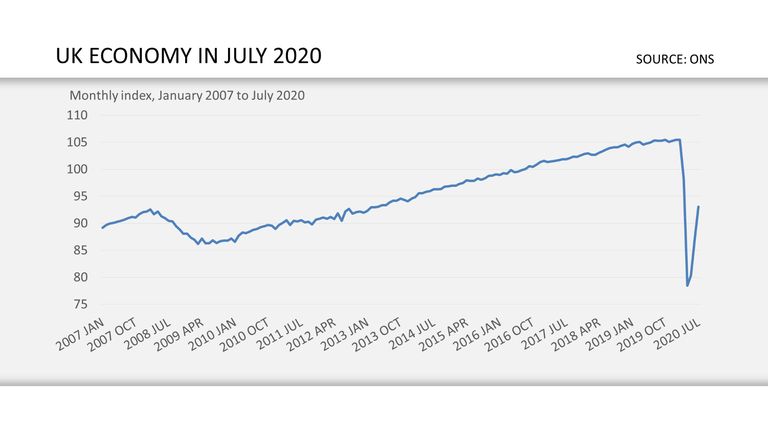
The economy remained 11.7% below its coronavirus pandemic peak in July as the UK emerges from its sharpest recession on record, official figures show.
The Office for National Statistics (ONS) reported gross domestic product (GDP) grew by 6.6% in the month as more parts of the economy awakened from the enforced hibernation of the COVID-19 lockdown.
The deep sleep for activity sparked the largest recession in UK history in the second quarter of the year - a slump of 20.4% - driven by the first full month of COVID-19 restrictions in April.
Month-on-month growth was recorded in May and in June.
ONS director of economic statistics Darren Morgan said of July's growth: "While it has continued steadily on the path towards recovery, the UK economy still has to make up nearly half of the GDP lost since the start of the pandemic.
Advertisement
"Education grew strongly as some children returned to school, while pubs, campsites and hairdressers all saw notable improvements.
"Car sales exceeded pre-crisis levels for the first time with showrooms having a particularly busy time.
More from Business
"All areas of manufacturing, particularly distillers and car makers, saw improvements, while housebuilding also continued to recover.
"However, both production and construction remain well below previous levels."
The update was released as ministers come under greater pressure to heed warnings of a deepening employment crisis as the Job Retention Scheme, that has supported wages of almost 10 million people during the crisis, is wound down.
A committee of MPs became the latest group to join the bandwagon on Friday, calling on Chancellor Rishi Sunak to introduce targeted support for sectors still struggling to reopen because of coronavirus rules.
There are dire predictions, most recently from the Bank of England, that the UK could have three million unemployed by the end of the year, while business groups argue an exit from the EU without a trade deal in January risks deepening the damage.
Caan: Kickstart must help older workers and SMEs
After the ONS update, Mr Sunak said: "While today's figures are welcome, I know that many people are rightly worried about the coming months or have already had their job or incomes affected.
"That's why supporting jobs is our first priority and why we've outlined a comprehensive Plan for Jobs to ensure nobody is left without hope or opportunity.
'Hard times are here'
"We're helping people return to work with a £1,000 retention bonus for jobs brought back from furlough. And we are creating new roles for young people with our Kickstart scheme, introducing incentives for training and apprenticeships, and supporting and protecting jobs in the tourism and hospitality sectors through our VAT cut and last month's Eat Out to Help Out scheme."
Yael Selfin, chief economist at KPMG UK, said of July's GDP figures: "Expect more of the same in August owing to the boost from the Eat Out to Help Out scheme."
But he added: "The risk of a second wave of infections in the autumn could derail the nascent recovery and put the economy into a lower gear."
Executive ministers have clashed over a proposal from the environment minister that work should be halted on facilities at local ports that could be used for checks related to Brexit.
The controls are currently used for checks on agri-food products and animals.
Work to expand the posts was then requested by the government.
However, it is understood Environment Minister Edwin Poots has taken the view that to press ahead with the expansion of current point of entry controls would be a waste of public resources following the latest UK Internal Market Bill.
The new bill sets out rules for the operation of the UK internal market - trade between England, Scotland, Wales and Northern Ireland - after the end of the Brexit transition period in January.
There has been controversy over the bill explicitly stating that these powers should apply even if they are incompatible with international law.
However, ministers say it is needed to prevent "damaging" tariffs on goods travelling from the rest of the UK to Northern Ireland if trade deal negotiations with the EU fail.
Stormont officials are concerned any ministerial order to pause work on the points of entry could be in breach of the Northern Ireland Act.
The act - which underpins the Stormont Executive - gives the secretary of state the power to order a minister or department to take an action if he believes it is required to fulfil the UK's international obligations.
Sinn Féin, the SDLP and Alliance argue that proceeding with work on the controls is required to fulfil the executive's international obligations.
The matter was put to a cross-community vote during a late session of the executive on Thursday night.
No authorisation was given for the environment minister to pause the work.
The executive is seeking legal advice and will reconvene on Friday for further discussions on the issue.
Post-Brexit trade deal talks are set to continue, despite the UK rejecting the EU's ultimatum to scrap plans to override the withdrawal agreement.
The EU has threatened the UK government with legal action if it does not ditch its controversial Internal Market Bill by the end of the month.
Angered Tory backbench MPs have launched a bid to amend the new law.
Meanwhile, trade talk negotiators on both sides have acknowledged they are still clashing on "significant" issues.
Boris Johnson's proposed Internal Market Bill, which will be formally debated by MPs in the House of Commons for the first time on Monday, addresses the Northern Ireland Protocol - an element of the Brexit withdrawal agreement designed to prevent a hard border returning to the island of Ireland.
The new law would give UK ministers powers to modify or "disapply" rules relating to the movement of goods that will come into force from 1 January, if the UK and EU are unable to strike a trade deal.
But the government defied the EU's demand, insisting it would proceed as planned with the legislation it says is necessary to protect the integrity of the UK and the peace process in Northern Ireland.
Time and trust are running out
When it comes to Brexit, all negotiations are inter-linked: EU-UK trade talks, the process to implement their divorce deal, negotiations on fishing rights and Brussels' deliberation on UK financial service.
What happens in one area very much affects progress in the others. You cannot separate them entirely.
Which is why this week, as the war of words and wills between Brussels and Downing Street raged over the government's threat to throw a grenade at key parts of the divorce deal, everyone's thoughts turned immediately to the trade talks between the two sides.
Could they survive? In fact, they limp on.
Despite bitter arguments over legislation and a huge list of outstanding issues still to be ironed out in bilateral trade talks; despite time and trust running out on both sides; neither the EU nor the UK seem to want to be the first ones to walk out the door.
The latest round of trade talks also took place in London on Thursday, with both sides acknowledging that "significant" differences remain.
Speaking afterwards, EU chief negotiator Michel Barnier said the EU had "shown flexibility" in an effort to "find solutions", but the UK had not "not engaged" on some "major issues".
His UK counterpart David Frost said "challenging areas remain and the divergences on some are still significant".
He said UK negotiators "remain committed" to reaching a deal and officials would "continue discussions" next week.
Mr Johnson has previously said he would walk away from the negotiating table if an agreement with the EU is not reached by 15 October.
'Not natural rebels'
The intense week of talks has sparked some unease within Boris Johnson's Conservative Party.
Former chancellor Lord Lamont said the government was in a "terrible mess" and warned that the Internal Market Bill would not get through the House of Lords in its present form.
And Sir Bernard Jenkin - the leader of the strongly pro-Brexit European Research Group - said Mr Johnson "should be more mindful of the reputational damage of playing such hardball".
Meanwhile, senior Conservative backbencher Sir Bob Neill, who chairs the Commons Justice Committee, is tabling an amendment to try to force a separate parliamentary vote on the three contentious clauses of the bill.
Sir Bob said there needed to be a "parliamentary lock" on any changes to the withdrawal agreement.
Among his supporters are Theresa May's former deputy prime minister, Damian Green.
"We are not natural rebels. We've all served as ministers, we know that this is a serious job, and we do our best to take the job seriously. So we don't do anything like this lightly," Sir Bob told Times Radio.
"So I hope it's at least an indication as a government that really, you need to think very hard and carefully about going down this route. For heaven's sake, try and find some other way."