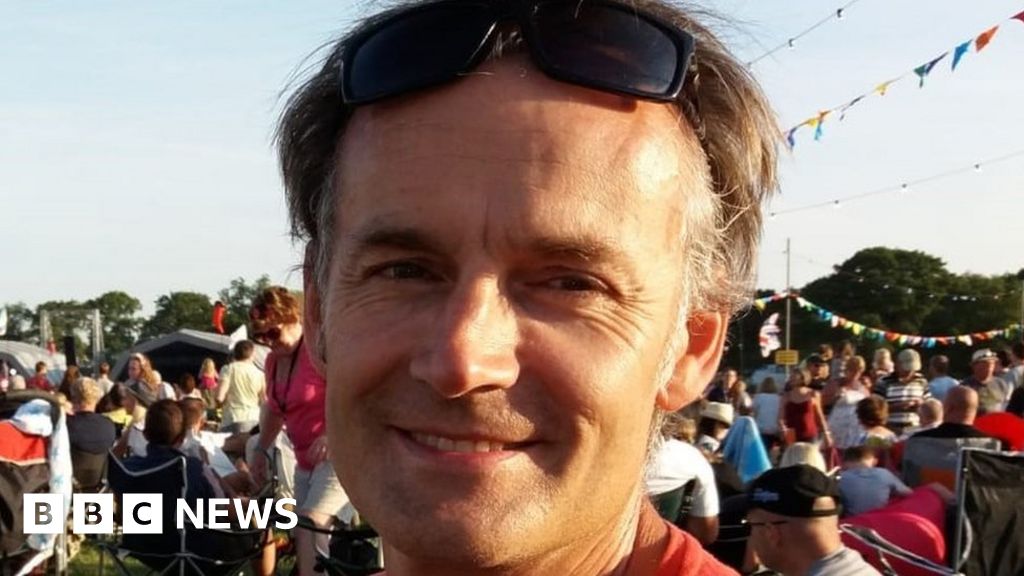
A British coronavirus “super spreader” says he’s fully recovered from the deadly illness — amid fears that he infected at least 11 other people, according to a new report.
Steve Walsh is under quarantine at a London hospital after becoming infected at Singapore’s Grand Hyatt hotel during a conference for Servomex, a British gas company, the Sun reported.
Walsh, 53, a businessman and local scout leader, then traveled to French ski chalet Les Contamine-Montoje with friends Bob and Catriona Saynor, according to the report. Both Bob and his 9-year-old son contracted the illness and are being treated at a French hospital.
And three men and a woman — including two health care workers — who knew Walsh and are believed to have stayed at the same French resort also fell ill, according to the report.
Walsh returned to the UK on an easyJet flight — sparking a desperate search for the hundreds of passengers who shared the plane with him, the outlet reported.
Walsh, a dad from Hove, East Sussex, told the outlet he contacted his doctor and the country’s public health system as soon as he learned he’d been exposed to a confirmed coronavirus case.
“I was advised to attend an isolated room at hospital, despite showing no symptoms, and subsequently self-isolated at home as instructed,” Walsh said. “When the diagnosis was confirmed I was sent to an isolation unit in hospital, where I remain, and, as a precaution, my family was also asked to isolate themselves.”
Walsh became a leader of the 3rd Hove cub scouts pack, where members call him Shere Khan, back in February 2016, according to the report.
A scouts spokesman told the Sun the leader has not attended any group meetings since becoming infected with the coronavirus.
Health officials told the outlet they’re looking to dig deeper into Walsh’s movements since he contracted the bug.
“Patient confidentiality is important but we may now be at the point where the public’s need to know more information is greater,” said Professor Paul Hunter of the University of East Anglia. “It would be helpful to know if he got a taxi straight home or got a bus and stopped off at the supermarket. Letting the public know this timeline will reassure many that they are not at risk.”
Dr. Andrew Freedman, an expert in infectious diseases at Cardiff University, added that it appears Walsh “has passed on the infection to an unusually large number of contacts.”
Health officials are urgently tracing patients who might have been infected.
Meanwhile, Patcham Nursing Home in Brighton confirmed on Tuesday that it has "closed to all visitors" after one of the infected GPs visited a patient there.
A spokeswoman for the care home said: "It is important to state that no-one at the home is unwell.
"However, following the closure of the local GP surgery, as a precaution we have closed the home to all visitors."
She added that the care home had conducted checks on residents and staff, which Public Health England was happy with.
It was later revealed that one is a student at the University of York.
Mr Walsh contracted the coronavirus at a work conference in Singapore, before travelling to a French ski resort for a holiday on his way back to the UK.
In a statement from quarantine in Guy's Hospital in London, Mr Walsh thanked the NHS for their care.
He said he contacted his GP, NHS 111 and Public Health England, on learning he had been exposed to a confirmed case of coronavirus.
He added: "I was advised to attend an isolated room at hospital, despite showing no symptoms, and subsequently self-isolated at home as instructed.
"When the diagnosis was confirmed I was sent to an isolation unit in hospital, where I remain, and, as a precaution, my family was also asked to isolate themselves."
He thanked friends, family and colleagues for their support, adding: "I ask the media to respect our privacy."
What are the symptoms of coronavirus and what can help stop its spread?
The main signs of infection are fever (high temperature) and a cough as well as shortness of breath and breathing difficulties.
Frequent hand washing with soap or gel, avoiding close contact with people who are ill and not touching your eyes, nose and mouth with unwashed hands, can help cut the risk of infection.
Catching coughs and sneezes in a tissue, binning it and washing your hands can minimise the risk of spreading disease.
Anyone experiencing symptoms, even if mild, after travelling from mainland China, Thailand, Japan, Republic of Korea, Hong Kong, Taiwan, Singapore, Malaysia or Macau, is advised to stay indoors and call the NHS 111 phone service.
In a statement, Servomex, Mr Walsh's employer, said it continues to "provide support" to him and his family.
A company spokesperson added: "We are working with public health authorities to ensure the welfare of our staff and communities and wish anyone with the virus a quick and full recovery."
Servomex said it had "acted quickly" to put "preventative measures" in place, including introducing travel restrictions and enforcing self-isolation for employees who attended the Singapore conference or who have shown symptoms of the virus.
It comes as a second GP surgery in Brighton closed on Tuesday following confirmed cases of coronavirus in the city.
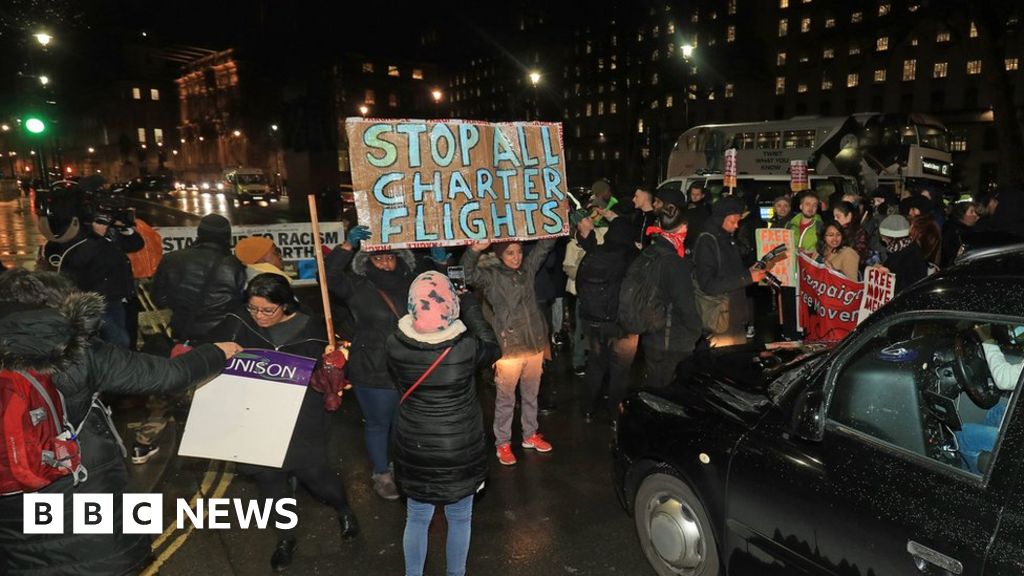
A Home Office flight deporting convicted offenders to Jamaica has left the UK, despite a last-minute legal challenge.
About 50 people were due to be on the plane, but Chancellor Sajid Javid said in the end there were "around 20".
The court order on Monday stopped the government deporting some of those due to leave, amid concerns they may not have had access to legal advice.
Mr Javid said no one protected by the court ruling was on the flight.
All of those being deported are Jamaican nationals who have been convicted of criminal offences and served prison sentences of 12 months or more.
"It is absolutely right that when they have served their sentence that we send them out of the country," Mr Javid told BBC Radio 5 Live.
"They are not British nationals, they are not members of the Windrush generation, they are all foreign national offenders."
The flight had been due to leave for Kingston at 6:30 GMT on Tuesday.
On Tuesday, the Home Office said: "We make no apology for trying to protect the public from serious, violent and persistent foreign national offenders.
"The court ruling does not apply to all of the foreign national offenders due to be deported and we have therefore proceeded with the flight."
Court ruling
On Monday, the Court of Appeal ruled the government should not deport detainees from Colnbrooke and Harmondsworth detention centres, near Heathrow, after lawyers argued mobile phone signal problems meant some of the detainees could not get legal advice.
The ruling said the government must not deport anyone from those centres unless they had access to a functioning, non-O2 Sim card on or before 3 February.
The original number due to be deported on the flight was about 50, but it is unclear how many people are onboard following the ruling.
Mr Javid told Sky News: "I don't know the exact number but I think it is around 20 - or above 20."
There had been calls for the government to suspend the flight until a report on the Windrush scandal has been published.
A leaked draft of the report said the government should consider ending the deportation of foreign-born offenders who came to the UK as children.
Campaigners argued that most of the detainees due to be deported had spent the majority of their lives in Britain.
Bella Sankey, director of charity Detention Action, told the BBC News Channel: "In these cases where people have been here for a long time and are to all intents and purposes British, by deporting individuals like that you are doubly punishing them.
"For many of these individuals deportation is a much harsher sentence than the time they've already served. Imagine being forever banished from the country you grew up in, unable to visit all of your close family and friends."
Tottenham MP David Lammy said it was an "outrage" that the flight had departed.
"The government wants to give the impression that everyone who was deported was a hardened violent criminal, but the reality is many of those who were scheduled to be deported had committed non-violent, one-time drugs offences.
"The lessons from Windrush have not been learned. Lives are being ruined because we don't remember our history."
Labour's shadow home secretary Diane Abbott said removing the detainees was "unfair", adding: "Many of the proposed deportees came here as children and have no memory of Jamaica."
But on Monday, Home Secretary Priti Patel said many of those on board were guilty of "serious offences", including rape and dealing class A drugs.
Every person on the flight had "received a custodial sentence of 12 months or more", she said.
Therefore under legislation introduced by the Labour government in 2007, Ms Patel said, "a deportation order must be made".
'I have no-one in Jamaica'
One of those who had been due to be deported on Tuesday is father-of-five Howard Ormsby.
He was jailed for 18 months after he was convicted of possession with intent to supply class A drugs and he was released in December.
"I came here at the age of 15 with my older sister and I've been here 18 years of my life," the 32-year-old said, speaking to the BBC's Victoria Derbyshire show from a detention centre at Harmondsworth, west London.
"I've never tried to deny the fact I've made a mistake, but everyone has a chance to right their wrongs.
"I have all my family here - I have no-one in Jamaica."
Have you been affected by issues covered in this story? Share your experiences by emailing haveyoursay@bbc.co.uk.
Please include a contact number if you are willing to speak to a BBC journalist. You can also contact us in the following ways:
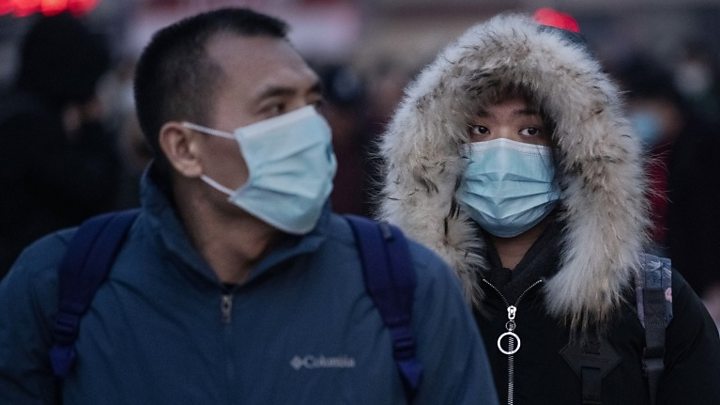
The number of people infected by the coronavirus in the UK has doubled to eight - after four more patients tested positive for the virus.
It comes as the government issued new powers in England to keep people in quarantine to stop the virus spreading.
In order to do this the Department of Health has described the coronavirus as a "serious and imminent threat" to public health.
The overall risk level to the UK remains "moderate".
There have been more than 40,000 cases of the virus globally, mostly in China. The total number of deaths in China is now 908.
The new cases are all linked to a British man who caught the virus at a conference in Singapore and travelled to a ski resort in France. He was diagnosed in Brighton, and is being treated at St Thomas' Hospital in London.
Chief medical officer for England Prof Chris Whitty said the new cases have been transferred to specialist NHS centres at Guys' and St Thomas' and the Royal Free hospitals in London.
A University of York student and their relative, still being treated at the Royal Victoria Infirmary infectious diseases centre in Newcastle, have not been connected to the cluster of UK cases.
Is the Brighton man a 'super-spreader'?
This looks a lot like a "super-spreading" event. It is likely another British national diagnosed in Majorca is also connected to the Brighton man.
This is not unusual in outbreaks.
We know that people pass this novel coronavirus on to an average of two-to-three people, but some will pass it on to nobody and others will pass it on to far more.
History has demonised the super-spreader. Irish cook Mary Mallon (1869-1938) is remembered as "Typhoid Mary" after unknowingly passing on the disease when she had no symptoms. She spent decades in exile and forced quarantine.
But in reality it's not the patient's fault.
Having no symptoms, making unusually large amounts of virus or mixing with lots of people can all lead to super-spreading.
Where had the Brighton coronavirus patient been?
The British man visited Singapore on business from 20 to 23 January, before staying at a chalet in the Alpine resort area of Les Contamines-Montjoie near Mont Blanc.
He flew back to the UK from Geneva on 28 January, easyJet confirmed.
Four adults and a nine-year-old child were subsequently diagnosed with the virus after coming into contact with him. They are not in a serious condition.
EasyJet said in a statement on Monday that health officials are trying to trace other passengers on flight EZS8481 to London Gatwick who might be at risk.
On his return to the UK, the Brighton man visited The Grenadier pub in Hove.
What are the latest regulations in the UK?
On Monday, the Health Secretary Matt Hancock announced new regulations in England as "the transmission of coronavirus would constitute a serious threat".
Under the Department of Health measures people will not be free to leave quarantine, and can be forcibly sent into isolation if they pose a threat.
Arrowe Park Hospital, on the Wirral, and Kents Hill Park conference centre, in Milton Keynes, have been designated as "isolation" facilities in the UK.
The BBC's political correspondent Iain Watson said the measures were announced because a passenger on the first UK flight from Wuhan, who is currently being held in quarantine on the Wirral, "is threatening to abscond" despite signing a contract agreeing to the isolation period.
He said the regulations were brought in "to try and compel him to stay put".
A statement on the Department of Health website said "incidence or transmission of novel coronavirus constitutes a serious and imminent threat to public health".
On Twitter, the department added that the announcement on the coronavirus threat was "a legal term... as part of changes to make it easier for health professionals to do their job".
A government spokesman said: "We are strengthening our regulations so we can keep individuals in supported isolation for their own safety and if public health professionals consider they may be at risk of spreading the virus to other members of the public."
Why have they issued this advice?
Tackling the coronavirus threat has taken the government into uncharted territory. Quarantining hundreds of British citizens for two weeks has never been done on this scale in modern times.
Whitehall sources say the latest Department of Health announcement on the virus threat covers the tightening of some regulations to help enforce quarantine powers.
This gives legal underpinning to the quarantining of people back from Wuhan in Milton Keynes and the Wirral.
They all signed contracts committing to the 14-day isolation but it's understood that more rigorous regulations are needed to ensure people stay the course.
This is not a ramping up in official warnings to the wider public. The language used in the official release describing an "imminent threat" was over dramatic and confusing and probably there only for obscure legal reasons.
The actual threat level announced by Public Health England a couple of weeks ago remains moderate.
What's happening globally?
The majority of cases are in China, where 40,171 people are infected.
The new virus was first reported in Wuhan, the capital of Hubei province. The city of 11 million has been in lockdown for weeks.
The outbreak was declared a global emergency by the WHO on 30 January.
Media playback is unsupported on your device
It is estimated that 1% of people infected with the new coronavirus may die, according to a report by the World Health Organization Collaborating Centre for Infectious Disease Modelling.
Prof Neil Ferguson, of Imperial College London, said the estimate suggests the impact of the epidemic "may be comparable to the major influenza pandemics of the 20th Century".
Meanwhile, there are now 130 confirmed cases of coronavirus on the quarantined Diamond Princess cruise ship in the port of Yokohama.
What should I do if I suspect I have coronavirus?
The coronavirus causes severe acute respiratory infection and symptoms usually start with a fever, followed by a dry cough.
Most people infected are likely to fully recover - just as they would from a flu.
Anyone who has travelled to the UK from mainland China, Thailand, Japan, Republic of Korea, Hong Kong, Taiwan, Singapore, Malaysia or Macau in the last 14 days and is experiencing cough or fever or shortness of breath, is advised to stay indoors and call NHS 111, even if symptoms are mild.
People who suspect they have the virus are asked to take steps to avoid close contact with other people as much as possible, as they would do with other flu viruses.
In Scotland, you can phone your GP or NHS 24 on 111 out of hours. If you are in Northern Ireland, call 0300 200 7885.
Are you or any of your family members involved in the quarantine process? Share your experiences by emailing haveyoursay@bbc.co.uk.
Please include a contact number if you are willing to speak to a BBC journalist. You can also contact us in the following ways:
The number of people infected by the coronavirus in the UK has doubled to eight - after four more patients in England tested positive for the virus.
It comes as the government announced new powers to keep people in quarantine to stop the spread of the virus.
In order to do this the Department of Health has described the coronavirus as a "serious and imminent threat" to public health.
The overall risk level to the UK remains "moderate".
There have been more than 40,000 cases of the virus globally, mostly in China. The total number of deaths in China is now 908 - but the number of newly-infected people per day has stabilised.
Confirming the four new cases on Monday, chief medical officer for England Prof Chris Whitty said they were all "known contacts of a previously confirmed UK case, and the virus was passed on in France".
He added that they have been transferred to specialist NHS centres at Guy's and St Thomas' and the Royal Free hospitals in London.
The BBC's political correspondent Iain Watson said the new measures were announced because a passenger on the first UK flight from Wuhan, who is currently being held in quarantine on the Wirral, "is threatening to abscond".
"Currently the regulations are not strong enough to stop him leaving before the 14-day period is up so they brought in these new regulations to try and compel him to stay put," he said.
The Department of Health insisted on Twitter that the latest announcement on the coronavirus threat to the public was "a legal term which we announced this morning as part of changes to make it easier for health professionals to do their job".
A government spokesman said: "We are strengthening our regulations so we can keep individuals in supported isolation for their own safety and if public health professionals consider they may be at risk of spreading the virus to other members of the public."
Why have they issued this advice?
Tackling the coronavirus threat has taken the government into uncharted territory. Quarantining hundreds of British citizens for two weeks has never been done on this scale in modern times.
Whitehall sources say the latest Department of Health announcement on the virus threat covers the tightening of some regulations to help enforce quarantine powers.
This gives legal underpinning to the quarantining of people back from Wuhan in Milton Keynes and the Wirral.
They all signed contracts committing to the 14-day isolation but it's understood that more rigorous regulations are needed to ensure people stay the course.
This is not a ramping up in official warnings to the wider public. The language used in the official release describing an "imminent threat" was over dramatic and confusing and probably there only for obscure legal reasons.
The actual threat level announced by Public Health England a couple of weeks ago remains moderate.
In a statement on Monday, Health Secretary Matt Hancock said Arrowe Park Hospital, on the Wirral, and Kents Hill Park conference centre, in Milton Keynes, have been designated as "isolation" facilities in the UK.
Evacuees from Wuhan, where the virus outbreak first emerged, who travelled to the UK on two flights chartered by the Foreign Office are currently in quarantine at the two locations.
A statement on the Department of Health website said: "The Secretary of State declares that the incidence or transmission of novel coronavirus constitutes a serious and imminent threat to public health, and the measures outlined in these regulations are considered as an effective means of delaying or preventing further transmission of the virus."
It is estimated that 1% of people infected with the new coronavirus may die, according to a report by the World Health Organization Collaborating Centre for Infectious Disease Modelling.
Prof Neil Ferguson, of Imperial College London, said: "Our estimates - while subject to much uncertainty due to the limited data currently available - suggest that the impact of the unfolding epidemic may be comparable to the major influenza pandemics of the 20th century."
Media playback is unsupported on your device
The latest UK cases come after a British man who caught the virus in Singapore was transferred to St Thomas' Hospital in London on Thursday, from Brighton. He was announced as the third person to test positive in the UK.
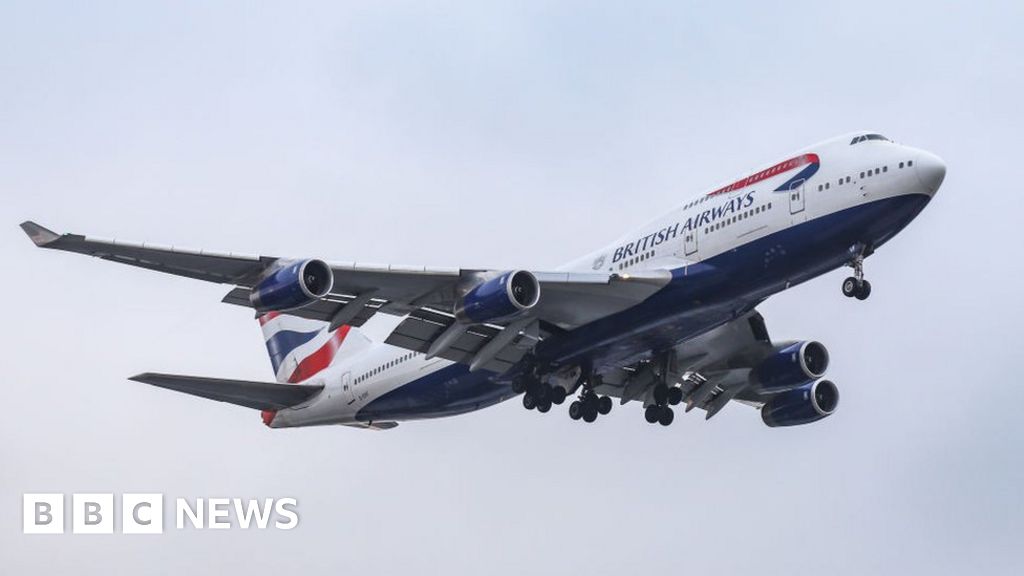
Experts are hailing a British Airways flight as the fastest subsonic New York to London journey.
The Boeing 747-436 reached speeds of 825 mph (1,327 km/h) as it rode a jet stream accelerated by Storm Ciara.
The four hours and 56 minutes flight arrived at Heathrow Airport 80 minutes ahead of schedule on Sunday morning.
According to Flightradar24, an online flight tracking service, it beat a previous five hours 13 minutes record held by Norwegian.
The BBC has been unable to independently verify the record as no complete database of flight times was available.
Aviation consultant and former BA pilot Alastair Rosenschein said the aeroplane reached a "phenomenal speed".
'Prioritise safety'
"The pilot will have sat their aircraft in the core of the jet stream and at this time of year it's quite strong.
"Turbulence in those jet streams can be quite severe, but you can also find it can be a very smooth journey."
The jet stream reached speeds of 260 mph (418 km/h) on Sunday morning, according to BBC Weather.
Despite travelling faster than the speed of sound the plane would not have broken the sonic barrier as it was helped along by fast-moving air.
Relative to the air, the plane was travelling slower than 801mph.
Modern passenger planes usually travel at about 85% the speed of sound, according to Mr Rosenschein.
British Airways said: "We always prioritise safety over speed records.
"Our highly-trained pilots made the most of the conditions to get customers back to London well ahead of time."
The fastest transatlantic crossing belongs to BA Concorde, which flew from New York to London in two hours 52 minutes and 59 seconds in 1996 - hitting a top speed of 1,350 mph.
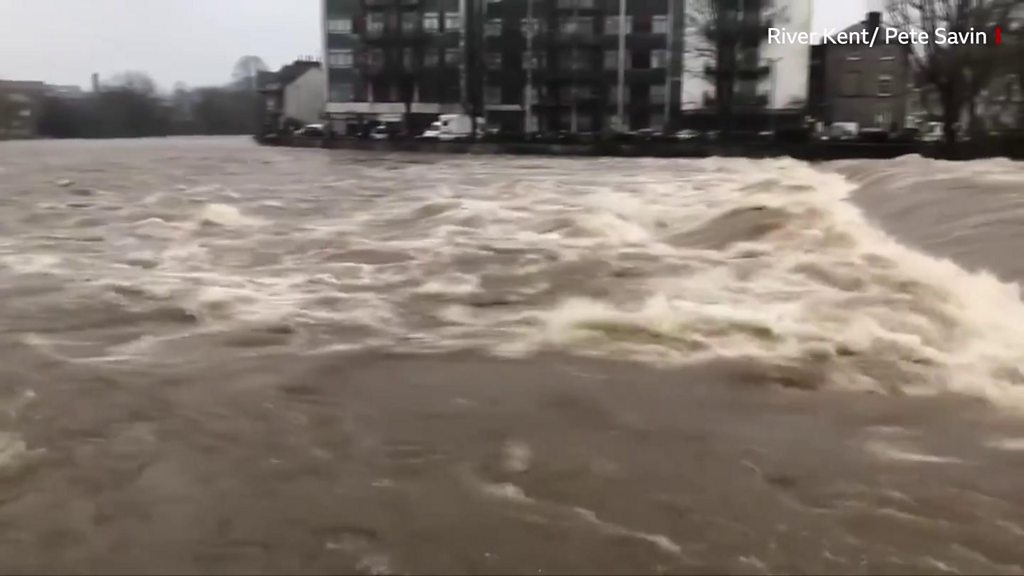
Heavy rain and gusts of wind reaching more than 90mph brought widespread flooding and travel disruption as Storm Ciara hit the UK.
Trees were toppled, buildings were damaged and some homes had to be evacuated as rivers burst their banks.
Thousands of people were left without electricity and sporting events were cancelled due to the weather.
Airlines also cancelled hundreds of flights, while several rail firms urged passengers not to travel.
Ferry passengers also faced delays and cancellations, and drivers were warned to take extra care.
Large parts of the UK were covered by an amber warning for very strong winds, with the Met Office advising that large waves in coastal areas and flying debris could cause injuries.
Meterologists said the high wind speeds inland were an unusual feature of the storm, with Manchester Airport also recording gusts of 86mph.
In Cumbria, Honister Pass received 177mm (7in) of rain in 24 hours - more than one-and-a-half times the average rainfall for the whole of February, which is 112mm.
Scotland saw gusts of wind of up to 77mph in Tiree in the Inner Hebrides, while heavy rain caused the River Nith to burst its banks.
The Environment Agency issued one severe warning for the River Nidd at Pateley Bridge in West Yorkshire, where it was feared the waters might rise to 5.1m, overtopping flood defences and posing a "danger to life". The warning was later withdrawn.
How has travel been disrupted?
Heathrow Airport said it had taken a joint decision with the airlines to operate a reduced timetable to minimise the number of flights cancelled at short notice.
Network Rail imposed a blanket speed restriction of 50mph across the network on Sunday, warning passengers to only travel by train that day "if absolutely necessary".
The rail firms which issued "do not travel" warnings for Sunday were CrossCountry, Gatwick Express, Grand Central, Great Northern, Hull Trains, LNER, Northern, Southeastern, Southern, Thameslink, TransPennine Express and the Caledonian Sleeper, which is cancelled on Sunday night.
Flooding and debris on the tracks caused delays and cancellations to many services.
Some of the routes affected by the weather include:
Edinburgh Waverley Station - closed to new passengers on cross-border services because of overcrowding
Avanti West Coast - no services except on routes between London and Manchester or Birmingham
Grand Central - all services cancelled on Sunday
Cross Country - a "severely reduced" service was operating
West Midlands Railway - several routes were closed and customers advised not to travel
London Euston temporarily closed due to overcrowding, but reopened within half an hour.
On the roads, the Humber Bridge in East Yorkshire was closed for only the second time in its history. It reopened to cars, but it is expected to remain closed to vans and lorries until Tuesday.
The Queen Elizabeth II Bridge at the Dartford Crossing in Kent was closed to traffic.
Ferry services were also affected, with all services suspended at the Port of Dover because of strong winds. The port reopened on Sunday evening.
DFDS also cancelled all its ferries between Newhaven and Dieppe.
What else has the storm affected?
Dozens of homes in Bury, Lancashire, were evacuated and people taken to a nearby leisure centre after the River Irewell burst its banks. Residents told the BBC the flooding was worse than the Boxing Day floods in 2015.
A surfer in Hastings who lost his board in powerful waves was rescued by police, coastguard teams, a helicopter and a lifeboat. He had been missing at sea for about an hour.
Elsewhere, firefighters in Blackpool had to rescue a motorist whose car got stuck in floodwater. Blackpool Council tweeted that some properties were being evacuated.
Strong winds buckled a construction crane in Stanmore, north London, and tore the sails off a historic windmill in Burgh Le Marsh, Lincolnshire.
The Queen did not attend church in Sandringham, Norfolk, because of "public safety reasons" due to the weather.
Other effects of the storm included:
Scotland's Women's Six Nations match against England was postponed
Four Women's Super League matches were called off, including Liverpool against Everton, where more than 20,000 fans were expected
Horse racing at Exeter and Southwell was cancelled
The London Winter Run 10k - due to be attended by 25,000 runners - was cancelled
London's eight Royal Parks, which include Hyde Park and Regent's Park, were closed on Sunday
What's the forecast?
Strong gusts of wind are expected to continue to hit Northern Ireland and most of Scotland after the storm has passed on Monday.
Met Office meteorologist Alex Burkill said: "While Storm Ciara is clearing away, that doesn't mean we're entering a quieter period of weather. It's going to stay very unsettled."
The Met Office has issued yellow warnings for Monday for wind and snow in Scotland and Northern Ireland, and snow and ice across north-west England.
A yellow warning for wind in the south-west of England and southern coastal areas is also in place between 10am and 5pm.
The yellow warnings for snow and ice remain in place for much of Scotland, Northern Ireland and parts of the north of England on Tuesday and Wednesday.
Have you been affected by Storm Ciara? Share your experiences by emailing haveyoursay@bbc.co.uk.
Please include a contact number if you are willing to speak to a BBC journalist. You can also contact us in the following ways: