Rabu, 12 Oktober 2022

PMQs: Liz Truss pledges no public spending cuts as she defends mini-budget - BBC

This video can not be played

To play this video you need to enable JavaScript in your browser.

Liz Truss has said she is "absolutely" not planning public spending cuts.

Markets are waiting to find out how the government proposes to bring down debt, following the chancellor's tax cutting mini-budget last month.

Ms Truss told MPs the government would focus on reducing debt "not by cutting public spending but by making sure we spend public money well".

Sir Keir Starmer said the government's "borrowing spree" had left homeowners worried about their mortgages.

Speaking during Prime Minister's Questions, the Labour leader called for a reversal of the mini-budget, which set out plans for £43bn borrowing to fund tax cuts intended to stimulate economic growth.

Government borrowing costs have increased following market turmoil over the last month, and the Bank of England has warned interest rates could rise again.

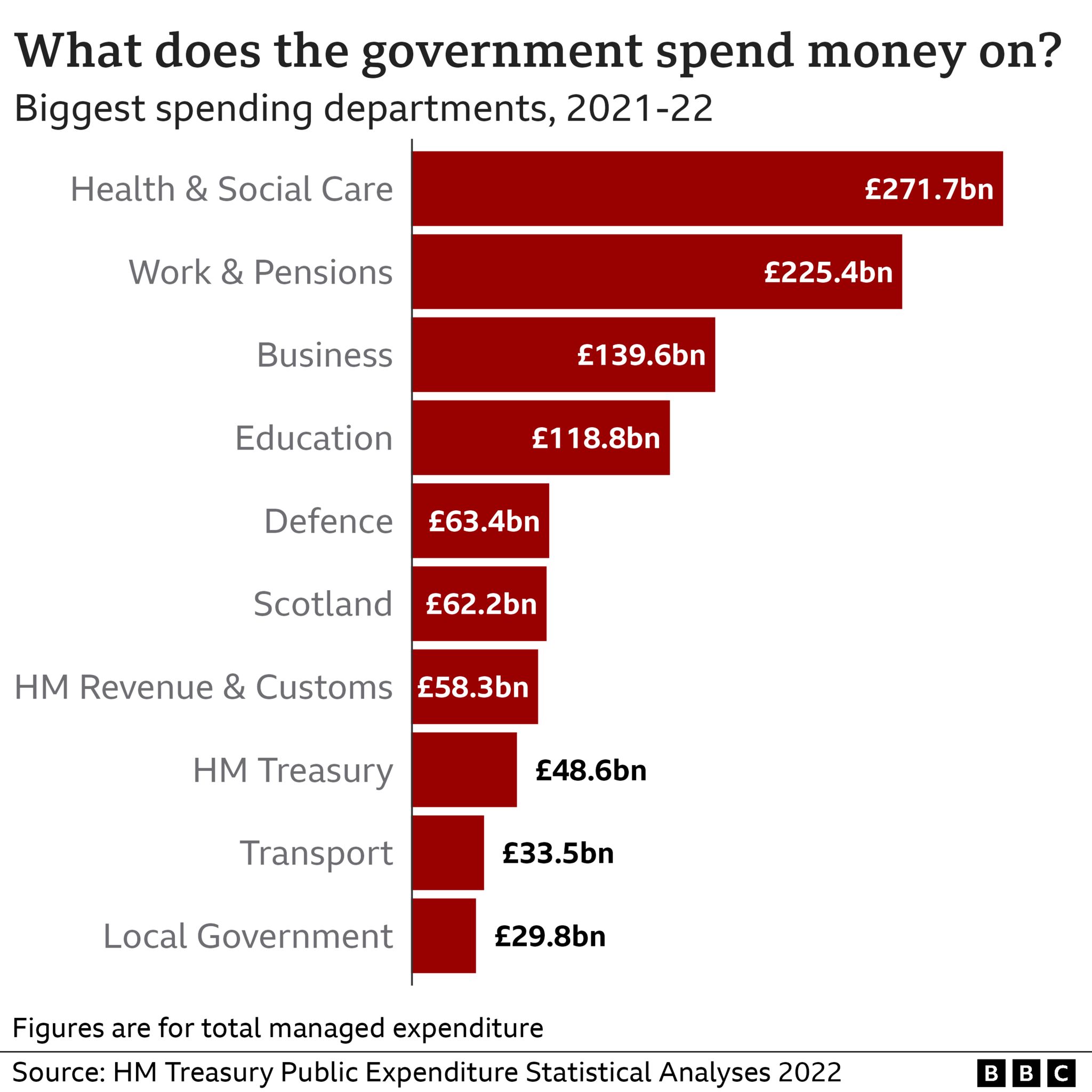
Meanwhile, the Institute for Fiscal Studies think tank has warned that the chancellor will need to make spending cuts to put the country's finances on a sustainable path, saying the government would have to spend £60bn a year less by 2026-27.

The chancellor has promised the government's economic plan will be outlined on 31 October, accompanied by an assessment by the independent Office for Budget Responsibility.

During PMQs, Sir Keir asked Ms Truss if she stood by her pledge, made during her leadership election, that "I'm not planning public spending reductions".

The prime minister replied: "Absolutely. What we will make sure is that over the medium term the debt is falling. But we will do that not by cutting public spending but by making sure we spend public money well."

Following PMQs, the prime minister's spokesman said there will be "difficult decisions" for the government regarding public spending, and that the chancellor would announce measures "in due course".

The government has previously said it was committed to spending settlements, set out in the 2021 Comprehensive Spending Review.

Chancellor Kwasi Kwarteng said earlier this month: "I think it's a matter of good practice and really important that we stick within the envelope of the CSR."

The review set out plans for increases to public spending above inflation, but with prices now rising, with inflation at 9.9% in August, government department budgets will come under pressure.

The prime minister's official spokesman has so far refused to confirm whether departmental budgets would stick to the below inflation increases set out in the CSR.

Privately several senior government figures have acknowledged there will "belt tightening" in departmental budgets coming.

Reporters repeatedly asked if public money being spent on the energy price cap freeze explains how the government can say that there won't be spending cuts, when belts are expected to be tightened.

Given the size of the intervention in the energy markets, there would still be capacity for significant cuts in some budgets, while allowing the PM to accurately say that government spending overall has increased.
Starmer

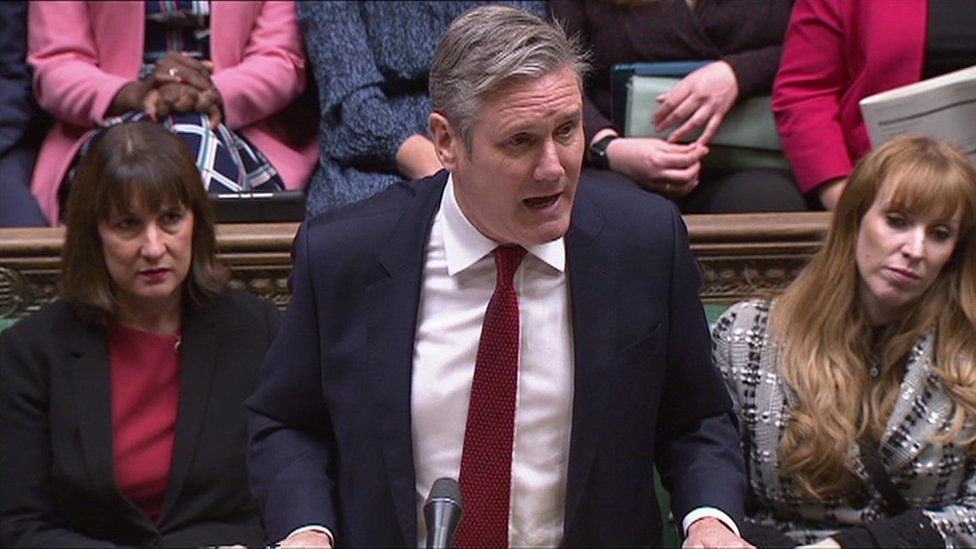
At PMQs, Sir Keir said the prime minister needs to "stop ducking responsibility".

He told her: "Does she think the public will ever forgive the Conservative Party if they keep on defending this madness and go ahead with their kamikaze budget?"

Ms Truss hit back, asking whether Labour would reverse the government's support for energy bills.

The PM said: "We are seeing interest rates rising globally in the face of Putin's appalling war in Ukraine.

"What we are making sure is that we protect our economy at this very difficult time internationally.

"As a result of our action - and this has been independently corroborated - we will see higher growth and lower inflation."

In the House of Commons later, answering questions from MPs on the economic situation, Chief Secretary to the Treasury Chris Philp said there would be "no real term cuts" to public spending.

"We do plan iron discipline when it comes to spending restraint," he added.

This video can not be played

To play this video you need to enable JavaScript in your browser.

Treasury Select Committee chair Mel Stride called on the Treasury to "come forward with a further rowing back" on the tax announcements in the mini-budget.

Mr Stride, who is Conservative MP for Central Devon, said the Chancellor has "a huge challenge" reassuring the markets ahead of his 31 October announcement.

"He has to get the fiscal rules right, he has to come forward with spending restraint and revenue raisers that are politically deliverable," Mr Stride said.
Data pic on departmental spending

Adblock test (Why?)


https://news.google.com/__i/rss/rd/articles/CBMiL2h0dHBzOi8vd3d3LmJiYy5jby51ay9uZXdzL3VrLXBvbGl0aWNzLTYzMjI5Njkw0gEzaHR0cHM6Ly93d3cuYmJjLmNvLnVrL25ld3MvdWstcG9saXRpY3MtNjMyMjk2OTAuYW1w?oc=5

2022-10-12 16:21:31Z
1591825534

Lucy Letby trial: Nurse killed baby and sent parents card, trial told - BBC

Lucy LetbySWNS

A nurse accused of murdering babies on a neonatal ward killed a premature baby girl on the fourth attempt before sending her parents a sympathy card, a court has heard.

Lucy Letby is charged with murdering seven babies and attempting to murder 10 others at Countess of Chester Hospital in 2015 and 2016.

Manchester Crown Court was told Ms Letby allegedly tried to kill the girl by injecting her with air.

Ms Letby, 32, denies 22 charges.

Continuing the prosecution's opening statement for a third day, Nick Johnson KC said the circumstances of the girl's death were "an extreme example even by the standards of this case".

"There were four separate occasions on which we allege Lucy Letby tried to kill her," he said.

The child, referred to for legal reasons as Child I, was "resilient," he said, "but ultimately at the fourth attempt, Lucy Letby succeeded in killing her".

He said on the first occasion Ms Letby, of Hereford, had injected Child I with air.

On her second attempt, he said she had stood in the doorway of the girl's darkened room and commented she looked pale.

The girl's designated nurse then turned on the light and saw Child I was not breathing.

Following a third alleged attempt to kill her, Child I was again found to have excess air in her stomach, which had affected her breathing.

She was transferred to Arrowe Park Hospital where she stabilised, before being taken back to Chester, the court heard.

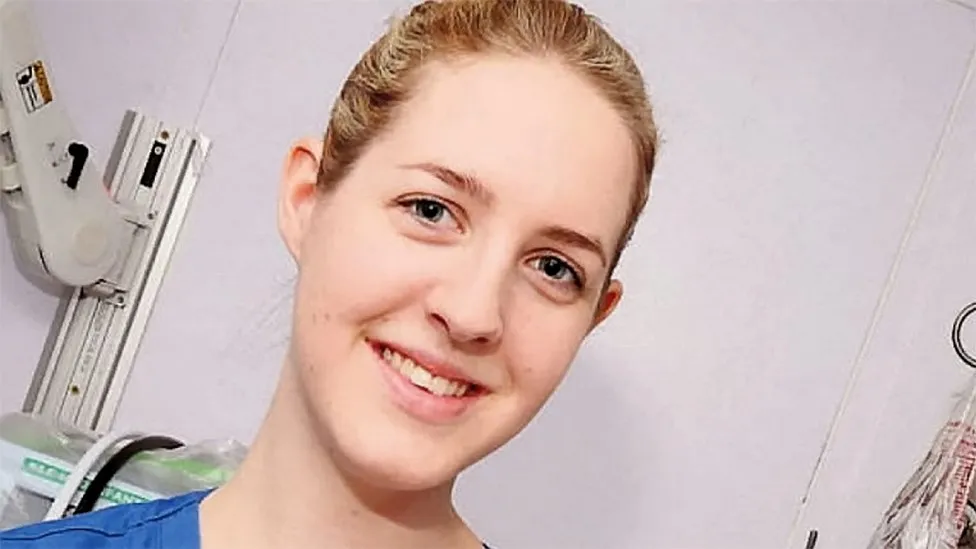
Lucy Letby

When Child I's medical alarm went off following a fourth attempt, another nurse found Ms Letby next to the incubator, the jury was told.

The baby died that morning.

Mr Johnson said: "[Child I] was born very early and very small.

"But she survived the first two months of her life and was doing well by the time Lucy Letby got her hands on her.

"It was persistent, it was calculated and it was cold-blooded."

The court heard how in the immediate aftermath of Child I's death her parents were taken to a private room and asked if the baby's mother wanted to bathe her daughter.

As the mother bathed her child, Ms Letby came into the room and, in the words of the mother, she "was smiling and kept going on about how she was present at the baby's first bath and how much the baby had loved it".

The jury was told Ms Letby later sent a sympathy card to the child's parents and kept an image of the card on her phone.

During a police interview she agreed this was unusual but said it was not often nurses got to know a family as well as they had got to know Child I's, the court heard.

The Countess of Chester Hospital sign
PA Media

The court was also told how a suspicious doctor walked in on Ms Letby as she allegedly attempted to kill another baby.

Dr Ravi Jayaram, a paediatric consultant, had helped deliver Child K, who was born at 25 weeks, and later became aware Ms Letby was alone with the baby.

Mr Johnson told the jury: "Feeling uncomfortable with this because he had started to notice the coincidence between the unexplained deaths, serious collapses and the presence of Lucy Letby, Dr Jayaram decided to check on where [Ms Letby] was and how Child K was.

"As he walked in he saw Ms Letby standing over Child K's incubator.

"Dr Jayaram could see from the monitor on the wall that Child K's oxygen saturation level was falling dangerously low, to somewhere in the 80s."

He said an alarm should have been sounding as Child K's oxygen levels were falling.

"We allege she was trying to kill Child K when Dr Jayaram walked in," Mr Johnson said.

Dr Jayaram found Child K's chest was not moving and asked Ms Letby if anything had happened, to which she replied: "She's just started deteriorating now."

Mr Johnson said Dr Jayaram found Child K's breathing tube had been dislodged.

The prosecutor said it was possible for this to happen in an active baby, but Child K was very premature and had been sedated.

'Remarkable recovery'

The jury heard the alarm should have sounded but could be overridden for one minute.

Despite his concerns at the time, Dr Jayaram did not make a note of his suspicions, the court heard.

Later the same morning Ms Letby was again at Child K's cot calling for help.

She was assisting the baby with her breathing and it was found Child K's breathing tube had this time slipped too far into her throat, the court heard.

Child K was transferred to another hospital later that day but remained unwell and died two days later. Ms Letby is not accused of her murder.

Lucy Letby court sketch
Julia Quenzler/BBC

Earlier, Mr Johnson told the court about attempts made on the life of another premature girl, Child H, on two consecutive night shifts.

He said that girl had a series of known medical problems but had suffered two inexplicable collapses.

He said on the first night, Ms Letby was the girl's designated nurse and, after she collapsed, she was transferred to Arrowe Park Hospital and underwent a "dramatic improvement".

He said Ms Letby had not been Child H's designated nurse the following night, after she was returned to Chester.

Mr Johnson said: "It is a notable fact in the case of [Child H] and others that as soon as children were removed from the Countess of Chester and the sphere of influence of Lucy Letby, it was often followed by their sudden and remarkable recovery."

He said a week after the baby's collapses, Ms Letby searched Facebook for the girl's parents and for the families of two other children she is accused of attacking.

The court also heard about Child J, who Ms Letby is accused of trying to murder.

She was a premature baby girl who was "doing well and healthy" after a bowel operation.

But she suffered two serious problems with her breathing overnight in November 2015 when Ms Letby was one of the six nurses working, the jury was told.

She was moved to a high-dependency room and had a seizure at 06:56 GMT. At 07:20 Ms Letby gave the baby a glucose infusion.

Minutes later Child J collapsed again with a seizure and had to be resuscitated, with the help of a doctor, but he could not explain why it had happened again, the jury heard.

An independent medical expert who reviewed Child J's case said it was "of concern and consistent with some form of obstruction of her airways, such as smothering".

Again, Ms Letby, made searches on Facebook for the child's parents.

Lucy Letby

The jury was told of twin baby brothers, Child L and M, who the nurse is charged with attempting to murder in April 2016.

By this time, Ms Letby was supposed only to be working day shifts because consultants were concerned about the correlation between her presence and unexpected deaths and life-threatening episodes on the night-shifts.

Mr Johnson said the defendant had volunteered to work an extra shift after she noted Child L's low glucose levels shortly after his birth the previous day.

"We say that in effect she saw the opportunity to complete what she had attempted [with Child F]," he said.

The prosecution said Ms Letby attacked Child L first by adding insulin to his nutrient feed and then, while that attack was under way, administering air into Child M's circulation.

Child M suffered an unexpected life-threatening event "without warning" and came close to death and his twin's blood sugar was left dangerously due to the insulin poisoning, the court heard.

When Ms Letby's home in Chester was searched two years later, medical notes were found detailing how many doses of adrenaline were given to Child M during his collapse and a note of his collapse was in her diary.

"She denied the notes were a souvenir and she denied deliberately trying to harm [Child M]," Mr Johnson said.

The nurse allegedly tried to kill another premature baby, referred to as Child N, who had a blood disorder, on three occasions.

Mr Johnson said this meant Ms Letby believed, wrongly, his disorder gave her "cover" to attack him because if he bled it would be put down to the condition.

He suffered a sudden life-threatening lowering of his blood oxygen levels but recovered after emergency assistance, the court heard.

Independent medical experts said the baby's sudden deterioration was consistent with some kind of "inflicted injury" or him having received an injection of air.

Twelve days later, in June 2016, Ms Letby is alleged to have made two more attempts to murder Child N.

Court sketch of Prosecutor Nick Johnson KC
Julia Quenzler/BBC

The court also heard about Child O and Child P, two boys from a set of triplets. Ms Letby is charged with murdering them both on successive days.

Within a few minutes of the nurse coming into the neonatal unit, Child O suffered his first collapse described as a "remarkable deterioration", the jury was told.

A breathing tube was inserted by medical staff and the baby was resuscitated but he suffered another episode later and this time doctors were not able to resuscitate him.

A post-mortem examination found unclotted blood in Child O's body from a liver injury and a coroner certified death on the basis of natural causes and intra-abdominal bleeding.

Mr Johnson said: "It would not occur to [the coroner] a nurse would have assaulted a child in the neonatal unit."

He said an independent pathologist had since reviewed the case and was of the opinion the liver injury was not the result of chest compressions in resuscitation.

Mr Johnson said the most likely cause was an impact-type trauma, adding: "In brutal terms, an assault."

The expert also concluded Child O had fatefully received excessive amounts of air into the bloodstream and through a nasogastric tube.

A year later, on the anniversary of Child O's death, Ms Letby carried out a Facebook search for his family's surname, the court was told.

The trial continues.

Presentational grey line

Why not follow BBC North West on Facebook, Twitter and Instagram? You can also send story ideas to northwest.newsonline@bbc.co.uk

Related Internet Links

The BBC is not responsible for the content of external sites.

Adblock test (Why?)


https://news.google.com/__i/rss/rd/articles/CBMiN2h0dHBzOi8vd3d3LmJiYy5jb20vbmV3cy91ay1lbmdsYW5kLW1lcnNleXNpZGUtNjMyMjgxNDfSATtodHRwczovL3d3dy5iYmMuY29tL25ld3MvdWstZW5nbGFuZC1tZXJzZXlzaWRlLTYzMjI4MTQ3LmFtcA?oc=5

2022-10-12 15:59:52Z
1602588338

PMQs: Liz Truss pledges no public spending cuts as she defends mini-budget - BBC

This video can not be played

To play this video you need to enable JavaScript in your browser.

Liz Truss has said she is "absolutely" not planning public spending cuts.

Markets are waiting to find out how the government proposes to bring down debt, following the chancellor's tax cutting mini-budget last month.

Ms Truss told MPs the government would focus on reducing debt "not by cutting public spending but by making sure we spend public money well".

Sir Keir Starmer said the government's "borrowing spree" had left homeowners worried about their mortgages.

Speaking during Prime Minister's Questions, the Labour leader called for a reversal of the mini-budget, which set out plans for £43bn borrowing to fund tax cuts intended to stimulate economic growth.

Government borrowing costs have increased following market turmoil over the last month, and the Bank of England has warned interest rates could rise again.

Meanwhile, the Institute for Fiscal Studies think tank has warned that the chancellor will need to make spending cuts to put the country's finances on a sustainable path, saying the government would have to spend £60bn a year less by 2026-27.

The chancellor has promised the government's economic plan will be outlined on 31 October, accompanied by an assessment by the independent Office for Budget Responsibility.

During PMQs, Sir Keir asked Ms Truss if she stood by her pledge, made during her leadership election, that "I'm not planning public spending reductions".

The prime minister replied: "Absolutely. What we will make sure is that over the medium term the debt is falling. But we will do that not by cutting public spending but by making sure we spend public money well."

The government has previously said it was committed to spending settlements, set out in the 2021 Comprehensive Spending Review.

Chancellor Kwasi Kwarteng said earlier this month: "I think it's a matter of good practice and really important that we stick within the envelope of the CSR."

The review set out plans for increases to public spending above inflation, but with prices now rising, with inflation at 9.9% in August, government department budgets will come under pressure.

The prime minister's official spokesman has so far refused to confirm whether departmental budgets would stick to the below inflation increases set out in the CSR.

Privately several senior government figures have acknowledged there will "belt tightening" in departmental budgets coming.

Reporters repeatedly asked if public money being spent on the energy price cap freeze explains how the government can say that there won't be spending cuts, when belts are expected to be tightened.

Given the size of the intervention in the energy markets, there would still be capacity for significant cuts in some budgets, while allowing the PM to accurately say that government spending overall has increased.

Starmer

At PMQs, Sir Keir said the prime minister needs to "stop ducking responsibility".

He told her: "Does she think the public will ever forgive the Conservative Party if they keep on defending this madness and go ahead with their kamikaze budget?"

Ms Truss hit back, asking whether Labour would reverse the government's support for energy bills.

The PM said: "We are seeing interest rates rising globally in the face of Putin's appalling war in Ukraine.

"What we are making sure is that we protect our economy at this very difficult time internationally.

"As a result of our action - and this has been independently corroborated - we will see higher growth and lower inflation."

In the House of Commons later, answering questions from MPs on the economic situation, Chief Secretary to the Treasury Chris Philp said there would be "no real term cuts" to public spending.

"We do plan iron discipline when it comes to spending restraint," he added.

This video can not be played

To play this video you need to enable JavaScript in your browser.

Treasury Select Committee chair Mel Stride called on the Treasury to "come forward with a further rowing back" on the tax announcements in the mini-budget.

Mr Stride, who is Conservative MP for Central Devon, said the Chancellor has "a huge challenge" reassuring the markets ahead of his 31 October announcement.

"He has to get the fiscal rules right, he has to come forward with spending restraint and revenue raisers that are politically deliverable," Mr Stride said.

Data pic on departmental spending

Adblock test (Why?)


https://news.google.com/__i/rss/rd/articles/CBMiL2h0dHBzOi8vd3d3LmJiYy5jby51ay9uZXdzL3VrLXBvbGl0aWNzLTYzMjI5Njkw0gEzaHR0cHM6Ly93d3cuYmJjLmNvLnVrL25ld3MvdWstcG9saXRpY3MtNjMyMjk2OTAuYW1w?oc=5

2022-10-12 14:39:30Z
1591825534

Leah Croucher: Human remains found in Milton Keynes in search for teenager missing since 2019 - Sky News

Human remains have been found in the search for teenager Leah Croucher, who vanished more than three years ago.

Ms Croucher was 19 when she was reported missing on 15 February 2019 in Milton Keynes, Buckinghamshire.

Thames Valley Police said her rucksack and other personal possessions had also been found at a house after a tip-off on Monday.

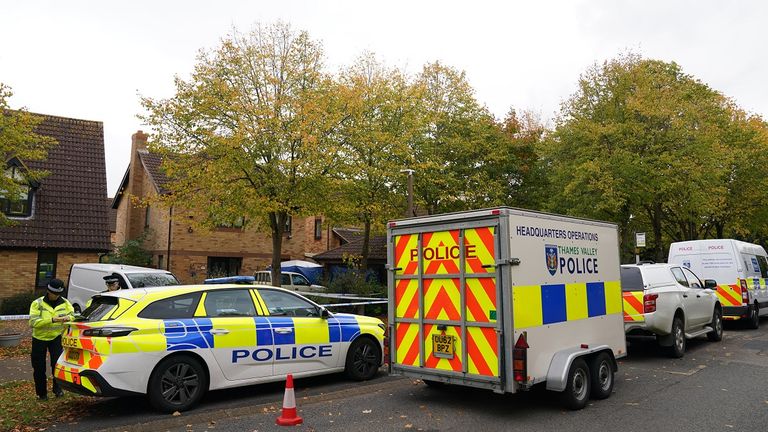
Officers are still searching the property on Loxbeare Drive in the Furzton area of Milton Keynes, less than half a mile from where she went missing.

Ms Croucher vanished while walking to work - the last sighting of her was at around 8.15am on Buzzacott Lane.

Detective Chief Superintendent Ian Hunter described the search as a "very difficult scene" and said a murder investigation had begun.

"The forensic examination continues and will do for some time. It is likely to take some time to formally identify the deceased," added a police statement.

Ms Croucher's family are being kept updated and supported.

Hundreds of officers have worked on the search since 2019, scouring 1,200 hours of CCTV and carrying out 4,000 house-to-house inquiries.

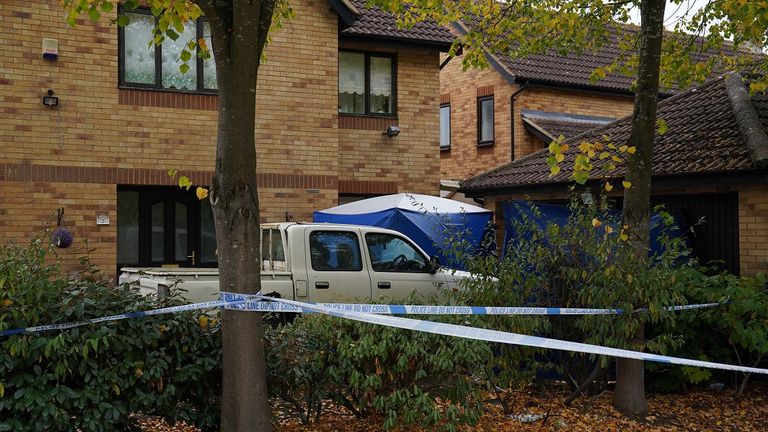
A police forensic tent outside a property in Loxbeare Drive in Milton Keynes
Image: A forensic tent was put up outside the Loxbeare Drive property

Specialist search teams, police on horseback, dogs, the marine unit and the National Police Air Service have all been involved.

Mr Hunter said the tip-off, which came from a member of the public, was the first time they had been alerted to the Loxbeare Drive property.

"Our thoughts remain with Leah's family and friends, and we will continue to offer them all the support that they need," he said.

Ms Croucher was last seen just after 8.15am on Friday 15 February. Pic; Thames Valley Police
Image: She was last seen on 15 February 2019. Pic: Thames Valley Police

In an appeal a year after her disappearance, her parents Claire and John Croucher described the family's heartbreak and said they feared someone had taken her.

Ms Croucher was described as "very quiet" and "not really an outgoing type of person", who preferred reading fantasy fiction or watching DVDs in her room than socialising.

An undated photo of Leah Croucher (right) with her sister Jade
Image: An undated photo of Leah Croucher (right) with her sister Jade

She competed internationally in taekwondo, but her father said she was "not a fighter".

There was more tragedy when Miss Croucher's brother Haydon died age 24 in November 2019 - nine months after Leah went missing.

His mother said he'd found the disappearance of his sister "very difficult".

Adblock test (Why?)


https://news.google.com/__i/rss/rd/articles/CBMiiAFodHRwczovL25ld3Muc2t5LmNvbS9zdG9yeS9sZWFoLWNyb3VjaGVyLW11cmRlci1pbnZlc3RpZ2F0aW9ubGF1bmNoZWQtYWZ0ZXItcnVja3NhY2stYmVsb25naW5nLXRvLXRlZW4tbWlzc2luZy1zaW5jZS0yMDE5LWZvdW5kLTEyNzE4NzM10gGMAWh0dHBzOi8vbmV3cy5za3kuY29tL3N0b3J5L2FtcC9sZWFoLWNyb3VjaGVyLW11cmRlci1pbnZlc3RpZ2F0aW9ubGF1bmNoZWQtYWZ0ZXItcnVja3NhY2stYmVsb25naW5nLXRvLXRlZW4tbWlzc2luZy1zaW5jZS0yMDE5LWZvdW5kLTEyNzE4NzM1?oc=5

2022-10-12 13:41:15Z
1594094229

Selasa, 11 Oktober 2022

King Charles III Coronation date announced by Buckingham Palace - The Scotsman

The deeply religious affair will take place in Westminster Abbey, on on Saturday May 6, eight months after the monarch's accession and the death of the Queen.

The Palace said the ceremony will be "rooted in longstanding traditions and pageantry" but also "reflect the monarch's role today and look towards the future".

Charles III will be anointed with holy oil, receive the orb, coronation ring and sceptre, be crowned with the majestic St Edward's Crown and blessed during the historic ceremony.

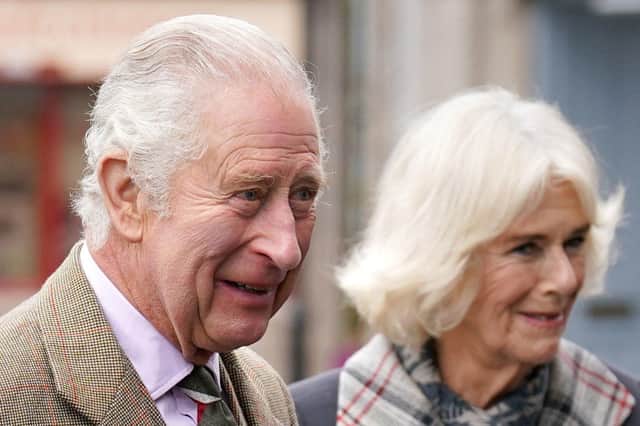
King Charles III and Camilla, Queen Consort will be crowned next year.King Charles III and Camilla, Queen Consort will be crowned next year.
King Charles III and Camilla, Queen Consort will be crowned next year.

Camilla will also be anointed with holy oil and crowned, just like the Queen Mother was when she was crowned Queen in 1937.

The Palace said: "Buckingham Palace is pleased to announce that the coronation of His Majesty The King will take place on Saturday 6th May 2023.

"The coronation ceremony will take place at Westminster Abbey, London, and will be conducted by the Archbishop of Canterbury.

"The ceremony will see His Majesty King Charles III crowned alongside the Queen Consort.

"The coronation will reflect the monarch's role today and look towards the future, while being rooted in longstanding traditions and pageantry."

It is understood that the ceremony will include the same core elements of the traditional service, which has retained a similar structure for more than 1,000 years, while also recognising the spirit of our times.

Charles's coronation is expected to be on a smaller scale and shorter, with suggestions that it could last just one hour rather than over three.

It is expected to be more inclusive of multi-faith Britain than past coronations but will be an Anglican service.

Guest numbers will be reduced from 8,000 to around 2,000, with peers expected to wear suits and dresses instead of ceremonial robes, and a number of rituals, such as the presentation of gold ingots, axed.

Coronations have not traditionally been held on a weekend, with the late Queen's taking place on a Tuesday. The Palace has yet to comment on whether there will be any arrangements for a bank holiday.

Further details are due to be released in due course, but the Government and the royal household will be conscious of the scale of the coronation in light of the cost-of-living crisis facing the country.

The late Queen's coronation took place on June 2 1953 - 16 months after she became monarch.

Special seating structures were built inside the church to increase the usual congregation from 2,000 to 8,000.

Security will be heightened given the high-profile nature of the day.

The King will be anointed, blessed and consecrated by the Archbishop.

Charles is expected to sign a proclamation formally declaring the date of the coronation at a meeting of the Privy Council later this year.

The King acceded to the throne on September 8, immediately on the death of his mother, Elizabeth II - the nation's longest reigning monarch.

Plans for the major event are known by the codename Operation Golden Orb, which sets out the blueprint for the service and the pageantry surrounding it.

Charles will be anointed by the Archbishop and take his oath to "maintain and preserve inviolably the settlement of the Church of England, and the doctrine worship, discipline, and government thereof, as the law established in England".

The Queen Consort will be crowned and take her place on a throne.

Elizabeth II delivered a masterstroke on the eve of her Platinum Jubilee in February 2022 when she endorsed the then-Duchess of Cornwall to be known as Queen Consort when the time came.

Royal aides insisted, when she married Charles, that Camilla did not want to be queen and said originally that she "intended" to be known instead as Princess Consort - the first in British history - when Charles acceded to the throne.

The wife of a king automatically becomes a Queen and only a change in legislation would prevent her from doing so, but there had been much controversy over whether Camilla would use the title, being Charles's former mistress who became his spouse.

The royal website used to declare: "A Queen Consort is crowned with the King, in a similar but simpler ceremony."

But, following Charles's marriage to Camilla, it added the get-out clause "unless decided otherwise".

The late Queen's coronation was a carnival of celebration and a morale boost for a nation starved of pageantry in the wake of the Second World War.

People began to bed down in the streets of London as early as 48 hours before Tuesday June 2 1953, just to make sure they had a standing place to watch the Queen pass by in the gold state coach in a grand procession.

By the Monday evening, in pouring rain and driving wind, half a million people were already lining the procession route.

Charles, who was only four at the time, attended the service.

He has recalled his mother going to say goodnight to him the night before while wearing the crown so she could get used to its weight on her head.

Charles described the "thousands of people gathered in The Mall outside Buckingham Palace chanting 'We want the Queen' and keeping me awake at night".

The 1953 coronation was shared with a wider audience through the relatively new medium of television, which came of age with the screening of the ceremony for the first time.

An estimated 27 million people in Britain alone watched the ceremony live on their black and white TVs and the images were also beamed around the world.

The Duke of Norfolk, who organised the Queen's funeral, also has the role of staging the coronation.

He was recently banned from driving for six months after pleading guilty to using his mobile phone behind the wheel - despite claiming he needed his licence to arrange the forthcoming ceremony.

Adblock test (Why?)


https://news.google.com/__i/rss/rd/articles/CBMibmh0dHBzOi8vd3d3LnNjb3RzbWFuLmNvbS9uZXdzL25hdGlvbmFsL2tpbmctY2hhcmxlcy1paWktY29yb25hdGlvbi1kYXRlLWFubm91bmNlZC1ieS1idWNraW5naGFtLXBhbGFjZS0zODc1NjM40gEA?oc=5

2022-10-11 20:39:18Z
1585522693

One in five residential care workers were living in poverty - before the cost of living crisis - Sky News

One in five residential care workers in the UK were living in poverty before the cost of living crisis, according to new research.

Care home and assisted living staff are also far more likely to live in poverty than the average UK worker, according to analysis by the Health Foundation.

It said low pay is a "political choice" and warned that for many providing care, "work is not a reliable route out of poverty".

The revelation comes as people across the country grapple with the cost of living crisis and surging inflation.

The think tank pooled data over three years from two government surveys on the incomes and living circumstances of households and families in the UK.

Health Foundation director of policy, Hugh Alderwick, said: "Social care workers - who are mostly women - play a vital role in society but are among the lowest paid workers in the UK, and experience shocking levels of poverty and deprivation.

"Many cannot afford enough food, shelter, clothing and other essentials, putting their health at risk.

More on Cost Of Living

"Sustained underfunding of social care has contributed to unacceptable pay and conditions for staff and major workforce shortages, with vacancies in England rising by 52% last year.

"This reflects political choices. If government values people using and providing social care, it must act to tackle low pay and insecure employment conditions in the sector."

The sample size over three years was 1,488 care staff aged 16 and over working in nursing homes, care homes and assisted-living housing for older and disabled people.

Read more:
Winter power blackouts 'extremely unlikely' but UK must 'plan for every scenario'
Graduates want higher starting salaries - and many would take up side hustles

Poverty was defined as having a household income below 60% of the median household income after housing costs.

Around one in five residential care workers (18.5%) were living in poverty in between April 2017 and April 2020, the analysis found.

This compares to 12.5% of all workers, and 8.5% of health workers, with "limited change" since 2012, which suggests "persistently high levels of poverty".

The analysis found a further 8.5% of care workers were living just above the poverty line, meaning in total more than a quarter were living in or on the brink of poverty.

The workforce was also twice as likely to receive Universal Credit and benefits from the old system than general workers (19.6% versus 9.8%), the report said.

What is more, over a quarter of England's adult social care workforce is over 55, and may retire in the next decade -- leaving already high vacancy rates even higher.

That's according to a new report from Skills for Care, which also revealed staff turnover rates at nearly 30 percent last year.

Adblock test (Why?)


https://news.google.com/__i/rss/rd/articles/CBMigAFodHRwczovL25ld3Muc2t5LmNvbS9zdG9yeS9vbmUtaW4tZml2ZS1yZXNpZGVudGlhbC1jYXJlLXdvcmtlcnMtd2VyZS1saXZpbmctaW4tcG92ZXJ0eS1iZWZvcmUtdGhlLWNvc3Qtb2YtbGl2aW5nLWNyaXNpcy0xMjcxNzc0MdIBhAFodHRwczovL25ld3Muc2t5LmNvbS9zdG9yeS9hbXAvb25lLWluLWZpdmUtcmVzaWRlbnRpYWwtY2FyZS13b3JrZXJzLXdlcmUtbGl2aW5nLWluLXBvdmVydHktYmVmb3JlLXRoZS1jb3N0LW9mLWxpdmluZy1jcmlzaXMtMTI3MTc3NDE?oc=5

2022-10-11 01:35:50Z
CBMigAFodHRwczovL25ld3Muc2t5LmNvbS9zdG9yeS9vbmUtaW4tZml2ZS1yZXNpZGVudGlhbC1jYXJlLXdvcmtlcnMtd2VyZS1saXZpbmctaW4tcG92ZXJ0eS1iZWZvcmUtdGhlLWNvc3Qtb2YtbGl2aW5nLWNyaXNpcy0xMjcxNzc0MdIBhAFodHRwczovL25ld3Muc2t5LmNvbS9zdG9yeS9hbXAvb25lLWluLWZpdmUtcmVzaWRlbnRpYWwtY2FyZS13b3JrZXJzLXdlcmUtbGl2aW5nLWluLXBvdmVydHktYmVmb3JlLXRoZS1jb3N0LW9mLWxpdmluZy1jcmlzaXMtMTI3MTc3NDE