Selasa, 11 Oktober 2022

One in five residential care workers were living in poverty - before the cost of living crisis - Sky News

One in five residential care workers in the UK were living in poverty before the cost of living crisis, according to new research.

Care home and assisted living staff are also far more likely to live in poverty than the average UK worker, according to analysis by the Health Foundation.

It said low pay is a "political choice" and warned that for many providing care, "work is not a reliable route out of poverty".

The revelation comes as people across the country grapple with the cost of living crisis and surging inflation.

The think tank pooled data over three years from two government surveys on the incomes and living circumstances of households and families in the UK.

Health Foundation director of policy, Hugh Alderwick, said: "Social care workers - who are mostly women - play a vital role in society but are among the lowest paid workers in the UK, and experience shocking levels of poverty and deprivation.

"Many cannot afford enough food, shelter, clothing and other essentials, putting their health at risk.

More on Cost Of Living

"Sustained underfunding of social care has contributed to unacceptable pay and conditions for staff and major workforce shortages, with vacancies in England rising by 52% last year.

"This reflects political choices. If government values people using and providing social care, it must act to tackle low pay and insecure employment conditions in the sector."

The sample size over three years was 1,488 care staff aged 16 and over working in nursing homes, care homes and assisted-living housing for older and disabled people.

Read more:
Winter power blackouts 'extremely unlikely' but UK must 'plan for every scenario'
Graduates want higher starting salaries - and many would take up side hustles

Poverty was defined as having a household income below 60% of the median household income after housing costs.

Around one in five residential care workers (18.5%) were living in poverty in between April 2017 and April 2020, the analysis found.

This compares to 12.5% of all workers, and 8.5% of health workers, with "limited change" since 2012, which suggests "persistently high levels of poverty".

The analysis found a further 8.5% of care workers were living just above the poverty line, meaning in total more than a quarter were living in or on the brink of poverty.

The workforce was also twice as likely to receive Universal Credit and benefits from the old system than general workers (19.6% versus 9.8%), the report said.

What is more, over a quarter of England's adult social care workforce is over 55, and may retire in the next decade -- leaving already high vacancy rates even higher.

That's according to a new report from Skills for Care, which also revealed staff turnover rates at nearly 30 percent last year.

Adblock test (Why?)


https://news.google.com/__i/rss/rd/articles/CBMigAFodHRwczovL25ld3Muc2t5LmNvbS9zdG9yeS9vbmUtaW4tZml2ZS1yZXNpZGVudGlhbC1jYXJlLXdvcmtlcnMtd2VyZS1saXZpbmctaW4tcG92ZXJ0eS1iZWZvcmUtdGhlLWNvc3Qtb2YtbGl2aW5nLWNyaXNpcy0xMjcxNzc0MdIBhAFodHRwczovL25ld3Muc2t5LmNvbS9zdG9yeS9hbXAvb25lLWluLWZpdmUtcmVzaWRlbnRpYWwtY2FyZS13b3JrZXJzLXdlcmUtbGl2aW5nLWluLXBvdmVydHktYmVmb3JlLXRoZS1jb3N0LW9mLWxpdmluZy1jcmlzaXMtMTI3MTc3NDE?oc=5

2022-10-11 01:35:50Z
CBMigAFodHRwczovL25ld3Muc2t5LmNvbS9zdG9yeS9vbmUtaW4tZml2ZS1yZXNpZGVudGlhbC1jYXJlLXdvcmtlcnMtd2VyZS1saXZpbmctaW4tcG92ZXJ0eS1iZWZvcmUtdGhlLWNvc3Qtb2YtbGl2aW5nLWNyaXNpcy0xMjcxNzc0MdIBhAFodHRwczovL25ld3Muc2t5LmNvbS9zdG9yeS9hbXAvb25lLWluLWZpdmUtcmVzaWRlbnRpYWwtY2FyZS13b3JrZXJzLXdlcmUtbGl2aW5nLWluLXBvdmVydHktYmVmb3JlLXRoZS1jb3N0LW9mLWxpdmluZy1jcmlzaXMtMTI3MTc3NDE

Big and painful cuts needed to fix budget, says IFS - BBC

Chancellor Kwasi KwartengPA Media

The chancellor will need to make "big and painful" spending cuts to put the country's finances on a sustainable path, the Institute for Fiscal Studies think tank has warned.

With a weaker economy and promised tax cuts, there will be a large shortfall in revenue, the IFS predicts.

It calculates the government would have to spend £60bn a year less by 2026-27.

However, the Treasury said its tax cuts and reforms would deliver "sustainable funding for public services".

In a new report, the IFS outlines the scale of the cuts necessary to make the sums add up over the next five years, using an illustrative example.

It suggests Chancellor Kwasi Kwarteng could:

  • increase working-age benefits in line with average earnings rather than inflation for two years to save £13bn
  • limit public investment to 2% of national income, to save £14bn
  • cut the budgets of every government department except health and defence by 15%, to save around £35bn

Mr Kwarteng and Prime Minister Liz Truss have argued focusing on measures to promote growth will help plug the shortfall between income and outgoings.

The chancellor has promised to set out further details of his economic strategy on 31 October, three weeks earlier than originally planned, alongside a full forecast from the official Office for Budget Responsibility (OBR).

That change of timetable came after the markets baulked at the strategy announced in last month's mini-budget.

It outlined large tax cuts and a huge package of support with energy costs without details of how they would be paid for, and without the usual assessment of their impact from the OBR.

The IFS, a politically independent economics-focused think tank, has published its own assessment of the chancellor's strategy, in what it names a Green Budget, after the consultation green papers issued in Parliament.

It calculates the chancellor would have to cut spending on benefits, public services, and investment sharply if he wants to stick to his commitment to balance the budget in the medium term, rather than see debt continuing to rise.

IFS director Paul Johnson said: "The chancellor says he wants to get the public finances on a sustainable basis. It looks to us like that's going to mean tens of billions of pounds of spending cuts in order to achieve that.

"It's hard to see what other way out the chancellor has."

Mr Johnson said the country was not going into a period "with much fat to trim".

"One of the problems the government faces is we have had a decade and more of really tight spending settlements, we're still spending less on a lot of public services than we were just over a decade ago," he told BBC News.

Cutting public sector pay, benefits, education, justice and prisons would all be very difficult against that backdrop, he said.

'Huge uncertainty'

The government's current commitment is to have debt falling relative to the size of the economy after three years, though that rule predates the start of Liz Truss's government.

The IFS has done its calculations based on allowing five years before debt must start to fall.

It said it accepted there was "huge uncertainty" over the impact of budgetary policies, and welcomed the government's focus on faster growth, which it said "would definitely help".

Children in a classroom put their hands up
Getty Images

The chancellor has said he is targeting growth of 2.5% a year, which would boost tax revenues and reduce the need for spending cuts.

However, an independent assessment from the OBR remained vital, the IFS said, to make sure that "politically motivated wishful thinking is not incorporated into economic and fiscal forecasts".

Forecasts from the bank Citi, which collaborated on the IFS Green Budget, suggest the economy will shrink in the next two years, as rising interest rates and rising prices slow the economy down.

Citi estimates growth will average about 0.8% over the next five years.

Paul Johnson said he would be "very surprised" if he OBR didn't also suggest that large spending cuts or tax rises would be necessary balance the books.

A Treasury spokesperson said: "Through tax cuts and ambitious supply-side reforms, our Growth Plan will drive sustainable long-term growth, which will lead to higher wages, greater opportunities and sustainable funding for public services."

"The government is committed to fiscal responsibility and getting debt falling as a share of GDP in the medium term," they added.

Adblock test (Why?)


https://news.google.com/__i/rss/rd/articles/CBMiLGh0dHBzOi8vd3d3LmJiYy5jby51ay9uZXdzL2J1c2luZXNzLTYzMjAzMDk10gEwaHR0cHM6Ly93d3cuYmJjLmNvLnVrL25ld3MvYnVzaW5lc3MtNjMyMDMwOTUuYW1w?oc=5

2022-10-10 23:03:31Z
1591496784

Senin, 10 Oktober 2022

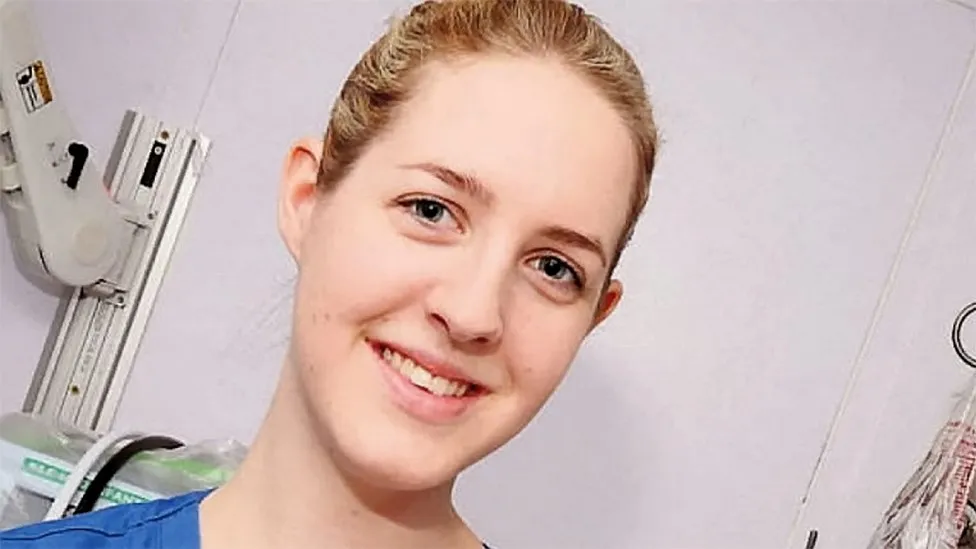
Nurse Lucy Letby poisoned babies with insulin, trial told - bbc.co.uk

Lucy LetbySWNS

A "poisoner was at work" at a hospital where there was a "significant rise" in the number of healthy babies dying, a court has heard.

Lucy Letby has been accused of murdering five baby boys and two girls, and attempting to murder 10 other babies at Countess of Chester hospital.

Nick Johnson KC, prosecuting, said she was a "constant malevolent presence" in the hospital's neonatal unit.

Ms Letby, 32, of Hereford, denies 22 charges at Manchester Crown Court.

Jurors heard Ms Letby is alleged to have tried to kill one child three times, while another died as a result of being injected with air.

Family members of some of the babies concerned in the case were among those present in the court as Mr Johnson opened the prosecution.

He said the Chester institution was a "busy general hospital like so many others in the UK".

However, he said that "unlike many other hospitals, within the neonatal unit at the Countess of Chester Hospital, a poisoner was at work".

"Prior to January 2015, the statistics for the mortality of babies in the neo-natal unit at the Countess of Chester were comparable to other like units," he said.

"However, over the next 18 months or so, there was a significant rise in the number of babies who were dying and in the number of serious catastrophic collapses."

Lucy Letby court sketch
Julia Quenzler/BBC

He said the increases were noticed by hospital consultants, who were concerned that "babies who were dying had deteriorated unexpectedly".

Medics also noted that babies who had collapsed "did not respond to appropriate and timely resuscitation" and that others "collapsed dramatically, but then, equally dramatically, recovered".

"Having searched for a cause, which they were unable to find, the consultants noticed that the inexplicable collapses and deaths did have one common denominator," he said.

"The presence of one of the neonatal nurses and that nurse was Lucy Letby."

Mr Johnson told the court that as medics could not account for the collapses and deaths, police were called in and conducted a "painstaking review".

"That review suggests in the period between mid-2015 and the middle of 2016, somebody in the neonatal unit poisoned two children with insulin," he said.

"The prosecution say the only reasonable conclusion to be drawn from the evidence you will hear is that somebody poisoned these babies deliberately with insulin."

Among several cases detailed by the barrister, he told the jury that both babies were boys and both born as twins - but not to each other - and were poisoned within a few days of being born.

Mr Johnson said their blood sugar levels dropped to dangerous levels.

But the babies - identified only as child F and child L - survived due to the skill of medical staff who appreciated low blood sugar can have natural causes, he said.

"What the medical staff did not realise was that in both cases, was the result of someone poisoning them with insulin," he added.

The prosecutor said nobody would think somebody would be trying to kill babies in a neonatal unit.

Countess of Chester Hospital
Dennis Turner/Geograph

"There's a very restricted number of people who could have been the poisoner, because entry to a neonatal unit is closely restricted," he said.

"Lucy Letby was on duty when both were poisoned and we allege she was the poisoner," Mr Johnson said.

He said both of the twins had a baby brother, child E and child M, who were both also allegedly attacked by Ms Letby - one of which did not survive.

The court heard one of the means by which the child E was killed and child M was harmed, was by having air injected into the bloodstream - what the doctors call an air embolus.

He said all the deaths and collapses were "no accident" and were not "naturally-occurring tragedies".

Mr Johnson said sometimes babies were injected with air and on other occasions they were fed with insulin or too much milk.

Court drawing of Lucy Letby with officers
Julia Quenzler

He told the court: "So varying means by which these babies were attacked, but the constant presence when they were fatally attacked or collapsed catastrophically was Lucy Letby."

Jurors were shown a chart showing nurses who were present on duty when the alleged criminal incidents were said to have taken place.

Pointing out, as examples, the first three alleged offences in time he said the chart showed the only person that was present on all three occasions was the defendant.

Mr Johnson said: "If you look at the table overall the picture is, we say, self-evidently obvious. It's a process of elimination.

"Many of the events in this case occurred on the night shifts.

"When upon Lucy Letby was moved on to day shifts, the collapses and deaths moved to the day shifts.

"They were all the work of the woman in the dock, who, we say, was the constant malevolent presence when things took a turn for the worse for these 17 children."

Mr Johnson alleged that in some cases, Ms Letby tried to kill the same baby more than once.

"Sometimes a baby that she succeeded in killing she did not manage to kill the first time she tried, or even the second time, and in one case even the third time."

The court heard how Ms Letby studied for her nursing degree at the University of Chester and had qualified a few years before the alleged events.

She worked throughout the period in consideration at the neonatal unit and was living in Chester at the time.

The jury has been told the trial may last up to six months.

Presentational grey line

Why not follow BBC North West on Facebook, Twitter and Instagram? You can also send story ideas to northwest.newsonline@bbc.co.uk

Related Internet Links

The BBC is not responsible for the content of external sites.

Adblock test (Why?)


https://news.google.com/__i/rss/rd/articles/CBMiOWh0dHBzOi8vd3d3LmJiYy5jby51ay9uZXdzL3VrLWVuZ2xhbmQtbWVyc2V5c2lkZS02MzIwMTIwMdIBPWh0dHBzOi8vd3d3LmJiYy5jby51ay9uZXdzL3VrLWVuZ2xhbmQtbWVyc2V5c2lkZS02MzIwMTIwMS5hbXA?oc=5

2022-10-10 16:08:54Z
1602588338

‘Panicked’ Truss abandons plan to hire outsider to shake-up Treasury - POLITICO Europe

Prime Minister Liz Truss has ditched her plan to hire a dynamic senior official to shake-up the Treasury and lead a sweeping overhaul of U.K. economic policy, in a sign that a crisis of confidence has gripped her faltering, month-old administration. 

In what insiders said was a panic move, Truss at the weekend overruled her Chancellor Kwasi Kwarteng over the appointment of the new chief official in the Treasury, a vital decision amid mounting unease over the government’s handling of the economy. 

As soon as they took office last month, Truss and Kwarteng fired the long-serving permanent secretary to the Treasury, Sir Tom Scholar, apparently wanting fresh leadership at the top of Whitehall’s most powerful department. 

Kwarteng and Truss had been preparing to name Antonia Romeo — the highest profile business-facing official in government — as Scholar’s replacement. Her mission was to have been to drive through an overhaul of what Truss’s team had disapprovingly called “Treasury orthodoxy” in order to deliver rapid growth. 

You may like

Kwarteng and his team had even privately named Romeo as his first choice for the role, with Truss’ apparent agreement. But the embattled prime minister, reeling from a succession of self-inflicted crises, backtracked on the plan and appointed James Bowler, a former Treasury insider, instead. 

People familiar with the process said Truss “panicked” over the appointment after the government’s tax-cutting mini-budget bombed, triggering a massive selloff in the currency and bond markets. 

The people said Romeo had been offered and had accepted the role last week. Transition arrangements in preparation for her arrival at the Treasury were already under way before the prime minister’s U-turn, according to the people, who asked not to be named discussing confidential matters. 

The chaotic process risks further undermining Truss’ reputation for competence and eroding the government’s already damaged credibility on its handling of the economy. It also leaves open huge questions over what happens to Truss’ personal pledge to deliver “growth, growth, growth” . 

Truss and Kwarteng’s decision to push Scholar out last month provoked dismay from senior figures in Westminster and Whitehall, including former chancellors and two ex-cabinet secretaries. 

They might have got away with it had their first fiscal announcements not been a disaster. The Bank of England had to intervene to stabilise the market turmoil, pledging to buy up government debt in order to stem spiralling borrowing costs. 

Last week, amid a growing political backlash from within the ruling Conservative party, Truss decided to reverse Kwarteng’s plan to cut the 45p top rate of income tax for the highest earners. 

Her decision to overrule him again will raise further doubts about the status of their working relationship. Asked repeatedly by broadcasters last week whether she trusted her chancellor in the wake of the budget chaos, Truss refused to say that she did. 

Antonia Romeo was appointed to the role last week, according to people familiar with the process | Neilson Barnard/Getty Images

After news broke Monday of Bowler’s appointment, No. 10 officials insisted the decision was taken jointly by the PM and chancellor. While Truss rates Romeo highly, Bowler was judged to be the best person for the job given his Treasury background, according to government aides.

The PM’s spokesman denied that the government was in chaos after the mini-budget, adding that Truss was “confident” in the measures she has announced to boost growth and support people through winter.

Both Romeo, who runs the Ministry of Justice, and Bowler, who is the top official at the Department for International Trade, were well qualified for the position, as long-standing civil servants with experience running government departments.

Some media reports suggested Romeo would not have been universally welcomed in the Treasury because she was seen as a disruptor. However, one senior Whitehall official said Romeo would have brought more drive and commercial experience than Bowler to the role. She has worked as a diplomat drumming up business for the U.K. in New York and set up the Department for International Trade, running it as permanent secretary for four years before Bowler took over last year.

"It's a shame. Antonia would have brought a lot of energy, great drive and leadership, with a more commercial perspective," the official said. "James is a good guy, very sensible" and is embedded in "classic Treasury orthodoxy" due to his long career in the economic department, the official said. Bowler's record at the Treasury stretches back to 2005, when he was principal private secretary to Labour's chancellor at the time, Gordon Brown.

"Something strange seems to have happened. She was appointed and then not," said the senior official, who asked not to be named because they were not authorized to speak publicly. "Whether it's panic or not I don't know."

In the official announcement, Kwarteng said he was “delighted to welcome James back to the Treasury.” 

The recruitment process was led by Simon Case, the Cabinet Secretary, the country’s most senior, politically impartial official who is in charge of the civil service. Officially, he made the appointment, with the approval of Truss and the agreement of Kwarteng, according to the government’s press release. 

This article has been updated with more details, including the government statement confirming the announcement.

Adblock test (Why?)


https://news.google.com/__i/rss/rd/articles/CBMiX2h0dHBzOi8vd3d3LnBvbGl0aWNvLmV1L2FydGljbGUvbGl6LXRydXNzLXVrLXRyZWFzdXJ5LWNoaWVmLWRyb3BzLWFudG9uaWEtcm9tZW8ta3dhc2kta3dhcnRlbmcv0gEA?oc=5

2022-10-10 14:16:48Z
1589085146

Police hunting man who threw acid over TV presenter Katie Piper - Sky News

Police are urgently hunting the man who threw acid over television presenter Katie Piper after he was recalled to jail for breaching his licence conditions.

Stefan Sylvestre, from Shepherd's Bush, west London, was given a life sentence in 2009 for the attack and was told he must serve a minimum of six years before he would be eligible for parole.

He was released in 2018 when he was aged 30, a time Ms Piper has said was "really difficult" for her.

A Probation Service spokeswoman said on Sunday: "We are urgently working with the police to bring the offender back to prison where he'll face longer behind bars."

Sylvestre was recalled to prison for breaching his licence conditions.

Ms Piper suffered horrific injuries in the acid attack that left her permanently scarred.

She was left fighting for her life after obsessive ex-boyfriend Daniel Lynch arranged for Sylvestre to throw the corrosive liquid in March 2008.

More on Katie Piper

Lynch was jailed for life with a minimum of 16 years for sexually assaulting Piper and telling Sylvestre to throw acid on her.

In court, Lynch and Sylvestre were told by Judge Nicholas Browne QC they were "the face of pure evil".

Adblock test (Why?)


https://news.google.com/__i/rss/rd/articles/CBMiY2h0dHBzOi8vbmV3cy5za3kuY29tL3N0b3J5L3BvbGljZS1odW50aW5nLW1hbi13aG8tdGhyZXctYWNpZC1vdmVyLXR2LXByZXNlbnRlci1rYXRpZS1waXBlci0xMjcxNzEwM9IBZ2h0dHBzOi8vbmV3cy5za3kuY29tL3N0b3J5L2FtcC9wb2xpY2UtaHVudGluZy1tYW4td2hvLXRocmV3LWFjaWQtb3Zlci10di1wcmVzZW50ZXIta2F0aWUtcGlwZXItMTI3MTcxMDM?oc=5

2022-10-10 04:01:16Z
1601762156

Chants of 'one solution, revolution' after London concert by Iranian singer evacuated over bomb threat - Sky News

A concert by Iranian singer Dariush in London was cancelled after a bomb threat was made and the venue was evacuated.

No explosive device was found at the Eventim Apollo in Hammersmith and police were called to the scene.

Video on social media shows people outside the venue chanting "one solution, revolution" - an apparent reference to ongoing protests in Iran over the death of 22-year-old Mahsa Amini.

A Met Police spokesperson said: "There was nothing to indicate that the threat made was genuine but at 8.21pm officers attended the venue to speak to security staff and to determine whether they were aware of anything suspicious or otherwise of concern.

"Nothing of suspicion had been brought to the attention of staff but at around 8.40pm the venue management took the decision to evacuate as a precaution."

"There are no reports of any injuries and no items of suspicion have been found," they added.

The death of Ms Amini in police custody has sparked widespread protests in Iran that have been met by a harsh government crackdown, including beatings, arrests and the killing of demonstrators.

Adblock test (Why?)


https://news.google.com/__i/rss/rd/articles/CBMihwFodHRwczovL25ld3Muc2t5LmNvbS9zdG9yeS9jaGFudHMtb2Ytb25lLXNvbHV0aW9uLXJldm9sdXRpb24tYWZ0ZXItbG9uZG9uLWNvbmNlcnQtYnktaXJhbmlhbi1zaW5nZXItZXZhY3VhdGVkLW92ZXItYm9tYi10aHJlYXQtMTI3MTcwODjSAYsBaHR0cHM6Ly9uZXdzLnNreS5jb20vc3RvcnkvYW1wL2NoYW50cy1vZi1vbmUtc29sdXRpb24tcmV2b2x1dGlvbi1hZnRlci1sb25kb24tY29uY2VydC1ieS1pcmFuaWFuLXNpbmdlci1ldmFjdWF0ZWQtb3Zlci1ib21iLXRocmVhdC0xMjcxNzA4OA?oc=5

2022-10-10 02:24:48Z
1601769755

Minggu, 09 Oktober 2022

Wanted man arrested in connection with alleged attempted murder in Grangetown - Teesside Live

A second man has been arrested on suspicion of attempted murder.

The news comes after a 22-year-old man was arrested on Sunday afternoon following a plea from Cleveland Police. Now, the force has have confirmed a second arrest has been made.

The 21-year-old man has been arrested in connection with an incident in Grangetown on Thursday which involved a VW Golf. The vehicle allegedly collided with a man on an electric bike.

The car was travelling along Birchington Avenue at the time of the collision.

READ MORE:Neighbours describe 'drive-by shooting' drama at OAP's home as police erect cordon and search garden

A 22-year-old man sustained serious head injuries as a result of the incident and was taken to hospital via ambulance. He was treated on the scene by paramedics, before being transported to the hospital, where he remains in a "critical condition".

A spokesperson for Cleveland Police said: "A 21-year-old man wanted by officers investigating an alleged incident in Grangetown on Thursday has been arrested on suspicion of attempted murder. He faces questioning, and enquiries are on-going."

Following the incident, which took place late on Thursday evening, a cordon was erected around the area between St Hilda's Church and Grangetown Library on Birchington Avenue by police. Reports state there was an ambulance van, ambulance car, critical care team car, undercover police car and two marked police cars in attendance at the scene.

A young couple who didn’t want to be identified but live opposite where the incident took place told Teesside Live at the time: “We didn’t see anything but around half 10 last night we heard a massive screech then a crash, we looked outside about 10.35 and saw an ambulance, critical care ambulance and police beginning to cordon off the road.

"The car had knocked someone off their bike into a layby, then the car sped off. There were tyre marks all over the road until this morning when it rained."

A 21-year-old man was previously arrested in connection with the incident, however has been bailed whilst enquiries continue.

READ NEXT:

Adblock test (Why?)


https://news.google.com/__i/rss/rd/articles/CBMiYGh0dHBzOi8vd3d3LmdhemV0dGVsaXZlLmNvLnVrL25ld3MvdGVlc3NpZGUtbmV3cy93YW50ZWQtbWFuLWFycmVzdGVkLWNvbm5lY3Rpb24tYWxsZWdlZC0yNTIxNzk3MdIBZGh0dHBzOi8vd3d3LmdhemV0dGVsaXZlLmNvLnVrL25ld3MvdGVlc3NpZGUtbmV3cy93YW50ZWQtbWFuLWFycmVzdGVkLWNvbm5lY3Rpb24tYWxsZWdlZC0yNTIxNzk3MS5hbXA?oc=5

2022-10-09 15:39:53Z
1599117606