Jumat, 13 November 2020

Yorkshire Ripper killings created 'culture of fear' - BBC News

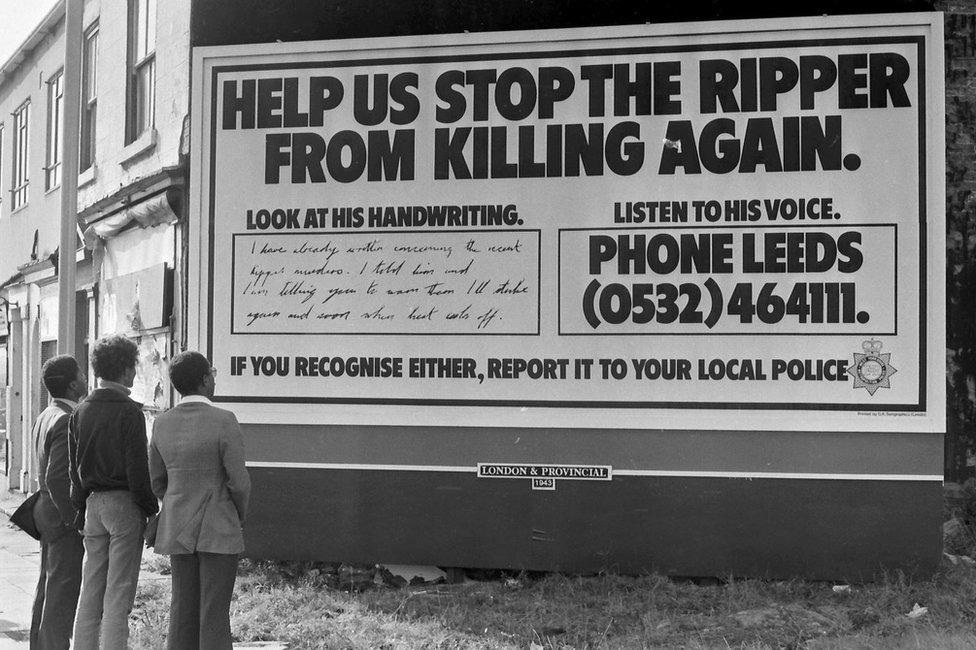
Help us stop the ripper sign
Alamy

Leeds in the late 1970s and early 1980s was a place of fear and suspicion as the hunt for one of Britain's most prolific killers dominated the city.

Peter Sutcliffe, later dubbed the Yorkshire Ripper, killed 13 women and attacked at least eight more between October 1975 and November 1980.

Six of the Ripper's victims were attacked in Leeds during a five-year period, and as the killings continued and the manhunt dragged on, every woman became a possible target and every man a potential suspect.
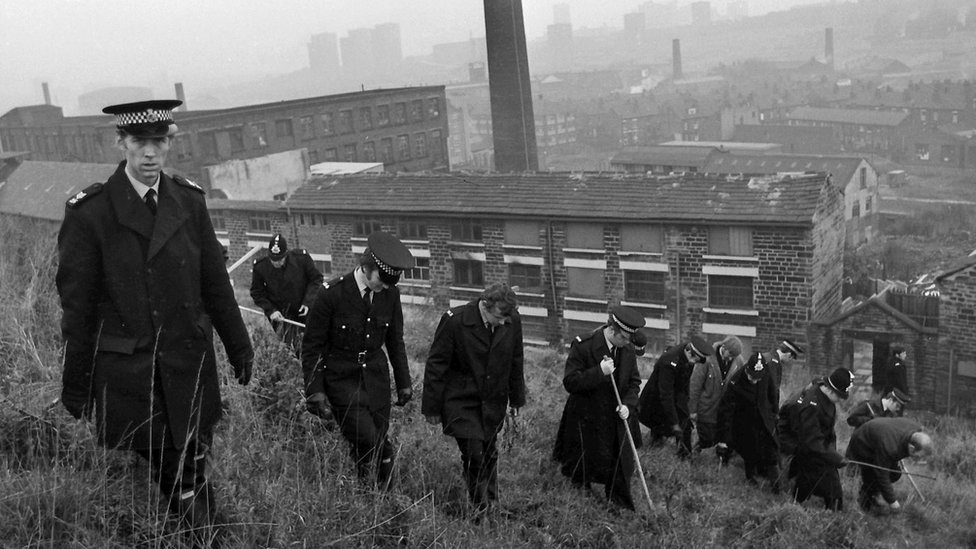
Police search following Wilma McCann murder
Alamy

Between October 1975 and June 1977 Sutcliffe, who has died aged 74, killed Wilma McCann, 28, Emily Jackson, 42, Irene Richardson, 28 and 16 year-old Jayne McDonald in the Chapeltown area of Leeds - a fifth woman, Patricia Atkinson, had been killed in Bradford.

Ruth Bundey, a solicitor who lived in Chapeltown at the time and who later went on to represent some of the Ripper's victims, said the killings brought fear and suspicion to the city.

Speaking in the 2019 documentary series 'The Yorkshire Ripper Files: A Very British Crime Story' she said: "[There was] fear in the homes of ordinary people.

"Suspicion, looking at one's neighbours and thinking 'Could it be him?'.

"Anybody who had a car dropping a woman home would wait until you had seen the woman get up to her front door, go in and put the light on. And you wouldn't go away until that had happened."

Presentational grey line
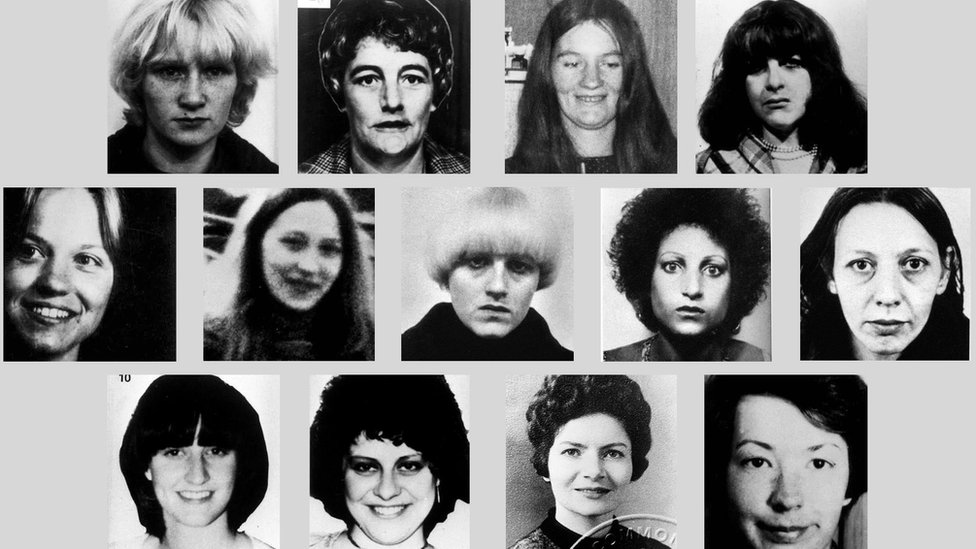
The Yorkshire Ripper's victims
PA Media

Sutcliffe's victims

  • Wilma McCann, 28, Leeds, October 1975
  • Emily Jackson, 42, Leeds, January 1976
  • Irene Richardson, 28, Leeds, February 1977
  • Patricia Atkinson, 32, Bradford, April 1977
  • Jayne McDonald, 16, Leeds, June 1977
  • Jean Jordan, 21, Manchester, October 1977
  • Yvonne Pearson, 22, Bradford, January 1978
  • Helen Rytka, 18, Huddersfield, January 1978
  • Vera Millward, 41, Manchester, May 1978
  • Josephine Whittaker, 19, Halifax, May 1979
  • Barbara Leach, 20, Bradford, September 1979
  • Marguerite Walls, 47, Leeds, August 1980
  • Jacqueline Hill, 20, Leeds, November 1980
Presentational grey line

Peter McGoldrick, now 63, was studying chemistry at the University of Leeds between 1976 and 1980.

He said that in his first year he was aware of the killings but became more observant in his second year when he moved to the Hyde Park area of Leeds - less than two miles west of Chapeltown.

"I can recall vividly, and certainly in the winter months, there was a lot of concern amongst the female population at the university," he said.

"The nights were getting short and it was a particularly dark walk from the university across Woodhouse Moor [towards Hyde Park].

"I remember meeting girls that I did not know asking me if I would walk with them across the park until they got to the other side.

"That was a common thing across the student population, you would not hesitate to offer someone an escort."
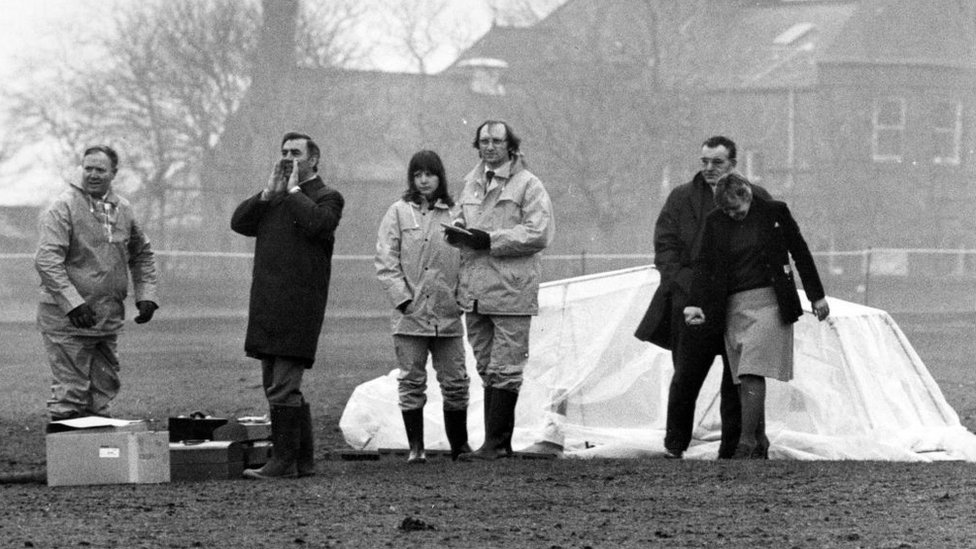
Detectives and Pathologists in Savile Park, Halifax,
Getty/Mirrorpix

Police wrongly believed to begin with the murders were a result of the killer's hatred of prostitution as they were centred around the city's notorious red light district.

But as the killings continued and spread across West Yorkshire and into Manchester the background of his victims seemed no longer to be the key.

In April 1979 Josephine Whitaker, a 19-year-old building society clerk, was found dead on Savile Park Moor in Halifax - she was the Ripper's 10th victim.

'Mass hysteria'

Her murder is seen by some as a tipping point, when many more women began to fear for their lives.

"Prior to the Josephine Whittaker murder people had felt that he was only targeting women that were prostitutes or sex workers," said former Ripper Squad detective Bob Bridgestock.

"But, after her death that changed, nobody was safe, no female was safe. It created mass hysteria.

"People used to say they wouldn't go out any more until he was caught, they daren't. He had created a culture of fear."

Diana Muir was a junior reporter on the Yorkshire Evening Post in 1978 - her first job after graduating.

"People were scared, there's no doubt about it," she said.

"The biggest jolt to that was when he killed [Josephine Whittaker].

"Chapeltown was notorious, it was the red light district for Leeds at that time and I suppose it was thought if you were in that area you were taking a risk, but it was quite clear after the attack in Halifax that it was nothing to do with that."
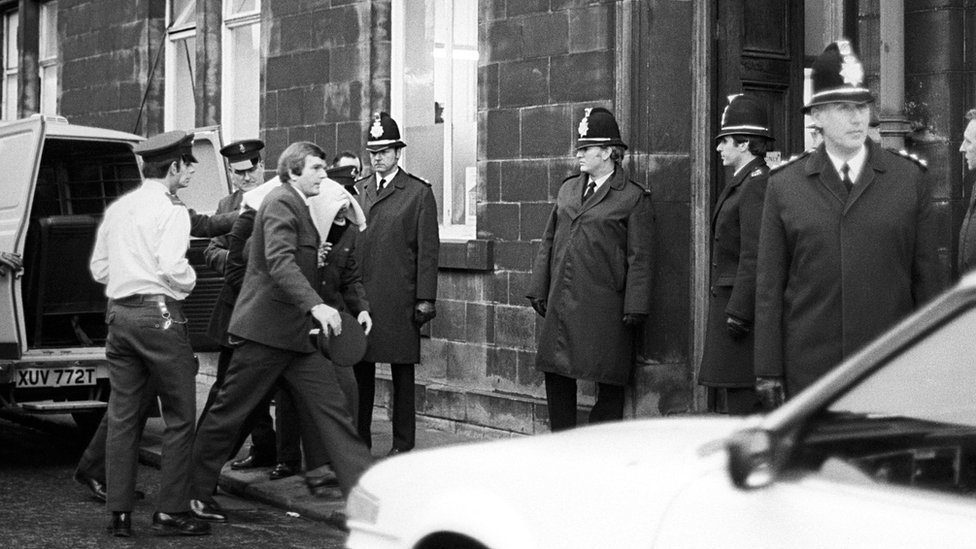
Yorkshire Ripper arrested
PA

The Ripper killings also brought the finger of suspicion to Leeds and the fear the killer was living among them.

"Everybody wanted him caught," recalled Mr Bridgestock.

"People were saying look at your brother, your father, your uncle is this the person that might be the Ripper?"

Mr Goldrick said one of his housemates had been interviewed by police after his car was identified as one of thousands with the same tyre markings linked to a track found at one of the murder scenes.

Mrs Muir said a colleague was taken in due to a resemblance to a police drawing of the potential suspect.

Over the course of five years West Yorkshire Police interviewed thousands of men while the terror and suspicion lingered over Leeds.

However, that culture of fear came to an end in January 1981 when Sutcliffe was arrested in Sheffield and quickly handed over to the Ripper squad.
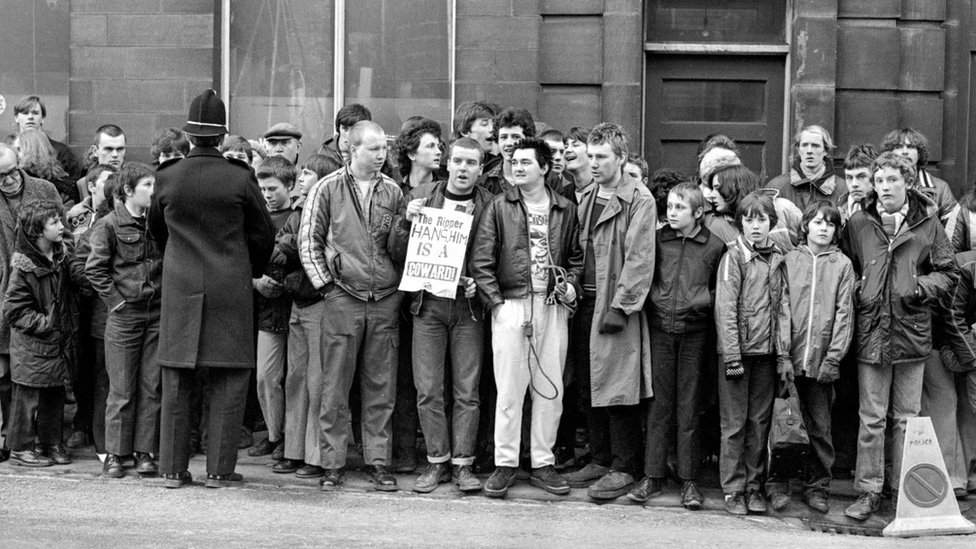
Crowds outside Dewsbury Magistrates' Court
Alamy

He was charged three days later and when he appeared at Dewsbury Magistrates' Court the fear that had held sway over Leeds and the north of England erupted.

On the day of his court appearance hundreds of people lined the streets shouting, jeering and jostling for a chance to see the man who had cast his shadow over their lives for so long.

Less than six months later Sutcliffe had been convicted of 13 counts of murder and attempting to murder seven more. He was given 20 life sentences.

With his arrest and conviction the grim spectre of fear which had hung over Leeds for so long was lifted, leaving its residents safe to walk the streets once more and able to sleep a little easier.

Mrs Muir, who left the local newspaper in 1988 but still lives in the city, said: "Leeds is unrecognisable. It's almost like if you think back to that time the city was in black and white.

"There are many young people who live here now who do not really know the story, it's gone and Leeds has reinvented itself."

Let's block ads! (Why?)


https://news.google.com/__i/rss/rd/articles/CBMiNGh0dHBzOi8vd3d3LmJiYy5jby51ay9uZXdzL3VrLWVuZ2xhbmQtbGVlZHMtNTQ4OTQzMTHSAThodHRwczovL3d3dy5iYmMuY28udWsvbmV3cy9hbXAvdWstZW5nbGFuZC1sZWVkcy01NDg5NDMxMQ?oc=5

2020-11-13 11:23:00Z
52781185840474

Yorkshire Ripper serial killer Peter Sutcliffe dies - Sky News

The serial killer known as the Yorkshire Ripper has died.

Peter Sutcliffe, one of the UK's most notorious prisoners, was serving a whole-life term for murdering 13 women across Yorkshire and the North West between 1975 and 1980.

He was jailed in 1981 and spent several years at Broadmoor Hospital where he was treated for paranoid schizophrenia, before he was transferred to HMP Frankland in County Durham in 2016.

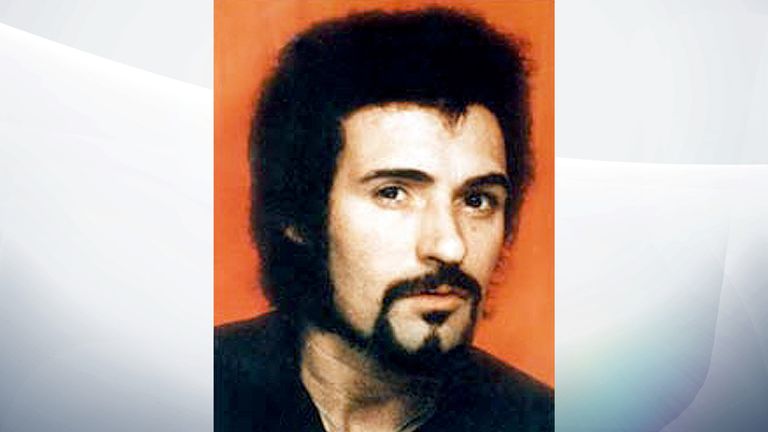
Peter Sutcliffe. Pic: Shutterstock
Image: Sutcliffe was jailed for 13 murders in 1981. Pic: Shutterstock

A Prison Service spokesman confirmed on Friday that Sutcliffe had died at University Hospital of North Durham, three miles from where he was an inmate.

He had contracted COVID-19 but is understood to have refused treatment for the virus.

The 74-year-old - who was obese and had a number of health problems, including diabetes and heart issues - had been treated for a suspected heart attack two weeks ago before returning to prison.

He was then readmitted to hospital after testing positive for coronavirus.

Please use Chrome browser for a more accessible video player

Sutcliffe's victims and families left behind

Once the most feared man in the country, Sutcliffe's killing spree instilled terror in the north of England as police failed to pick up the clues in their pursuit of the notorious murderer.

As the story of his crimes grew, he became known as the Yorkshire Ripper, a reference to the Victorian killer Jack the Ripper who also mutilated his victims.

In all, 13 women were killed and seven more were viciously attacked, although police suspect the number of victims is higher.

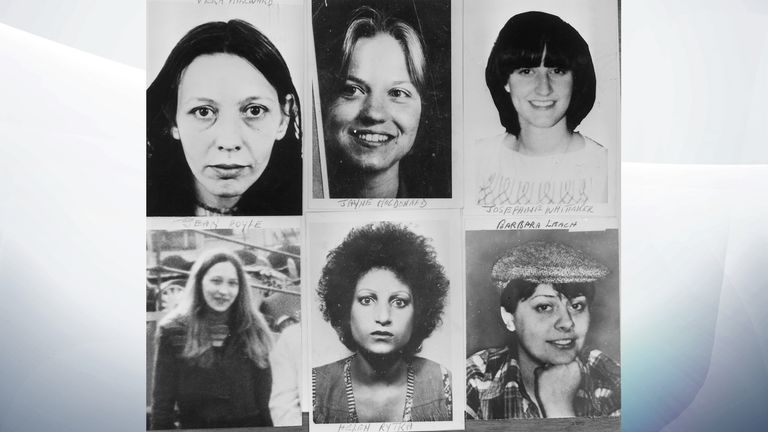
The 13 murder victims of  Peter Sutcliffe. Pic: Shutterstock
Image: The victims (top left to right): Wilma McCann, Jayne McDonald, Yvonne Pearson, Patricia Atkinson, Josephine Whitaker, Vera Millward, Jacqueline Hill, Barbara Leach, Marguerite Walls, Irene Richardson, Helen Rytka, Emily Jackson and Jean Jordan

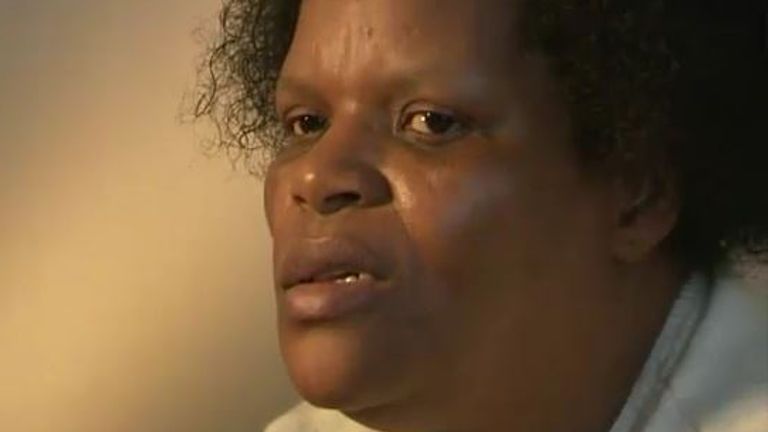
A woman who survived an attack by Sutcliffe said she still suffers from the effects of his attack in Leeds, 44 years on.

Marcella Claxton told Sky News: "I have to live with my injuries, 54 stitches in my head, back and front, plus I lost a baby, I was four months pregnant.

"I still get headaches, dizzy spells and black outs."

Marcella Claxton survived an attack by Sutcliffe
Image: Marcella Claxton survived an attack by Sutcliffe

The broad spectrum of victims from various walks of life - including teenage girls, shop assistants and prostitutes - meant no woman was safe with Sutcliffe at large.

During the five years it took police to catch him during his murderous rampage, women in some areas were urged not to go out alone at night.

"Do not go out at night unless absolutely necessary and only if accompanied by a man you know," police warned at the time.

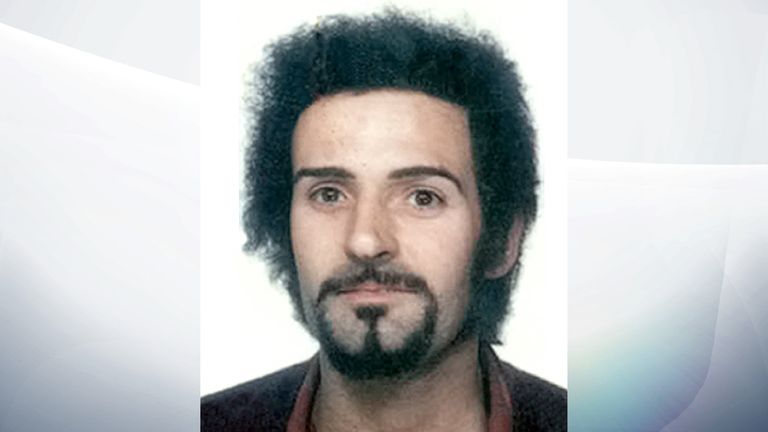
Peter Sutcliffe. Pic: Shutterstock
Image: Sutcliffe killed women across Yorkshire and the North West. Pic: Shutterstock

Sutcliffe grew up in West Yorkshire and after leaving school held a number of different low skilled jobs, including a job as a gravedigger.

He married in 1974, but had also become obsessed with female sex workers.

He started attacking women in the late 1960s, but the first known murder happened in 1975 when he killed 28-year-old Wilma McCann, a mother-of-four from Leeds.

Wilma McCann was murdered by Peter Sutcliffe
Image: Wilma McCann was murdered by Peter Sutcliffe

Her son Richard McCann told Sky News: "He ruined so many lives.

"He will go down as one of those figures from the twentieth century in the same league I suppose as someone like Hitler.

"It was never just a drunken fight, he went out there with tools and implements and he murdered people again and again and again and again."

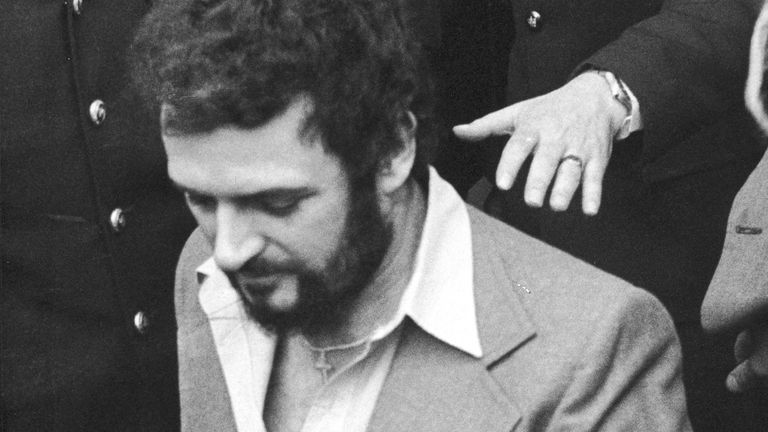
British serial killer Peter Sutcliffe, a.k.a. 'The Yorkshire Ripper,' in police custody, 1983. (Photo by Express Newspapers/Getty Images)
Image: Sutcliffe was given a whole life sentence in 2010

The 13 known murder victims were: Wilma McCann, Emily Jackson, Irene Richardson, Tina Atkinson, Jayne MacDonald, Jean Jordan, Yvonne Pearson, Helen Rytka, Vera Millward, Josephine Whitaker, Barbara Leach, Marguerite Walls and Jacqueline Hill.

Sutcliffe avoided detection for years due to a series of missed opportunities by police to snare him, but he confessed in 1981 when he was called in to a police station over stolen number plates on his car.

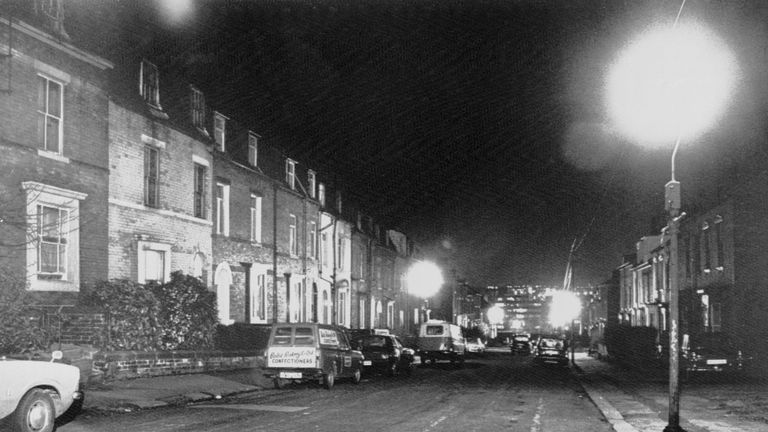
(Original Caption) January 4, 1981 - Sheffield, England: This is the scene in a red light district late on the street where police arrested a man identified as Peter Sutcliffe for questioning in relation to the "Yorkshire Ripper" murders.
Image: The Sheffield street where Sutcliffe was arrested in 1981

He later decided to contest the charges - leading to an Old Bailey trial during which he claimed he was on a mission from God to kill prostitutes.

His sentence was made a whole-life term in 2010.

Sutcliffe's cause of death has not been confirmed, but will be investigated by the coroner.

Confirming his death, a Prison Service spokesman said in a statement: "HMP Frankland prisoner Peter Coonan (born Sutcliffe) died in hospital on 13 November. The prisons and probation ombudsman has been informed."

Let's block ads! (Why?)


https://news.google.com/__i/rss/rd/articles/CBMicGh0dHBzOi8vbmV3cy5za3kuY29tL3N0b3J5L3lvcmtzaGlyZS1yaXBwZXItc2VyaWFsLWtpbGxlci1wZXRlci1zdXRjbGlmZmUtaGFzLWRpZWQtc2t5LW5ld3MtdW5kZXJzdGFuZHMtMTIxMzEwNDLSAXRodHRwczovL25ld3Muc2t5LmNvbS9zdG9yeS9hbXAveW9ya3NoaXJlLXJpcHBlci1zZXJpYWwta2lsbGVyLXBldGVyLXN1dGNsaWZmZS1oYXMtZGllZC1za3ktbmV3cy11bmRlcnN0YW5kcy0xMjEzMTA0Mg?oc=5

2020-11-13 10:35:56Z
52781185840474

Yorkshire Ripper serial killer Peter Sutcliffe has died - Sky News

The serial killer known as the Yorkshire Ripper has died.

Peter Sutcliffe, 74, was one of the UK's most notorious prisoners, having murdered at least 13 women across the north of England in the late 1970s.

He was jailed in 1981 and spent several years at Broadmoor Hospital where he was treated for paranoid schizophrenia. His sentence was made a whole-life term in 2010 before he was transferred to HMP Frankland in County Durham in 2016.

Peter Sutcliffe. Pic: Shutterstock
Image: Sutcliffe was jailed for 13 murders in 1981. Pic: Shutterstock

Sutcliffe died at University Hospital of North Durham, three miles from where he was an inmate, a Prison Service spokesman confirmed.

He was sent there after developing COVID-19, but is understood to have refused treatment for the virus.

The 74-year-old had previously returned to prison after being treated for a suspected heart attack two weeks ago - but was forced to go back to hospital after testing positive for coronavirus.

He was obese and had a number of health problems, including diabetes and heart issues.

The 13 murder victims of  Peter Sutcliffe. Pic: Shutterstock
Image: The victims (top left to right): Wilma McCann, Jayne McDonald, Yvonne Pearson, Patricia Atkinson, Josephine Whitaker, Vera Millward, Jacqueline Hill, Barbara Leach, Marguerite Walls, Irene Richardson, Helen Rytka, Emily Jackson and Jean Jordan

Sutcliffe grew up in West Yorkshire and after leaving school held a number of different low skilled jobs, including a job as a gravedigger.

He got married in 1974, but had also become obsessed with female sex workers.

He started attacking women in the late 1960s, but the first known murder happened in 1975 when he killed 28-year-old Wilma McCann, a mother-of-four from Leeds.

Please use Chrome browser for a more accessible video player

Sutcliffe's victims and families left behind

Over the following five years he continued killing women across Yorkshire and the North West and as the story of his crimes grew, he became known as the Yorkshire Ripper.

Sutcliffe avoided detection for years due to a series of missed opportunities by police to snare him, but he confessed in 1981 when he was called in to a police station over stolen number plates on his car.

Peter Sutcliffe. Pic: Shutterstock
Image: Sutcliffe killed women across Yorkshire and the North West. Pic: Shutterstock

While he was still at large police urged women not to go out alone at night.

His 13 known victims were: Wilma McCann, Emily Jackson, Irene Richardson, Tina Atkinson, Jayne MacDonald, Jean Jordan, Yvonne Pearson, Helen Rytka, Vera Millward, Josephine Whitaker, Barbara Leach, Marguerite Walls and Jacqueline Hill.

British serial killer Peter Sutcliffe, a.k.a. 'The Yorkshire Ripper,' in police custody, 1983. (Photo by Express Newspapers/Getty Images)
Image: He was given a whole life sentence in 2010

Richard McCann, the son of his first victim Wilma, told Sky News: "He ruined so many lives.

"He will go down as one of those figures from the twentieth century in the same league I suppose as someone like Hitler."

(Original Caption) January 4, 1981 - Sheffield, England: This is the scene in a red light district late on the street where police arrested a man identified as Peter Sutcliffe for questioning in relation to the "Yorkshire Ripper" murders.
Image: The Sheffield street where Sutcliffe was arrested in 1981

"It was never just a drunken fight, he went out there with tools and implements and he murdered people again and again and again and again."

Sutcliffe's cause of death has not been confirmed, but will be investigated by the coroner.

Confirming his death, a Prison Service spokesman said in a statement: "HMP Frankland prisoner Peter Coonan (born Sutcliffe) died in hospital on 13 November. The prisons and probation ombudsman has been informed."

Let's block ads! (Why?)


https://news.google.com/__i/rss/rd/articles/CBMicGh0dHBzOi8vbmV3cy5za3kuY29tL3N0b3J5L3lvcmtzaGlyZS1yaXBwZXItc2VyaWFsLWtpbGxlci1wZXRlci1zdXRjbGlmZmUtaGFzLWRpZWQtc2t5LW5ld3MtdW5kZXJzdGFuZHMtMTIxMzEwNDLSAXRodHRwczovL25ld3Muc2t5LmNvbS9zdG9yeS9hbXAveW9ya3NoaXJlLXJpcHBlci1zZXJpYWwta2lsbGVyLXBldGVyLXN1dGNsaWZmZS1oYXMtZGllZC1za3ktbmV3cy11bmRlcnN0YW5kcy0xMjEzMTA0Mg?oc=5

2020-11-13 08:30:27Z
52781185840474

Yorkshire Ripper serial killer Peter Sutcliffe has died - Sky News

The serial killer known as the Yorkshire Ripper has died.

Peter Sutcliffe, 74, was one of the UK's most notorious prisoners, having murdered at least 13 women across the north of England in the late 1970s.

His prison term had been increased to a whole life sentence in 2010 and he was being held at HMP Frankland in County Durham.

British serial killer Peter Sutcliffe, a.k.a. 'The Yorkshire Ripper,' in police custody, 1983. (Photo by Express Newspapers/Getty Images)
Image: He was jailed for life in 2010

Sutcliffe died at University Hospital of North Durham, three miles from where he was an inmate, a Prison Service spokesman confirmed.

He was sent there after developing COVID-19, but is understood to have refused treatment for the virus.

The 74-year-old had previously returned to prison after being treated for a suspected heart attack two weeks ago - but was forced to go back to hospital after testing positive for coronavirus. He had a number of health problems, including diabetes and obesity.

Sutcliffe grew up in West Yorkshire and after leaving school held a number of different low skilled jobs, including a job as a gravedigger.

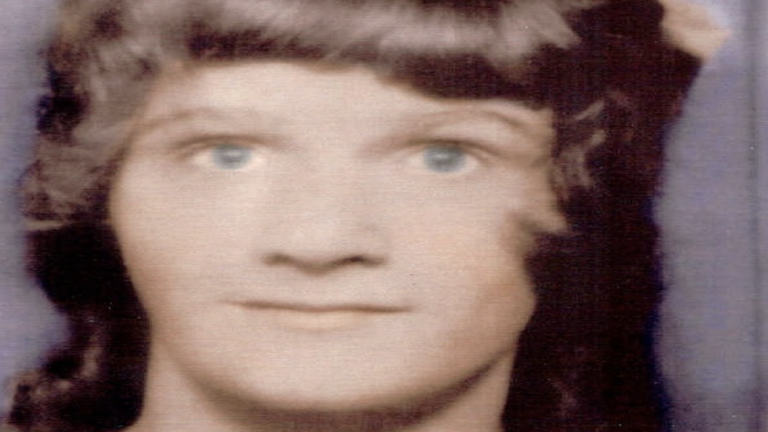
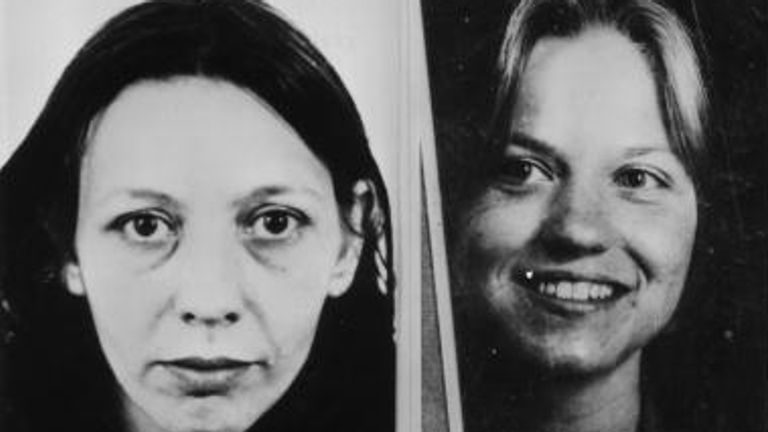
Two of Sutcliffe's victims Vera Millward and Jayne McDonald (R)
Image: Two of Sutcliffe's victims Vera Millward and Jayne McDonald (R)

He got married in 1974 but had also become obsessed with female sex workers.

He started attacking women in the late 1960s but the first known murder happened in 1975 when he killed 28-year-old Wilma McCann, a mother of four from Leeds.

Over the following five years he continued killing women across Yorkshire and the North West and as the story of his crimes grew, he became known as the Yorkshire Ripper.

It led the police to advise women in some areas not to go out alone at night.

His 13 known victims were: Wilma McCann, Emily Jackson, Irene Richardson, Tina Atkinson, Jayne MacDonald, Jean Jordan, Yvonne Pearson, Helen Rytka, Vera Millward, Josephine Whitaker, Barbara Leach, Marguerite Walls and Jacqueline Hill.

Richard McCann, the son of Sutcliffe's first known victim Wilma, told Sky News: "He ruined so many lives.

(Original Caption) January 4, 1981 - Sheffield, England: This is the scene in a red light district late on the street where police arrested a man identified as Peter Sutcliffe for questioning in relation to the "Yorkshire Ripper" murders.
Image: The Sheffield street where Sutcliffe was arrested in 1981

"He will go down as one of those figures from the twentieth century in the same league I suppose as someone like Hitler."

"It was never just a drunken fight, he went out there with tools and implements and he murdered people again and again and again and again."

Sutcliffe's cause of death has not been confirmed, but will be investigated by the coroner.

Let's block ads! (Why?)


https://news.google.com/__i/rss/rd/articles/CBMicGh0dHBzOi8vbmV3cy5za3kuY29tL3N0b3J5L3lvcmtzaGlyZS1yaXBwZXItc2VyaWFsLWtpbGxlci1wZXRlci1zdXRjbGlmZmUtaGFzLWRpZWQtc2t5LW5ld3MtdW5kZXJzdGFuZHMtMTIxMzEwNDLSAXRodHRwczovL25ld3Muc2t5LmNvbS9zdG9yeS9hbXAveW9ya3NoaXJlLXJpcHBlci1zZXJpYWwta2lsbGVyLXBldGVyLXN1dGNsaWZmZS1oYXMtZGllZC1za3ktbmV3cy11bmRlcnN0YW5kcy0xMjEzMTA0Mg?oc=5

2020-11-13 07:42:04Z
52781185840474

Kamis, 12 November 2020

Dominic Cummings: How will the prime minister's departing chief aide be remembered? - Sky News

A radical reformer, "career psychopath", omniscient Svengali, serial election winner, or dangerous disruptor?

As Dominic Cummings bows out of Downing Street, the view of his spell in Number 10 is set to be fiercely debated by his champions and detractors.

The 48-year-old was among Boris Johnson's first appointments when he became prime minister in July 2019.

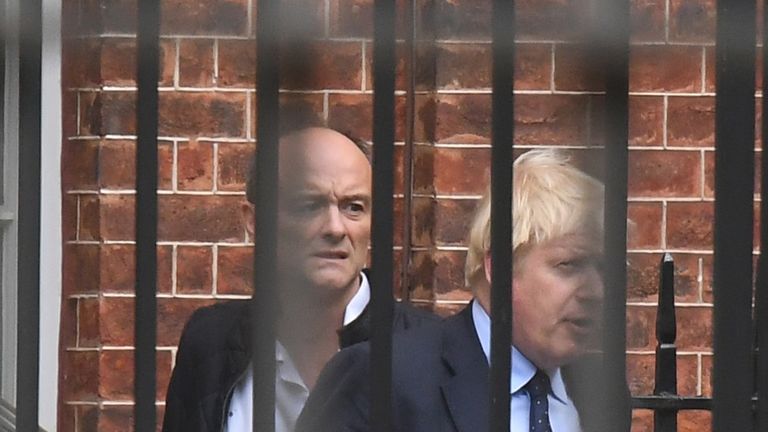
Prime Minister Boris Johnson with his senior aide Dominic Cummings as they leave Downing Street, central London.
Image: The 48-year-old was one of Boris Johnson's first appointments as prime minister

He was already a well-known figure at Westminster due his past as a government special adviser and then the driving force behind the Vote Leave campaign during the 2016 EU referendum.

And, while in Number 10, Mr Cummings went on to gain national notoriety - becoming one of the few government advisers to have ever become a household name - due to the heated row over his mid-lockdown trips to his native North East.

His reputation as a divisive character began in the early 2000s, when he served as director of strategy for the Conservative Party.

On leaving the role, he subsequently branded then Tory leader Iain Duncan Smith as "incompetent", adding he would be a "worse prime minister than Tony Blair and must be replaced".

More from Boris Johnson

Mr Cummings later led the successful campaign against Labour's proposal for an elected regional assembly in the North East, before going on to work as a special adviser for Michael Gove.

However, when the Conservatives were elected to power as part of the coalition government in 2010, Mr Cummings' employment at Mr Gove's Department for Education was banned by Andy Coulson, then Downing Street's director of communications.

Yet, after Mr Coulson resigned amid the News of the World phone-hacking scandal, Mr Cummings became Mr Gove's chief of staff.

Dominic Cummings
Image: Mr Cummings was previously in charge of the Vote Leave campaign

Civil servants made allegations of an "us-and-them aggressive, intimidating culture" under the pair, before Mr Cummings quit his role in 2013 in order to open a new free school.

Then prime minister David Cameron later reportedly described Mr Cummings as a "career psychopath".

Ahead of the 2016 EU referendum, Mr Cummings joined the Vote Leave campaign but soon clashed with eurosceptic Tory MPs.

He survived an attempt to oust him from the campaign and was later credited as one of the most influential figures behind Vote Leave's success under its "Take Back Control" slogan.

Hollywood actor Benedict Cumberbatch portrayed Mr Cummings in a Channel 4 drama of the 2016 EU referendum campaign.

In 2018, Mr Cummings refused to appear before the House of Commons' digital, culture, media and sport committee as part of their fake news inquiry.

He was called to appear to respond to "allegations made against the Vote Leave campaign" during the inquiry and to "clarify allegations about the unlawful coordination of EU referendum campaigns".

But Mr Cummings accused the committee of having "greater interest in grandstanding than truth-seeking".

He was subsequently found in contempt of parliament over his no-show.

xx
Image: He cemented a reputation as a serial election winner after helping to deliver Mr Johnson's 80-strong majority

Mr Cummings was a consistent critic of Theresa May's handling of Brexit and branded her plans for leaving the EU as "unacceptable bulls***" and attacked a "truck load of c*** ideas" from the government, who he called "morons".

He also argued against the government's decision to trigger the Article 50 notification to leave the EU so soon after the 2016 referendum, calling it an "historic unforgivable blunder".

In 2017, he branded then Brexit secretary David Davis "thick as mince, lazy as a toad, and vain as Narcissus".

And, despite being the former chief of the Vote Leave campaign, Mr Cummings was no more polite about the European Research Group of Tory Brexiteer MPs.

He claimed the collective had been "useful idiots" for Remain and referred to them as a "metastasising tumour" to be "excised from the UK body politic".

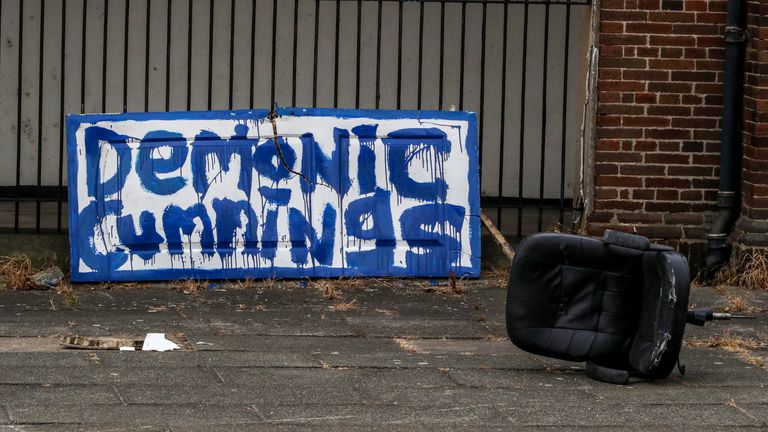
A Dominic Cummings protest banner on a roundabout in Wavertree, Liverpool after allegations he breached coronavirus lockdown restrictions.
Image: Mr Cummings was widely-criticised for his mid-lockdown trips

After the ERG played a key role in toppling Mrs May, Mr Johnson succeeded her in 10 Downing Street and brought Mr Cummings with him.

It was at this point that the "classic Dom" meme was born across Whitehall, with political observers granting - tongue-in-cheek - Mr Cummings the credit for a grander masterplan as Mr Johnson faced numerous setbacks over Brexit.

These included the attempted prorogation of parliament - a suspension that was later overturned by the Supreme Court, as well as the missing of a "do or die" deadline for leaving the EU and the expulsion of 21 Conservative MPs to cost Mr Johnson his Commons majority.

However, the prime minister and Mr Cummings then - finally - got the general election they seemed to have craved and the pair cemented their reputation as serial political winners.

Having teamed up together as part of the Vote Leave campaign, the pair again tasted victory as Mr Johnson led the Tories to a thumping 80-set majority in December 2019.

The celebrations lasted through to 31 January, when the prime minister belatedly oversaw the UK's exit from the EU.

Mr Cummings - known for often eschewing a suit and tie - issued a call for "misfits and weirdos" to apply to join him in Downing Street under the Tories' new majority government, although one of those subsequently employed was soon forced to resign.

Please use Chrome browser for a more accessible video player

'I behaved reasonably', says Cummings

The onset of the coronavirus pandemic then saw Mr Johnson's loyalty to his chief aide come under severe scrutiny.

On 25 May, in what was an unprecedented act for a political adviser, Mr Cummings took his own news conference in an attempt to try and answer questions over his actions during the national lockdown.

He admitted to making a trip from London to the North East, at a time when he feared he could have contracted coronavirus, with his wife and child to stay on his father's farm.

Mr Cummings also explained a later trip to Barnard Castle as a means of testing whether his eyesight was good enough to drive.

Doubt was cast over his claim to have warned of the dangers of pandemics "for years", after it appeared he had used his first day back at work after recovering from the disease to edit a year-old blog post to add a mention of coronavirus.

With the prime minister's backing, Mr Cummings survived the furore over his lockdown actions - alleged to have been a breach of the government's own COVID-19 restrictions - and remained in Number 10.

But, since that point, he was said to have moved away from day-to-day concerns and focussed more of his efforts on his passion projects; such as setting up an advanced defence projects research agency and reforming government procurement processes.

Let's block ads! (Why?)


https://news.google.com/__i/rss/rd/articles/CBMidGh0dHBzOi8vbmV3cy5za3kuY29tL3N0b3J5L2RvbWluaWMtY3VtbWluZ3MtaG93LXdpbGwtdGhlLXByaW1lLW1pbmlzdGVycy1kZXBhcnRpbmctY2hpZWYtYWlkZS1iZS1yZW1lbWJlcmVkLTEyMTMwOTA20gF4aHR0cHM6Ly9uZXdzLnNreS5jb20vc3RvcnkvYW1wL2RvbWluaWMtY3VtbWluZ3MtaG93LXdpbGwtdGhlLXByaW1lLW1pbmlzdGVycy1kZXBhcnRpbmctY2hpZWYtYWlkZS1iZS1yZW1lbWJlcmVkLTEyMTMwOTA2?oc=5

2020-11-13 01:34:38Z
52781181093535

Dominic Cummings to leave Downing Street by Christmas - BBC News

Dominic Cummings
PA Media

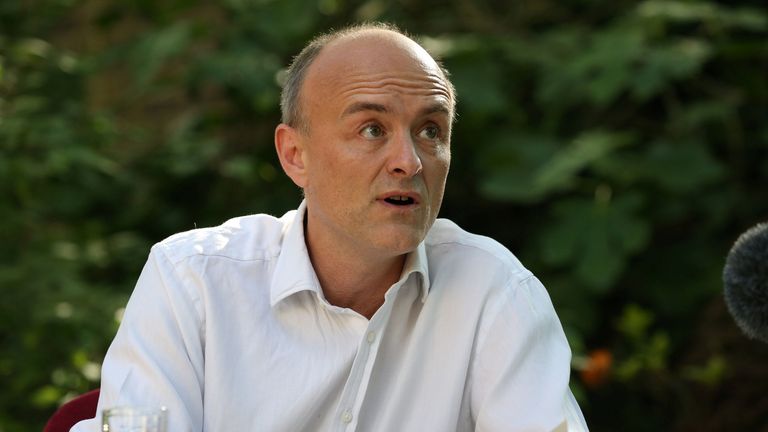
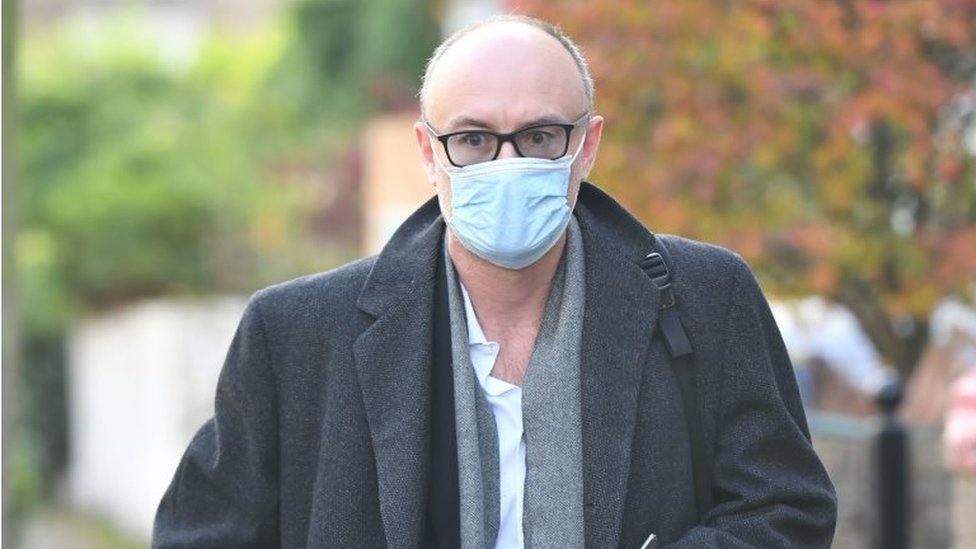
Boris Johnson's senior adviser Dominic Cummings is expected to leave his position by the end of the year.

Mr Cummings told the BBC "rumours of me threatening to resign are invented", after speculation this week.

But he added that his "position hasn't changed since my January blog" when he said that he wanted to make himself "largely redundant" by the end of 2020.

And a senior Downing Street source said that Mr Cummings would be "out of government" by Christmas.

It follows a turbulent week at No 10 in which Lee Cain - the director of communications and an ally of Mr Cummings - also stood down amid reports of internal tensions at Downing Street.

The pair are long-time colleagues, having worked together on the Leave campaign during the EU referendum - and Mr Cain's departure prompted rumours that his ally would also step down.

  • Who is Dominic Cummings?
  • Is Vote Leave losing its muscle in Downing Street?

Mr Cummings ran the pro-Brexit Vote Leave campaign in the EU referendum and was behind the group's "take back control" slogan.

After Boris Johnson became prime minister in July 2019, he hired Mr Cummings to be his senior adviser and six months later the pair's strategy of stressing "Get Brexit Done" as the main campaign message helped the party win a larger majority in the general election.

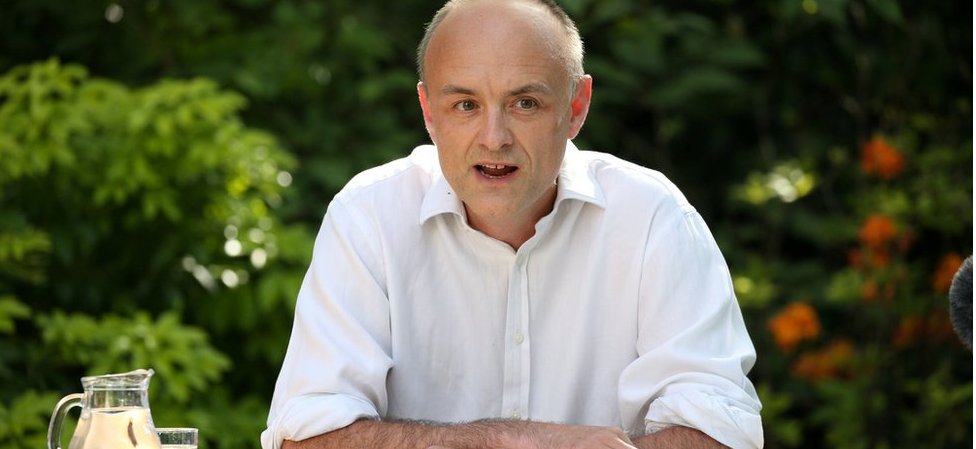
Mr Cummings has become more of a public figure in the past year and was forced into holding his own news conference at Downing Street in the summer, following controversy over him making a trip to the north of England when non-essential travel was banned at the height of the coronavirus lockdown.

Presentational grey line

Analysis

Dominic Cummings
Reuters

By Nicholas Watt, Newsnight political editor

In the Dominic Cummings camp, the news that he will be leaving Downing Street before Christmas is no great shakes.

"Dom was never going to be there for long," one friend told me.

But there is no doubt that Cummings was deeply dismayed by what he regarded as unfair treatment of his chief lieutenant, Lee Cain, who resigned as communications director on Wednesday night. Mr Cummings had a number of tense conversations with Boris Johnson.

The departure of the two standard bearers of the Vote Leave campaign backroom from Downing Street marks a seminal moment.

We can expect a less abrasive Downing Street and a strong focus on climate change.

The prime minister also wants to adopt a softer image if, as he hopes, the vaccine allows us to enter in a post-Covid world. Mr Cummings has his admirers in government but also his critics.

One told me: "Brexit is done, he is done."

Presentational grey line

Speaking to the BBC's political editor Laura Kuenssberg, Mr Cummings denied that he had threatened to resign after Mr Cain's departure - and instead pointed out that he had indicated his own plans nearly a year ago.

1px transparent line

Writing in his blog in January 2020 to encourage "weirdos" to work in No 10, Mr Cummings said he wanted to "improve performance" in government in order to "make me less important - and within a year largely redundant".

Prior to his work with the Brexit campaign, he had worked for Iain Duncan Smith when he was Conservative Party leader and Michael Gove at the Department of Education.

He also ran a successful campaign to oppose a regionally elected assembly in north-east England.

Since taking his job at Number 10, he has not been a popular figure with everyone within the governing party, and was known for making disparaging comments about some of Mr Johnson's own MPs, including labelling Brexiteer MPs "useful idiots".

It was widely suggested that former Conservative leader Sir John Major was talking about Mr Cummings when we warned Mr Johnson in a speech in September 2019 not to rely on "overmighty advisers".

Sir John, who led the country from 1990 to 1997, added: "I offer the prime minister some friendly advice: get rid of these advisers before they poison the political atmosphere beyond repair. And do it quickly."

Let's block ads! (Why?)


https://news.google.com/__i/rss/rd/articles/CBMiL2h0dHBzOi8vd3d3LmJiYy5jby51ay9uZXdzL3VrLXBvbGl0aWNzLTU0OTI1MzIy0gEzaHR0cHM6Ly93d3cuYmJjLmNvLnVrL25ld3MvYW1wL3VrLXBvbGl0aWNzLTU0OTI1MzIy?oc=5

2020-11-13 01:06:00Z
52781181093535