More than 560,000 people had coronavirus in England last week with the number of infections rising steeply among secondary school children, figures from the Office for National Statistics (ONS) suggest.
The figures also appear to show around one in 100 people had COVID-19 in England for the week between 17 and 23 October, as the number of cases continues to rise across the UK.
New coronavirus cases increased by around 51,900 in England each day last week, according to ONS estimates.
This is up 47% from 35,200 new cases per day for the period from 10 to 16 October.
The ONS Infection Survey estimated 568,100 people had COVID-19 in England between 17 to 23 October, up from 433,300 the week before.
Advertisement
The numbers also show there has been an increase in cases in all age groups over the past two weeks, with older teenagers and young adults having the highest current rates.
Rates appear to be steeply increasing among secondary school children.
More from Covid-19
The figures, based on 609,777 swab tests taken whether people have symptoms or not, do not include anyone staying in hospitals, care homes or other institutional settings.
The highest COVID-19 infection rates in England continue to be seen in the North West, and Yorkshire and The Humber.
Rates also remain high for the North East but have now levelled off and there is now a larger gap with the other two northern regions.
The lowest rates are in the South East, South West and eastern England, while there has been growth in all age groups over the past two weeks.
Katherine Kent, co-head of analysis for the COVID-19 infection survey, said: "Following the expansion of ONS infection survey, we are now seeing evidence of increases in COVID-19 infections across the UK.
"In England, infections have continued to rise steeply, with increases in all regions apart from in the North East, where infections appear to have now levelled off.
"Wales and Northern Ireland have also all seen increased infections, though it is currently too early to see a certain trend in Scotland, where we have been testing for a shorter period.
"When looking at infections across different age groups, rates now seem to be steeply increasing among secondary school children whilst older teenagers and young adults continue to have the highest levels of infection."
Analysis: Figures offer 'glimmers of optimism' but we are heading in the wrong direction
By Rowland Manthorpe, technology correspondent
The ONS survey is perhaps the most reliable estimate we have of the state of the pandemic in the UK, and the picture it paints of rising infections across the UK is concerning.
There is some regional difference between the four nations of the UK, but in even the country where the virus is spreading slowest (Scotland), ONS estimates that 1 in 140 people have the virus.
A month ago, ONS estimated that 1 in 500 people in England had the virus. That shows startling progress.
Yet for seasoned watchers of these figures, there are some glimmers of optimism.
The ONS estimates that around 50,000 people a day are catching the virus, almost half as few as the REACT survey by Imperial College estimated yesterday.
Imperial College put the doubling rate - a crucial estimate of the speed of the growth of the outbreak - at nine days.
The ONS data would suggest that the numbers of infections are doubling every 14 days.
To put this in context: at the peak of the outbreak, the doubling rate was as high as three days.
That was what accounted for the frankly terrifying growth of March.
Based on this data, we are not back at that point again, but we are heading in the wrong direction.
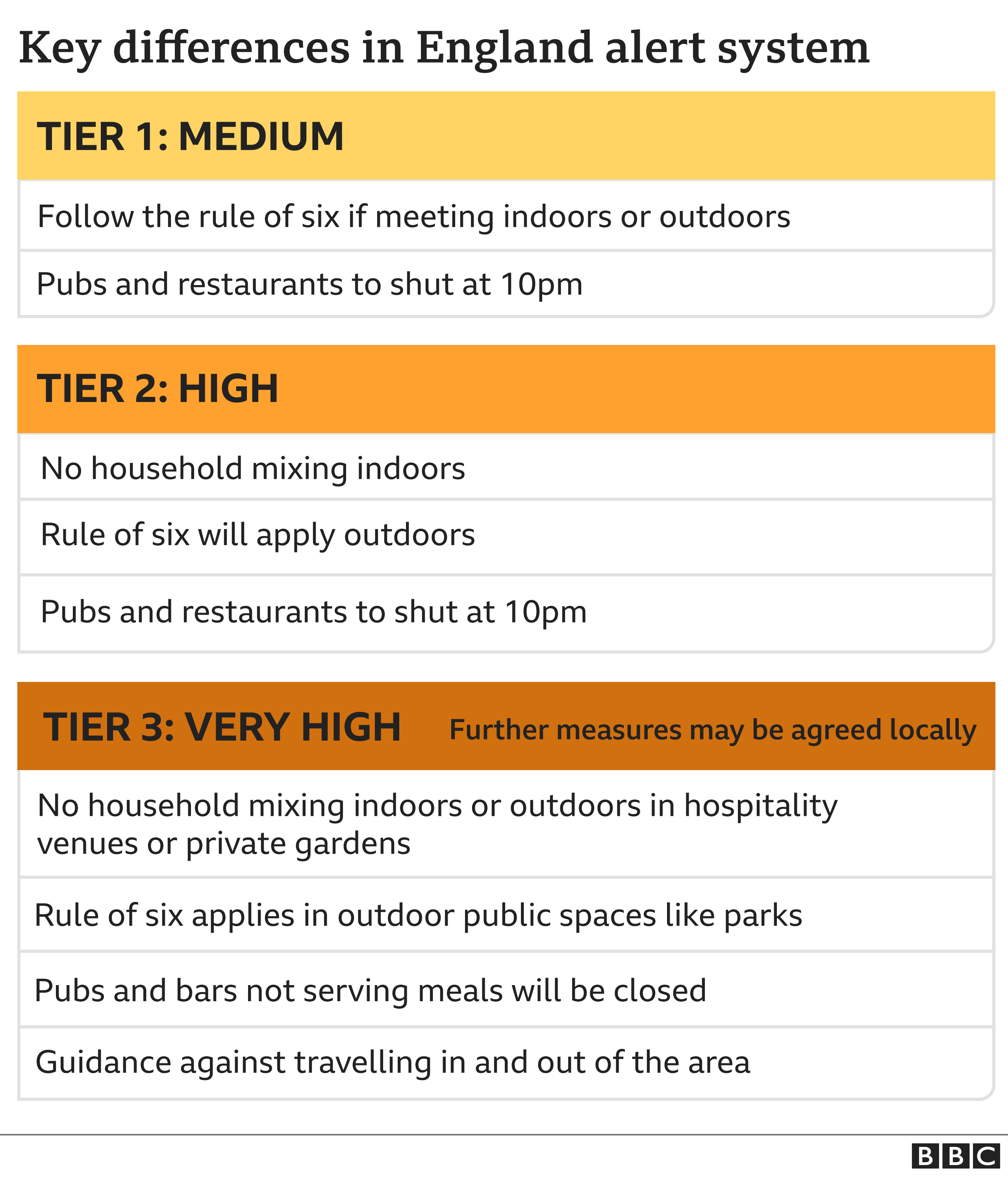
Every area of England is now in one of three coronavirus alert categories - medium (tier one), high (tier two) or very high (tier three). Scotland has five levels of restrictions.
Under tier three rules in England, pubs and bars not serving substantial meals must shut, while household mixing is banned indoors and outdoors in private gardens, most outdoor venues and ticketed events. Further restrictions can be introduced for individual areas.
According to the latest figures from the Office for National Statistics, about one in 10 people in homes in England had coronavirus in the week ending 23 October - equating to about 570,000 people. This is about one third higher than the figure for the previous week - 430,000.
The ONS also estimates there was about 52,000 new infections each day in homes in England in the same week, up about half on last week's number (35,000). The 52,000 figure is half the estimate of 100,000 a day from another study, the authors of which said the country is at a "critical stage" and "something has to change".
'Targeting the virus'
Speaking to BBC Radio 4's Today programme, Mr Raab said ministers were "confident" they had "the right measures and framework in place, which is not to have a blanket approach but to target measures [...] on the areas where the uptick is highest".
He said this was the most effective way to tackle the virus "and avoid the blanket approach, which I don't think would be the best interest in the country, and which we are striving to avoid".
Mr Raab added that there had been "a decrease in the rate of growth" since the government had adopted that approach, although he admitted "clearly there is still an uptick in the virus".
However, the foreign secretary did not deny that ministers were considering bringing in an even higher fourth tier of restrictions.
He added: "We're always ready for further measures that we can take. But I think the most important thing about further measures is that we continue on the track we're on of targeting the virus."
On BBC Breakfast, Mr Raab insisted the public would find it "desperately unfair" for measures to be brought in across the country "while rates vary".
Asked whether a national lockdown was now inevitable, he said targeted measures were "the right thing to do", and appealed for "full compliance and full co-operation" in high-risk coronavirus regions to avoid more stringent measures.
He said that schools and businesses had been kept open in tier three areas but the government had left in "reserve the option of taking further measures".
Earlier, Labour's leader Sir Keir Starmer told the programme he was "deeply concerned" by rising infection rates, and said "that's why we called for a circuit-break [lockdown] over half term".
"The prime minister didn't choose that course and my concern is that the tier system is not strong enough to stop the infection rate going up," Sir Keir added.
A so-called "circuit-breaker" is a short limited lockdown - of about two to three weeks.
In Nottinghamshire - unlike some other tier three areas - betting shops, saunas, tattoo parlours and nail salons must close.
Alcohol cannot be sold after 21:00 GMT in shops, but can be sold until 22:00 if bought "in hospitality venues where accompanying a substantial meal".
On Thursday evening, young people took to the streets of Nottingham in fancy dress before the new restrictions came into force.
The Department of Health and Social Care has said leisure and sports facilities, such as gyms, will be allowed to stay open in West Yorkshire when it moves to tier three.
It also said more than a dozen more regions will move from the lowest to the middle tier of restrictions on Saturday.
These include East Riding of Yorkshire, Kingston-Upon-Hull, North East Lincolnshire, North Lincolnshire, Dudley, Staffordshire, Telford, the Wrekin, Amber Valley, Bolsover, Derbyshire Dales, Derby City, South Derbyshire, the whole of High Peak, Charnwood, Luton and Oxford.
On Thursday, it was announced that another 280 people had died within 28 days of testing positive for Covid-19 in the UK, while another 23,065 more lab-confirmed cases were reported.
Meanwhile, Scotland's new tiered system of restrictions will come into force at 06:00 on Monday, and Wales remains under a 17-day "firebreak" lockdown until 9 November.
Wales' First Minister Mark Drakeford has said a new set of national rules will be brought in once the lockdown ends, rather than a "network of local restrictions".
Pubs and restaurants in Northern Ireland were closed for four weeks starting on 16 October with the exception of takeaways and deliveries. Schools were closed for two weeks.
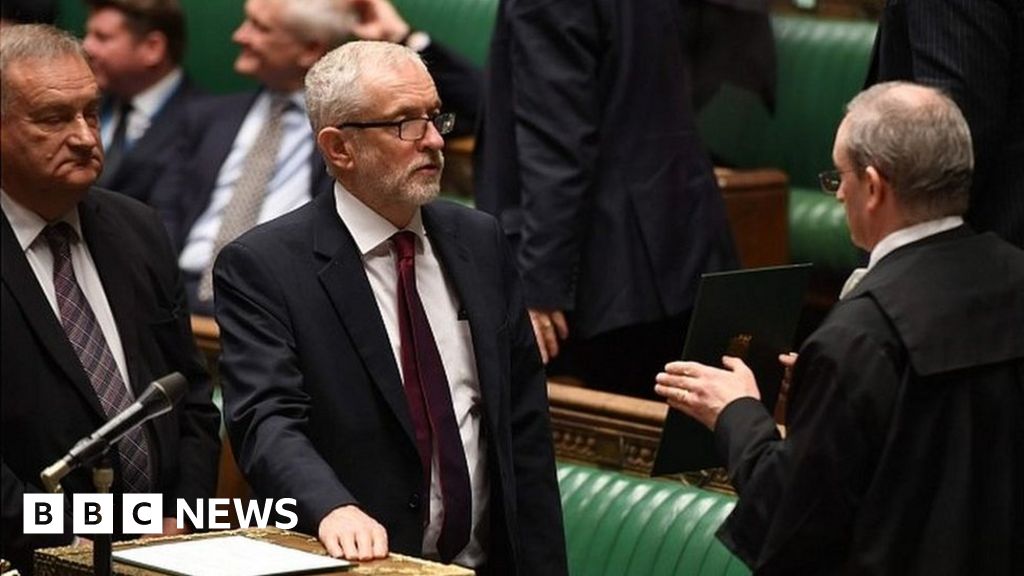
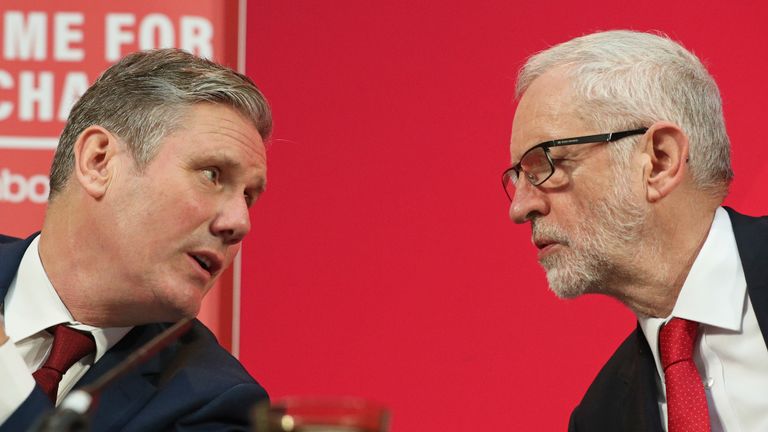
Labour leader Sir Keir Starmer has told Sky News he was "disappointed" in his predecessor Jeremy Corbyn's response to a damning antisemitism report - but has insisted there is "no reason for a civil war" in the party.
Mr Corbyn was suspended from Labour on Thursday - a move he condemned as "political intervention" - after he claimed that antisemitism in the party was "dramatically overstated for political reasons".
He has vowed to fight his suspension, raising the prospect of a bitter battle between Mr Corbyn, his allies and Sir Keir's leadership.
Image:Sir Keir Starmer's predecessor, Jeremy Corbyn, has been suspended from Labour
Some Labour MPs loyal to Mr Corbyn have condemned the decision to suspend the party's former leader and called for him to be reinstated to the party.
But Sir Keir played down the prospect of a looming internal conflict within Labour.
Advertisement
"I don't want a split in the Labour Party," he told Sky News.
"I stood as leader of the Labour Party on the basis I would unite the party, but also that I would tackle antisemitism.
More from Jeremy Corbyn
"I think both of those can be done, there's no reason for a civil war in our party.
"But we are absolutely determined, I am absolutely determined, to root out antisemitism.
"I don't want the words Labour and Labour Party and antisemitism in the same sentence again."
Sir Keir stressed that the Equality and Human Rights Commission investigation, published on Thursday, had made "no individual findings" against Mr Corbyn.
But he said Mr Corbyn's response to the critical report - in which the former leader suggested antisemitism was exaggerated by Labour's opponents and the media - was "part of the problem" the party faces in addressing the issue.
"I was disappointed in Jeremy's response yesterday, particularly since I had said in my response that the Labour Party will not tolerate antisemitism, nor will it tolerate those who deny there's a problem of antisemitism and say it's all exaggerated or factional," Sir Keir added.
"That, for me, is part of the problem."
Please use Chrome browser for a more accessible video player
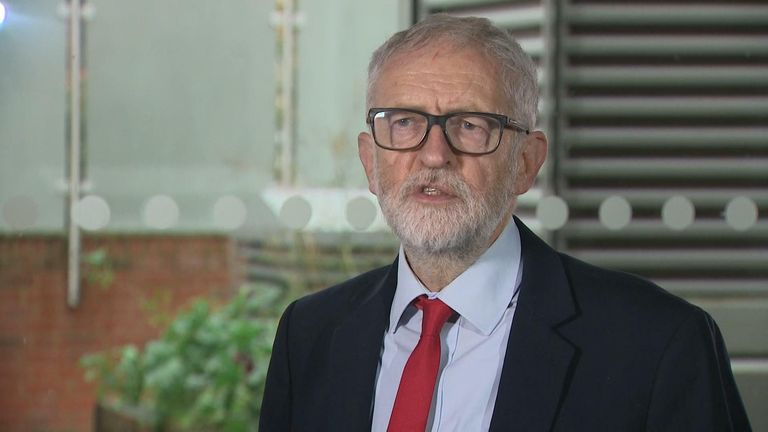
Corbyn responds to Labour suspension
In another broadcast interview, Sir Keir revealed he had spoken to Mr Corbyn on Wednesday night, before the report was published, in which he discussed with his predecessor his planned comments about those who made claims of antisemitism being exaggerated.
Sir Keir served in Mr Corbyn's shadow cabinet for three-and-a-half years and campaigned for him to become prime minister at the general elections in both 2017 and last year.
The Labour leader defended his decision to align himself with Mr Corbyn's leadership during that time, despite the allegations of antisemitism that dogged his predecessor's spell in charge of Labour.
Sir Keir said he "spoke out about antisemitism" both within the shadow cabinet and in media appearances during that time.
"I thought it was right to raise it inside the shadow cabinet and outside the shadow cabinet," he told Sky News.
"But there's no getting away from the findings of the report yesterday.
"They are clear findings and we all have to accept them, including myself, which is why I thought the right response yesterday was to accept the findings, to apologise again for the hurt that has been caused, and to make it my absolute business to implement the recommendations as quickly as possible."
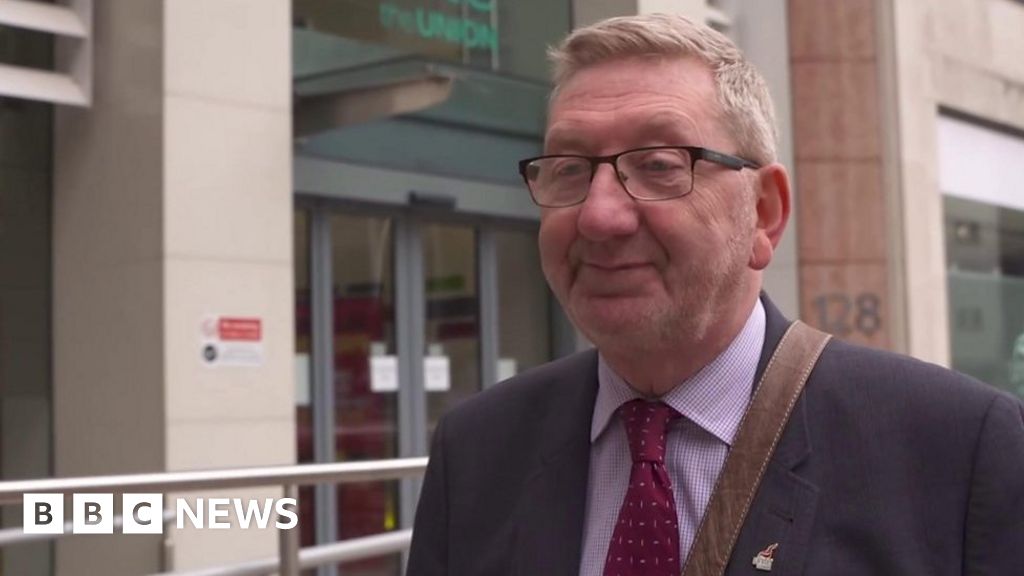
Jonathan Goldstein, chairman of the Jewish Leadership Council, told Sky News that Unite general secretary Len McCluskey - a key ally of Mr Corbyn - was "part of the problem" with antisemitism.
Mr McCluskey has previously claimed antisemitism allegations were used to undermine Mr Corbyn's leadership.
In his Sky News' interview, when asked repeatedly if Labour would continue to accept millions of pounds in funding from Unite, Sir Keir said he spoke to Mr McCluskey on Thursday and the trade union leader "recognises the antisemitism in the Labour Party".
But Mr Goldsteain said: "Len McCluskey is part of the problem, he's been part of the problem since the beginning.
"He's part of the faction that supported Jeremy Corbyn. There's been denial on this issue since the very beginning.
"He described it as 'mood music', he's described it as 'overstated'.
"He's part of the problem and until those around Jeremy Corbyn and Jeremy Corbyn himself have a level of self-reflection and understand that when Jewish people complain about antisemitism - in the same way that black people complain about racism and Muslim people complain about Islamophobia - they undertand what they are talking about, they understand what they're feeling.
"Until he respects Jewish people and understands their problems, I'm afraid he will remain part of the problem himself."