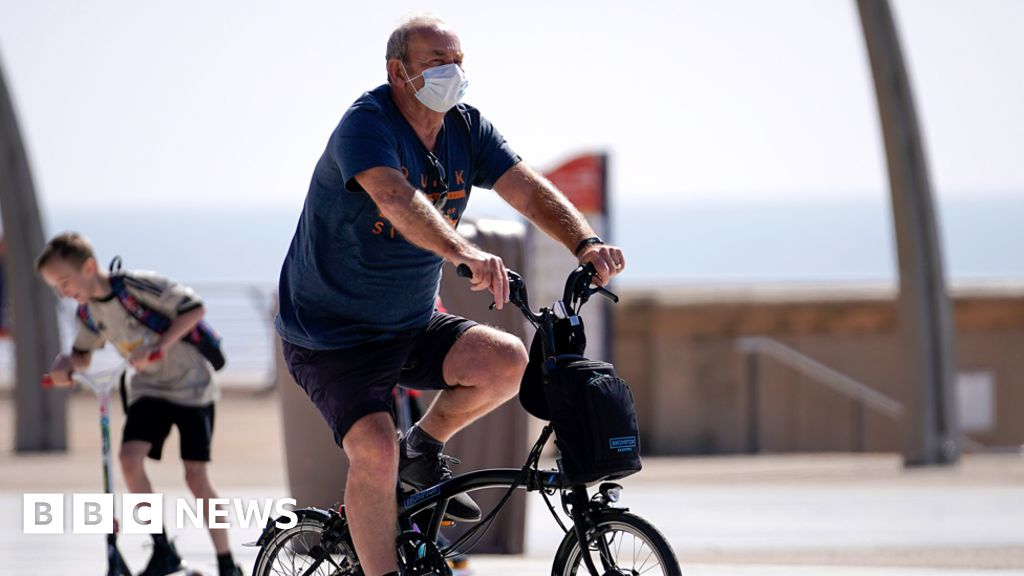
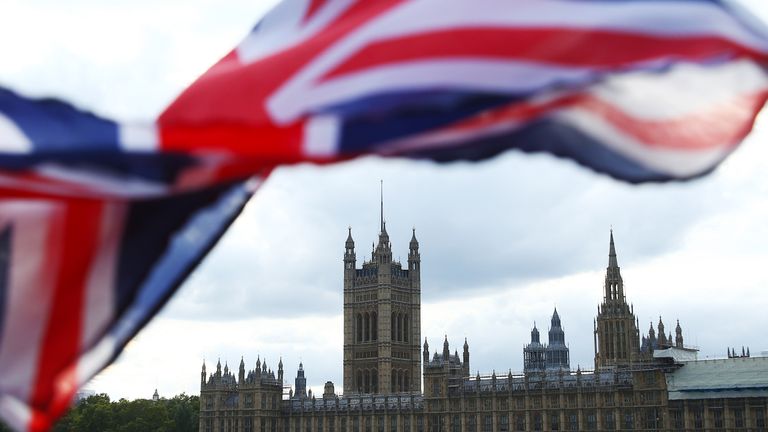
Boris Johnson has said he is "concerned" over the rise in coronavirus cases in the Greater Manchester region, amid a bitter stand-off with local leaders over looming restrictions.
The area could have a Tier 3 lockdown imposed on it if negotiations fail, but the prime minister said he would rather "work out something" instead.
"I am, I have to say, concerned about what's happening in Manchester where the levels of infection are rising steeply, the level of hospitalisation is rising steeply, and we do need to see action," Mr Johnson said.
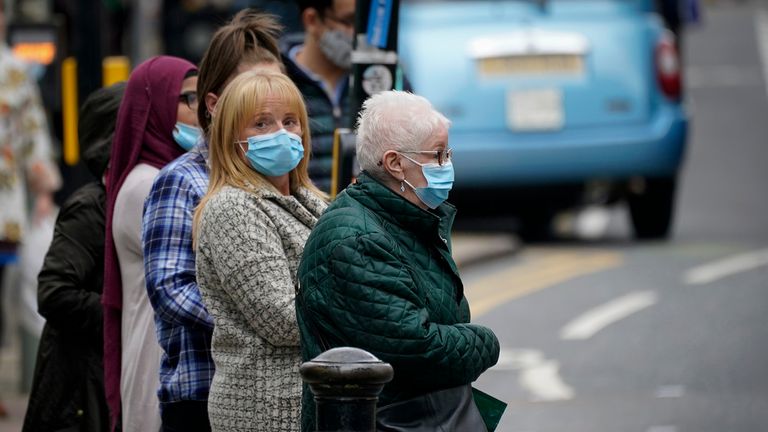
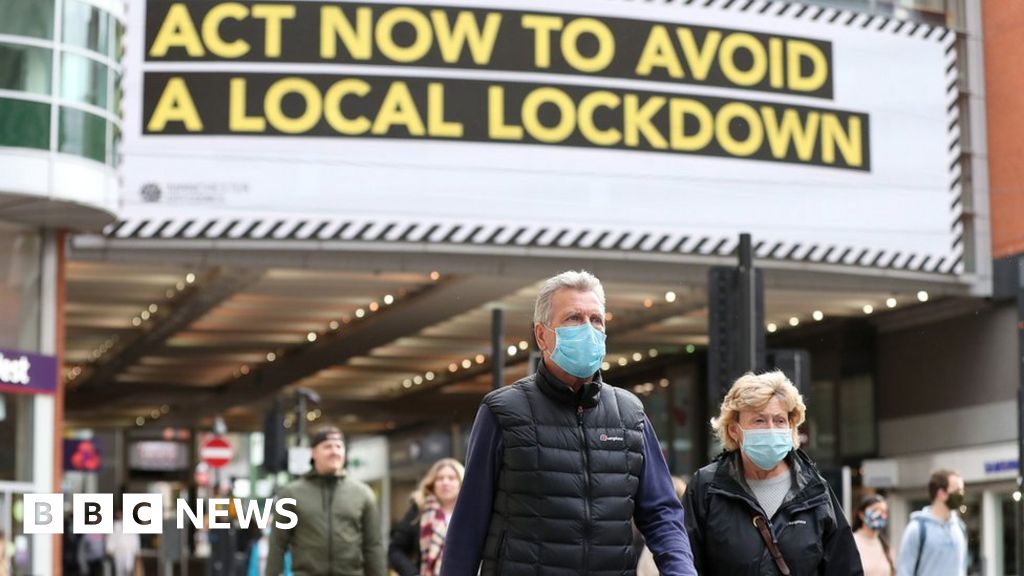
Image:Residents are waiting to hear if they will face more restrictions
"I'd much rather not impose things, I'd much rather that we were able to work out something together with local authorities, with the mayor in Manchester.
Advertisement
"But it is up to local leaders to show the kind of leadership that we have seen in Liverpool, in Lancashire and in London."
Foreign Secretary Dominic Raab issued a warning earlier, telling Sky News that ministers have "the power to proceed" with putting the city into England's highest band of measures to stem the spread of COVID-19.
"We will keep talking and we'll keep working," he said.
"Obviously in the last resort the government has the powers to proceed in any event."
Please use Chrome browser for a more accessible video player
Government can impose measure as last resort
Mr Raab added the "right thing" for the country was to "avoid a second national lockdown" in the face of coronavirus cases rising a further 18,980 and deaths by 138 on Thursday.
"The way to do it is with a tiered approach that we've advocated," he said.
"That will only work, the scientists tell us, if everyone really leans in and implements it to the maximum."
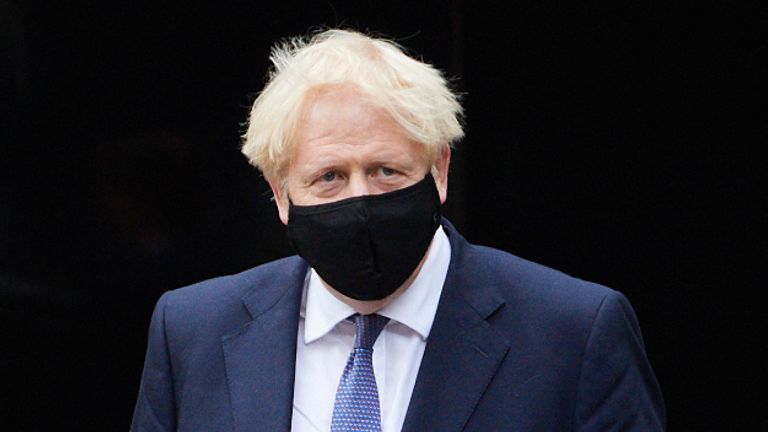
Image:Boris Johnson has urged the authorities in Greater Manchester to show leadership
But several politician were unimpressed with Mr Raab's message on Friday.
Three northern mayors - for Greater Manchester, North Tyne and Liverpool City Region - issued a joint statement claiming the government was trying to paint them as "divided".
"That is simply not the case," they said.
"We are all united in fighting for an 80% furlough scheme for all people affected by regional lockdowns, wherever they are in the country.
"Paying two-thirds of salaries will not be enough to protect the jobs of thousands - it should at least match the 80% that was available under furlough, with the minimum wage as the minimum support."
They added the Universal Credit top up "is not the answer" as it "doesn't help everybody and takes weeks to come through", meaning thousands of low-paid workers will still experience "severe hardship" before Christmas.
Labour's Jim McMahon, MP for Oldham, also tweeted that "less posturing" from ministers and "more practical solutions to reduce the spread of the virus and prevent economic harm... might just work".
Please use Chrome browser for a more accessible video player
Burnham: 'We're being set up like canaries in a coal mine'
And John Edmunds, a scientist who sits on the government's science advisory group known as SAGE, has called for ministers in England to follow the lead of Northern Ireland and impose a "circuit breaker".
Mr Johnson laid out his plans for a three-tier system to suppress a coronavirus second spike on Monday.
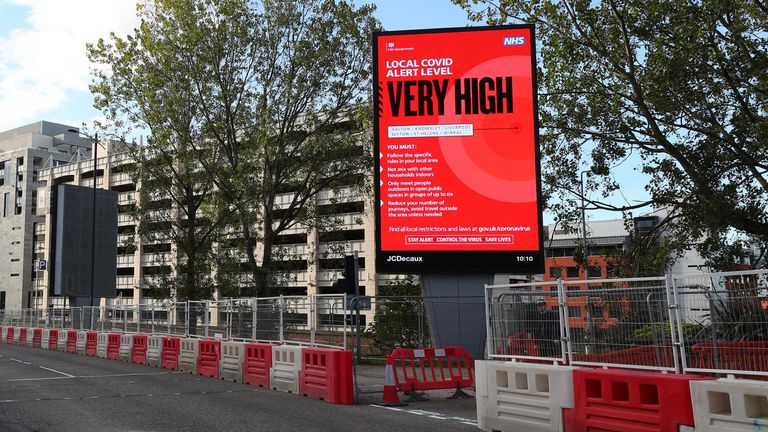
Image:Lancashire is moving into Tier 3, following the Liverpool City Region
In Tier 1, known as Medium, areas must follow the national restrictions - meaning people are only allowed social gatherings of up to six people inside or out, with a 10pm curfew for pubs bars and restaurants.
In Tier 2, people are banned from mixing with others they don't live with inside, but the Rule of Six still applies outside. Pubs and restaurants can remain open.
And in Tier 3, you cannot meet anyone you don't live with inside or out, pubs and bars must close unless they can operate as restaurants and no wedding receptions are allowed. People should avoid non-essential travel and staying overnight in another part of the UK, and local politicians will decide if gyms, betting shops, casinos, hairdressers and beauty salons should close.
Boris Johnson says it's time to "get ready" for the prospect of no free trade deal with the EU on 1 January.
The prime minister claimed Brussels had "abandoned" the ambition but insisted "we always knew there would be changes" next year once the transition period ends "whatever type of relationship we had".
Speaking from Downing Street after an EU summit both sides said was the deadline for hammering out a trade deal, Mr Johnson said it looked like the country was heading for what he called "the Australian solution".
Image:Mr Johnson said the UK will 'prosper mightily'
He suggested he is not completely walking away from negotiations, adding: "What we're saying to them is come here, come to us, if there's some fundamental change of approach."
The UK left the EU on 31 January this year.
Advertisement
After that the country entered a transition period, following many of the same rules meaning there was no change to trade and tariffs or things like freedom of movement.
Negotiators have since been trying to hammer out a trade deal to come into force when that runs out at the end of December.
More from Brexit
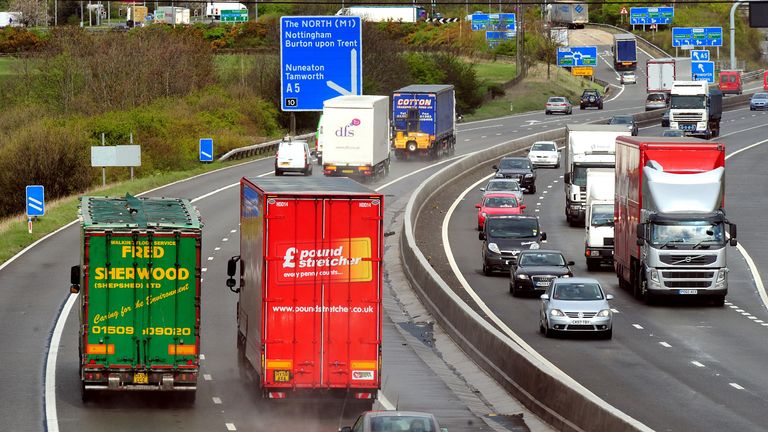
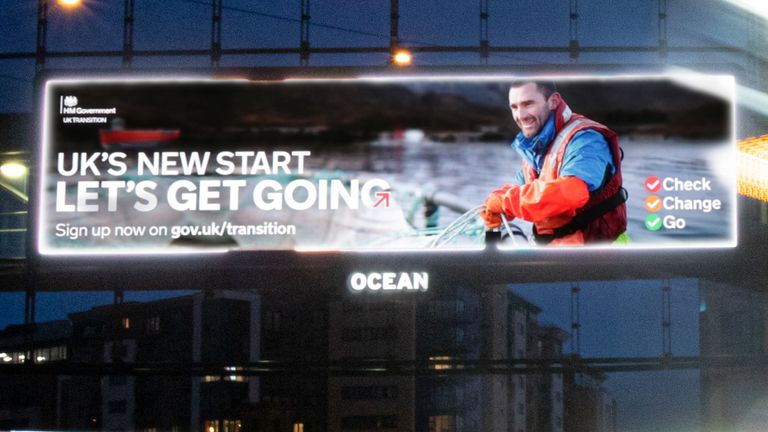
Image:Hauliers were told to prepare for change come 1 January
But Mr Johnson said in a dramatic intervention that "there doesn't seem to be any progress coming from Brussels".
He told businesses and hauliers to "get ready" for there to be no free trade deal.
Instead he said the UK's relationship with the EU could be more like the one Brussels has with Australia, which will mean tariffs being introduced on goods between the UK and the 27 other EU countries.
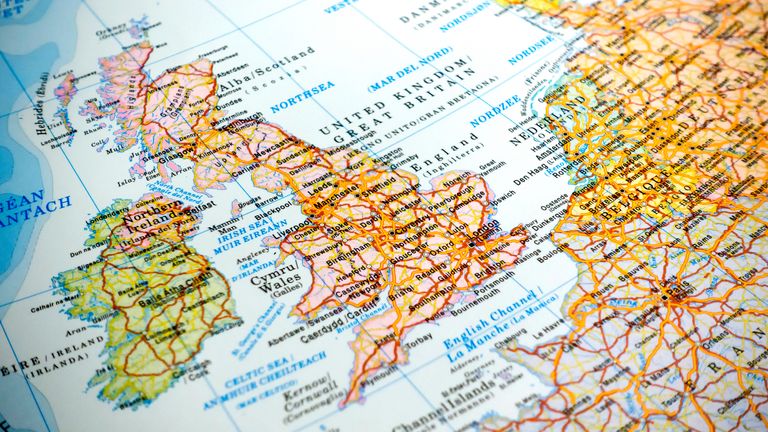
Image:The UK left the EU on 31 January and is in a transition period
And Mr Johnson urged people to "embrace the alternative" with "high hearts", vowing the UK will "prosper mightily".
He is due to hold a news conference later on Friday afternoon.
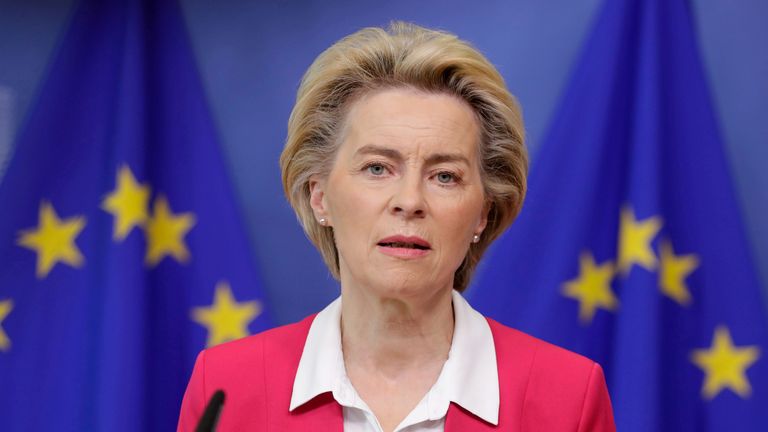
Image:Ms von der Leyen said EU negotiators would come to London next week as planned
Ursula von der Leyen, president of the EU Commission, said she would continue to work for a deal - "but not at any price".
"As planned, our negotiation team will go to London next week to intensify these negotiations," she added.
And German Chancellor Angela Merkel echoed a similar sentiment, saying: "As far as EU is concerned, and as far as I am concerned, we should continue to negotiate."
The pound fell by a cent against the dollar immediately following Mr Johnson's statement, but quickly recovered to trade at just under $1.29.
Analysis: EU won't be encouraged or upset by PM's intervention By Adam Parsons, Europe correspondent
Image:The transition period runs out at the end of December 2020
The EU won't exactly see these comments as encouraging, but nor will they be especially upset.
Mr Johnson has left the way clear for talks to continue, inviting the EU to "come here, come to us".
And by happy coincidence, Michel Barnier had already offered to continue negotiations in London next week.
As for the commitment to prepare for an Australian-style deal, by which he means just about no deal at all, EU sources have said to me that they think everyone should have been making those preparations anyway, just in case.
Does this turn up the heat? Maybe, although the pressure of the clock is doing that anyway.
The EU does think that slight progress has been made, but nobody is claiming that a deal is around the corner.
The economic damage of COVID-19 is a much bigger problem for many leaders.
Plenty of countries see a Brexit deal as a distraction at a time when they want to spend their time concentrating on how to respond to the resurgent pandemic.
And there is a school of thought among some in Brussels that a period of no-deal might be a good thing, in order to focus minds on a subsequent return to negotiations.
One diplomat said to me: "If we end up with no-deal, and massive queues of lorries on both sides of the Channel, then everyone might negotiate with a bit more purpose."
The mantra here has been "we want a deal, but not at any cost". There's not much sign of anyone embracing a fundamental rethink at this point.
Boris Johnson says it's time to "get ready" for the prospect of no free trade deal with the EU on 1 January.
The prime minister claimed Brussels had "abandoned" the ambition but insisted "we always knew there would be changes" next year once the transition period ends "whatever type of relationship we had".
Speaking from Downing Street after an EU summit both sides said was the deadline for hammering out a trade deal, Mr Johnson said it looked like the country was heading for what he called "the Australian solution".
Image:Mr Johnson said the UK will 'prosper mightily'
He suggested he is not completely walking away from negotiations, adding: "What we're saying to them is come here, come to us, if there's some fundamental change of approach."
The UK left the EU on 31 January this year.
Advertisement
After that the country entered a transition period, following many of the same rules meaning there was no change to trade and tariffs or things like freedom of movement.
Negotiators have since been trying to hammer out a trade deal to come into force when that runs out at the end of December.
More from Brexit
Image:Hauliers were told to prepare for change come 1 January
But Mr Johnson said in a dramatic intervention that "there doesn't seem to be any progress coming from Brussels".
He told businesses and hauliers to "get ready" for there to be no free trade deal and instead for World Trade Organisation terms similar to Australia's relationship with the EU.
And he urged people to "embrace the alternative" with "high hearts", vowing the UK will "prosper mightily".
The prime minister is due to hold a news conference later on Friday afternoon.
Image:Ms von der Leyen said EU negotiators would come to London next week as planned
Ursula von der Leyen, president of the EU Commission, said she would continue to work for a deal - "but not at any price".
"As planned, our negotiation team will go to London next week to intensify these negotiations," she added.
The pound fell by a cent against the dollar immediately following Mr Johnson's statement, but quickly recovered to trade at just under $1.29.
Analysis: EU won't be encouraged or upset by PM's intervention By Adam Parsons, Europe correspondent
The EU won't exactly see these comments as encouraging, but nor will they be especially upset.
Mr Johnson has left the way clear for talks to continue, inviting the EU to "come here, come to us".
And by happy coincidence, Michel Barnier had already offered to continue negotiations in London next week.
As for the commitment to prepare for an Australian-style deal, by which he means just about no deal at all, EU sources have said to me that they think everyone should have been making those preparations anyway, just in case.
Does this turn up the heat? Maybe, although the pressure of the clock is doing that anyway.
The EU does think that slight progress has been made, but nobody is claiming that a deal is around the corner.
The economic damage of COVID-19 is a much bigger problem for many leaders.
Plenty of countries see a Brexit deal as a distraction at a time when they want to spend their time concentrating on how to respond to the resurgent pandemic.
And there is a school of thought among some in Brussels that a period of no-deal might be a good thing, in order to focus minds on a subsequent return to negotiations.
One diplomat said to me: "If we end up with no-deal, and massive queues of lorries on both sides of the Channel, then everyone might negotiate with a bit more purpose."
The mantra here has been "we want a deal, but not at any cost". There's not much sign of anyone embracing a fundamental rethink at this point.