A new three-tier system of local lockdown measures for England has been announced to try to curb rising COVID-19 rates.
The Local COVID Alert Levels - "medium", "high" and "very high" - will be implemented depending on local infection rates. The government has released a full list of areas and which tier they fall under.
So what are the rules for the different tiers - and which is your area in?
Tier 1 - Medium
10pm curfew for bars, pubs and restaurants
Gatherings of more than six people banned, apart from some settings such as funerals and weddings
Areas in Tier 1:
Everywhere in England apart from those places listed below
Tier 2 - High:
Mixing of households indoors not allowed
Two households can meet in a private garden - rule of six and social distancing rules apply
Areas in Tier 2:
Cheshire
Cheshire West and Chester
Cheshire East
Greater Manchester
Manchester
Bolton
Bury
Stockport
Tameside
Trafford
Wigan
Salford
Rochdale
Oldham
Warrington
Warrington
Derbyshire
High Peak - the wards of Tintwistle, Padfield, Dinting, St John's, Old Glossop, Whitfield, Simmondley, Gamesley, Howard Town, Hadfield South and Hadfield North
Lancashire
Lancashire
Blackpool
Preston
Blackburn with Darwen
Burnley
West Yorkshire
Leeds
Bradford
Kirklees
Calderdale
Wakefield
South Yorkshire
Barnsley
Rotherham
Doncaster
Sheffield
North East
Newcastle
South Tyneside
North Tyneside
Gateshead
Sunderland
Durham
Northumberland
Tees Valley
Middlesbrough
Redcar and Cleveland
Stockton-on-Tees
Darlington
Hartlepool
West Midlands
Birmingham
Sandwell
Solihull
Wolverhampton
Walsall
Leicester
Leicester
Oadby and Wigston
Nottingham
Nottinghamshire
Nottingham City
Tier 3 - Very high:
No mixing of households indoors and outdoors, including in private gardens
Pubs and bars to close
Restaurants, and pubs that can operate as restaurants, allowed to stay open
Local politicians will decide if gyms, betting shops, casinos, hairdressers and beauty salons should close
Non-essential shops, schools and universities to remain open
Avoid non-essential travel
Travel outside area advised against
Areas in Tier 3:
Liverpool City Region
Liverpool
Knowsley
Wirral
St Helens
Sefton
Halton
Please use Chrome browser for a more accessible video player
Medical officer warns of 'baked in' deaths
Why has the system been developed?
Different parts of the country are experiencing differing rates of COVID-19 transmission, with the North West currently rising fastest.
The government has decided a local lockdown approach will be more effective than another national lockdown.
They will have to adhere to different rules depending on their case, hospital admission and death rates.
The Liverpool City Region will be on the "very high" Covid alert level from Wednesday, Boris Johnson has announced.
Confirming a new three-tier lockdown system, the PM said pubs, bars and betting shops will close on Merseyside.
Most areas of England will be on "medium" alert, with measures like the rule of six, but areas with local restrictions on household mixing are automatically on "high" alert.
The PM said all retail outlets, schools and universities will remain open.
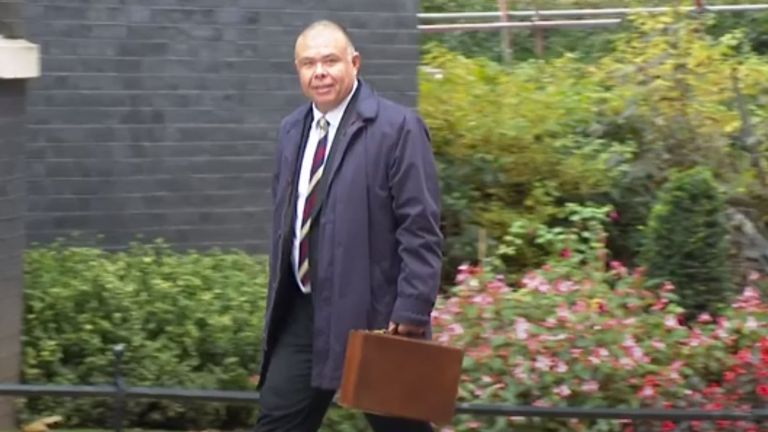
It came after England's deputy chief medical officer, Prof Jonathan Van-Tam, said growth in Covid cases was a "nationwide phenomenon" and that "things are heating up" in areas beyond northern England.
The new system is split into three alert levels: medium, high and very high. Most areas in England are in the medium alert level - meaning current restrictions continue, including the 10pm hospitality curfew.
Areas already under additional local restrictions are automatically in the high alert level - meaning bans on household mixing indoors are extended to include hospitality venues.
The Liverpool City Region - home to 1.5 million people - becomes the first area to enter the very high alert level, with the closure of pubs, bars, betting shops, gyms, leisure centres and casinos. Household mixing will be banned anywhere indoors and in private gardens.
Restaurants can continue to trade in very high risk areas - and pubs and bars which can operate as one - but people will be advised against travelling to and from these zones.
Analysis
By Ellie Price, political correspondent
Monday is following a grimly familiar pattern.
It started with a data briefing from England's deputy chief medical officer. A depressing scene set of how worrying the science is looking, particularly in large areas of northern England.
In the Commons, Boris Johnson set out more details of the three-tier alert system. The idea, he said, is to simplify and standardise local rules. People will be able to check exactly what tier and what rules they have to live by with the help of an official postcode checker.
The prime minister was also keen to reiterate his "balanced approach", between curbing the virus, and not stifling the economy and young people's education. Even in high-risk areas, restaurants will stay open, along with schools and universities.
But the questions, and criticisms, came at Mr Johnson from all sides and highlight his challenge.
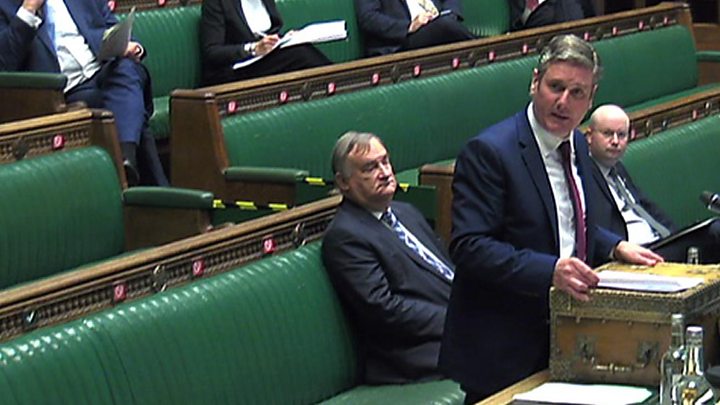
Since March, Labour Leader Keir Starmer has lent his broad support to government restrictions. But in the House he accused the PM of being "several steps behind the curve" and questioned whether the measures "can bring the country back from the brink."
There were numerous questions on whether the government could be more generous in its financial support for businesses affected.
And from Conservative MPs, some said individuals should be left to make their own decisions, while others saying tougher measures need to be imposed now.
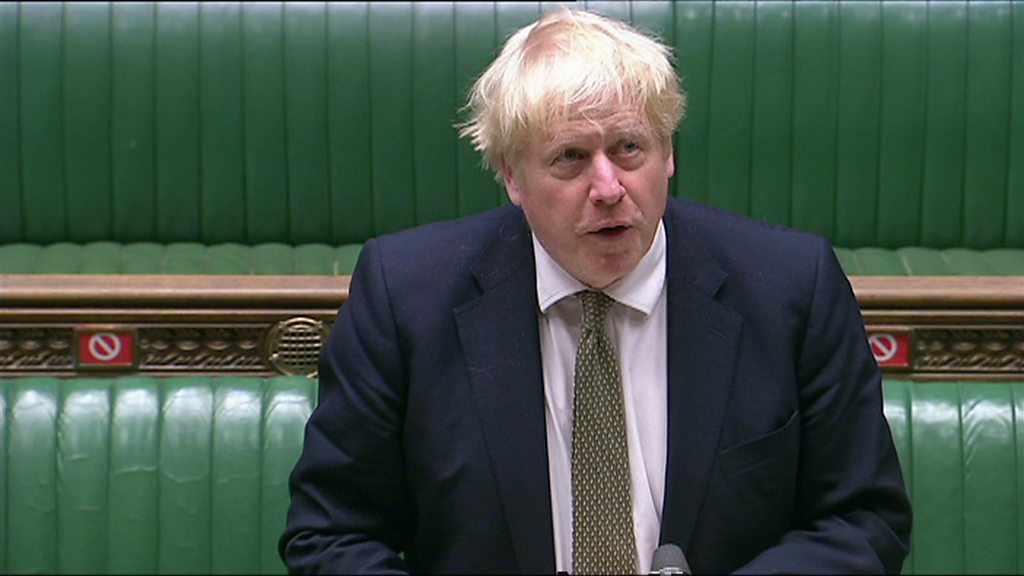
Boris Johnson told MPs restricting interactions between people would save lives and help prevent the NHS being overwhelmed.
Speaking in the House of Commons, he said "This is not how we want to live our lives but this is the narrow path we have to tread between the social and economic trauma of a full lockdown and the massive human, and indeed, economic cost of an uncontained epidemic."
The PM said around £1bn of "new financial support" will be provided to local authorities in England, adding: "For very high areas, we will give further financial support for local test and trace and local enforcement - and assistance from the armed forces, not for enforcement but rather to support local services if desired in the local area."
It was announced earlier that the NHS Nightingale hospitals in Manchester, Sunderland and Harrogate built during the first wave of the virus have been told to get ready once more.
Labour leader Sir Keir Starmer said: "The question today is whether the restrictions announced by the prime minister can bring the country back from the brink."
Media playback is unsupported on your device
Labour mayor of Liverpool Joe Anderson told the BBC "we agree with the government having to impose tougher restrictions" but that an argument for a stronger financial package for the city "wasn't listened to".
The three-tier alert system applies only to England, with the devolved administrations in Scotland, Wales and Northern Ireland in charge of designing and implementing their own coronavirus restrictions.
A further 13,972 confirmed coronavirus cases were reported on Monday, with 50 more deaths within 28 days of a positive test recorded.
Do you live in the Liverpool City Region? Do you work in the pub and hospitality industry? What would you like to ask our experts? Email haveyoursay@bbc.co.uk.
Please include a contact number if you are willing to speak to a BBC journalist. You can also get in touch in the following ways:
If you are reading this page and can't see the form you will need to visit the mobile version of the BBC website to submit your question or comment or you can email us at HaveYourSay@bbc.co.uk. Please include your name, age and location with any submission.
The Liverpool City Region will be on the "very high" Covid alert level from Wednesday, Boris Johnson has announced.
Confirming a new three-tier lockdown system, the PM said pubs, bars and betting shops will close on Merseyside.
Most areas of England will be on "medium" alert, with measures like the rule of six, but areas with local restrictions on household mixing are automatically on "high" alert.
The PM said all retail outlets, schools and universities will remain open.
It came after England's deputy chief medical officer, Prof Jonathan Van-Tam, said growth in Covid cases was a "nationwide phenomenon" and that "things are heating up" in areas beyond northern England.
The new system is split into three alert levels: medium, high and very high. Most areas in England are in the medium alert level - meaning current restrictions continue, including the 10pm hospitality curfew.
Areas already under additional local restrictions are automatically in the high alert level - meaning bans on household mixing indoors are extended to include hospitality venues.
The Liverpool City Region - home to 1.5 million people - becomes the first area to enter the very high alert level, with the closure of pubs, bars, betting shops, gyms, leisure centres and casinos. Social mixing will be banned indoors and in private gardens.
Restaurants can continue to trade in very high risk areas - and pubs and bars which can operate as one - but people will be advised against travelling to and from these zones.
'Narrow path'
Boris Johnson told MPs restricting interactions between people would save lives and help prevent the NHS being overwhelmed.
Speaking in the House of Commons, he said "This is not how we want to live our lives but this is the narrow path we have to tread between the social and economic trauma of a full lockdown and the massive human, and indeed, economic cost of an uncontained epidemic."
The PM said said around £1bn of "new financial support" will be provided to local authorities in England, adding: "For very high areas, we will give further financial support for local test and trace and local enforcement - and assistance from the armed forces, not for enforcement but rather to support local services if desired in the local area."
Labour leader Sir Keir Starmer said he was "sceptical" whether the government has a plan to get control of the virus and that it increasingly felt as if Mr Johnson was "several steps behind the curve".
"The question today is whether the restrictions announced by the prime minister can bring the country back from the brink," he said.
Labour mayor of Liverpool Joe Anderson told the BBC "we agree with the government having to impose tougher restrictions" but that an argument for a stronger financial package for the city "wasn't listened to".
A further 13,972 confirmed coronavirus cases were reported on Monday, with 50 more deaths within 28 days of a positive test recorded.
Do you live in the Liverpool City Region? Do you work in the pub and hospitality industry? What would you like to ask our experts? Email haveyoursay@bbc.co.uk.
Please include a contact number if you are willing to speak to a BBC journalist. You can also get in touch in the following ways:
If you are reading this page and can't see the form you will need to visit the mobile version of the BBC website to submit your question or comment or you can email us at HaveYourSay@bbc.co.uk. Please include your name, age and location with any submission.
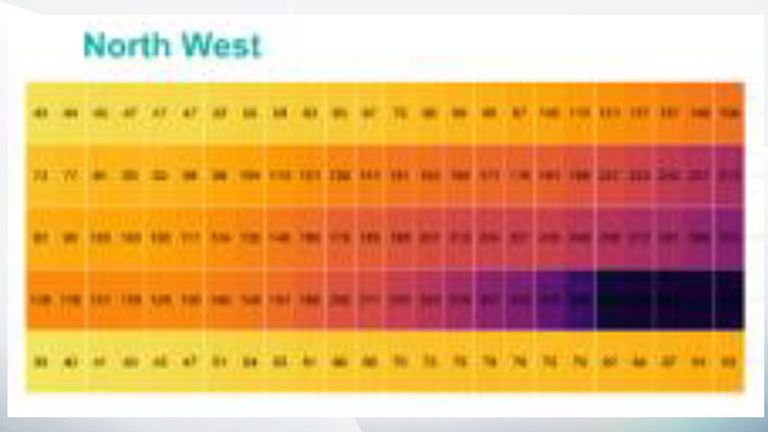
Coronavirus is "creeping up" into older, more vulnerable age groups, England's deputy chief medical officer has said, as he unveiled heat maps showing how the virus is spreading in different parts of the country.
Professor Jonathan Van-Tam said the rise in COVID-19 cases is being seen "nationwide" and "pretty much all areas of the UK are now seeing growths in the infection rate".
He told a news conference that other regions are following the pattern of the North West of England where the virus hasmoved through the age bands, having started spiking among young people at first.
Please use Chrome browser for a more accessible video player
'Incremental creep' of coronavirus infections
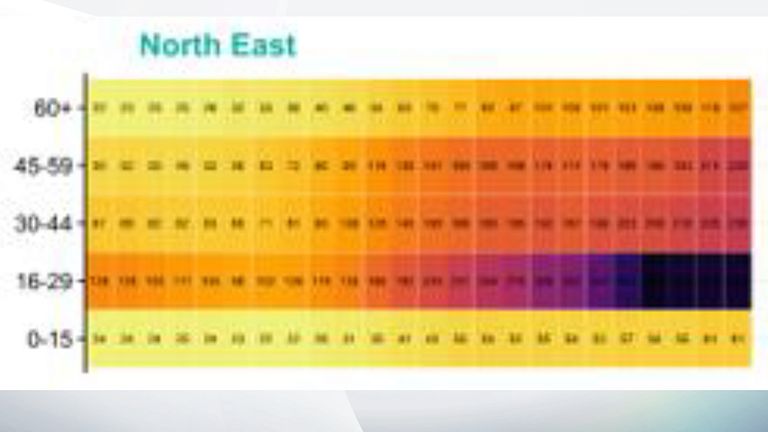
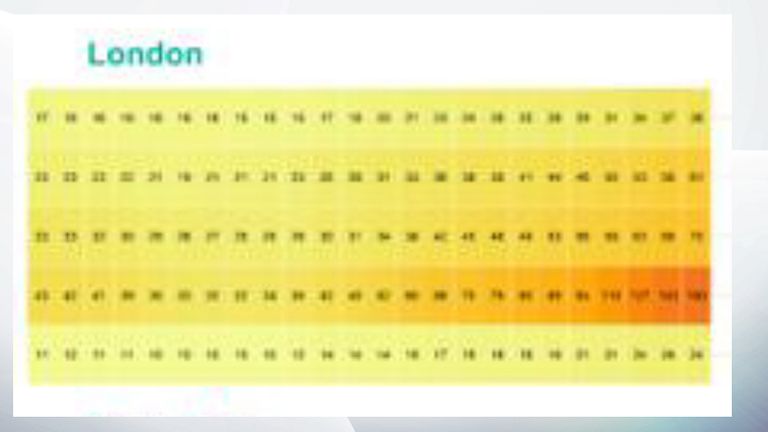
The regional heat maps show age groups 0 to 15, 16 to 29, 30 to 44, 45 to 59 and 60 plus on the y-axis, and dates from mid-September to early October on the x-axis.
Advertisement
The colours range from yellow (meaning fewer than 100 cases per 100,000 people), orange (between 100 and 200 cases per 100,000), red/light purple (between 200 and 300 cases per 100,000), purple (between 300 and 400 cases per 100,000) and dark purple/black (between 400 and 500 cases per 100,000).
Image:The darker colours on the heat map for the North East show how the virus has spread to older age groups
Image:The North West has also seen coronavirus 'creeping up' into older age groups since mid-September
Image:London's heat map shows older age groups in the capital have seen fewer cases compared with the North West and North East
Addressing the regional heat maps, Prof Van-Tam said: "You will see that the infection rate was initially highest in the 16 to 29-year-olds and that, as you move to the right, just gets hotter and hotter.
More from Covid-19
"But as it does so, you can see the incremental creep of the infection into the next age band up, 30 to 44, followed two or three weeks later by a creep-up again into the 45 to 59s, and you can now see that the 60 plus are also heating up on that chart.
"The North West experienced all of this first and my understanding is that pattern is likely to be followed - you can see it in the North East and you can see it in Yorkshire and the Humber just beginning but at an earlier stage."
Prof Van-Tam said the spread of the virus into the 60-plus age group was "of significant concern".
"The elderly suffer a much worse course with COVID-19, they are admitted to hospital for longer periods, and they are more difficult to save," he added.
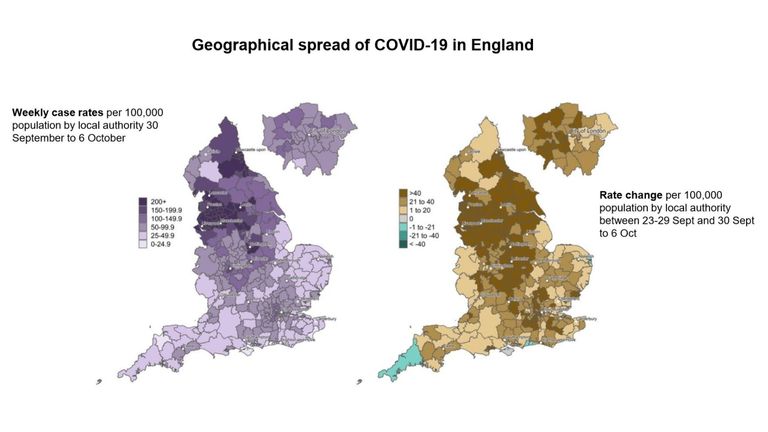
Prof Van-Tam also addressed a slide shown in the briefing about rates of coronavirus cases increasing in the south of England.
He said he was concerned he may have presented a "bi-polar picture that COVID-19 is a problem in the North and not a problem in the South".
"On the contrary, the epidemic this time has clearly picked up pace in the north of England earlier than it did in the first wave and that almost certainly relates to the fact the disease levels in the North, and certainly in the North West, never dropped as far in the summer as they did in the South," he added.
"But pretty much all areas of the UK are now seeing growths in the infection rate and that extending brown map that I showed you, which is sourced from the Joint Biosecurity Centre, absolutely makes that point.
"This is a nationwide phenomenon now that rates are changing upwards across the UK."
Prof Van-Tam was speaking at a news briefing ahead of an announcement on further restrictions from Prime Minister Boris Johnson.