Kamis, 24 September 2020

Covid: Scottish university students banned from going to pubs - BBC News

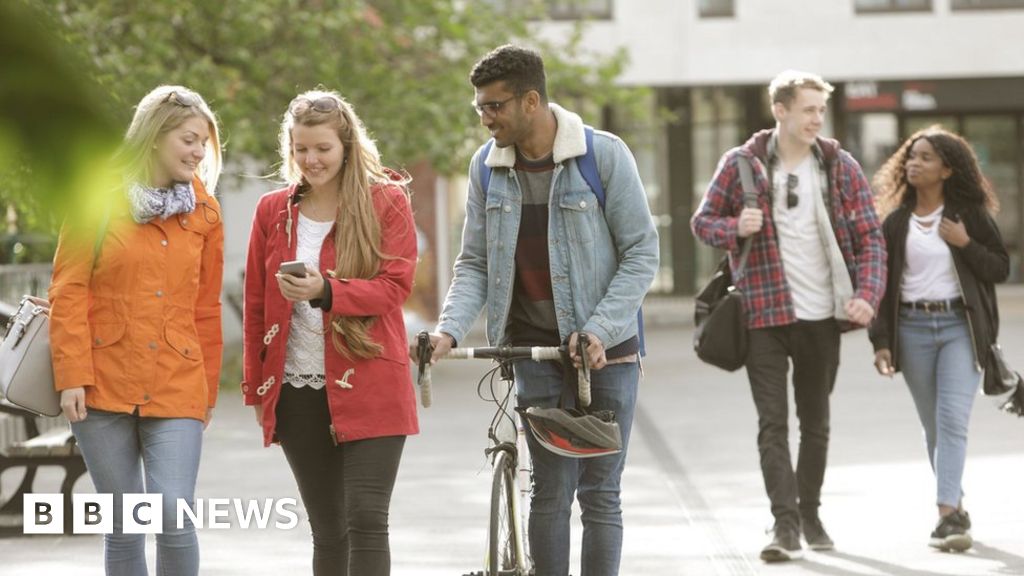
Students are being told not to go to pubs, parties or restaurants in a bid to stem a spate of coronavirus outbreaks at Scottish universities.

Hundreds of students have tested positive at campuses across the country, with many more self-isolating.

Universities have now pledged to make it "absolutely clear" to students that there must be no parties.

And they will not be allowed to socialise with anyone outside of their accommodation.

Students have also been warned that any breaches of the new rules "will not be tolerated".

The stricter guidelines were announced after opposition leaders accused First Minister Nicola Sturgeon of a "basic failure" to anticipate the problem and provide more testing on university campuses.

Universities Scotland said the new guidance that had been agreed with the Scottish government was a "necessary step at this crucial moment of managing the virus in the student population, to protect students and the wider community".

The new rules state that all universities will "make absolutely clear to students that there must be no parties, and no socialising outside their households".

They go on to say: "This weekend, the first of the new tighter Scottish government guidance, we will require students to avoid all socialising outside of their households and outside of their accommodation.

"We will ask them not to go to bars or other hospitality venues."

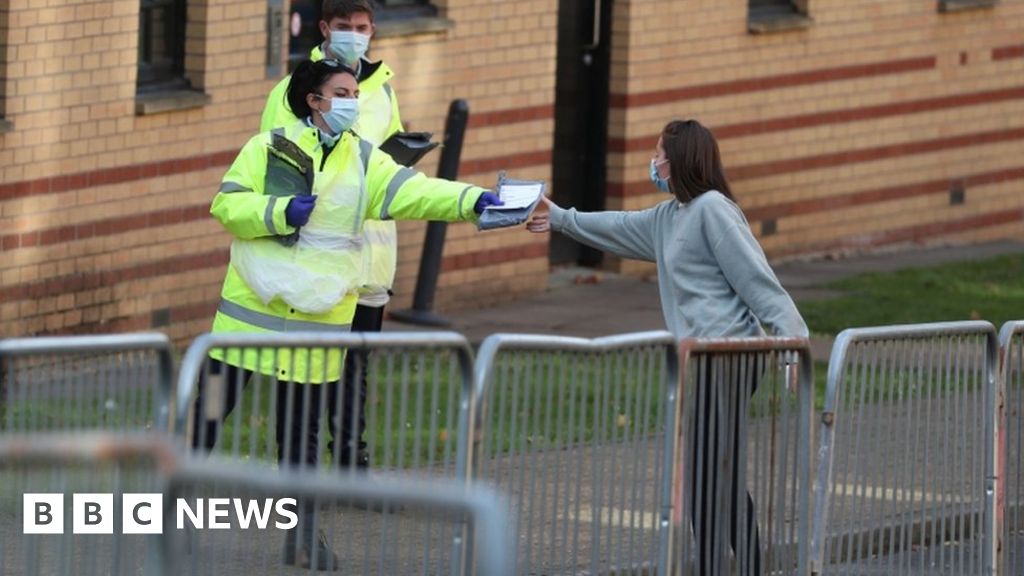
Extra staff will be brought into student accommodation to watch for any breaches of the guidance and to support students who are self-isolating.

Police Scotland will also be monitoring student behaviour off-campus and in private accommodation.

And private providers of student accommodation will also be urged to strictly enforce the guidance.

Students will also be required to download the Protect Scotland app.

The guidance warns: "We will take a strict 'Yellow Card/Red Card' approach to breaches of student discipline that put students and others at risk.

"While we first want to advise students about breaches of discipline, we will not hesitate to escalate this to disciplinary action including potential discontinuation of study."

Infection rates among age groups

Several universities across the country are dealing with major outbreaks of the virus, with many students in halls of residence in Glasgow, Dundee, Aberdeen and Edinburgh all being told to self-isolate.

A total of 124 Glasgow University students have so far tested positive, with 600 in isolation, while all 500 residents at the Parker House halls in Dundee have been told to quarantine.

And 120 cases have been identified in an outbreak at Edinburgh Napier University.

Opposition parties have argued that the Scottish government should have been better prepared for outbreaks when university students returned for the new term.

Ms Sturgeon has said the number of positive cases at universities was likely to increase, but claimed this showed that the test and protect system "is working, and we must continue to have confidence in that".

Life for university students was already very different this term.

Most students were already set to learn mostly online, but the university experience is a social one as much as an academic one.

Perhaps the most significant move is to appeal to students not to visit bar or hospitality venues.

Ultimately students who break the rules on campus or in university accommodation face expulsion.

However, universities know they also have to appeal to the individual's sense of responsibility and common sense.

It will still be a big ask. Homesick students won't usually be able to go back inside the family home they lived in until a few weeks ago.

Starting university can be a difficult experience - a student may not like their course or may find it hard to live away from home or make new friends.

This year it will be even tougher so for that reason, it will be more important than ever to consider the wellbeing and mental health of students.

Let's block ads! (Why?)


https://news.google.com/__i/rss/rd/articles/CBMiQWh0dHBzOi8vd3d3LmJiYy5jby51ay9uZXdzL3VrLXNjb3RsYW5kLXNjb3RsYW5kLXBvbGl0aWNzLTU0Mjg1NzIw0gFFaHR0cHM6Ly93d3cuYmJjLmNvLnVrL25ld3MvYW1wL3VrLXNjb3RsYW5kLXNjb3RsYW5kLXBvbGl0aWNzLTU0Mjg1NzIw?oc=5

2020-09-24 16:49:29Z
52781080284442

Coronavirus: Test turnaround times getting longer in England - BBC News

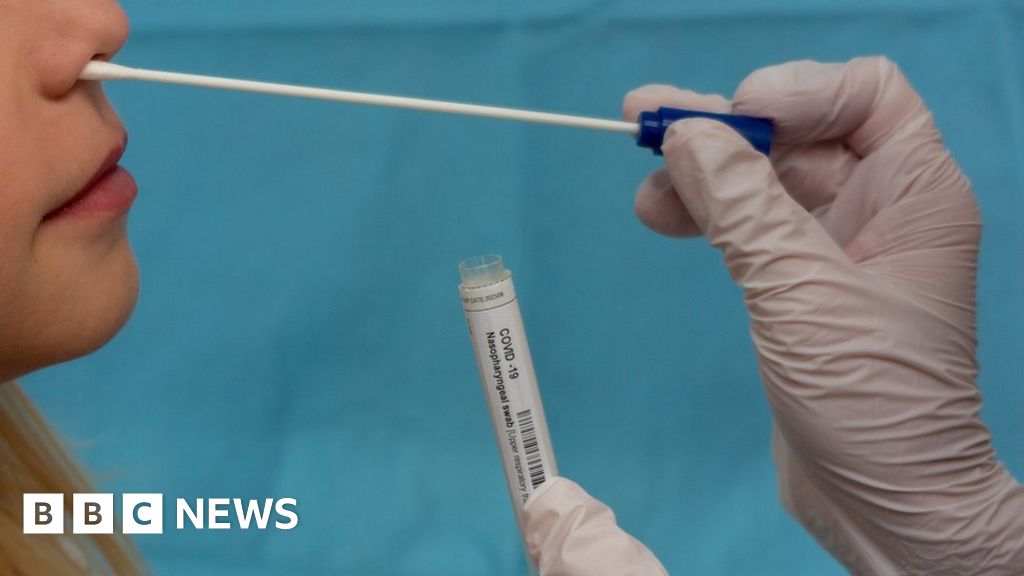
People are waiting longer for test results from England's community Covid testing centres, figures show.

Only 28% of tests carried out in these venues came back in 24 hours in the week up to 16 September.

That is down from one in three last week, and two in three the week before, NHS Test and Trace said.

Just over 5% of tests took more than three days to turn around. It comes as the government is struggling to increase lab capacity to process tests.

Access to community testing has had to be rationed because the network of five Lighthouse Labs, which process tests done in the community, are struggling to keep up with demand.

The opening of a sixth lab in Newport has been delayed from August.

The government said that lab and a seventh in Loughborough would be open by next month, helping to double lab capacity to 500,000 by the end of October.

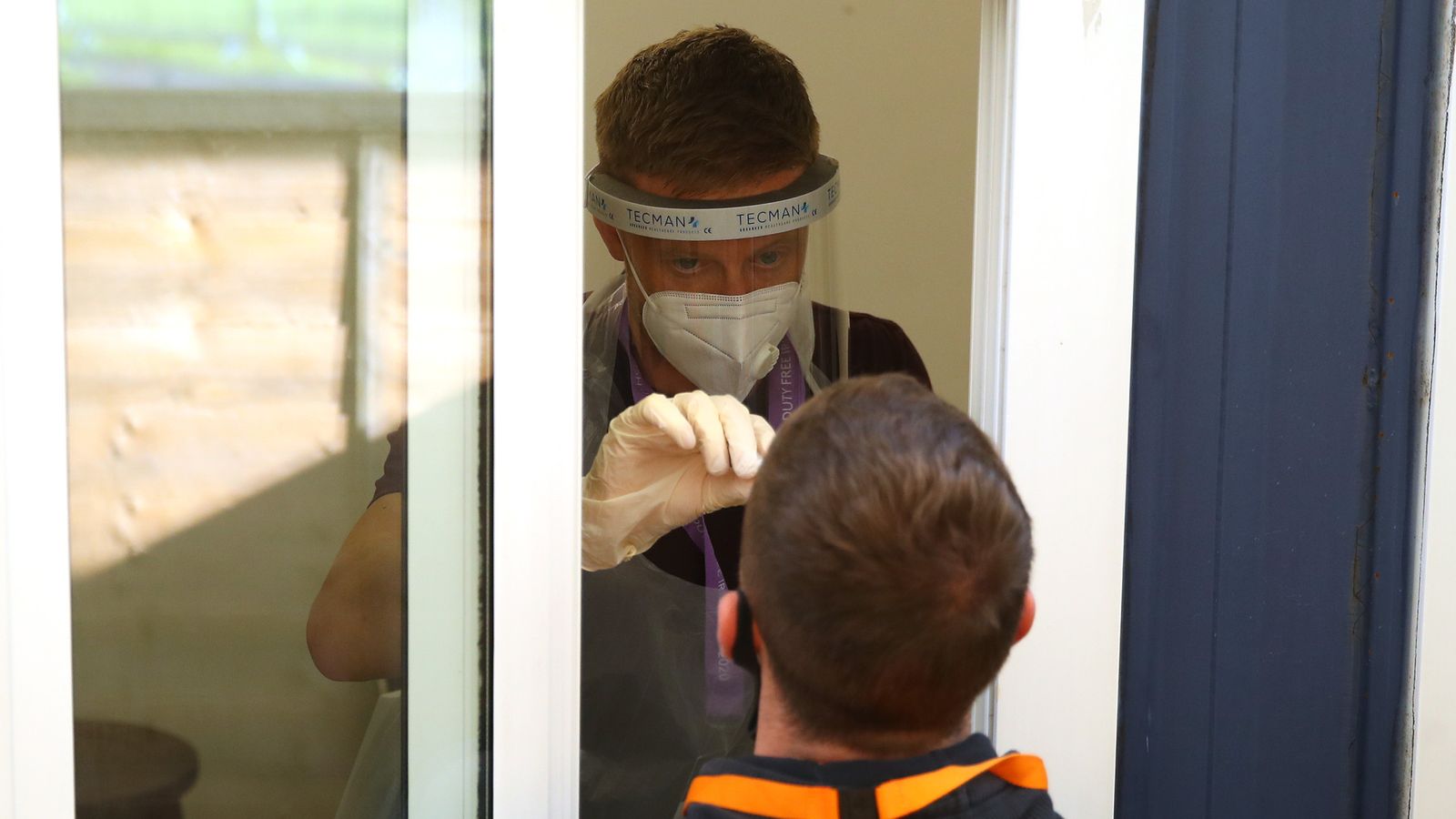
There are three types of community testing centres - drive-thrus, walk-ins and mobile units that are deployed to hotspot areas.

  • Average turnaround times for regional drive-thru centres rose from 27 hours the week before to 30
  • Mobile units saw average times of 31 hours up from 26
  • Performance for local walk-in centres improved slightly from 35 to 34 hours

Turnaround times for kits posted out to care homes and people's private homes improved, however. The government has been prioritising care homes for testing in recent weeks amid the shortage of tests.

Testing carried out in hospitals is processed by their own labs, and nine in 10 test results are provided in 24 hours.

The weekly data released by NHS Test and Trace also includes figures for the performance of contact tracers.

They obtained contact details for 77,500 close contacts of people who had tested positive, reaching three-quarters of them to ask them to self-isolate.

NHS Test and Trace boss Baroness Dido Harding said the system was facing "unprecedented demand".

The data shows over the past two weeks more than 200,000 children under nine have been tested - nearly three times more than were tested the two weeks before that, suggesting the return to school did lead to an increase in this age group seeking tests. Less than 1% tested positive.

Baroness Harding added: "We continue to work tirelessly to build our testing capacity to meet this and our target of 500,000 tests a day, building our lab network and testing sites across the country."

Meanwhile, people living in England and Wales are being urged to download the government's contact-tracing app following its official release.

NHS Covid-19 instructs users to self-isolate for 14 days if it detects they were nearby someone who has the virus.

It also has a check-in scanner to alert owners if a venue they have visited is found to be an outbreak hotspot.

Anyone aged 16 and over is being asked to install the app on to their smartphone.

Let's block ads! (Why?)


https://news.google.com/__i/rss/rd/articles/CBMiKmh0dHBzOi8vd3d3LmJiYy5jby51ay9uZXdzL2hlYWx0aC01NDI4MTA3MdIBLmh0dHBzOi8vd3d3LmJiYy5jby51ay9uZXdzL2FtcC9oZWFsdGgtNTQyODEwNzE?oc=5

2020-09-24 15:11:15Z
52781074875560

Covid in Scotland: How do you self-isolate in a student flat? - BBC News

Hundreds of students have been asked to self-isolate in their halls of residence following Covid outbreaks at a number of Scotland's universities.

About 600 students are isolating at residential halls at the University of Glasgow, with another 500 in quarantine at Abertay University in Dundee.

For many Freshers in the first few weeks at university, it will be the first time they have lived away from the family home.

So what is it like to self-isolate in a student flat?

'I am slowly running out of food'

One student, who is self isolating because of positive cases in her student household, told the BBC she has had to adapt quickly.

She said: "Being asked to isolate in uni halls isn't the best. It's not like in your own house where you might have a garden and your own bathroom and a separate room to work in and sleep in.

"Most of the time is spent in my bedroom. It's nice but it can get me down a bit. I get out of bed, take two steps to my desk and that's what I do for most of the day.

"We share our bathrooms - there are five showers for eight of us which is plenty but we have designated two for the people who have tested positive so we have tried to contain the virus within our household."

She also said the students needed practical help.

'Nowhere to go'

"I am slowly running out of food. I've only been here a week and haven't done a big food shop. I have been using up the few things I brought with me. It's another stressor to deal with."

She said students from her accommodation had socialised in other halls before the outbreak and had been "mingling outside their household".

She added the threat from the university accommodation bosses that anyone breaking rules may be evicted was worrying.

She said: "Threats to kick people out are quite harsh. We took a decision as a group to be more responsible because we knew we didn't have somewhere to go if we got kicked out. It might make students think twice."

Concerned mum Amanda from Argyll is in regular contact with her 18-year-old daughter who is living in a five-person student flat within Murano Halls in Glasgow, the epicentre of one of the main outbreaks.

She told BBC Radio Scotland's Mornings with Kaye Adams: "I believe the architect of the Murano Halls was famed for prison designs. And it has been a tough and lonely situation.

"My daughter was the first in her flat to test positive and there was a bit of a social stigma to that."

In her flat, Amanda's daughter shares a bathroom and a kitchen with four others, and this makes self-isolating difficult.

'They need PPE to go for a pee'

Amanda said: "She has to get into PPE to go for a pee. Then she has to disinfect everything - the flusher, the taps, the sink, the door handle before she can go back to her tiny room. It's the last thing you want to do when you are feeling rubbish.

"She can't access the kitchen at the same time as any of the others so she goes in there alone to cook in PPE and again has to disinfect everything - the taps, the surfaces, the cooker, knives if she has used them.

"She ran out of fresh fruit and veg early and is now on to the stock of dried food we sent her to Glasgow with."

Amanda also said that laundry was an issue because "not much" was done in the first two weeks at university and none now that her daughter was ill.

Three out of the five freshers in her flat have tested positive for the virus now and the other two are awaiting results but they are all self-isolating.

Amanda is relieved for her daughter that her flatmates are all accepting of the situation but is concerned for some young people who may experience tension in their flats with a "blame game" over who brought the virus in.

The Covid clusters in Glasgow are centred on two halls of residence, the Murano Street Village and Cairncross residences, with 124 students testing positive so far.

The university said the actual number of infected students was "likely to be higher" and blamed social activity at the start of Freshers Week, from 12-14 September.

In a statement it said that affected students had access to food and other supplies.

It added that advice on medical issues including mental health and wellbeing was also being made available.

The Glasgow outbreak is one of a number linked to student residences across Scotland.

All 500 residents at Parker House in Dundee have been asked to self-isolate until contact tracing is complete after three confirmed coronavirus cases.

In Aberdeen 72 residents at Hillhead student village are self isolating after students tested positive.

Aberdeen University has urged anyone who attended parties or other gatherings since Friday to come forward to aid contact tracing efforts, and promised that if they do so they will not be punished for breaching guidance.

Let's block ads! (Why?)


https://news.google.com/__i/rss/rd/articles/CBMiLWh0dHBzOi8vd3d3LmJiYy5jb20vbmV3cy91ay1zY290bGFuZC01NDI0NDMzM9IBMWh0dHBzOi8vd3d3LmJiYy5jb20vbmV3cy9hbXAvdWstc2NvdGxhbmQtNTQyNDQzMzM?oc=5

2020-09-24 12:55:18Z
52781080284442

Rishi Sunak unveils emergency jobs scheme - BBC News

The government and firms will continue to top up wages of workers who have not been able to return to the workplace full time due to the coronavirus.

The Jobs Support Scheme, which will replace the furlough scheme, will see workers get three quarters of their normal salaries for six months.

It aims to stop mass job cuts after the government introduced new measures to tackle a rise in coronavirus cases.

Chancellor Rishi Sunak said it was part of a wider "winter economy plan".

Nearly three million workers - or 12% of the UK's workforce - are currently on partial or full furlough leave, according to official figures. The Job Retention Scheme ends on 31 October.

"The government will directly support the wages of people in work, giving businesses who face depressed demand the option of keeping employees in a job on shorter hours, rather than making them redundant," Mr Sunak said.

He added said the new scheme would "support only viable jobs" as opposed to jobs that only exist because the government is continuing to subsidise the wages.

"The primary goal of our economic policy remains unchanged - to support people's jobs - but the way we achieve that must evolve," he said.

"I cannot save every business, I cannot save every job."

The new scheme begins on 1 November and will cost the government an estimated £300m a month.

Mr Sunak said a similar scheme for the self-employed would be available.

How will the Jobs Support Scheme work?

  • Under the scheme, the government will subsidise the pay of employees who are working fewer than normal hours due to lower demand
  • It will apply to staff who can work at least a third of their usual hours
  • Employers will pay staff for the hours they do work
  • For the hours employees can't work, the government and the employer will each cover one third of the lost pay
  • The grant will be capped at £697.92 per month
  • All small and medium sized businesses will be eligible for the scheme
  • Larger business will be eligible if their turnover has fallen during the crisis
  • It will be open to employers across the UK even if they have not previously used the furlough scheme
  • The scheme will run for six months starting in November

The furlough scheme was a bridge to carry livelihoods through the crisis. But the bridge needs to reach the other side of the gap to be effective.

The chancellor's wage subsidy scheme is a continuation of that support - but it's of a different, less generous type. As employers will have to pay more than before, and employees will have to be working, it's aimed only at those businesses and posts that are viable.

So some workers will slip through the gap: the government is keen that those in unsustainable jobs are spurred to think about their next move.

And that means unemployment will still rise - although not as far perhaps as the four million some economists previously feared. The cost of the chancellor's new plan will run into billions, adding to the shortfall of £320bn the Treasury is already facing.

At some point, taxes may have to rise to help plug that but there was no mention of that today, for it may be some time before the economy will be strong enough to take that on.

But the bill facing the Chancellor now is likely to be far smaller than the ultimate cost to the economy of doing nothing.

Longer repayments

Mr Sunak also announced that businesses that have borrowed money through the government's loan scheme would be given more time to repay the money.

A cut in VAT for hospitality and tourism companies will also be extended until March. The cut from 20% to 5% VAT - which came into force on 15 July - had been due to expire on 12 January next year.

The chancellor said that small businesses who took out "Bounce Back" loans can use a new Pay as You Grow flexible repayment system. It means borrowings can be repaid over 10 years instead of the original six year term.

The longer repayment time also applied to small and medium-sized firms who borrowed under the Coronavirus Business Interruption Loan Scheme.

Businesses will also have more time to apply for these loans, as well as the Coronavirus Large Business Interruption Loan Scheme and the Future Fund. Application dates for the various schemes had been due to end in October and November.

Let's block ads! (Why?)


https://news.google.com/__i/rss/rd/articles/CBMiLGh0dHBzOi8vd3d3LmJiYy5jby51ay9uZXdzL2J1c2luZXNzLTU0MjgwOTY20gEwaHR0cHM6Ly93d3cuYmJjLmNvLnVrL25ld3MvYW1wL2J1c2luZXNzLTU0MjgwOTY2?oc=5

2020-09-24 12:45:00Z
52781079634830

Live: Chancellor discusses furlough at commons as covid threat returns - The Sun

[unable to retrieve full-text content]

  1. Live: Chancellor discusses furlough at commons as covid threat returns  The Sun
  2. Sunak to announce new job protection plans  BBC News
  3. Coronavirus latest: Fears persist but outlook at some UK companies are ahead of expectations  Financial Times
  4. London markets open down ahead of multi-billion pound 'winter plan'  Daily Mail
  5. Coronavirus: Could the UK adopt a German-style jobs scheme? - BBC Newsnight  BBC Newsnight
  6. View Full coverage on Google News

https://news.google.com/__i/rss/rd/articles/CBMiK2h0dHBzOi8vd3d3LnlvdXR1YmUuY29tL3dhdGNoP3Y9VUNhUVJSWTNtZ0nSAQA?oc=5

2020-09-24 10:19:22Z
52781079634830

Coronavirus: Test and trace figures show positive cases up almost three times on end of August - Sky News

The number of people testing positive for coronavirus in England is almost three times as many as at the end of August, official data shows.

The new numbers from the NHS test and trace system show 19,278 new people tested positive between 10-16 September.

Cases are now double the number recorded when the system was launched at the end of May.

But the scheme is also showing signs of struggling, with turnaround times for in-person swab testing taking longer to turn around results.

Only 28.2% of in person test results were received within 24 hours compared to 33.3% in the previous week even though the number of tests carried out was similar.

Although, the number of people transferred to the contact tracing system - 21,268 - increased by 37% compared to the previous week, a continuation of the sharp upward trend seen from the beginning of August.

The proportion of people reached through tracing has decreased slightly, 77.7% compared with 83.8% in previous week.

More from UK

The figures show 77,556 people were identified as coming into close contact with someone who had tested positive, an increase of 16%.

Out of these 74.7% were reached.

Let's block ads! (Why?)


https://news.google.com/__i/rss/rd/articles/CBMigQFodHRwczovL25ld3Muc2t5LmNvbS9zdG9yeS9jb3JvbmF2aXJ1cy10ZXN0LWFuZC10cmFjZS1maWd1cmVzLXNob3ctcG9zaXRpdmUtY2FzZXMtdXAtYWxtb3N0LXRocmVlLXRpbWVzLW9uLWVuZC1vZi1hdWd1c3QtMTIwODAxODfSAYUBaHR0cHM6Ly9uZXdzLnNreS5jb20vc3RvcnkvYW1wL2Nvcm9uYXZpcnVzLXRlc3QtYW5kLXRyYWNlLWZpZ3VyZXMtc2hvdy1wb3NpdGl2ZS1jYXNlcy11cC1hbG1vc3QtdGhyZWUtdGltZXMtb24tZW5kLW9mLWF1Z3VzdC0xMjA4MDE4Nw?oc=5

2020-09-24 10:41:15Z
52781074875560

Hancock refuses to rule out Christmas student lockdown - BBC News

Matt Hancock has refused to rule out banning students from returning home at Christmas, to limit the spread of coronavirus outbreaks.

The health secretary was responding to a question about concerns that students could be spreading Covid-19, amid numerous university-based outbreaks.

At Glasgow University 120 students have tested positive for Covid-19 and are among 600 self-isolating there.

Academics had warned against the mass movement of the UK's million students.

The University and College Union had called for students to be taught wholly online, from home until Christmas, ahead of the start of term, but ministers advised some face-to-face learning was key to students' mental health.

This has meant up to a million students have returned to their university premises or are commuting there regularly.

In a response to a question on BBC Radio 4's Today Programme about whether students would be asked to stay in their university towns at Christmas, Mr Hancock said he had "learned not to rule things out".

"I don't want to have a situation like that and I very much hope we can avoid it.

"We have said throughout that our goal is to suppress the virus, whilst protecting the economy and protecting education.

"And protecting people in education whether it's school or university is obviously critical as is protecting the economy."

He added: "In terms of universities, we are working very closely with them to try to make sure the students are safe, but that they can also get their education."

"I've learned not to rule things out and one of the challenges that we have is how to make sure people are as safe as possible."

But he added: "This is not our goal, I don't want to leave you with the expectation - but we have to work on all contingencies at the moment."

It comes after a growing number of outbreaks on university campuses, with students isolating in their residential groups at Glasgow, Dundee and Liverpool.

Boris Johnson has said universities have been given a "clear request not to send students home in the event of an outbreak, so as to avoid spreading the virus across the country".

Socialising

University students are being urged not to hold parties in their halls of residence under the rule of six, and to avoid socialising in places that do not have Covid-19 protections in place.

Many universities are warning students they face fines or even having their courses terminated if they do not follow the regulations.

Universities have taken extensive measures in their buildings to minimise risks on campuses and many lectures are already being taught online, but there is less control over what takes place off university premises.

But minutes of a recent meeting of the government's scientific advisory group on emergencies, suggest ministers were aware of the risks of bringing students back to university and sending them home at the end of term.

The minutes of the 1 September meeting said: "Sage noted that risks of larger outbreaks spilling over from HE institutions are more likely to occur towards the end of the academic term, coinciding with Christmas and New Year period when students return home.

"This could pose risk to both local communities and families, and will require national oversight, monitoring and decision-making."

UCU general secretary Jo Grady has said the evidence was clear that online learning should be the default position and that government should be working to prevent outbreaks not creating conditions for them.

She said:" students and their parents will be rightly worried about being locked down in an unfamiliar area over Christmas.

"Locking students down at Christmas is based on a flawed boarding school vision of university that ignores the fact thousands of students and staff commute every day around the UK to and from university.

"Threatening to lock students up over the festive period is not the solution."

She also urged the government to act now, before thousands more students move onto campuses this weekend.

It was completely irresponsible to let students go back to university when outbreaks have already started, she added.

'Number one priority'

University leaders say they have working hard for months to ensure students can return to their campuses safely.

"Ensuring the health, safety and wellbeing of students, staff and local communities in the new academic year is the number one priority for universities," said a Universities UK spokeswoman.

UUK said institutions were taking action to encourage responsible student behaviour, would continue to follow the latest government and public health advice, and were working in partnership with local authorities and public health bodies "to ensure that effective and rapid outbreak response plans are in place and clearly understood".

Let's block ads! (Why?)


https://news.google.com/__i/rss/rd/articles/CBMiLWh0dHBzOi8vd3d3LmJiYy5jby51ay9uZXdzL2VkdWNhdGlvbi01NDI3ODA1M9IBMWh0dHBzOi8vd3d3LmJiYy5jby51ay9uZXdzL2FtcC9lZHVjYXRpb24tNTQyNzgwNTM?oc=5

2020-09-24 08:59:06Z
52781080216610