Rabu, 16 September 2020

Brexit: Lord Keen quits in row over controversial bill - Sky News

A government minister has quit in the row over Boris Johnson's bid to potentially break international law by overriding the Brexit deal.

Lord Keen of Elie, the advocate general for Scotland, had reportedly handed in his resignation earlier on Wednesday.

The prime minister appeared to suggest he was trying to convince the peer to stay on in his post, telling a committee that afternoon that "conversations on that matter are still continuing".

But Downing Street has now confirmed that Lord Keen had stepped down, a spokesperson adding: "The prime minister thanks him for his service."

It follows the government's admission that proposed Brexit legislation would break international law.

The UK Internal Market Bill, which cleared its first parliamentary hurdle to becoming law earlier this week, has been heavily criticised in both Westminster and Brussels.

The EU has threatened legal action and said it could threaten ongoing trade talks on a future EU-UK relationship.
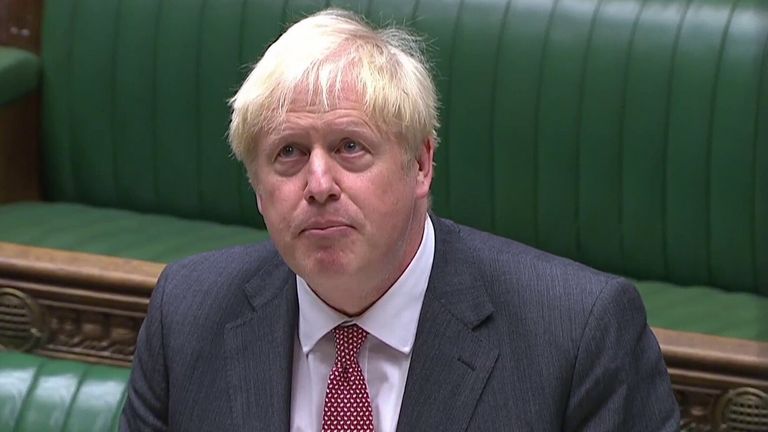
More from Brexit

Boris Johnson
MPs vote through Brexit bill

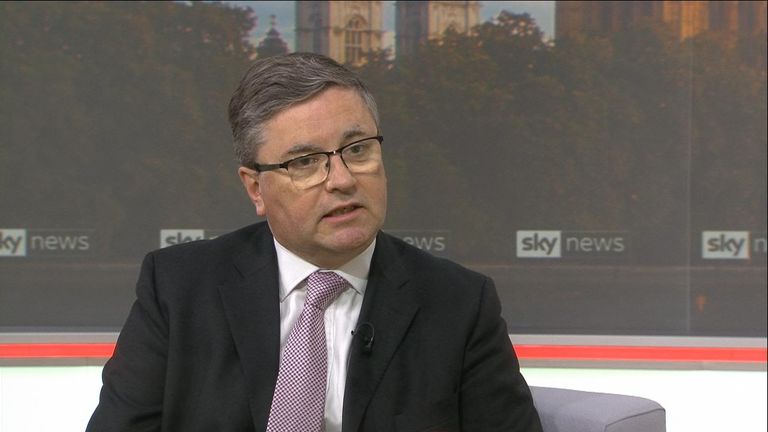
Sky's deputy political editor Sam Coates said Lord Keen "was one of the government's law officers - he was charged with executing legal duties", adding: "He clearly felt he could not stay in post while the government is pushing through legislation which will break international law."

Coates explained: "He earlier submitted his resignation and during that time it appears ministers were trying to talk him out of leaving the government - but conveniently, after the prime minister had finished in front of the Liaison Committee of MPs, Downing Street announced he had gone.

"It appears Downing Street and the government are very keen to know that their plans will continue to breach international law and that was something that this law officer could not continue to tolerate. It puts further pressure on other law officers, including Justice Secretary Robert Buckland and Attorney General Suella Braverman."

Last week, Northern Ireland Secretary Brandon Lewis told the House of Commons that the bill, if passed, would reinterpret the Northern Ireland Protocol - a key part of the withdrawal agreement - and so break international law "in a very specific and limited way".

However, in the House of Lords on Tuesday, Lord Keen told peers that the bill does not "constitute a breach of international law or of the rule of law".

He also claimed Mr Lewis had "essentially answered the wrong question" when asked about the bill in the Commons.

"I have satisfied myself as to the correct legal position in this context," Lord Keen said.

But on Wednesday morning, Mr Lewis contradicted Lord Keen's assertion and said his comments in the Commons last week were "absolutely in line" with the government's legal advice on the matter.

He said: "I gave a very straight answer to parliament last week in line with the attorney general's position.

"My position is absolutely in line with the legal advice that the attorney general put out."
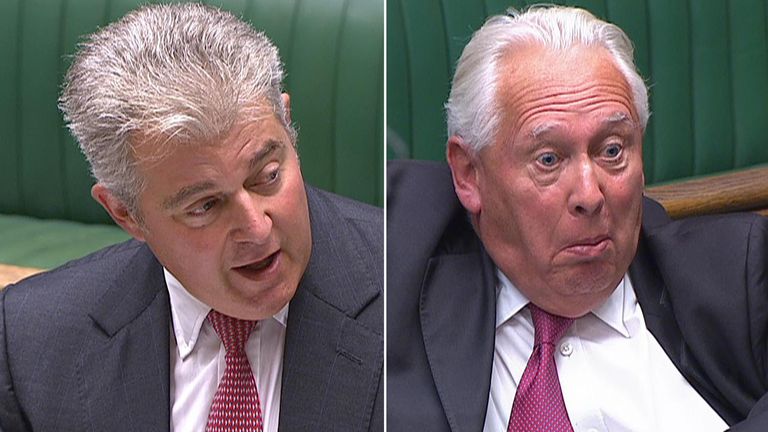
A senior UK politician told the country’s parliament on September 8 that proposed legislation related to Brexit “does break international law in a very specific and limited way.”
Minister admits new bill will break law

Speaking to the House of Commons Northern Ireland Affairs Committee, Mr Lewis added: "I read out something very specific because I wanted to ensure that what I said... to make sure that I was giving the House a straight answer."

In Brussels on Wednesday, European Commission President Ursula von der Leyen used her annual State of the Union speech to warn the UK cannot unilaterally set aside the withdrawal agreement.

"This withdrawal agreement took three years to negotiate and we worked relentlessly on it line by line, word by word, and together we succeeded," she said.

"The European Union and the UK jointly agreed that it was the best and only way for ensuring peace on the island of Ireland and we will never backtrack on that.

"This agreement has been ratified by this house and the House of Commons. It cannot be unilaterally changed, disregarded, disapplied.

"This is a matter of law and trust and good faith."

Mrs von der Leyen said Margaret Thatcher had always insisted the UK honoured its treaty commitments.

She quoted the former UK prime minister as saying: "Britain does not break treaties. It would be bad for Britain, bad for relations with the rest of the world and bad for any future treaty on trade."

Mrs von der Leyen added: "This was true then and this is true today. Trust is the foundation of any strong partnership."

A top civil servant and the government's most senior lawyer had already quit over the row at Westminster over the UK Internal Market Bill.

Sir Jonathan Jones, permanent secretary to the Government Legal Department, will leave his post before his five-year term was due to end next April.

Let's block ads! (Why?)


https://news.google.com/__i/rss/rd/articles/CBMiZWh0dHBzOi8vbmV3cy5za3kuY29tL3N0b3J5L2JyZXhpdC1wbS11bmFibGUtdG8tc2F5LWlmLW1pbmlzdGVyLWhhcy1xdWl0LWFtaWQtbGVnaXNsYXRpb24tcm93LTEyMDczMzc50gFpaHR0cHM6Ly9uZXdzLnNreS5jb20vc3RvcnkvYW1wL2JyZXhpdC1wbS11bmFibGUtdG8tc2F5LWlmLW1pbmlzdGVyLWhhcy1xdWl0LWFtaWQtbGVnaXNsYXRpb24tcm93LTEyMDczMzc5?oc=5

2020-09-16 17:11:09Z
52781066034773

Coronavirus: Children should stay at school until there is a positive test in their bubble, PM says - Sky News

Groups of pupils should only be sent home if there has been a positive test, rather than someone just developing symptoms, the prime minister has said.

Boris Johnson said it was important for teachers and parents to examine the Public Health England guidance about coronavirus testing.

Speaking to MPs on the Liaison Committee, he reiterated government policy when he said: "The reasons for sending such a class home, or a bubble home, would be if somebody tests positive."

Live coronavirus updates from UK and around world

It comes as a teaching union leader warned that schools are struggling to cope with a lack of COVID-19 tests for pupils and staff as the situation is becoming "increasingly out of control".

Health Secretary Matt Hancock: 'Trying to fix' COVID-19 testing

Dr Patrick Roach, general secretary of the NASUWT teaching union, has called on the government to prioritise the education sector for the allocation of tests in light of widespread challenges.

And the Association of School and College Leaders (ASCL) said it has received 264 responses from schools and colleges in recent days where leaders have said they have symptomatic staff and/or pupils who were struggling to access tests.

More from Boris Johnson

Mr Johnson admitted overall demand for tests in England has "massively accelerated" in the last two weeks and there is not enough capacity to meet it.

He promised daily testing capacity would reach 500,000 by the end of October.

The PM insisted: "We have massively increased our testing capacity. I know that many people have had infuriating experiences, and I do sympathise with them.

"89% get their results within 24 hours, if you have an in-person test.

"And the distance that you have to travel to get a test has come down just in the last week. On average from about six or seven miles to about five miles."

The PM also told MPs that the government will "very shortly" be setting out "the priority of the groups that we think should have tests".

He added: "In schools, it's very important that parents and teachers should look at the guidance about when you should get a test."

Justice Sec quizzed on testing
Justice secretary quizzed on testing

Justice Secretary Robert Buckland has told Sky News' Kay Burley that schoolchildren and their parents could be prioritised for coronavirus tests - after hospitals and care homes - as the government deals with "real challenges" in the system.

The government has come under growing pressure over a lack of availability of tests in some parts of England - blamed on problems with laboratory capacity - and admitted it could take a "matter of weeks" to solve the issues.

Tests were not available for people with coronavirus symptoms in some of the worst-affected areas on Wednesday, including Bolton and the local authority of Oadby and Wigston in Leicestershire, as well as Preston and Oldham, said the PA news agency.

Bolton currently has the highest infection rate in England with more than 200 cases per 100,000 people.

Mr Johnson also said he did not want a second national lockdown as it would likely have "disastrous" financial consequences for the UK and "we are going to do everything in our power to prevent it".

:: Subscribe to the Daily podcast on Apple Podcasts, Google Podcasts, Spotify, Spreaker

The UK has recorded 20 more deaths of people with confirmed cases of COVID-19, according to government figures.

There were 3,991 new daily confirmed cases of coronavirus, compared with 3,105 on Tuesday, the figures show.

That means there have been 41,684 deaths in total, according to the official numbers.

Mr Johnson said an inquiry into the government's response to the pandemic would "look at everything that has gone wrong and gone right" but would not be a "good use of official time at the moment".

And he declined to indicate when the inquiry could begin.

Let's block ads! (Why?)


https://news.google.com/__i/rss/rd/articles/CBMihQFodHRwczovL25ld3Muc2t5LmNvbS9zdG9yeS9jb3JvbmF2aXJ1cy1jaGlsZHJlbi1zaG91bGQtc3RheS1hdC1zY2hvb2wtdW50aWwtdGhlcmUtaXMtYS1wb3NpdGl2ZS10ZXN0LWluLXRoZWlyLWJ1YmJsZS1wbS1zYXlzLTEyMDczNDIx0gGJAWh0dHBzOi8vbmV3cy5za3kuY29tL3N0b3J5L2FtcC9jb3JvbmF2aXJ1cy1jaGlsZHJlbi1zaG91bGQtc3RheS1hdC1zY2hvb2wtdW50aWwtdGhlcmUtaXMtYS1wb3NpdGl2ZS10ZXN0LWluLXRoZWlyLWJ1YmJsZS1wbS1zYXlzLTEyMDczNDIx?oc=5

2020-09-16 16:41:15Z
52781066157295

Boris Johnson seeks to head off Brexit rebellion - BBC News

Boris Johnson has reached a deal with potential Tory rebels over a bill to rewrite the EU withdrawal agreement, the BBC understands.

More than 30 Tory MPs were expected to vote for an amendment to the Internal Market Bill next week.

If passed, Sir Bob Neill's amendment would have given MPs the final say over changes to the withdrawal agreement.

The PM has now promised to give MPs "an extra layer of Parliamentary oversight" it is understood.

The BBC's political editor Laura Kuenssberg said the hope from ministers is that this will "prevent rebellion next week".

The UK Internal Market Bill cleared its first hurdle in the Commons on Monday.

The bill sets out changes to the withdrawal deal Boris Johnson signed with the EU in January.

'Good faith'

Mr Johnson says it is needed to protect the "territorial integrity" of the UK if trade talks with the EU fail.

Speaking to the Liaison Committee, a panel of senior backbench MPs, he insisted the bill was a "belt and braces" measure in case of "extreme" interpretations of the withdrawal agreement by the EU.

The bill was "about ensuring friends and and partners don't do something unreasonable," he added.

Pressed by Labour MP Hilary Benn on whether he believed the EU was negotiating with the UK in good faith, he said: "I don't believe they are."

He added that it was "always possible that I am mistaken and perhaps they will prove my suspicions wrong".

'Specific and limited'

But he told the MPs a no-deal scenario was "not what this country wants" and "it's not what our EU friends and partners want from us".

"Therefore I have every hope and expectation that that won't be the outcome."

The Internal Markets Bill has provoked a backlash from the EU, which has threatened legal action - and the possible suspension of trade talks - if it is not withdrawn.

Northern Ireland Secretary Brandon Lewis last week admitted - in response to a Commons question from Tory MP Sir Bob Neill - that the bill would break international law in a "specific and limited" way.

His words prompted the resignation of a senior government law officer and condemnation from all five living former prime ministers, who have warned that it threatens the UK's reputation for upholding treaties and international laws.

A number of Tory MPs abstained, or voted against, the bill on Monday - and many of them were expected to back Sir Bob Neill's amendment next week.

'Legal safety net'

Writing in the I Paper, Sir Bob said his amendment "seeks to put a Parliamentary lock on the powers the government is seeking to give itself".

He added: "Taking a sledgehammer to the entire bill would be the wrong approach.

"There is a great deal of good in it, with 51 of its 54 clauses fairly innocuous for the large majority.

"However, the gravity of the three remaining clauses require, at the very least, additional checks and balances.

"My amendment would ensure further Parliamentary approval is secured before the government can discharge them."

Speaking earlier, Mr Johnson's official spokesman said the PM and his team "are in conversations with MPs about the bill and the importance of creating the legal safety net".

He confirmed that the prime minister had spoken to Sir Bob and said "conversations with MPs will continue".

What is the Internal Markets Bill?

The bill sets out rules for the operation of the UK internal market - trade between England, Scotland, Wales and Northern Ireland - after the end of the Brexit transition period in January.

It proposes:

  • No new checks on goods moving from Northern Ireland to the rest of Great Britain
  • Giving UK ministers powers to modify or "disapply" rules relating to the movement of goods that will come into force from 1 January if the UK and EU are unable to reach an alternative agreement through a trade deal
  • Powers to override previously agreed obligations on state aid - government support for businesses.

The bill explicitly states that these powers should apply even if they are incompatible with international law.

Ministers say the legislation is needed to prevent "damaging" tariffs on goods travelling from the rest of the UK to Northern Ireland if negotiations with the EU on a free trade agreement fail.

But some senior Conservatives - including former Prime Minister John Major - have warned it risks undermining the UK's reputation as an upholder of international law.

The legislation has also proved controversial with the devolved administrations, which are concerned about how the UK's "internal market" will operate post-Brexit and who will set regulations and standards.

Let's block ads! (Why?)


https://news.google.com/__i/rss/rd/articles/CBMiL2h0dHBzOi8vd3d3LmJiYy5jby51ay9uZXdzL3VrLXBvbGl0aWNzLTU0MTcwMzk30gEzaHR0cHM6Ly93d3cuYmJjLmNvLnVrL25ld3MvYW1wL3VrLXBvbGl0aWNzLTU0MTcwMzk3?oc=5

2020-09-16 15:56:15Z
52781066034773

Boris Johnson seeks to head off Brexit rebellion - BBC News

Boris Johnson has reached a deal with potential Tory rebels over a bill to rewrite the EU withdrawal agreement, the BBC understands,

More than 30 Tory MPs were expected to vote for an amendment to the Internal Market Bill next week.

If passed, Sir Bob Neill's amendment would have given MPs the final say over changes to the withdrawal agreement.

The PM has now promised to give MPs "an extra layer of Parliamentary oversight" it is understood.

The BBC's political editor Laura Kuenssberg said the hope from ministers is that this will "prevent rebellion next week".

The UK Internal Market Bill cleared its first hurdle in the Commons on Monday.

The bill sets out changes to the withdrawal deal Boris Johnson signed with the EU in January.

'Good faith'

Mr Johnson says it is needed to protect the "territorial integrity" of the UK if trade talks with the EU fail.

Speaking to the Liaison Committee, a panel of senior backbench MPs, he insisted the bill was needed as a "belt and braces" measure in case of "extreme" interpretations of the withdrawal agreement by the EU.

The bill was "about ensuring friends and and partners don't do something unreasonable," he added.

Pressed by Labour MP Hilary Benn on whether he believed the EU was negotiating with the UK in good faith, he said: "I don't believe they are."

He added that it was "always possible that I am mistaken and perhaps they will prove my suspicions wrong".

'Specific and limited'

But he told the MPs a no-deal scenario was "not what this country wants" and "it's not what our EU friends and partners want from us".

"Therefore I have every hope and expectation that that won't be the outcome."

The Internal Markets Bill has provoked a backlash from the EU, which has threatened legal action - and the possible suspension of trade talks - if it is not withdrawn.

Northern Ireland Secretary Brandon Lewis last week admitted - in response to a Commons question from Tory MP Sir Bob Neill - that the bill would break international law in a "specific and limited" way.

His words prompted the resignation of a senior government law officer and condemnation from all five living former prime ministers, who have warned that it threatens the UK's reputation for upholding treaties and international laws.

A number of Tory MPs abstained, or voted against, the bill on Monday - and many of them were expected to back Sir Bob Neill's amendment next week.

'Legal safety net'

Writing in the I Paper, Sir Bob said his amendment "seeks to put a Parliamentary lock on the powers the government is seeking to give itself".

He added: "Taking a sledgehammer to the entire bill would be the wrong approach.

"There is a great deal of good in it, with 51 of its 54 clauses fairly innocuous for the large majority.

"However, the gravity of the three remaining clauses require, at the very least, additional checks and balances.

"My amendment would ensure further Parliamentary approval is secured before the government can discharge them."

Speaking earlier, Mr Johnson's official spokesman said the PM and his team "are in conversations with MPs about the bill and the importance of creating the legal safety net".

He confirmed that the prime minister had spoken to Sir Bob and said "conversations with MPs will continue".

What is the Internal Markets Bill?

The bill sets out rules for the operation of the UK internal market - trade between England, Scotland, Wales and Northern Ireland - after the end of the Brexit transition period in January.

It proposes:

  • No new checks on goods moving from Northern Ireland to the rest of Great Britain
  • Giving UK ministers powers to modify or "disapply" rules relating to the movement of goods that will come into force from 1 January if the UK and EU are unable to reach an alternative agreement through a trade deal
  • Powers to override previously agreed obligations on state aid - government support for businesses.

The bill explicitly states that these powers should apply even if they are incompatible with international law.

Ministers say the legislation is needed to prevent "damaging" tariffs on goods travelling from the rest of the UK to Northern Ireland if negotiations with the EU on a free trade agreement fail.

But some senior Conservatives - including former Prime Minister John Major - have warned it risks undermining the UK's reputation as an upholder of international law.

The legislation has also proved controversial with the devolved administrations, which are concerned about how the UK's "internal market" will operate post-Brexit and who will set regulations and standards.

Let's block ads! (Why?)


https://news.google.com/__i/rss/rd/articles/CBMiL2h0dHBzOi8vd3d3LmJiYy5jby51ay9uZXdzL3VrLXBvbGl0aWNzLTU0MTcwMzk30gEzaHR0cHM6Ly93d3cuYmJjLmNvLnVrL25ld3MvYW1wL3VrLXBvbGl0aWNzLTU0MTcwMzk3?oc=5

2020-09-16 15:45:00Z
52781066034773

Coronavirus: Children should stay at school until there is a positive test in their bubble, PM says - Sky News

Groups of pupils should only be sent home if there has been a positive test, rather than someone just developing symptoms, the prime minister has said.

Boris Johnson said it was important for teachers and parents to examine the Public Health England guidance about testing.

Speaking to MPs on the Liaison Committee, he reiterated government policy when he said: "The reasons for sending such a class home, or a bubble home, would be if somebody tests positive."

Live coronavirus updates from UK and around world

It comes as a teaching union leader warned that schools are struggling to cope with a lack of COVID-19 tests for pupils and staff as the situation is becoming "increasingly out of control".

Health Secretary Matt Hancock: 'Trying to fix' COVID-19 testing

Dr Patrick Roach, general secretary of the NASUWT teaching union, has called on the government to prioritise the education sector for the allocation of tests in light of widespread challenges.

And the Association of School and College Leaders (ASCL) said it has received 264 responses from schools and colleges in recent days where leaders have said they have symptomatic staff and/or pupils who were struggling to access tests.

More from Boris Johnson

Mr Johnson admitted overall demand for tests in England has "massively accelerated" in the last two weeks, and daily coronavirus testing capacity will reach 500,000 by the end of October.

He said many people are using tests so they can resume normal life.

The PM also told MPs that the government will "very shortly" be setting out "the priority of the groups that we think should have tests".

He added: "In schools, it's very important that parents and teachers should look at the guidance about when you should get a test."

Justice Sec quizzed on testing
Justice secretary quizzed on testing

Justice Secretary Robert Buckland has told Sky News' Kay Burley that schoolchildren and their parents could be prioritised for coronavirus tests - after hospitals and care homes - as the government deals with "real challenges" in the system.

The government has come under growing pressure over a lack of availability of tests in some areas - blamed on problems with laboratory capacity - and admitted it could take a "matter of weeks" to solve the issues.

Currently anyone who displays coronavirus symptoms can get an NHS test, as well as those who have been asked to get a test by a hospital or local council.

Asked about targets to get tests to 10 million per day, Mr Johnson said: "I don't recognise the figure that you have just given.

"But what I can tell you is that... there is an opportunity to do something that is wholly separate from the expansion of NHS Test and Trace, and that's to see if we can get to a world in which there is a test and release system, as it were."

Asked about his aim of having a "pregnancy-style test" in place within months, Boris Johnson said: "I am going to be cautious and say that I can't sit here today and say that we have such a 'pregnancy-style test'... today.

"It is right for government to invest in such a project."

:: Subscribe to the Daily podcast on Apple Podcasts, Google Podcasts, Spotify, Spreaker

Meanwhile, hours of operation at the most used COVID-19 community test site in Lancashire are being reduced with immediate effect.

The facility in Burnley town centre opposite the bus station - with no booking required - was open seven days a week from 10am to 3pm but will now be closed on Thursdays and Fridays.

And the South Tees Hospitals NHS Foundation Trust, which runs hospitals in the Middlesbrough area, said it has had young people turn up hoping to get a test.

In a statement, Julie Suckling, service manager for emergency medicine, said: "We have seen an increase in children and young people attending our A&E asking for a coronavirus test. Anyone requiring a test should follow the guidance on the government website."

The UK has recorded 20 more deaths of people with confirmed cases of COVID-19, according to government figures.

There were 3,991 new daily confirmed cases of coronavirus, compared with 3,105 on Tuesday, the figures show.

That means there have been 41,684 deaths in total, according to the official numbers.

Let's block ads! (Why?)


https://news.google.com/__i/rss/rd/articles/CBMihQFodHRwczovL25ld3Muc2t5LmNvbS9zdG9yeS9jb3JvbmF2aXJ1cy1jaGlsZHJlbi1zaG91bGQtc3RheS1hdC1zY2hvb2wtdW50aWwtdGhlcmUtaXMtYS1wb3NpdGl2ZS10ZXN0LWluLXRoZWlyLWJ1YmJsZS1wbS1zYXlzLTEyMDczNDIx0gGJAWh0dHBzOi8vbmV3cy5za3kuY29tL3N0b3J5L2FtcC9jb3JvbmF2aXJ1cy1jaGlsZHJlbi1zaG91bGQtc3RheS1hdC1zY2hvb2wtdW50aWwtdGhlcmUtaXMtYS1wb3NpdGl2ZS10ZXN0LWluLXRoZWlyLWJ1YmJsZS1wbS1zYXlzLTEyMDczNDIx?oc=5

2020-09-16 15:33:45Z
52781066661718

Boris Johnson seeks to head off Brexit rebellion - BBC News

Boris Johnson has reached a deal with potential Tory rebels over a bill to rewrite the EU withdrawal agreement, the BBC understands,

More than 30 Tory MPs were expected to vote for an amendment to the Internal Market Bill next week.

If passed, Sir Bob Neill's amendment would have given MPs the final say over changes to the withdrawal agreement.

The PM has now promised to give MPs "an extra layer of Parliamentary oversight" it is understood.

The BBC's political editor Laura Kuenssberg said the hope from ministers is that this will "prevent rebellion next week".

The UK Internal Market Bill cleared its first hurdle in the Commons on Monday.

The bill sets out changes to the withdrawal deal Boris Johnson signed with the EU in January.

'Specific and limited'

Mr Johnson says it is needed to protect the "territorial integrity" of the UK if trade talks with the EU fail.

But it has provoked a backlash from the EU, which has threatened legal action - and the possible suspension of trade talks - if it is not withdrawn.

Northern Ireland Secretary Brandon Lewis last week admitted - in response to a Commons question from Tory MP Sir Bob Neill - that the bill would break international law in a "specific and limited" way.

His words prompted the resignation of a senior government law officer and condemnation from all five living former prime ministers, who have warned that it threatens the UK's reputation for upholding treaties and international laws.

A number of Tory MPs abstained, or voted against, the bill on Monday - and many of them were expected to back Sir Bob Neill's amendment next week.

'Legal safety net'

Writing in the I Paper, Sir Bob said his amendment "seeks to put a Parliamentary lock on the powers the government is seeking to give itself".

He added: "Taking a sledgehammer to the entire bill would be the wrong approach.

"There is a great deal of good in it, with 51 of its 54 clauses fairly innocuous for the large majority.

"However, the gravity of the three remaining clauses require, at the very least, additional checks and balances.

"My amendment would ensure further Parliamentary approval is secured before the government can discharge them."

Speaking earlier, Mr Johnson's official spokesman said the PM and his team "are in conversations with MPs about the bill and the importance of creating the legal safety net".

He confirmed that the prime minister had spoken to Sir Bob and said "conversations with MPs will continue".

What is the Internal Markets Bill?

The bill sets out rules for the operation of the UK internal market - trade between England, Scotland, Wales and Northern Ireland - after the end of the Brexit transition period in January.

It proposes:

  • No new checks on goods moving from Northern Ireland to the rest of Great Britain
  • Giving UK ministers powers to modify or "disapply" rules relating to the movement of goods that will come into force from 1 January if the UK and EU are unable to reach an alternative agreement through a trade deal
  • Powers to override previously agreed obligations on state aid - government support for businesses.

The bill explicitly states that these powers should apply even if they are incompatible with international law.

Ministers say the legislation is needed to prevent "damaging" tariffs on goods travelling from the rest of the UK to Northern Ireland if negotiations with the EU on a free trade agreement fail.

But some senior Conservatives - including former Prime Minister John Major - have warned it risks undermining the UK's reputation as an upholder of international law.

The legislation has also proved controversial with the devolved administrations, which are concerned about how the UK's "internal market" will operate post-Brexit and who will set regulations and standards.

Let's block ads! (Why?)


https://news.google.com/__i/rss/rd/articles/CBMiL2h0dHBzOi8vd3d3LmJiYy5jby51ay9uZXdzL3VrLXBvbGl0aWNzLTU0MTcwMzk30gEzaHR0cHM6Ly93d3cuYmJjLmNvLnVrL25ld3MvYW1wL3VrLXBvbGl0aWNzLTU0MTcwMzk3?oc=5

2020-09-16 14:35:45Z
CBMiL2h0dHBzOi8vd3d3LmJiYy5jby51ay9uZXdzL3VrLXBvbGl0aWNzLTU0MTcwMzk30gEzaHR0cHM6Ly93d3cuYmJjLmNvLnVrL25ld3MvYW1wL3VrLXBvbGl0aWNzLTU0MTcwMzk3

Sharp slowdown in release of Covid tests in England hits efforts to stop virus - Financial Times

The severe weaknesses of England’s coronavirus testing system have been exposed by data showing a sharp reduction in the number of people receiving positive results quickly.

At the start of September before schools reopened, 63 per cent of people in England who tested positive received their results by the end of the day after they had taken the test, according to data from the government’s Covid-19 dashboard.

But by Tuesday that figure had dropped to just 8 per cent.

Swift processing of test results is key to stopping the spread of the virus because people who test positive can immediately quarantine themselves, reducing the likelihood that they infect others.

The collapse in testing speeds, which was first reported by statistician Chris Drake, comes amid an uptick in coronavirus cases.

On Tuesday, half of those receiving a positive result in England had taken the test at least three days earlier. For a quarter of the cases, the results took four days or more to come.

Delays are likely to increase further after the government’s decision to prioritise testing for NHS workers, patients and those in care homes.

On Wednesday, Prime Minister Boris Johnson acknowledged that in recent days, there had been a sharp rise in demand for tests. “I think everybody can see just in the last few days, a colossal spike in the number of people who want tests and who want to ascertain whether they have got coronavirus,” he said.

He defended the government’s record, arguing that ministers and officials were trying to “meet demand at record speed” and that the majority of people were able to access tests. 

“Eighty-nine per cent of those who have tests — in person tests — get them the next day and we are working very fast to turn around all the test requests that we get,” he said.

“We have conducted more tests than any other European country and that is why we are able to deliver tests as I say and deliver results in 80 per cent of the cases where we know the contacts.”

The widening gap between the date positive results were reported publicly and the dates the tests were taken might be caused by increased reporting delays to the government's dashboard. But the Department of Health did not say there were such problems.

It said the latest figures from NHS Test and Trace also showed a much faster turnround time for “in person” tests.

The NHS figures, however, are out of date. They relate to the week ending September 2, when the official data on positive tests also showed the system working well. These statistics quoted by Mr Johnson also showed that the majority of tests were not “in person” and the proportion of people getting tests the next day was just 44 per cent of all coronavirus tests in that week.

Column chart of (%) showing postive coronavirus test results received on the day  the test was taken or the day after

Matt Hancock, health secretary, admitted on Tuesday that the testing system faced “operational challenges” which would take “weeks” to resolve.

The NHS admitted last week that turnround times for the majority of tests, which are taken at satellite testing centres or via home-delivered kits, were “getting longer” and took on average 80 hours to deliver a result — double the time in early July.

Mr Hancock conceded there was a shortage of tests, that the government was having to prioritise those working in the health system for tests and that members of the public often had to travel miles to be tested.

This is now showing up in the daily data released by the government on caseloads, which are increasingly being reported as positive samples taken from many days before being reported.

In an interview with BBC Radio 4’s Today programme, former health secretary Jeremy Hunt defended the government’s record on testing but said the return of schools and office working had placed pressure on the system.

“The root cause, and what is different between now and what was happening in July and August is that everyone is trying to get back to work and kids are in school,” he said. “What is happening now is that if one person gets the virus in an office, then the office manager is trying to get everyone in the office tested.”

Mr Hunt acknowledged the importance of mass testing. “It is totally reasonable when you have a virus which the majority of people don’t show symptoms [of], for people to be very keen to get tested as quickly as they can.”

When challenged at prime minister’s questions by Labour’s Angela Rayner on care worker pay and testing capacity within the sector, Mr Johnson said the government was working hard to protect care home residents and staff. 

“We are concerned about the rates of infections within care homes, clearly they have come down massively since we introduced the £600m care home action plan, tomorrow we will be announcing a further winter care home action plan,” he said.

Mr Johnson said the government wanted to see “a toughening up of the rules governing the movement of workers from one care home to another, we want to make sure we protect care homes from further infections”.

Let's block ads! (Why?)


https://news.google.com/__i/rss/rd/articles/CBMiP2h0dHBzOi8vd3d3LmZ0LmNvbS9jb250ZW50L2FiMDA2Y2EzLWJkNGYtNDllZi1hMjQ4LTI3NjM4MTI3NmQ3NtIBP2h0dHBzOi8vYW1wLmZ0LmNvbS9jb250ZW50L2FiMDA2Y2EzLWJkNGYtNDllZi1hMjQ4LTI3NjM4MTI3NmQ3Ng?oc=5

2020-09-16 14:42:00Z
52781062870158