Selasa, 08 September 2020

Brexit: Ministers to unveil law on policing UK trade - BBC News

Details of the UK government's plans for policing trade between different parts of the country from next year are set to be published on Wednesday.

The Internal Market Bill will set out how powers currently held by the EU will be shared out after the post-Brexit transition period ends.

But it has promoted a row over elements which could allow minsters to modify the UK's exit agreement.

It comes as the talks over a trade deal with the EU continue in London.

The permanent secretary to the Government Legal Department, Sir Jonathan Jones, has resigned from his role in light of the bill.

Sir Jonathan, the government's most senior lawyer, is understood to believe it went too far in breaching the government's obligations under international law.

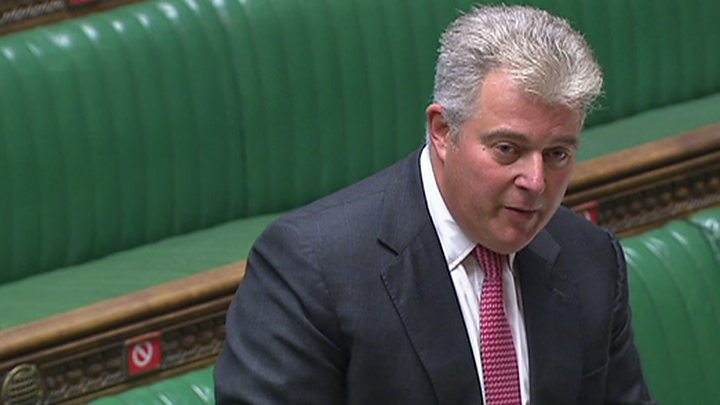
And speaking in the Commons on Tuesday, Northern Ireland Secretary Brandon Lewis admitted the bill would break international law in a "very specific and limited way".

The Scottish Government, meanwhile, has said it will not consent to the law, arguing it undermines devolution.

The legislation will see Scotland, Wales and Northern Ireland handed powers in areas such as air quality and building efficiency currently regulated at EU level.

It will also set up a new body - the Office for the Internal Market - to make sure standards adopted in different parts of the UK do not undermine cross-border trade.

The new body will be able to issue non-binding recommendations to the UK Parliament and devolved administrations when clashes emerge.

However, plans to hand UK ministers extra powers to ensure the application of customs and trade rules in Northern Ireland have prompted a row over the UK's legal obligations in its exit deal.

International law breach

Under the UK's withdrawal agreement, Northern Ireland is due to stay part of the EU's single market for goods in a bid to avoid creating a hard border with the Irish Republic.

In parallel with talks over a post-Brexit trade deal, the UK and EU are negotiating the precise nature of new customs checks that will be required.

On Tuesday, Mr Lewis, the Northern Ireland secretary, told MPs it would allow ministers to override EU law in "tightly defined circumstances" if border negotiations broke down.

He conceded this would break international law in a "very specific and limited way" - but insisted it was a "safety net" in case the talks to iron out arrangements fail.

The government says it remains fully committed to the withdrawal agreement, and the bill is a necessary step to avoid a legal void if these talks fail.
Media playback is unsupported on your device

However Labour leader Sir Keir Starmer condemned the bill and accused Downing Street of "reopening old arguments that had been settled".

Former Conservative PM Theresa May warned the legislation could damage "trust" in the UK over future trade deals with other states.

Irish Foreign Affairs Minister, Simon Coveney, called Mr Lewis's comments "gravely concerning".

The bill has also prompted a fresh row with the Scottish Government, which has accused the UK government of a power grab.

'Shabby blueprint'

Scottish Constitution Secretary Michael Russell said ministers would find it "impossible" to recommend the Scottish Parliament gives its consent to the bill.

He added the bill "undermines devolution and the Scottish Parliament, and which, by the UK government's own admission, is going to break international law."

He added the "shabby blueprint" for policing cross-border UK trade would "open the door to a race to the bottom" on food and environmental standards.

Scottish Secretary Alister Jack said the new legislation was about "respecting and strengthening devolution" by providing certainty to business.

"Without this legislation there would be a serious risk to our jobs and businesses," he added.

The bill has also been attacked by the Welsh Brexit minister, Labour's Jeremy Miles, who accused the government of "stealing powers from devolved administrations".

"This bill is an attack on democracy and an affront to the people of Wales, Scotland and Northern Ireland," he added.

Let's block ads! (Why?)


https://news.google.com/__i/rss/rd/articles/CBMiL2h0dHBzOi8vd3d3LmJiYy5jby51ay9uZXdzL3VrLXBvbGl0aWNzLTU0MDgxMjEx0gEzaHR0cHM6Ly93d3cuYmJjLmNvLnVrL25ld3MvYW1wL3VrLXBvbGl0aWNzLTU0MDgxMjEx?oc=5

2020-09-09 02:03:28Z
52781050329710

Coronavirus: Social gatherings above six banned in England from 14 September - BBC News

Social gatherings of more than six people will be illegal in England from Monday - with some exemptions - amid a steep rise in coronavirus cases.

A new legal limit will ban larger groups meeting anywhere socially indoors or outdoors, No 10 said.

But it will not apply to schools, workplaces or Covid-secure weddings, funerals and organised team sports.

It will be enforced through a £100 fine if people fail to comply with police, doubling up to a maximum of £3,200.

Several exemptions apply to the new rules - which come into force on 14 September - with households and support bubbles bigger than six people unaffected.

A full list of exemptions will be published by the government later.

Prime Minister Boris Johnson is expected to deliver further details at a Downing Street news conference on Wednesday.

In a preview of his address, the PM said: "We need to act now to stop the virus spreading. So we are simplifying and strengthening the rules on social contact - making them easier to understand and for the police to enforce.

"It is absolutely critical that people now abide by these rules and remember the basics - washing your hands, covering your face, keeping space from others, and getting a test if you have symptoms."

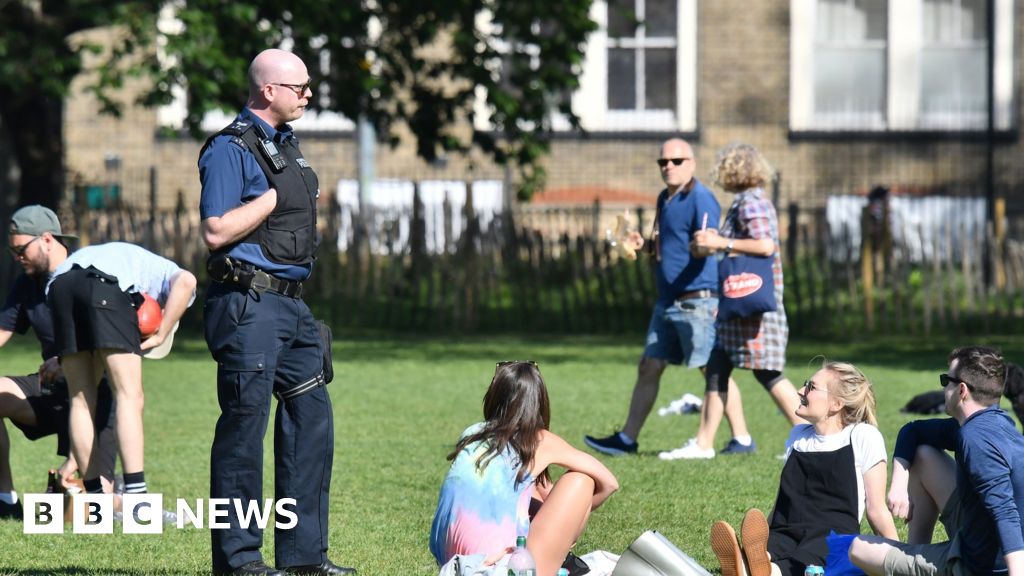
No 10 said any group of seven or more people gathering anywhere "risks being dispersed by police or fined for non-compliance".

At-a-glance: What are the new rules?

  • Social gatherings of more than six people in England will not be allowed in law from Monday 14 September
  • The new rule applies to private homes, indoors and outdoors, and places such as bars and cafes
  • The rule does not apply to schools and workplaces, or weddings, funerals and organised team sports
  • A full list of exemptions is due to be published before the law changes
  • People who ignore police could be fined £100 - doubling with each offence to a maximum of £3,200

The change applies to people in England of all ages, and to gatherings indoors and outdoors, in private homes, public outdoor spaces, and venues such as pubs and restaurants.

BBC political correspondent Nick Eardley pointed out that pubs and restaurants would be allowed to have more than six customers inside, but that the groups of six would have to be socially distant from each other.

The "rationale" behind allowing this, but not allowing larger groups of people inside other people's homes, is that businesses can only be open if they follow safety and hygiene measures set out by the government, he added.

The devolved administrations in Scotland, Wales and Northern Ireland are able to set their own coronavirus restrictions and, while largely implementing similar rules, have moved at their own pace during the pandemic.

Downing Street said Mr Johnson held a virtual roundtable with police forces which heard officers wanted clearer rules and enforcement on social contact.

Previously, guidance in England allowed gatherings of up to six people from different households outdoors - or two households or any size, indoors or outdoors.

Ministers and government advisers earlier expressed concern over a "sharp rise" in cases and a "heartfelt" apology was issued following shortages in England's testing system.

Overall, there have been 8,396 new cases reported since Sunday - with 2,460 reported on Tuesday alone.

There were also 32 deaths reported, but these will not have been related to the most recent rise in cases.

Large gatherings 'greatest risk'

The rise in cases seen in recent days has caused alarm among ministers and their health advisers.

They believe the UK is at a critical point ahead of the onset of autumn and winter when respiratory viruses tend to thrive.

Close contact within homes remains the most common risk of transmission identified by contact tracers.

Clearly people living with an infected person are most at risk.

But, after that, the most common contact infected individuals have is with visitors to their household, according to data gathered by England's NHS Test and Trace service.

It is ahead of leisure venues, shops, workplaces and health and care settings.

Clearly large gatherings in homes - especially indoors which is more likely to happen when the weather turns - present the greatest risk.

Ministers will also make it clear on Wednesday further restrictions will follow if the rise in infections is not curbed.

The UK government's chief medical adviser, Prof Chris Whitty, who No 10 said backed urgent action in England, has said Covid-19 rates were now rising, especially among people between the ages of 17 and 29.

He warned that if people stopped social distancing then "Covid comes back".

'Relaxed too much'

England's deputy chief medical officer Prof Jonathan Van Tam added: "People have relaxed too much. Now is the time for us to re-engage, and to realise that this is a continuing threat to us."

In Bolton, Greater Manchester, a local rise in cases led Health Secretary Matt Hancock to announce the immediate return of some lockdown measures on Tuesday.

Among the restrictions imposed on the town was a requirement for hospitality venues to only offer takeaway service and close to customers completely between 22:00 BST and 05:00.

It also became illegal for people in Bolton to socialise with those outside their own household in any setting, even outdoors.

Schools in Bolton will continue to teach pupils as usual, Bolton Council said, as its leader described how Covid-19 was "moving round the borough uncontrolled".

Meanwhile, a new public information campaign will be launched across the UK reminding people of the "basics" - washing their hands, covering their face and giving others space.

How will you be affected by the new restrictions? Do you have questions relating to the changes? Get in touch by emailing haveyoursay@bbc.co.uk.

Please include a contact number if you are willing to speak to a BBC journalist. You can also get in touch in the following ways:

If you are reading this page and can't see the form you will need to visit the mobile version of the BBC website to submit your question or comment or you can email us at HaveYourSay@bbc.co.uk. Please include your name, age and location with any submission.

Let's block ads! (Why?)


https://news.google.com/__i/rss/rd/articles/CBMiJmh0dHBzOi8vd3d3LmJiYy5jby51ay9uZXdzL3VrLTU0MDgxMTMx0gEqaHR0cHM6Ly93d3cuYmJjLmNvLnVrL25ld3MvYW1wL3VrLTU0MDgxMTMx?oc=5

2020-09-08 23:58:58Z
52781051926856

Coronavirus: Social gatherings above six banned in England from 14 September - BBC News

Social gatherings of more than six people will be illegal in England from Monday - with some exemptions - amid a steep rise in coronavirus cases.

A new legal limit will ban larger groups meeting anywhere socially indoors or outdoors, No 10 said.

But it will not apply to schools, workplaces or Covid-secure weddings, funerals and organised team sports.

It will be enforced through a £100 fine if people fail to comply with police, doubling up to a maximum of £3,200.

Several exemptions apply to the new rules - which come into force on 14 September - with households and support bubbles bigger than six people unaffected.

A full list of exemptions will be published by the government later.

Prime Minister Boris Johnson is expected to deliver further details at a Downing Street news conference on Wednesday.

In a preview of his address, the PM said: "We need to act now to stop the virus spreading. So we are simplifying and strengthening the rules on social contact - making them easier to understand and for the police to enforce.

"It is absolutely critical that people now abide by these rules and remember the basics - washing your hands, covering your face, keeping space from others, and getting a test if you have symptoms."

No 10 said any group of seven or more people gathering anywhere "risks being dispersed by police or fined for non-compliance".

At-a-glance: What are the new rules?

  • Social gatherings of more than six people in England will not be allowed in law from Monday 14 September
  • The new rule applies to private homes, indoors and outdoors, and places such as bars and cafes
  • The rule does not apply to schools and workplaces, or weddings, funerals and organised team sports
  • A full list of exemptions is due to be published before the law changes
  • People who ignore police could be fined £100 - doubling with each offence to a maximum of £3,200

The change applies to England only, to people of all ages, and to gatherings indoors and outdoors, in private homes, public outdoor spaces, and venues such as pubs and restaurants.

The devolved administrations in Scotland, Wales and Northern Ireland are able to set their own coronavirus restrictions and, while largely implementing similar rules, have moved at their own pace during the pandemic.

Downing Street said Mr Johnson held a virtual roundtable with police forces which heard officers wanted clearer rules and enforcement on social contact.

Previously, guidance in England allowed gatherings of up to six people from different households - or up to 30 people from two households.

Ministers and government advisers earlier expressed concern over a "sharp rise" in cases and a "heartfelt" apology was issued following shortages in England's testing system.

Overall, there have been 8,396 new cases reported since Sunday - with 2,460 reported on Tuesday alone.

There were also 32 deaths reported, but these will not have been related to the most recent rise in cases.

Large gatherings 'greatest risk'

The rise in cases seen in recent days has caused alarm among ministers and their health advisers.

They believe the UK is at a critical point ahead of the onset of autumn and winter when respiratory viruses tend to thrive.

Close contact within homes remains the most common risk of transmission identified by contact tracers.

Clearly people living with an infected person are most at risk.

But, after that, the most common contact infected individuals have is with visitors to their household, according to data gathered by England's NHS Test and Trace service.

It is ahead of leisure venues, shops, workplaces and health and care settings.

Clearly large gatherings in homes - especially indoors which is more likely to happen when the weather turns - present the greatest risk.

Ministers will also make it clear on Wednesday further restrictions will follow if the rise in infections is not curbed.

The UK government's chief medical adviser, Prof Chris Whitty, who No 10 said backed urgent action in England, has said Covid-19 rates were now rising, especially among people between the ages of 17 and 29.

He warned that if people stopped social distancing then "Covid comes back".

'Relaxed too much'

England's deputy chief medical officer Prof Jonathan Van Tam added: "People have relaxed too much. Now is the time for us to re-engage, and to realise that this is a continuing threat to us."

In Bolton, Greater Manchester, a local rise in cases led Health Secretary Matt Hancock to announce the immediate return of some lockdown measures on Tuesday.

Among the restrictions imposed on the town was a requirement for hospitality venues to only offer takeaway service and close to customers completely between 22:00 BST and 05:00.

It also became illegal for people in Bolton to socialise with those outside their own household in any setting, even outdoors.

Schools in Bolton will continue to teach pupils as usual, Bolton Council said, as its leader described how Covid-19 was "moving round the borough uncontrolled".

Meanwhile, a new public information campaign will be launched reminding people of the "basics" - washing their hands, covering their face and giving others space.

How will you be affected by the new restrictions? Do you have questions relating to the changes? Get in touch by emailing haveyoursay@bbc.co.uk.

Please include a contact number if you are willing to speak to a BBC journalist. You can also get in touch in the following ways:

If you are reading this page and can't see the form you will need to visit the mobile version of the BBC website to submit your question or comment or you can email us at HaveYourSay@bbc.co.uk. Please include your name, age and location with any submission.

Let's block ads! (Why?)


https://news.google.com/__i/rss/rd/articles/CBMiJmh0dHBzOi8vd3d3LmJiYy5jby51ay9uZXdzL3VrLTU0MDgxMTMx0gEqaHR0cHM6Ly93d3cuYmJjLmNvLnVrL25ld3MvYW1wL3VrLTU0MDgxMTMx?oc=5

2020-09-08 21:45:55Z
52781051926856

Birmingham stabbings: Man charged with murder - BBC News

Related Topics
  • Birmingham stabbings
Forensics officers at the scene
image copyrightPA Media

A man has been charged with murder and seven counts of attempted murder, after a series of stabbings across Birmingham city centre.

Zephaniah McLeod, aged 27, of Nately Grove, Selly Oak, is due in court on Wednesday, West Midlands Police said.

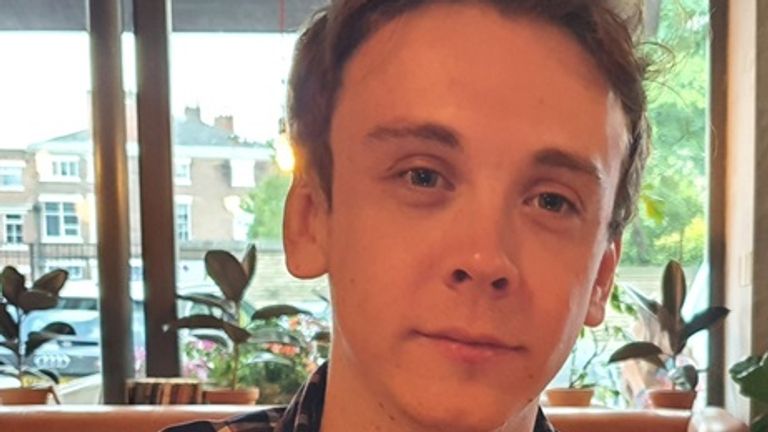
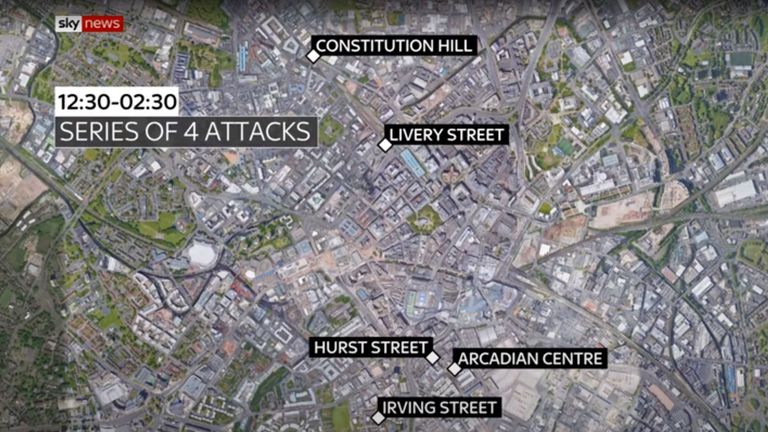
Jacob Billington, 23, was killed and seven others injured at four locations over a period of 90 minutes on Sunday.

Mr Billington, from Crosby, Merseyside, was stabbed in Irving Street while enjoying a night out with friends.

A post-mortem examination concluded he died of a stab wound to the neck.

Drummer in band

Mr Billington had been working as a library intern at Sheffield Hallam University and was also a drummer in a band.

A university spokesman said: "Jacob was a Sheffield Hallam graduate and had joined the library as a graduate intern, where his warmth and enthusiasm made him a greatly valued member of our team.

"Our thoughts and condolences are with his family, friends and colleagues."

His friend, Michael Callaghan, also 23 and a fellow band-mate, was seriously injured in the attack in Irving Street and remains in hospital in a critical condition.

Both men had previously attended Sacred Heart Catholic College in Crosby, where prayers were said on Monday evening for their families.

In a statement, the school said: "We are saddened at the events in Birmingham which took Jacob's life and left Michael critically injured.

"We are praying for Michael's recovery and will never forget Jacob, his life touched so many in our school."

Jacob Billington
image copyrightPolice handout

A 22-year-old woman, attacked in Hurst Street, remains critical but stable in hospital.

Another man, aged 30, remains in a serious condition in hospital, while four others have been discharged.

Det Ch Insp Jim Munro said: "Since these tragic events unfolded in the early hours of Sunday morning we've had a team of officers working non-stop on the investigation.

"Our driving focus is to secure justice for the victims, their family and friends. Our sympathies remain with everyone who's been impacted by these terrible crimes."

Three people arrested early on Monday at an address in Selly Oak on suspicion of assisting an offender have all been released pending investigation, police said.

Presentational grey line
Follow BBC West Midlands on Facebook, Twitter and Instagram. Send your story ideas to: newsonline.westmidlands@bbc.co.uk

Related Topics

Let's block ads! (Why?)


https://news.google.com/__i/rss/rd/articles/CBMiOWh0dHBzOi8vd3d3LmJiYy5jby51ay9uZXdzL3VrLWVuZ2xhbmQtYmlybWluZ2hhbS01NDA1OTAyONIBPWh0dHBzOi8vd3d3LmJiYy5jby51ay9uZXdzL2FtcC91ay1lbmdsYW5kLWJpcm1pbmdoYW0tNTQwNTkwMjg?oc=5

2020-09-08 21:01:00Z
52781050908112

Coronavirus: Social gatherings above six banned in England from 14 September - BBC News

Social gatherings of more than six people will be illegal in England from Monday - with some exemptions - amid a steep rise in coronavirus cases.

A new legal limit will ban larger groups meeting anywhere socially indoors or outdoors, No 10 said.

But it will not apply to schools, workplaces or Covid-secure weddings, funerals and organised team sports.

It will be enforced through a £100 fine if people fail to comply with police, doubling up to a maximum of £3,200.

Several exemptions apply to the new rules - which come into force on 14 September - with households and support bubbles bigger than six people are unaffected.

A full list of exemptions will be published by the government later.

Prime Minister Boris Johnson is expected to deliver further details at a Downing Street news conference on Wednesday.

In a preview of his address, the PM said: "We need to act now to stop the virus spreading. So we are simplifying and strengthening the rules on social contact - making them easier to understand and for the police to enforce.

"It is absolutely critical that people now abide by these rules and remember the basics - washing your hands, covering your face, keeping space from others, and getting a test if you have symptoms."

No 10 said any group of seven or more people gathering anywhere "risks being dispersed by police or fined for non-compliance".

At-a-glance: What are the new rules?

  • Social gatherings of more than six people in England will not be allowed in law from Monday 14 September
  • The new rule applies to private homes, indoors and outdoors, and places such as bars and cafes
  • The rule does not apply to schools and workplaces, or weddings, funerals and organised team sports
  • A full list of exemptions is due to be published before the law changes
  • People who ignore police could be fined £100 - doubling with each offence to a maximum of £3,200

The change applies to England only, to people of all ages, and to gatherings indoors and outdoors, in private homes, public outdoor spaces, and venues such as pubs and restaurants.

The devolved administrations in Scotland, Wales and Northern Ireland are able to set their own coronavirus restrictions and, while largely implementing similar rules, have moved at their own pace during the pandemic.

Downing Street said Mr Johnson held a virtual roundtable with police forces which heard officers wanted clearer rules and enforcement on social contact.

Previously, guidance in England allowed gatherings of up to six people from different households - or up to 30 people from two households.

Ministers and government advisers earlier expressed concern over a "sharp rise" in cases and a "heartfelt" apology was issued following shortages in England's testing system.

Overall, there have been 8,396 new cases reported since Sunday - with 2,460 reported on Tuesday alone.

There were also 32 deaths reported, but these will not have been related to the most recent rise in cases.

Large gatherings 'greatest risk'

The rise in cases seen in recent days has caused alarm among ministers and their health advisers.

They believe the UK is at a critical point ahead of the onset of autumn and winter when respiratory viruses tend to thrive.

Close contact within homes remains the most common risk of transmission identified by contact tracers.

Clearly people living with an infected person are most at risk.

But, after that, the most common contact infected individuals have is with visitors to their household, according to data gathered by England's NHS Test and Trace service.

It is ahead of leisure venues, shops, workplaces and health and care settings.

Clearly large gatherings in homes - especially indoors which is more likely to happen when the weather turns - present the greatest risk.

Ministers will also make it clear on Wednesday further restrictions will follow if the rise in infections is not curbed.

The UK government's chief medical adviser, Prof Chris Whitty, who No 10 said backed urgent action in England, has said Covid-19 rates were now rising, especially among people between the ages of 17 and 29.

He warned that if people stopped social distancing then "Covid comes back".

'Relaxed too much'

England's deputy chief medical officer Prof Jonathan Van Tam added: "People have relaxed too much. Now is the time for us to re-engage, and to realise that this is a continuing threat to us."

In Bolton, Greater Manchester, a local rise in cases led Health Secretary Matt Hancock to announce the immediate return of some lockdown measures on Tuesday.

Among the restrictions imposed on the town was a requirement for hospitality venues to only offer takeaway service and close to customers completely between 22:00 BST and 05:00.

It also became illegal for people in Bolton to socialise with those outside their own household in any setting, even outdoors.

Schools in Bolton will continue to teach pupils as usual, Bolton Council said, as its leader described how Covid-19 was "moving round the borough uncontrolled".

Meanwhile, a new public information campaign will be launched reminding people of the "basics" - washing their hands, covering their face and giving others space.

How will you be affected by the new restrictions? Do you have questions relating to the changes? Get in touch by emailing haveyoursay@bbc.co.uk.

Please include a contact number if you are willing to speak to a BBC journalist. You can also get in touch in the following ways:

If you are reading this page and can't see the form you will need to visit the mobile version of the BBC website to submit your question or comment or you can email us at HaveYourSay@bbc.co.uk. Please include your name, age and location with any submission.

Let's block ads! (Why?)


https://news.google.com/__i/rss/rd/articles/CBMiJGh0dHBzOi8vd3d3LmJiYy5jb20vbmV3cy91ay01NDA4MTEzMdIBKGh0dHBzOi8vd3d3LmJiYy5jb20vbmV3cy9hbXAvdWstNTQwODExMzE?oc=5

2020-09-08 21:22:54Z
52781051926856

Birmingham stabbings: Zephaniah McLeod charged with murder of Jacob Billington - Sky News

A man has been charged with the murder of Jacob Billington - one of eight people stabbed in Birmingham in the early hours of Sunday.

Zephaniah McLeod, 27, of Nately Grove, Selly Oak, Birmingham, is also accused of the attempted murder of the seven other victims.

Police have so far not released an image of McLeod but Sky News has tracked down one of the first pictures - showing the accused man against a red background.

Mr Billington, 23, was on a night out with school friends from Liverpool, visiting one of their group studying in Birmingham, when he was stabbed in the neck.

https://west-midlands.police.uk/news/loving-tribute-birmingham-stab-victim
Image: Jacob Billington, 23, was stabbed in the neck during a night out with friends

Three people are still in hospital after the city centre attack, including Mr Billington's friend, Michael Callaghan, who is in a critical condition.

A 22-year-old woman, attacked in Hurst Street, is critical but stable, and a man aged 30 is in a serious condition.

The other four victims have been discharged.

More from Birmingham

Three people arrested on suspicion of assisting an offender were released earlier on Tuesday pending investigation.

Mr Billington's family said in a statement on Monday that he was "a funny, caring and wonderful person who was loved by every single person he met".

More tributes were paid today by the the university he worked and studied at.

Image: The attacks happened in Birmingham in the early hours of Sunday

A spokesperson for Sheffield Hallam University said: "Jacob was a Sheffield Hallam graduate and had joined the library as a graduate intern, where his warmth and enthusiasm made him a greatly valued member of our team.

"Our thoughts and condolences are with his family, friends and colleagues at this very difficult time.

"We are providing support to those in our community who have been affected by this tragic incident."

Mr Billington and Mr Callaghan had both attended the Sacred Heart Catholic College in Crosby, which held prayers for them on Monday evening.

Investigations into Sunday's attack are ongoing
Image: Police want any witnesses or anyone with photos to get in touch

The school said in a statement: "We are saddened at the events in Birmingham which took Jacob's life and left Michael critically injured."

"We are praying for Michael's recovery and will never forget Jacob, his life touched so many in our school."

Also paying tribute was Mr Billington's local MP for Crosby, Bill Esterton, who said that his friends had acted "heroically" in a bid to save his life.

:: Anyone with information, photos or video which could help is asked to contact police here: https://mipp.police.uk/operation/20HQ19G54-PO1

Let's block ads! (Why?)


https://news.google.com/__i/rss/rd/articles/CBMicWh0dHBzOi8vbmV3cy5za3kuY29tL3N0b3J5L2Jpcm1pbmdoYW0tc3RhYmJpbmdzLXplcGhhbmlhaC1tY2xlb2QtY2hhcmdlZC13aXRoLW11cmRlci1vZi1qYWNvYi1iaWxsaW5ndG9uLTEyMDY2OTQz0gF1aHR0cHM6Ly9uZXdzLnNreS5jb20vc3RvcnkvYW1wL2Jpcm1pbmdoYW0tc3RhYmJpbmdzLXplcGhhbmlhaC1tY2xlb2QtY2hhcmdlZC13aXRoLW11cmRlci1vZi1qYWNvYi1iaWxsaW5ndG9uLTEyMDY2OTQz?oc=5

2020-09-08 21:00:00Z
52781050908112

Boris Johnson's Brexit plan under fire as Cabinet minister admits it 'does break international law' - Evening Standard

[unable to retrieve full-text content]

  1. Boris Johnson's Brexit plan under fire as Cabinet minister admits it 'does break international law'  Evening Standard
  2. What happened to Boris Johnson's 'oven-ready' Brexit deal? - BBC Newsnight  BBC Newsnight
  3. Boris Johnson's Brexit plan breaks international law, minister admits  The Independent
  4. Why Boris Johnson is considering a no-deal Brexit for a bruised economy  Financial Times
  5. Boris Johnson’s disastrous Brexit is just pushing Scots towards independence – Angus Robertson  East Lothian News
  6. View Full coverage on Google News

https://news.google.com/__i/rss/rd/articles/CBMiK2h0dHBzOi8vd3d3LnlvdXR1YmUuY29tL3dhdGNoP3Y9LWo3eEpfTnBmcUnSAQA?oc=5

2020-09-08 18:47:48Z
52781048918908