Jumat, 17 Juli 2020

Fans in stadiums: Boris Johnson says supporters could return in England in October - BBC Sport

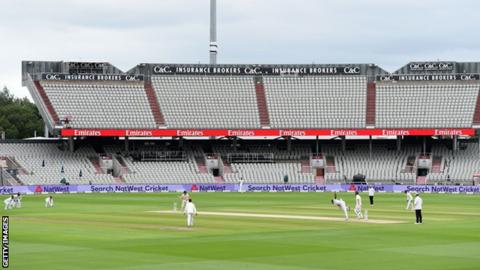
England v West Indies at Old Trafford

Fans could be able to return to stadiums in England from October, says Prime Minister Boris Johnson.

Pilots will take place from 1 August but any stadium reopenings would be subject to coronavirus guidelines.

Some sports, including football and cricket, have resumed behind closed doors after the Covid-19 lockdown.

"We will pilot larger gatherings in venues like sports stadiums with a view to a wider reopening in the autumn," said Johnson on Friday.

"From October, we intend to bring back audiences in stadiums.

"Again, these changes must be done in a Covid-secure way, subject to the successful outcome of pilots."

The pilot projects will be held at:

  • Two men's county cricket friendly matches - including Surrey v Middlesex at The Oval on 26-27 July;
  • The World Snooker Championship at Sheffield's Crucible Theatre from 31 July;
  • The Goodwood horse racing festival - known as Glorious Goodwood - on 1 August.

The Racecourse Association said the Goodwood event has been designed for up to 5,000 people, plus participants.

"For months, millions of us have felt the void of being unable to go to the match to support our team or attend a top-class sporting event," said Sports Minister Nigel Huddleston.

"So I am pleased that we are now able to move forward with a plan to help venues safely reopen their doors to fans.

"I recognise that not every sport, team or club has the benefit of huge commercial revenue, and it is often their dedicated fans that are the lifeblood which helps keep them going. By working closely with sports and medical experts, these pilots will help ensure the safe return of fans to stadiums.

"Although it will remain some time before venues are full to capacity, this is a major step in the right direction for the resumption of live spectator sport across the country."

The Department for Digital, Culture, Media and Sport also said further pilot events are likely to be held in other sports.

In order for fans to return to stadiums, the government has outlined operating guidelines that state:

  • Fans must agree to a new code of behaviour that includes not attending if they potentially have symptoms of coronavirus or have been exposed to a person who has tested positive;
  • Social distancing must be observed in seating arrangements;
  • Crowd management plans should be in place, including the controlled entry and exit of fans and one-way systems;
  • Additional hygiene facilities should be installed inside venues, particularly at entrances and exits;
  • Screening procedures should be considered at stadia entrances.

Domestic competitive sport in England resumed on 1 June for the first time since mid-March, with football's Premier League and English Football League getting back under way on 17 and 20 June respectively.

International cricket, golf, horse racing and snooker are among the other sports to have resumed.

In Scotland, no date has yet been set for fans returning to stadiums. Now in phase three of the Scottish government's route out of lockdown, the Premiership - football's top flight - will begin on 1 August behind closed doors.

The second-tier Scottish Championship and Leagues One and Two kick off a reduced, 27-game season on 17 October, the same weekend as the first Old Firm derby between Celtic and Rangers of the 2020-21 campaign.

The Scottish government has held talks with Scottish Rugby about using Murrayfield as a test venue, where fans could return but be physically distanced.

More than 45,000 people in the UK have died with coronavirus, while there have been more than 292,000 confirmed cases.

Around the BBC iPlayer banner
Around the BBC iPlayer footer

Let's block ads! (Why?)


https://news.google.com/__i/rss/rd/articles/CBMiJGh0dHBzOi8vd3d3LmJiYy5jby51ay9zcG9ydC81MzQ0MTY3MNIBKGh0dHBzOi8vd3d3LmJiYy5jby51ay9zcG9ydC9hbXAvNTM0NDE2NzA?oc=5

2020-07-17 11:26:15Z
52780929500770

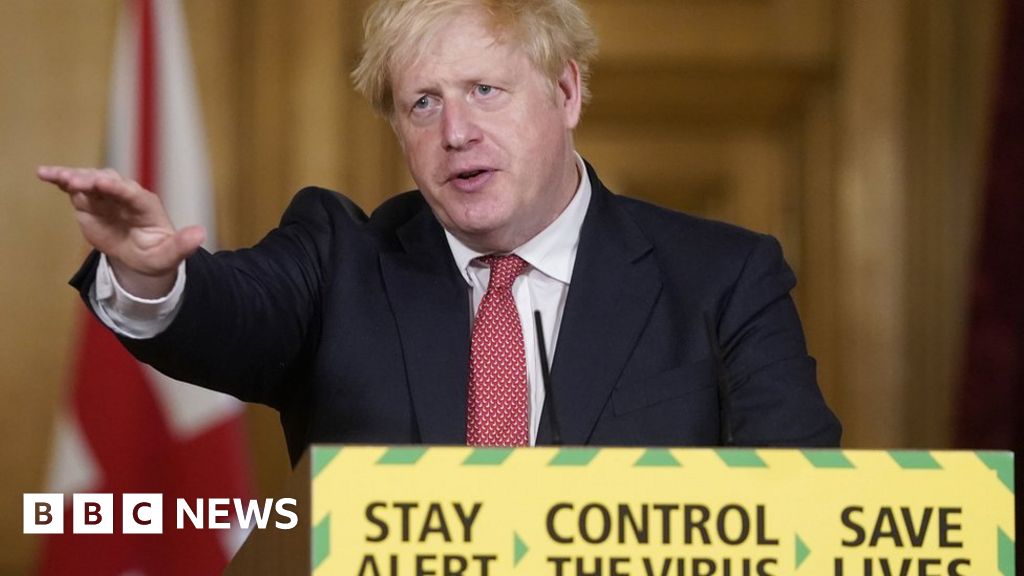
Coronavirus: Boris Johnson plans for 'significant normality' by Christmas - BBC News

Coronavirus restrictions will ease further in England under plans for a "significant return to normality" by Christmas, Boris Johnson has said.

The prime minister said people may use public transport for journeys immediately, while advice for employers would change from 1 August.

Mr Johnson said employers would have more discretion to bring staff back to workplaces if it was safe to do so.

The PM added he was "hoping for the best and planning for the worst".

Mr Johnson said during a news conference at Downing Street he hoped the country would return to a sense of normality "possibly in time for Christmas".

But he said the plan "remains conditional" on the UK pulling together to win its "long fight" against Covid-19.

"It is my strong and sincere hope that we will be able to review the outstanding restrictions and allow a more significant return to normality from November at the earliest - possibly in time for Christmas," he said.

Devolved administrations in Scotland, Wales and Northern Ireland have the power to set their own timings for the easing of restrictions.

In the announcement, Mr Johnson said that the government was making it clear to people in England they may use public transport now.

From 1 August, he said: "Instead of government telling people to work from home, we are going to give employers more discretion, and ask them to make decisions about how their staff can work safely.

He explained that could mean "continuing to work from home, which is one way of working safely and which has worked for many employers and employees".

Crowds 'could return in October'

Also from 1 August, Mr Johnson said most remaining leisure settings, such as bowling alleys, skating rinks and casinos, and close-contact services such as beauticians could resume.

However, soft play areas and nightclubs will remain closed beyond that date.

From October, he said fans could be able to return to stadiums for sports under the plan.

The PM also said conferences and other events can recommence from that month, adding that "these changes must be done in a Covid-secure way, subject to the successful outcome of pilots".

Let's block ads! (Why?)


https://news.google.com/__i/rss/rd/articles/CBMiJmh0dHBzOi8vd3d3LmJiYy5jby51ay9uZXdzL3VrLTUzNDQxOTEy0gEqaHR0cHM6Ly93d3cuYmJjLmNvLnVrL25ld3MvYW1wL3VrLTUzNDQxOTEy?oc=5

2020-07-17 10:52:30Z
CBMiJmh0dHBzOi8vd3d3LmJiYy5jby51ay9uZXdzL3VrLTUzNDQxOTEy0gEqaHR0cHM6Ly93d3cuYmJjLmNvLnVrL25ld3MvYW1wL3VrLTUzNDQxOTEy

LIVE: Boris Johnson announces sweeping new powers to impose local lockdowns - The Telegraph

[unable to retrieve full-text content]

  1. LIVE: Boris Johnson announces sweeping new powers to impose local lockdowns  The Telegraph
  2. Coronavirus: £3bn for NHS to prepare for possible second wave  BBC News
  3. UK coronavirus live: Boris Johnson says he hopes for 'return to normality, possibly in time for Christmas'  The Guardian
  4. Live: Boris Johnson promises to get the NHS 'battle ready' against coronavirus for winter  The Sun
  5. Boris Johnson coronavirus announcement LIVE: Updates as Prime Minister holds press conference  Manchester Evening News
  6. View Full coverage on Google News

https://news.google.com/__i/rss/rd/articles/CBMiK2h0dHBzOi8vd3d3LnlvdXR1YmUuY29tL3dhdGNoP3Y9Z3o4UnVkdzhyZFHSAQA?oc=5

2020-07-17 10:00:05Z
52780929500770

Coronavirus: Health Secretary Matt Hancock orders urgent review into Public Health England death data - Sky News

An urgent review has been ordered into how daily coronavirus death figures are calculated after it was claimed the current method did not account for people recovering from COVID-19.

Health Secretary Matt Hancock has asked for the examination of Public Health England's (PHE) data - said by researchers to include a "statistical anomaly" by which "no one can ever recover from COVID-19 in England".

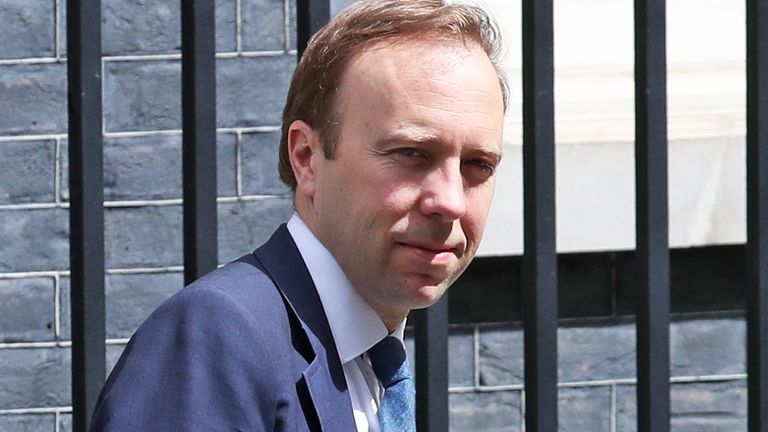
Health Secretary Matt Hancock in Downing Street, London.
Image: Health Secretary Matt Hancock has ordered an urgent review

According to government figures, there have been 45,119 COVID-19 associated deaths across the UK.

However, there are now concerns that death tally could be inaccurate due to the way coronavirus deaths are recorded in England.

A government source confirmed that PHE's current method of calculation means if a person was previously diagnosed with COVID-19 but subsequently died of unrelated causes, their death would still be counted as part of PHE's daily coronavirus death tally.

It is understood a different methodology for counting coronavirus deaths is used in Scotland and Northern Ireland to the one used in England.

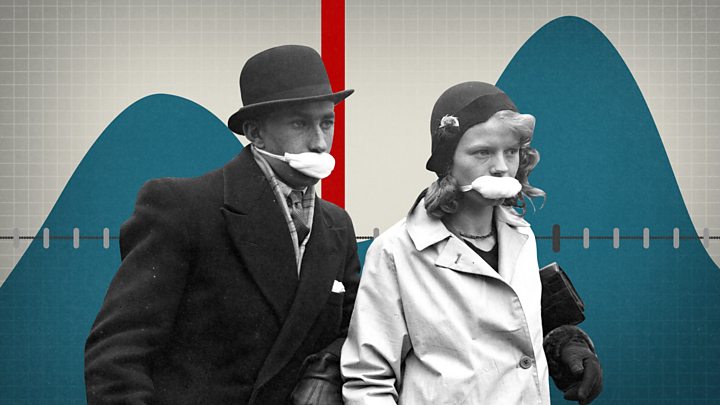
moore mask explainer
The science behind face masks

The review ordered by Mr Hancock aims to sort out the issue and establish the impact on the UK's overall death tally.

More from Covid-19

A recent article published by the Centre for Evidence-Based Medicine (CEBM), based at Oxford University, described the "statistical anomaly" which means that "no one can ever recover from COVID-19 in England".

"It seems that PHE regularly looks for people on the NHS database who have ever tested positive, and simply checks to see if they are still alive or not," said the CEBM article's authors Professor Yoon Loke, from the University of East Anglia, and Professor Carl Heneghan, from Oxford University.

"PHE does not appear to consider how long ago the COVID test result was, nor whether the person has been successfully treated in hospital and discharged to the community.

"Anyone who has tested COVID positive but subsequently died at a later date of any cause will be included on the PHE COVID death figures.

"By this PHE definition, no one with COVID in England is allowed to ever recover from their illness.

"A patient who has tested positive, but successfully treated and discharged from hospital, will still be counted as a COVID death even if they had a heart attack or were run over by a bus three months later."

:: Listen to the Daily podcast on Apple Podcasts, Google Podcasts, Spotify, Spreaker

CEBM said this would explain why daily death figures vary substantially from day to day, with 16 new deaths reported in the UK on 6 July but then 155 reported the next day.

With more than 250,000 people having so far tested positive for coronavirus in England, CEBM suggested PHE's definition of daily death figures means "that everyone who has ever had COVID at any time must die with COVID too".

They called for PHE to instead define COVID-related deaths as those that occur within three weeks of a positive test result for coronavirus.

"It's time to fix this statistical flaw that leads to an over-exaggeration of COVID-associated deaths," they added.

Let's block ads! (Why?)


https://news.google.com/__i/rss/rd/articles/CBMiiAFodHRwczovL25ld3Muc2t5LmNvbS9zdG9yeS9jb3JvbmF2aXJ1cy1oZWFsdGgtc2VjcmV0YXJ5LW1hdHQtaGFuY29jay1vcmRlcnMtdXJnZW50LXJldmlldy1pbnRvLXB1YmxpYy1oZWFsdGgtZW5nbGFuZC1kZWF0aC1kYXRhLTEyMDMwMzky0gGMAWh0dHBzOi8vbmV3cy5za3kuY29tL3N0b3J5L2FtcC9jb3JvbmF2aXJ1cy1oZWFsdGgtc2VjcmV0YXJ5LW1hdHQtaGFuY29jay1vcmRlcnMtdXJnZW50LXJldmlldy1pbnRvLXB1YmxpYy1oZWFsdGgtZW5nbGFuZC1kZWF0aC1kYXRhLTEyMDMwMzky?oc=5

2020-07-17 09:33:45Z
52780930537031

Blackpool Pier Fire: Firefighters tackle large blaze at Blackpool's central pier - Evening Standard

[unable to retrieve full-text content]

  1. Blackpool Pier Fire: Firefighters tackle large blaze at Blackpool's central pier  Evening Standard
  2. Blackpool Central Pier fire: Blaze breaks out during the night  BBC News
  3. Blackpool Central Pier fire: Ten crews tackle blaze at 152-year-old attraction  Mirror Online
  4. Firefighters tackle huge blaze at seaside pier popular with Stokies  Stoke-on-Trent Live
  5. Huge fire at Blackpool Central Pier as around 50 firefighters scrambled in early hours  Manchester Evening News
  6. View Full coverage on Google News

https://news.google.com/__i/rss/rd/articles/CBMiK2h0dHBzOi8vd3d3LnlvdXR1YmUuY29tL3dhdGNoP3Y9RUxzSFBjaTR0c3PSAQA?oc=5

2020-07-17 07:57:14Z
52780930196594

Kamis, 16 Juli 2020

Coronavirus: £3bn for NHS to prepare for possible second wave - BBC News

The NHS in England will get an extra £3bn of funding to prepare for a possible second wave of coronavirus, Boris Johnson is set to announce.

The funding will also help ease winter pressures on the health service, Downing Street said.

It follows warnings a second wave this winter could see around 120,000 Covid-19 deaths in UK hospitals.

The PM is also expected to use a press conference on Friday to commit to a new target for testing capacity.

Under the plans, capacity would be increased to 500,000 coronavirus tests a day by the end of October.

Mr Johnson will also publish an additional chapter to the government's Covid-19 recovery strategy "road map".

Downing Street said the funding would be available immediately and would allow the NHS to continue using additional private hospital capacity and maintain the temporary Nightingale hospitals until the end of March.

This would provide additional capacity for coronavirus patients, as well as allowing the NHS to carry out routine treatments and procedures, No 10 said.

Non-urgent operations were suspended to free up hospital beds as the UK went into lockdown during the first wave of coronavirus - but in May NHS England told hospitals they should restart.

In normal times an announcement of £3bn to help the NHS in England cope with winter pressures might look generous.

But these are not normal times as the government pumps tens of billions into the economy to soften the blows of the coronavirus crisis.

The head of NHS England, Sir Simon Stevens, has been in talks with the Treasury to get guarantees that the Nightingale hospitals can stay open through until next spring in case there is another Covid surge.

He also wanted secure funding in place to do a deal with private hospitals to help tackle the backlog of cancelled non urgent operations such as hip and knee replacements.

That money now seems to have been secured, though we await further details.

The question is, will this be enough to get the health service through what could be one of the most difficult winters in its history?

There have been predictions that the waiting list for routine surgery will swell to 10 million as fears of a second wave of Covid cases in the depths of winter won't go away.

A No 10 spokesman said: "Thanks to the hard work and sacrifices of the British people, the virus is under control and we have eased restrictions in a cautious, phased way.

"But the prime minister is clear that now is not the time for complacency, and we must make sure our NHS is battle ready for winter.

"Tomorrow, he will set out a broad package of measures to protect against both a possible second wave, and to ease winter pressures and keep the public safe."

The spokesman said the funding for England was new and not previously allocated, while expenditure will be set out for the devolved nations in due course.

Return to work?

By announcing this extra NHS funding, the prime minister is looking to reassure the public he is serious about dealing with the second wave, which may give him space to further ease the lockdown, BBC Newsnight political editor Nicholas Watt says.

The government sees this as a "very important moment as it seeks to open up society", Watt adds, and there has been a lot of discussion in government about whether Mr Johnson will on Friday announce a "return to work" in a safe way.

The PM is very worried that people continuing to work from home means town and city centres are being "hollowed out economically", Watt says.

The UK's chief scientific adviser Sir Patrick Vallance told MPs on Thursday there was "absolutely no reason" to change the government's current guidance on working from home.

Since late March the government has advised people to work from home if possible to help curb coronavirus.

But last week Mr Johnson signalled a change, saying: "I think we should now say, well, 'Go back to work if you can'."

Second wave fears

Earlier this week a report, requested by Sir Patrick, called for immediate action to reduce the risks posed by a second wave of coronavirus this winter.

Among its recommendations were increasing the capacity of the test and trace programme and getting more people vaccinated against flu.

Asked to model a "reasonable" worst-case scenario, scientists suggested a range of between 24,500 and 251,000 virus-related deaths in hospitals alone, peaking in January and February.

The estimate does not take into account any lockdowns, treatments or vaccines.

Media playback is unsupported on your device

Research suggests the virus can survive longer in colder conditions and is more likely to spread when people spend more time indoors.

Experts are also concerned the NHS will be under extreme pressure, not just from a resurgence of coronavirus but also from seasonal flu and a backlog of regular, non-coronavirus workload.

No 10 said the increased prevalence of seasonal illnesses was also likely to increase individual's vulnerability to infection, particularly among the elderly.

The potential for a rise in other respiratory viruses with similar symptoms also presents challenges for the capacity of the government's test and trace programme, Downing Street added.

Health Secretary Matt Hancock has already announced plans for the "biggest flu vaccination programme in history", with expanded eligibility criteria expected to be set out shortly.

'We need transparency'

The British Medical Association chairman, Chaand Nagpaul, called for clarity on how the £3b funding will be used.

"The government talks of winter planning, but we need transparency on this, including how far this money can stretch in tackling a modelled worst-case forecast - including a second peak, additional non-Covid demand and a possible flu outbreak," Dr Nagpaul said.

"Crucially, the government must make prevention a priority and take every necessary step to try and avoid a national second spike all together."

NHS Providers, which represents hospitals and other NHS organisations, echoed the call for clarity over what the money will be used for, saying funding is already in place for Nightingale hospitals and private beds.

While welcoming the financial support, deputy chief executive Saffron Cordery added: "Trusts need more than that. They have got to recover the lost ground of the last four or five months and put measures in place to manage the additional activity that always happens in winter."

Let's block ads! (Why?)


https://news.google.com/__i/rss/rd/articles/CBMiJmh0dHBzOi8vd3d3LmJiYy5jby51ay9uZXdzL3VrLTUzNDM4NDg20gEqaHR0cHM6Ly93d3cuYmJjLmNvLnVrL25ld3MvYW1wL3VrLTUzNDM4NDg2?oc=5

2020-07-17 04:20:58Z
52780929500770

Coronavirus: £3bn for NHS to prepare for possible second wave - BBC News

The NHS in England will get an extra £3bn of funding to prepare for a possible second wave of coronavirus, Boris Johnson is set to announce.

The funding will also help ease winter pressures on the health service, Downing Street said.

It follows warnings a second wave this winter could see around 120,000 Covid-19 deaths in UK hospitals.

The PM is also expected to use a press conference on Friday to commit to a new target for testing capacity.

Under the plans, capacity would be increased to 500,000 coronavirus tests a day by the end of October.

Mr Johnson will also publish an additional chapter to the government's Covid-19 recovery strategy "road map".

Downing Street said the funding would be available immediately and would allow the NHS to continue using additional private hospital capacity and maintain the temporary Nightingale hospitals until the end of March.

This would provide additional capacity for coronavirus patients, as well as allowing the NHS to carry out routine treatments and procedures, No 10 said.

Non-urgent operations were suspended to free up hospital beds as the UK went into lockdown during the first wave of coronavirus - but in May NHS England told hospitals they should restart.

In normal times an announcement of £3bn to help the NHS in England cope with winter pressures might look generous.

But these are not normal times as the government pumps tens of billions into the economy to soften the blows of the coronavirus crisis.

The head of NHS England, Sir Simon Stevens, has been in talks with the Treasury to get guarantees that the Nightingale hospitals can stay open through until next spring in case there is another Covid surge.

He also wanted secure funding in place to do a deal with private hospitals to help tackle the backlog of cancelled non urgent operations such as hip and knee replacements.

That money now seems to have been secured, though we await further details.

The question is, will this be enough to get the health service through what could be one of the most difficult winters in its history?

There have been predictions that the waiting list for routine surgery will swell to 10 million as fears of a second wave of Covid cases in the depths of winter won't go away.

A No 10 spokesman said: "Thanks to the hard work and sacrifices of the British people, the virus is under control and we have eased restrictions in a cautious, phased way.

"But the prime minister is clear that now is not the time for complacency, and we must make sure our NHS is battle ready for winter.

"Tomorrow, he will set out a broad package of measures to protect against both a possible second wave, and to ease winter pressures and keep the public safe."

The spokesman said the funding for England was new and not previously allocated, while expenditure will be set out for the devolved nations in due course.

Return to work?

By announcing this extra NHS funding, the prime minister is looking to reassure the public he is serious about dealing with the second wave, which may give him space to further ease the lockdown, BBC Newsnight political editor Nicholas Watt says.

The government sees this as a "very important moment as it seeks to open up society", Watt adds, and there has been a lot of discussion in government about whether Mr Johnson will on Friday announce a "return to work" in a safe way.

The PM is very worried that people continuing to work from home means town and city centres are being "hollowed out economically", Watt says.

The UK's chief scientific adviser Sir Patrick Vallance told MPs on Thursday there was "absolutely no reason" to change the government's current guidance on working from home.

Since late March the government has advised people to work from home if possible to help curb coronavirus.

But last week Mr Johnson signalled a change, saying: "I think we should now say, well, 'Go back to work if you can'."

Second wave fears

Earlier this week a report, requested by Sir Patrick, called for immediate action to reduce the risks posed by a second wave of coronavirus this winter.

Among its recommendations were increasing the capacity of the test and trace programme and getting more people vaccinated against flu.

Asked to model a "reasonable" worst-case scenario, scientists suggested a range of between 24,500 and 251,000 virus-related deaths in hospitals alone, peaking in January and February.

The estimate does not take into account any lockdowns, treatments or vaccines.

Media playback is unsupported on your device

Research suggests the virus can survive longer in colder conditions and is more likely to spread when people spend more time indoors.

Experts are also concerned the NHS will be under extreme pressure, not just from a resurgence of coronavirus but also from seasonal flu and a backlog of regular, non-coronavirus workload.

No 10 said the increased prevalence of seasonal illnesses was also likely to increase individual's vulnerability to infection, particularly among the elderly.

The potential for a rise in other respiratory viruses with similar symptoms also presents challenges for the capacity of the government's test and trace programme, Downing Street added.

Health Secretary Matt Hancock has already announced plans for the "biggest flu vaccination programme in history", with expanded eligibility criteria expected to be set out shortly.

'We need transparency'

The British Medical Association chairman, Chaand Nagpaul, called for clarity on how the £3b funding will be used.

"The government talks of winter planning, but we need transparency on this, including how far this money can stretch in tackling a modelled worst-case forecast - including a second peak, additional non-Covid demand and a possible flu outbreak," Dr Nagpaul said.

"Crucially, the government must make prevention a priority and take every necessary step to try and avoid a national second spike all together."

NHS Providers, which represents hospitals and other NHS organisations, echoed the call for clarity over what the money will be used for, saying funding is already in place for Nightingale hospitals and private beds.

While welcoming the financial support, deputy chief executive Saffron Cordery added: "Trusts need more than that. They have got to recover the lost ground of the last four or five months and put measures in place to manage the additional activity that always happens in winter."

Let's block ads! (Why?)


https://news.google.com/__i/rss/rd/articles/CBMiJmh0dHBzOi8vd3d3LmJiYy5jby51ay9uZXdzL3VrLTUzNDM4NDg20gEqaHR0cHM6Ly93d3cuYmJjLmNvLnVrL25ld3MvYW1wL3VrLTUzNDM4NDg2?oc=5

2020-07-17 03:28:34Z
52780929500770