The SNP's Ian Blackford hit out at Prime Minister Boris Johnson for having a "hostile agenda" against devolution in the Commons yesterday. Mr Blackford criticised the Government's proposals to bring forward legislation for state aid laws to remain a reserved power of the Westminster Government after Brexit, despite SNP calls for it to be devolved. The BBCNewsnight host said: "You know, Ian, that a lot of people will say this is all part of a grievance accountancy, that you are stacking them up to advance your cause for independence because the more unhappy the people of Scotland feel, the more likely they are to vote for you."
Speaking on the show, Mr Blackford responded: "I can give you an assurance that is not the case.
"It is about genuine anger about the powers the Parliament has to legislate on devolved areas which has now been interefered with.
"That is not acceptable. That's not respect from Westminster.
"I understand that we would accept that there would have to be framework agreements. We will work constructively I assure you that."
Ms Mailtis added: "That is your voice. You are the voice for the SNP in Westminster. You get around the table and use your voice for this."
It comes as extra powers are being promised for Holyrood, Cardiff Bay and Stormont under the UK Government's plans for dealing with Brexit.
Measures that were previously regulated by the European Union will return to the UK at the end of the year when the transition period expires.
Responsibilities in 160 policy areas - including animal welfare, public procurement rules and environmental regulations - will now go to one or more of the devolved administrations.
The way the Government is handling the return of powers from Brussels has already provoked a row with Nicola Sturgeon's administration in Scotland after it was revealed that Whitehall will assume control of the state aid regime.
The proposed changes - set out in a white paper being published on Thursday for a four-week consultation - will see Northern Ireland receive responsibility in 157 of the 160 areas, Scotland in 111 and Wales in 70.
As this could lead to different regulatory regimes in the UK the Government has drawn up plans for the "internal market" to ensure seamless trade between England, Scotland, Wales and Northern Ireland.
At the heart of the plans are the principles of mutual recognition - so regulations in one part of the UK are recognised in all the other nations - and non-discrimination, providing a "level playing field" for companies across the UK.
The plans were compared by officials to the systems governing trade between the states and territories of Australia and the cantons in Switzerland.
Officials said that without these actions a Welsh lamb producer could end up unable to sell their meat in Scotland, or Scotch Whisky producers could lose access to supply from English barley farmers.
Business Secretary Alok Sharma said: "Without these necessary reforms, the way we trade goods and services between the home nations could be seriously impacted, harming the way we do business within our own borders."
The UK Government highlighted the importance of the measures to jobs and livelihoods - Scottish sales of produce to the rest of the UK are worth £52.1 billion a year and account for 60 percent of exports, 50 percent of Northern Ireland's sales are to Great Britain and 75 percent of Welsh exports are to the other parts of the UK.
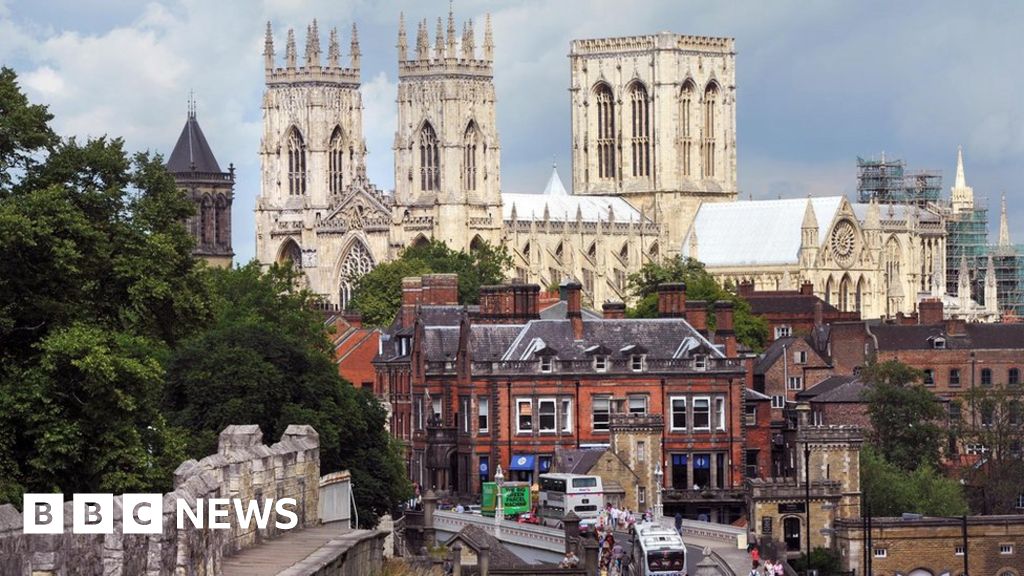
Boris Johnson has suggested Parliament could move to York while the Palace of Westminster undergoes renovation.
In a letter, the prime minister said the government was considering establishing a hub in the northern city and "it would therefore make sense to consider this as a potential location".
The move, if it happens, is expected to take place around 2025.
Other possible London locations proposed by Mr Johnson in the letter to David Goldstone and Sarah Johnson, who are overseeing the restoration project, include Richmond House, the QUII (Queen Elizabeth II Centre) and City Hall.
Mr Johnson said that the case for both Houses staying in place should also be considered.
In his letter, seen by the BBC, the prime minister said: "We all have a responsibility to protect the Palace of Westminster as a functioning building and as the iconic UNESCO World Heritage site that is the home and symbol of our democracy.
"The current situation is unsustainable given the serious risk of a major fire and the need to upgrade the services throughout the building."
Mr Johnson added that "costs are obviously a major driver" in the review but said other factors including disruption to Parliament's work, the timelines for delivery, heritage benefits and fire safety, should be considered.
"We should also move as quickly as possible, both because of the risks associated with the current state of the building and the need to provide certainty on the way forward and thereby minimise disruption to our business," he added.
The letter also said that the location of Parliament was a constitutional issue and that the views of parliamentarians would need to be considered carefully.
The review into the project and the potential move is expected to report its recommendations in the autumn.
Before Parliament voted in 2018 to approve the renewal works, which would entail decanting the whole building for at least six years, MPs had pushed rival plans that would have seen only a partial vacating required. This would have forced builders to work around the Commons schedule.
A recent report by the National Audit Office (NAO) stated that the £4bn cost previously reported for the restoration project was likely to be a "median" figure, with the final outlay expected to be higher.
When the nine members of the powerful Intelligence and Security Committee (ISC) of parliament filed into the Macmillan Room of Portcullis House at 5pm for the first meeting of the new committee, Chris Grayling thought he had the chairmanship in the bag.
After all, the former cabinet minister and Brexiteer was Boris Johnson's choice - controversially, given his record in government and lack of expertise on intelligence and security - and he had already nominated himself the day before.
Nothing could go wrong, he must have thought, because the Tories had a five-four majority on the nine-member committee.
But Mr Grayling and the government whips had both made a major blunder. Neither had sounded out the senior Tory backbencher Dr Julian Lewis and made sure that he was going to vote for Mr Grayling.
And when the committee clerk asked at the start of the meeting if there were any more nominations for chairman, Dr Lewis nominated himself and was immediately backed by the three Labour and one Scottish National Party member.
Advertisement
Result: 5-4 to Dr Lewis, leaving Mr Grayling - cruelly lampooned as "failing Grayling" after his accident-prone cabinet career - and the prime minister humiliated, and the Number 10 machine who were so desperate to see their loyalist nomination elected absolutely furious.
"Grayling is the only person ever to have lost a rigged election," said one Tory MP.
More from Boris Johnson
Mr Grayling had been ambushed. It had been a bloodless coup. But that was about to change.
Within an hour of the decisive vote in the Macmillan Room, it emerged that the committee would meet again at 10am the following morning and almost certainly agree to publish the committee's long-suppressed report on allegations of Russian meddling in UK politics.
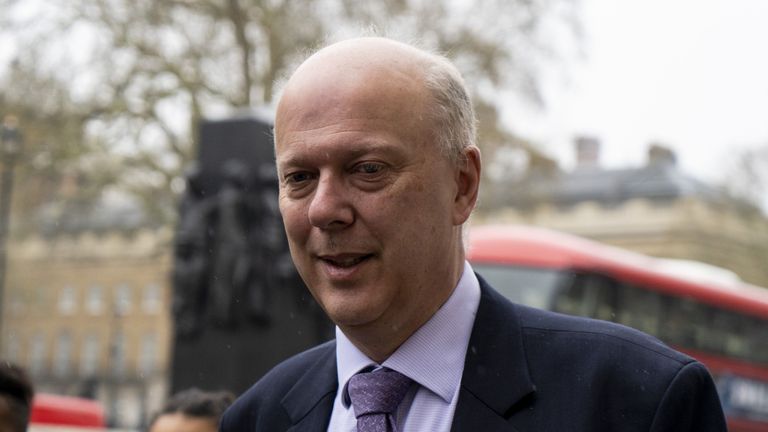
Image:Chris Grayling had been expected to become the new ISC chair
But a crisis for the prime minister was then immediately turned into a drama by Number 10, when Dr Lewis was informed by the government's burly bruiser of a Chief Whip, Mark Spencer, that he had been kicked out of the Tory parliamentary party.
Dr Lewis had the whip withdrawn, government sources told Sky News, "for working with Labour and other opposition MPs for his own advantage".
Another source said: "There are consequences for that duplicity."
The decision sent shockwaves through Westminster.
"This is gangster politics," one member of the committee was reported to have said.
The consensus among many MPs was that Number 10 was guilty of a massive overreaction which has made what was only a moderately bad situation much, much worse.
Dr Lewis has suffered the fate of the 21 pro-Remain Tory MPs who defied Mr Johnson in Brexit votes last year, including - in a delicious irony - the former chairman of the ISC, Dominic Grieve.
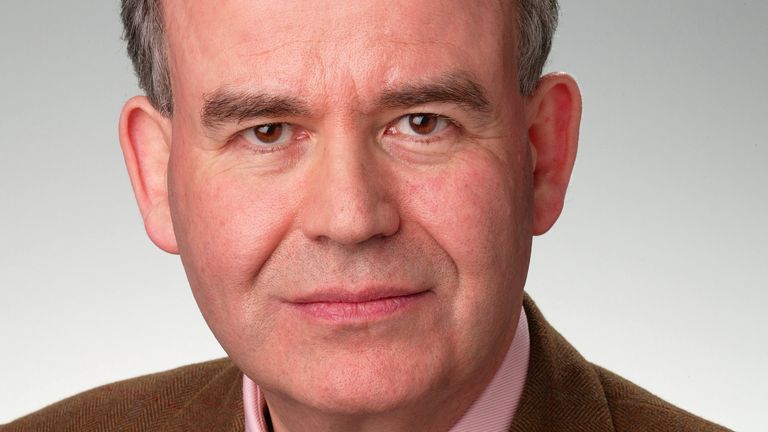
Image:Julian Lewis MP, pictured in 2005
One senior MP told Sky News: "This would have blown over in a few days. Now there will be a huge row throughout the weekend and into next week.
"Removing the whip from Julian also massively strengthens his authority and boosts his independence from the government.
"He is also very popular with the Tory old guard on the back benches, the old knights of the shires, the Thatcherites and the veteran Brexiteers. He's one of them and they won't like it."
Dr Lewis is indeed popular with MPs on both sides of the House.
He was a successful chairman of the Defence Select Committee for four years. He is independent-minded and, despite being a Brexiteer, was a big defender of John Bercow during the former speaker's battles with Mr Johnson last year.
MPs blame the prime minister's controversial adviser, Dominic Cummings, for Number 10's brutal revenge on Dr Lewis.
"This isn't the Chief Whip's decision," one senior MP told Sky News.
"It's Cummings. And it's absolutely bonkers."
Number 10's retribution against Dr Lewis may not be over, however.
The rules governing the ISC, in the Justice and Security Act of 2013, state that the chairman is elected for the whole parliament, until the next election.
But there is already talk of the government tabling a Committee of Selection motion, which can be debated for up to 90 minutes and then voted on by MPs, removing Dr Lewis from the committee and replacing him with another Tory MP.
That would cause a huge row. But would the PM, in his current belligerent mood, care?
And in the chamber, of course, Mr Johnson has a majority of 80. Well, he did. It's down to 78 now, with Dr Lewis presumably crossing the floor to sit with the opposition.
One MP even suggested the PM could go for the nuclear option of abolishing the Intelligence and Security Committee altogether.
Out of the question? Probably not while Mr Cummings is advising Mr Johnson.
Despite his humiliation, Mr Grayling remains a member of the committee and could yet - theoretically - still become chairman if Dr Lewis is kicked of the committee and replaced by a Johnson loyalist.
Besides Mr Grayling, the other outvoted Tories are another ex-cabinet minister Theresa Villiers, ex-minister Sir John Hayes and backbencher Mark Pritchard.
It was Labour MPs Dame Diane Johnson and Kevan Jones, Labour peer Lord West and SNP MP Steward Hosie who backed Dr Lewis.
When Dr Lewis walked into the Macmillan Room in Portcullis House at 5pm, he obviously knew he had the support of the opposition MPs on the committee.
But with Boris Johnson in vengeful mood, he may need the support of many other Tory MPs if he is to survive this fight to the death with the prime minister.
THE Tories were plunged into civil war last night as Boris Johnson sacked a senior MP for colluding with Labour and the SNP to get a top job.
Julian Lewis was booted out after he humiliated the Prime Minister by working with rivals to gazump his pick for chair of the intelligence and security committee.
4
MP Julian Lewis has been booted out of the Conservative PartyCredit: PA:Press Association
4
Chris Grayling is said to have had the backing of Boris Johnson to take the Chair's roleCredit: PA:Press Association
No 10 had chosen ex-Cabinet minister Chris Grayling for the role and expected all Conservative MPs to back him.
But the former justice and transport secretary was a controversial choice due to his poor record in numerous top government jobs.
Dr Lewis was appointed to the powerful job at the last moment after gaining the support of all four Labour and SNP members of the committee.
It is now expected to meet today and agree to publish a long-awaited report into Russian meddling in UK politics as early as next week.
A government source Dr Lewis had been stripped of the whip “because he worked with Labour and other opposition MPs for his own advantage”.
The committee oversees the work of MI5, MI6 and GCHQ, and there had been concern about Mr Grayling’s expertise for the chairmanship.
He worked with Labour and other opposition MPs for his own advantage
Government source
Former national security adviser Lord Ricketts had warned that Mr Grayling - who earned the nickname “Failing Grayling” during a chequered ministerial career - does not “match up” to the authority and reputation of former chairs.
Following Dr Lewis’ success, Lord Ricketts said the body was now in the “hands of someone with much wider experience of defence and security”.
As well as Mr Grayling and Dr Lewis, the members of the ISC are Tory MPs Theresa Villiers, Sir John Hayes and Mark Pritchard, Labour MPs Dame Diana Johnson and Kevan Jones, the Labour peer Admiral Lord West and the SNP MP Stewart Hosie.
Mr Johnson has faced criticism over the delay in appointing the committee which has not met since the last parliament was dissolved in November last year.
The committee has yet to publish its long-awaited report into Russian interference in UK politics after Mr Johnson refused to clear it for release before last year’s general election.
A committee source told the PA news agency: “This was a secret ballot but clearly for him (Mr Grayling) to lose, some Tories decided not to vote for him.”
'GRUBBY'
Labour's deputy leader Angela Rayner branded the move against Dr Lewis "grubby".
She tweeted: "Julian Lewis MP has the Tory Whip removed after being elected as Chairman of the Intelligence and Security Select Committee, after beating hapless Chris Grayling.
"I wonder who in No10 ordered that the long serving Tory MP had the whip removed? What a grubby shower they are!"
Labour former frontbencher Chris Bryant said: "It's a momentous failure of intelligence when a PM takes months to handpick Intelligence and Security Committee members so as to deliver the Chair he wants and they refuse to do his bidding.
"To then chuck the new chairman out of the party is to lose control/the plot."
SNP defence spokesman Stewart McDonald MP said: "This is another total shambles from the Tory government, which has failed to put in place a functioning Intelligence and Security Committee for more than six months since the election.
"With his abysmal record of failure as a Tory minister, Chris Grayling is the only man who could lose a rigged election but it is right the committee has elected a chair and it should now get on with the crucial job of ensuring scrutiny and oversight of security matters, after months of delay."
KING'S HEIR GONE
Same looks, same love of music & like grandad Elvis, Ben's gone too soon
BBQ BRITAIN
UK's 29C heatwave to last all weekend as Brits get set for beaches and BBQs
'DISGRACEFUL'
Footballer handcuffed while police 'search car for drugs & guns' outside shop
Revealed
BABY 'MURDER'
Mum, 27, is accused of murdering her six-week-old baby boy
CABIN CREW CRASH
Three BA cabin crew killed in smash when driver was double drink limit
POODUNNIT?
Depp's dog 's*** all over him' 18 months before he claimed Amber pooed in bed
Liberal Democrat foreign affairs spokesman Alistair Carmichael said Mr Johnson had appointed "yes men" to the ISC but "true to form, however, failing Grayling has been undone in his bid to be chair".
"I hope we now have a committee with real teeth that can hold this Government to account," he added.
"That starts by publishing the report into Russian interference of our democracy before the summer recess so MPs can scrutinise it fully."
4
The Conservatives have removed the whip from Julian Lewis, effectively booting him out of the party
4
Chris Grayling had been Boris Johnson's preferred choice for the committee chair roleCredit: Getty Images - Getty