The British economy returned to growth in May for the first time since the lockdown was announced but is still almost a quarter of the size it was before the crisis, according to official figures.
Economists abandoned their hopes of a swift, V-shaped recovery after figures from the Office for National Statistics showed that output rose by only 1.8 per cent in May. This was weaker than the 5.5 per cent rebound expected by economists.
The economy contracted by almost a fifth, down 19.1 per cent in the three months to May, but the depth of the damage was felt in April when output shrank by 20.3 per cent. The economy is now 24.5 per cent smaller than it was in February.
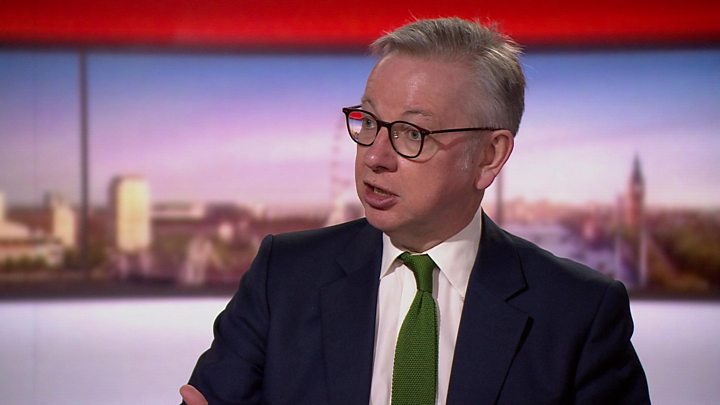
Michael Gove has outlined a £700million package for new infrastructure, the hiring of staff and advanced technology at the UK border as Britain begins to take back control. The new border control will be built inland where there is no space at ports and contain up to 12 new sites. The blueprint also outlines new regulations on the trading of goods from the EU as the UK prepares to formally leave the single market and customs union at the end of the year.
Cabinet Office Minister Michael Gove said: "The publication of the border operating model is an important step which gives business the certainty and direction they need to prepare for the end of the transition period when the UK becomes an independent trading nation for the first time in nearly 50 years.
"We are committed to working closely with businesses and the border industry to help deliver not just a fully operational border at the end of the transition period, but also the world's most effective and secure border in the world by 2025."
Announcing the move in the House of Commons, Mr Gove also fired a warning at Brussels and reiterated the UK would be pressing ahead with the plans regardless of the outcomes of trade talks.
The Chancellor of the Duchy of Lancaster insisted Britain will take back control of its economy whether it is in the form of a formal Canada-style trade agreement or an informal Australian-style deal.
Mr Gove added: “From January 1, 2021, we will embark on the next chapter in our history as a fully independent United Kingdom.
"With control of our economy we can continue to put in place the right measures for Covid recovery. With control over the money we sent to Brussels we can spend it on our priorities, investing in the NHS, spreading opportunity more equally across the UK and strengthening our union.
"Regardless of the outcome of the negotiations with the EU over our future relationship, whether or not we have a Canada-style deal or an Australian model, we will be leaving the single market and the customs union."
On Monday International Trade Secretary Liz Truss also kicked-off a new era for Britain by embarking on trade talks with New Zealand.
Nicola Sturgeon has clashed with Boris Johnson over his post-Brexit plans.
The Prime Minister is set to publish legislation in order to create an internal market in the UK following Brexit.
Under this agreement, the devolved nations would need to accept standards on food, the environment and animal welfare following the end of the Brexit transition period.
Nicola Sturgeon said: “This would be a full-scale assault on devolution, a blatant move to erode the powers of the Scottish parliament in key areas.
“If the Tories want to further boost support for independence, this is the way to do it.”
8.25am update: Ireland issues no deal warning
Ireland's foreign affairs minister Simon Coveney has issued a warning over the possibility of no trade deal being reached between the UK and the EU.
Simon Coveney said if the stalemate continues in Brexit trade talks it would be an “extraordinary failing of politics”.
Mr Coveney said: “There are more discussions happening this week and we hope the UK will adapt its approach to the commitment that they gave in the political declaration that they have moved away from since these negotiations began so we can try to put the pieces of this agreement in place.
"Hopefully by the end of September or October to ensure we avoid the consequences of a no deal trade Brexit which would be an enormous act of self-harm, but also an extraordinary failing of politics if we were, at the start of next year, trading on the basis of WTO regulations which would include tariffs on certain products."
Wearing a face covering in shops and supermarkets in England is to become mandatory from 24 July.
Those who fail to comply with the new rules will face a fine of up to £100, the government is to announce.
The move will bring England into line with Scotland and other major European nations like Spain, Italy and Germany.
Since mid-May, the public have been advised to wear coverings in enclosed public spaces, where they may encounter people they would not usually meet.
It has been compulsory on public transport since 15 June.
Health Secretary Matt Hancock is expected to set out the new guidance on face coverings on Tuesday.
They are designed to minimise the spread of coronavirus and also encourage people to return to the shops safely.
The announcement follows confusion about the government's intentions in recent days, with a senior minister suggesting on Sunday that people should use their "common sense" rather than being compelled to cover up.
Labour said ministers' response had been "slow and muddled" and questioned why the new rules would not come into force for 11 days.
Penalties
The rules will be enforced by the police, with anyone disregarding them at risk of a fine of up to £100. This will be reduced to £50 if people pay within 14 days.
While shop workers will be encouraged to prompt customers to comply, they will not be expected to enforce the rules, allaying unions' concerns about their involvement.
In line with the rules on public transport, children under 11 and those with certain disabilities will be exempt.
In Scotland, the use of coverings in shops has been mandatory since 10 July. Shoppers in Wales and Northern Ireland are not currently required to wear them, although both nations have said this will be kept under review.
Boris Johnson signalled a shift in the government's position on Friday when he spoke of the need for a stricter approach in confined settings and was pictured wearing a mask in a shop in his Uxbridge constituency.
But in a BBC interview on Sunday, Cabinet Office minister Michael Gove downplayed the suggestion of any immediate legal change, saying he believed it should merely be a matter of "courtesy and good manners" to cover up.
Asked whether it should become mandatory, he replied "I don't think so, no".
'Slow and muddled'
Labour said the mixed messages were symptomatic of the government's indecision during the pandemic, and ministers had to explain the "further delay".
"The government has been slow and muddled again," said shadow health secretary Jonathan Ashworth.
"Given the government's own guidance issued on 11 May advised in favour of face masks, many will ask why yet again have ministers been slow in making a decision in this pandemic, and why it'll take another 11 days before these new guidelines to come into force."
Media playback is unsupported on your device
How has the UK government's position on face coverings changed?
12 March: England's deputy chief medical officer Dr Jenny Harries says it is "not a good idea" for the average member of the public to wear a face mask as they may not use it properly and put themselves at more risk of contracting coronavirus
17 April: The transport secretary says the evidence on whether masks work is "quite mixed" and it is possible wearing them "could do more harm than good in certain situations"
1 May: Downing Street says face coverings have a "weak but positive effect" in reducing the spread of coronavirus
A No 10 spokesman said: "There is growing evidence that wearing a face covering in an enclosed space helps protect individuals and those around them from coronavirus.
"The prime minister has been clear that people should be wearing face coverings in shops and we will make this mandatory from 24 July."
Unions have said the new guidance must be "clear and detailed" to protect staff and customers.
While welcoming clarity over the issue, Usdaw said coverings could not be a substitute for strict hygiene controls and social distancing measures, such as limiting the number of people allowed in a store at any one time.
Downing Street said it would keep the guidance on face coverings in other settings, such as offices, under review.
While the government has not outlined what will constitute a face covering under the new rules for shops, it is thought likely to be the same as on public transport.
In those settings, it is not necessary for buy a medical grade mask. Instead, scarves or other textile items that can be used to continually cover the nose and mouth without having to be held in place by hand are considered adequate.
The London Chambers of Commerce said the move would "hopefully bring much needed reassurance to consumers and boost London footfall".
Face coverings have been compulsory in shops in Germany since the end of April and in Italy since 4 May. Similar rules came into force in Spain on 21 May and in Belgium on 11 July.
But they are not mandatory in France, where it is up to retailers to decide whether customers should wear them.
Wearing a face covering in shops and supermarkets in England is to become mandatory from 24 July.
Those who fail to comply with the new rules will face a fine of up to £100, the government is to announce.
The move will bring England into line with Scotland and other major European nations like Spain, Italy and Germany.
Since mid-May, the public have been advised to wear coverings in enclosed public spaces, where they may encounter people they would not usually meet.
It has been compulsory on public transport since 15 June.
Health Secretary Matt Hancock is expected to set out the new guidance on face coverings on Tuesday.
They are designed to minimise the spread of coronavirus and also encourage people to return to the shops safely.
The announcement follows confusion about the government's intentions in recent days, with a senior minister suggesting on Sunday that people should use their "common sense" rather than being compelled to cover up.
Labour said ministers' response had been "slow and muddled" and questioned why the new rules would not come into force for 11 days.
Penalties
The rules will be enforced by the police, with anyone disregarding them at risk of a fine of up to £100. This will be reduced to £50 if people pay within 14 days.
While shop workers will be encouraged to prompt customers to comply, they will not be expected to enforce the rules, allaying unions' concerns about their involvement.
In line with the rules on public transport, children under 11 and those with certain disabilities will be exempt.
In Scotland, the use of coverings in shops has been mandatory since 10 July. Shoppers in Wales and Northern Ireland are not currently required to wear them, although both nations have said this will be kept under review.
Boris Johnson signalled a shift in the government's position on Friday when he spoke of the need for a stricter approach in confined settings and was pictured wearing a mask in a shop in his Uxbridge constituency.
But in a BBC interview on Sunday, Cabinet Office minister Michael Gove downplayed the suggestion of any immediate legal change, saying he believed it should merely be a matter of "courtesy and good manners" to cover up.
Asked whether it should become mandatory, he replied "I don't think so, no".
'Slow and muddled'
Labour said the mixed messages were symptomatic of the government's indecision during the pandemic, and ministers had to explain the "further delay".
"The government has been slow and muddled again," said shadow health secretary Jonathan Ashworth.
"Given the government's own guidance issued on 11 May advised in favour of face masks, many will ask why yet again have ministers been slow in making a decision in this pandemic, and why it'll take another 11 days before these new guidelines to come into force."
Media playback is unsupported on your device
A No 10 spokesperson said: "There is growing evidence that wearing a face covering in an enclosed space helps protect individuals and those around them from coronavirus.
"The prime minister has been clear that people should be wearing face coverings in shops and we will make this mandatory from July 24."
Unions have said the new guidance must be "clear and detailed" to protect staff and customers.
While welcoming clarity over the issue, Usdaw said coverings could not be a substitute for strict hygiene controls and social distancing measures, such as limiting the number of people allowed in a store at any one time.
Downing Street said it would keep the guidance on face coverings in other settings, such as offices, under review.
The London Chambers of Commerce said the move would "hopefully bring much needed reassurance to consumers and boost London footfall".
Face coverings have been compulsory in shops in Germany since the end of April and in Italy since 4 May. Similar rules came into force in Spain on 21 May and in Belgium on 11 July.
But they are not mandatory in France, where it is up to retailers to decide whether customers should wear them.
Wearing a face covering in shops and supermarkets in England is to become mandatory from 24 July.
Those who fail to comply with the new rules will face a fine of up to £100, the government is to announce.
The move will bring England into line with Scotland and other major European nations like Spain, Italy and Germany.
Since mid-May, the public have been advised to wear coverings in enclosed public spaces, where they may encounter people they would not usually meet.
It has been compulsory on public transport since 15 June.
Health Secretary Matt Hancock is expected to set out the new guidance on face coverings on Tuesday.
They are designed to minimise the spread of coronavirus and also encourage people to return to the shops safely.
The announcement follows confusion about the government's intentions in recent days, with a senior minister suggesting on Sunday that people should use their "common sense" rather than being compelled to cover up.
Labour said ministers' response had been "slow and muddled" and questioned why the new rules would not come into force for 11 days.
Penalties
The rules will be enforced by the police, with anyone disregarding them at risk of a fine of up to £100. This will be reduced to £50 if people pay within 14 days.
While shop workers will be encouraged to prompt customers to comply, they will not be expected to enforce the rules, allaying unions' concerns about their involvement.
In line with the rules on public transport, children under 11 and those with certain disabilities will be exempt.
In Scotland, the use of coverings in shops has been mandatory since 10 July. Shoppers in Wales and Northern Ireland are not currently required to wear them, although both nations have said this will be kept under review.
Boris Johnson signalled a shift in the government's position on Friday when he spoke of the need for a stricter approach in confined settings and was pictured wearing a mask in a shop in his Uxbridge constituency.
But in a BBC interview on Sunday, Cabinet Office minister Michael Gove downplayed the suggestion of any immediate legal change, saying he believed it should merely be a matter of "courtesy and good manners" to cover up.
Asked whether it should become mandatory, he replied "I don't think so, no".
'Slow and muddled'
Labour said the mixed messages were symptomatic of the government's indecision during the pandemic, and ministers had to explain the "further delay".
"The government has been slow and muddled again," said shadow health secretary Jonathan Ashworth.
"Given the government's own guidance issued on 11 May advised in favour of face masks, many will ask why yet again have ministers been slow in making a decision in this pandemic, and why it'll take another 11 days before these new guidelines to come into force."
Media playback is unsupported on your device
A No 10 spokesperson said: "There is growing evidence that wearing a face covering in an enclosed space helps protect individuals and those around them from coronavirus.
"The prime minister has been clear that people should be wearing face coverings in shops and we will make this mandatory from July 24."
Unions have said the new guidance must be "clear and detailed" to protect staff and customers.
While welcoming clarity over the issue, Usdaw said coverings could not be a substitute for strict hygiene controls and social distancing measures, such as limiting the number of people allowed in a store at any one time.
Downing Street said it would keep the guidance on face coverings in other settings, such as offices, under review.
The London Chambers of Commerce said the move would "hopefully bring much needed reassurance to consumers and boost London footfall".
Face coverings have been compulsory in shops in Germany since the end of April and in Italy since 4 May. Similar rules came into force in Spain on 21 May and in Belgium on 11 July.
But they are not mandatory in France, where it is up to retailers to decide whether customers should wear them.
Wearing a face covering in shops and supermarkets in England is to become mandatory from 24 July.
Those who fail to comply with the new rules will face a fine of up to £100, the government is to announce.
The move will bring England into line with Scotland and other major European nations like Spain, Italy and Germany.
Since mid-May, the public have been advised to wear coverings in enclosed public spaces, where they may encounter people they would not usually meet.
It has been compulsory on public transport since 15 June.
Health Secretary Matt Hancock is expected to set out the new guidance on face coverings on Tuesday.
They are designed to minimise the spread of coronavirus and also encourage people to return to the shops safely.
The announcement follows confusion about the government's intentions in recent days, with a senior minister suggesting on Sunday that people should use their "common sense" rather than being compelled to cover up.
Labour said ministers' response had been "slow and muddled" and questioned why the new rules would not come into force for 11 days.
Penalties
The rules will be enforced by the police, with anyone disregarding them at risk of a fine of up to £100. This will be reduced to £50 if people pay within 14 days.
While shop workers will be encouraged to prompt customers to comply, they will not be expected to enforce the rules, allaying unions' concerns about their involvement.
In line with the rules on public transport, children under 11 and those with certain disabilities will be exempt.
In Scotland, the use of coverings in shops has been mandatory since 10 July. Shoppers in Wales and Northern Ireland are not currently required to wear them, although both nations have said this will be kept under review.
Boris Johnson signalled a shift in the government's position on Friday when he spoke of the need for a stricter approach in confined settings and was pictured wearing a mask in a shop in his Uxbridge constituency.
But in a BBC interview on Sunday, Cabinet Office minister Michael Gove downplayed the suggestion of any immediate legal change, saying he believed it should merely be a matter of "courtesy and good manners" to cover up.
Asked whether it should become mandatory, he replied "I don't think so, no".
'Slow and muddled'
Labour said the mixed messages were symptomatic of the government's indecision during the pandemic, and ministers had to explain the "further delay".
"The government has been slow and muddled again," said shadow health secretary Jonathan Ashworth.
"Given the government's own guidance issued on 11 May advised in favour of face masks, many will ask why yet again have ministers been slow in making a decision in this pandemic, and why it'll take another 11 days before these new guidelines to come into force."
Media playback is unsupported on your device
A No 10 spokesperson said: "There is growing evidence that wearing a face covering in an enclosed space helps protect individuals and those around them from coronavirus.
"The prime minister has been clear that people should be wearing face coverings in shops and we will make this mandatory from July 24."
Unions have said the new guidance must be "clear and detailed" to protect staff and customers.
While welcoming clarity over the issue, Usdaw said coverings could not be a substitute for strict hygiene controls and social distancing measures, such as limiting the number of people allowed in a store at any one time.
Downing Street said it would keep the guidance on face coverings in other settings, such as offices, under review.
The London Chambers of Commerce said the move would "hopefully bring much needed reassurance to consumers and boost London footfall".
Face coverings have been compulsory in shops in Germany since the end of April and in Italy since 4 May. Similar rules came into force in Spain on 21 May and in Belgium on 11 July.
But they are not mandatory in France, where it is up to retailers to decide whether customers should wear them.