Kamis, 09 Juli 2020

Tax boss questions value of Rishi Sunak's job bonus and meal discount plans - BBC News

Two schemes unveiled by Chancellor Rishi Sunak to stem coronavirus job losses may not be value for money for taxpayers, a top official has warned.

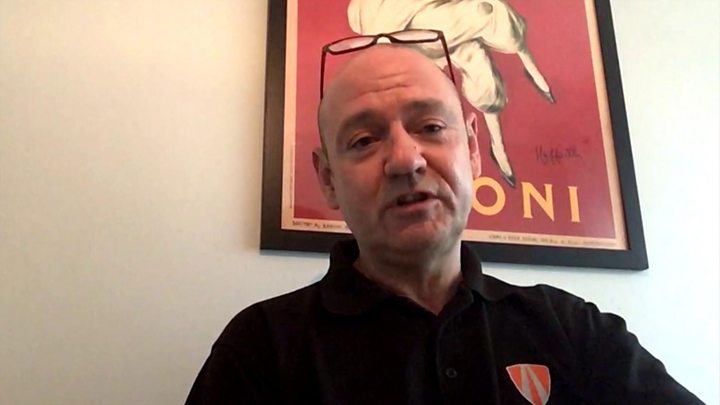
HM Revenue and Customs boss Jim Harra wrote to Mr Sunak to express concerns about paying firms a £1,000 bonus to retain furloughed staff.

He also questioned the value for money of a discount scheme offering 50% off restaurant meals.

The chancellor rejected his concerns, saying action was needed to save jobs.

The exchanges are revealed in letters between the pair during a standard procedure for assessing the effectiveness of policy decisions.

They show Mr Sunak issued so-called "ministerial directions" to instruct officials to go ahead with both programmes.

A Treasury official said a decision to press ahead with a policy in such a manner was a "normal part" of government business.

Under plans outlined on Wednesday, firms will be offered a one-off £1,000 "job retention bonus" for every furloughed employee kept to the end of January 2021.

'Dead weight'

The UK-wide scheme, which will apply to workers earning over £520 per month, has been estimated to cost up to £9.4bn.

The chancellor says ministers are "throwing everything" at stemming job losses after UK companies announced thousands of cuts in recent weeks.

But he has admitted some firms will claim the bonus who would be keeping staff on in any case, saying there would be a "dead weight" cost to the policy.
Media playback is unsupported on your device

He told BBC Radio 4's Today programme: "In an ideal world... you would minimise that dead weight and do everything in incredibly targeted fashion.

"The problem is the severity of what was happening to our economy, the scale of what was happening, and indeed the speed that it was happening at demanded a different response."

Labour leader Sir Keir Starmer said the bonus scheme "should be targeted in the areas which most need it, not across the piece".

The government's furlough scheme - currently paying the 80% of the wages of 9.4m employees - will be pared back from next month and end in October.

'Policy rationale'

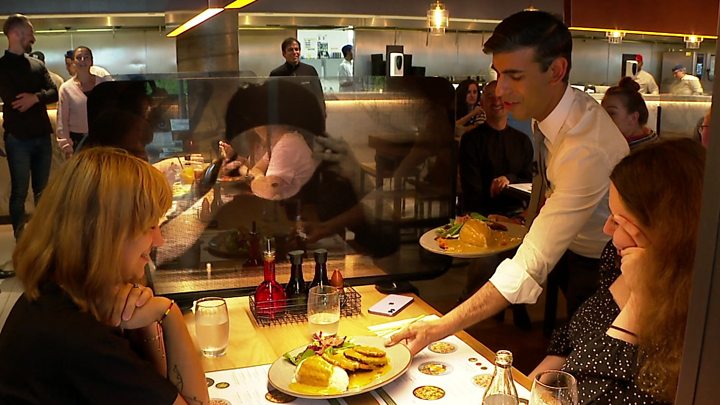
Mr Harra also questioned the plan to offer diners a 50% discount for every meal, up to £10 a head, from Monday to Wednesday throughout August, and which is set cost £0.5bn.

In his letters, sent before Wednesday's announcements, Mr Harra said there was "sound policy rationale" behind the aims of both programmes, but it had been hard to estimate their effectiveness.

Of the jobs programme, he wrote: "It has proved difficult to establish a counterfactual for this scheme, which depends on the overall cost of the scheme and the number of extra jobs it would protect, both of which are currently highly uncertain."

He added that he had been unable to conclude the policy "represents value for money" to the standards expected in the public spending guidebook.

The chancellor hasn't done anything wrong here.

Ministerial direction is designed to allow political choices to be made - even if officials don't agree with them.

But these letters from Jim Harra highlight the uncertainty around the key policies in the summer statement.

Quite simply, the government doesn't know how effective they will be, how many jobs they will save, or whether they will provide value for money when we look back on these decisions in a year or so.

Clearly this unprecedented crisis requires some 'out of the box' thinking.

But the chancellor will be judged on the success of his novel policies.

Mr Harra expressed reservations about the plans for meal discounts, saying: "There is insufficient time to gather further evidence and wider external opinions that might enable me to reach a conclusion.

"By nature, this is a novel scheme meaning there are also particular value for money risks surrounding the level of potential losses that could arise."

Replying to the letters from Mr Harra, Rishi Sunak said there were "broader issues" to consider outside the normal guidance on public spending, and there were "compelling reasons" for the action he has taken.

He said the jobs bonus scheme would play a "vital role" in allowing employers to bring back furloughed staff whose jobs would otherwise be at "acute risk".

Defending the meal discount scheme, he said it would make people more likely to visit restaurants and help support up to 1.8m hospitality jobs.

Let's block ads! (Why?)


https://news.google.com/__i/rss/rd/articles/CBMiL2h0dHBzOi8vd3d3LmJiYy5jby51ay9uZXdzL3VrLXBvbGl0aWNzLTUzMzQ4MjQ20gEzaHR0cHM6Ly93d3cuYmJjLmNvLnVrL25ld3MvYW1wL3VrLXBvbGl0aWNzLTUzMzQ4MjQ2?oc=5

2020-07-09 12:53:13Z
52780898176939

Coronavirus: Chancellor Rishi Sunak sorry for not being able to protect all jobs - BBC News

The chancellor has said he is "sorry" for not helping "everyone in exactly the way they would have wanted".

Rishi Sunak said the government was "throwing everything" at stemming job losses with a £30bn stimulus package.

But he told the BBC he will not be able to protect "every single job" as the UK enters a "severe recession".

He also admitted that some of the £1,000 bonuses being offered to take back furloughed staff would go to firms that were already keeping workers on.

Labour has called for a more targeted approach to saving jobs, saying the government will "waste billions at a time when others are crying out for support".

In his summer statement on Wednesday, Mr Sunak said the "jobs retention bonus" could cost as much as £9bn if every worker currently furloughed is kept on.

Meanwhile, it has emerged the most senior civil servant at HM Revenue and Customs did not back two of the key policies in Mr Sunak's summer statement over uncertainty about their value for money.

In letters to the chancellor, Jim Harra, HMRC's permanent secretary, said advice received by HMRC "highlights uncertainty around the value for money" of the job Retention Bonus and Eat Out To Help Out scheme - which gives diners money off some meals in August.

'Zero income'

Self-employed curtain fitter Mark Whittaker told BBC Breakfast he cannot "get his head round how the chancellor expects any citizen of this country to get by on zero income".

"If he can manage it, please tell me how to do it," Mr Whittaker said. "I don't want a handout… I want parity."

Media playback is unsupported on your device

Mr Whittaker started his own business in Stockport, Greater Manchester, towards the end of 2018 and fell short of earnings requirements to receive support during the crisis.

He said people in his situation have children, mortgages, rent and bills to pay.

Responding to Mr Whittaker's comments, Mr Sunak said more than 2.5 million people who are self-employed will receive support from a "generous" scheme of government funding.

He added: "Have we been able to help everyone in exactly the way they would have wanted? I'm sure not and I've said previously that we haven't been able to do that and for that I am sorry."

Mr Sunak warned the UK was "entering one of the most severe recessions this country has ever seen".

"If you're asking me 'can I protect every single job' of course the answer is no," he said.

"'Is unemployment going to rise, are people going to lose their jobs?' Yes, and the scale of this is significant."

It comes as figures released by the Treasury reveal that public spending on the battle against coronavirus has risen to nearly £190bn.

And the Institute for Fiscal Studies has warned the UK was not in a "normal recession" but "the deepest in history".

The Organisation for Economic Co-operation and Development (OECD) estimates that unemployment in the UK will reach "record highs" of up to 11.7% by the end of 2020, without a second wave of coronavirus.

With a second wave, it says UK unemployment could reach near 15%.

'Dead weight'

The chancellor announced a series of measures to help the economy on Wednesday, including a VAT cut for the hospitality and tourism sectors, a bonus scheme for employers and an eating out money off scheme for August.

Mr Sunak said the £1,000 bonus being offered to businesses that keep furloughed staff in jobs until January would be a "dead weight" cost, as some employers who intend to retain workers anyway would benefit.

The Chancellor told BBC Radio 4's Today programme: "Throughout this crisis I've had decisions to make and whether to act in a broad way at scale and at speed or to act in a more targeted and nuanced way.

"In an ideal world, you're absolutely right, you would minimise that dead weight and do everything in incredibly targeted fashion.

"The problem is the severity of what was happening to our economy, the scale of what was happening, and indeed the speed that it was happening at demanded a different response."

He said that "without question there will be dead weight - and there has been dead weight in all of the interventions we have put in place".

But Labour's shadow chief secretary to the Treasury Bridget Philipson said: "The chancellor should be targeting support on those who need it, not handing it out aimlessly to those who don't.

"It's not brave to admit the government plans to waste billions at a time when others are crying out for support."

Some 9.3 million workers are having 80% of their salaries paid for by the government - up to £2,500 a month - under the furlough scheme, which was originally due to end in July, before being extended to October, with employer contributions.

From August, employers must pay National Insurance and pension contributions, then 10% of pay from September, rising to 20% in October.


We are looking to speak to people who used previous unemployment schemes to get work - is that you? Did the 'Future Jobs Fund' in 2009 help you get a job? How useful was it for you in developing your career? Share your experiences by emailing haveyoursay@bbc.co.uk.

Please include a contact number if you are willing to speak to a BBC journalist.

Let's block ads! (Why?)


https://news.google.com/__i/rss/rd/articles/CBMiL2h0dHBzOi8vd3d3LmJiYy5jby51ay9uZXdzL3VrLXBvbGl0aWNzLTUzMzQ2NDE50gEzaHR0cHM6Ly93d3cuYmJjLmNvLnVrL25ld3MvYW1wL3VrLXBvbGl0aWNzLTUzMzQ2NDE5?oc=5

2020-07-09 11:37:30Z
52780898176939

Coronavirus: Taxes will rise to pay for virus, IFS think tank warns - BBC News

Taxpayers face a day of reckoning when the government's massive coronavirus support measures have to be paid off, experts warn.

The Institute of Fiscal Studies think tank says the economy will remain in a "support and recovery" phase for some time, but higher taxes are inevitable.

On Wednesday, the chancellor unveiled another £30bn of support, bringing the total cost to £190bn.

But it was revealed the UK's tax authority queried its value for money.

The most senior civil servant at HM Revenue and Customs (HMRC) wrote to Chancellor Rishi Sunak about the value of two measures in his summer statement - the Job Retention Bonus and the eating out support.

'No normal recession'

Wednesday's additional spending announced by Mr Sunak is worth nearly £3,000 for every person in the UK - and more than the entire planned health budget for 2020-21.

It also means that the cost of the crisis so far has risen by more than 40% since last month, when the government's spending watchdog, the Office for Budget Responsibility, estimated it at £133bn.

On Thursday, in its analysis of the latest measures, the IFS predicted that government borrowing would surge to about £350bn this year. In March, the government forecast a deficit of about £50bn to £60bn this year.

The IFS said it expected further spending support in the autumn Budget, perhaps through targeted tax cuts.

However, IFS director Paul Johnson said: "Let's hold in the back of our minds that a reckoning, in the form of higher taxes, will come eventually.

"This is no normal recession. It's the deepest in history," Mr Johnson said. The IFS said annual borrowing as a share of the economy was on course to be its highest outside wartime in more than 300 years.

There are some things no chancellor can prepare for - such as what to do if your economy wipes out 18 years' gains in two months of lockdown.

His solution was to temporarily deep freeze the economy, and pump money into crisis response. And the thawing process needs more funds, to prevent long term damage.

Now economists are talking about a deficit, a shortfall of way more than the £300bn previously expected. It's equivalent to a bigger slice of the economy than at any time since the Second World War.

And it could get bigger; if more is needed to support the recovery - or in the event of a severe second wave.

But it's a cost worth bearing if it carries the economy through a devastating crisis, safeguard the damage to output and jobs - and ensure taxes get paid.

For at some point, there will have to be a discussion about how we pay this back.

The government is currently borrowing record amounts on the financial markets to plug the gap - but that may not be enough. There may have to be tax hikes, possibly less generous rises in pensions.

But it may be a while until the economy is robust enough to bear that.

'Value for money issue'

Of the policy measures announced in Wednesday's summer statement, the biggest was the plan to pay employers £1,000 for every furloughed worker they retain past January. The total bill could rise as high as £9.4bn, but only if every furloughed worker keeps their job.

But Mr Johnson said there was a "value for money issue" about the scheme.

"A lot, probably a majority, of the job retention bonus money will go in respect of jobs that would have been, indeed already have been, returned from furlough anyway," he said. And he said much of the planned cuts in VAT and stamp duty "will be deadweight".

It has also emerged that the UK tax authority had some doubts. Jim Harra, HMRC's permanent secretary, wrote to the chancellor earlier this week about the Job Retention Bonus and Eat Out To Help Out policies.

On both, he said, advice received by HMRC and the Treasury "highlights uncertainty around the value for money" of the proposals.

However, the correspondence showed the chancellor said the plans should go ahead because there was a "compelling case".

Businessman Charlie Mullins, founder of Pimlico Plumbers, also questioned if the job retention bonus was money well spent, as he thought some firms would only retain staff until they get the cash.

"Firms will either want their staff back, or they won't. I just feel some employers will take advantage of this scheme," he told the BBC.

Media playback is unsupported on your device

Meanwhile, Torsten Bell, chief executive of the Resolution Foundation think tank, said the financial cost of the crisis, at £190bn so far, was "approaching the amount we spend on the day-to-day running of our NHS, schools and colleges each year".

He welcomed the focus on supporting young people and sectors most affected by lockdown, but added: "The scale of support... risks falling short of what will be required. The chancellor is taking quite a gamble on the strength of the recovery in the months ahead."

Let's block ads! (Why?)


https://news.google.com/__i/rss/rd/articles/CBMiLGh0dHBzOi8vd3d3LmJiYy5jby51ay9uZXdzL2J1c2luZXNzLTUzMzQ3ODUz0gEwaHR0cHM6Ly93d3cuYmJjLmNvLnVrL25ld3MvYW1wL2J1c2luZXNzLTUzMzQ3ODUz?oc=5

2020-07-09 11:15:00Z
52780908842890

10000 jobs axed at Boots, John Lewis, Burger King and Rolls-Royce | ITV News - ITV News

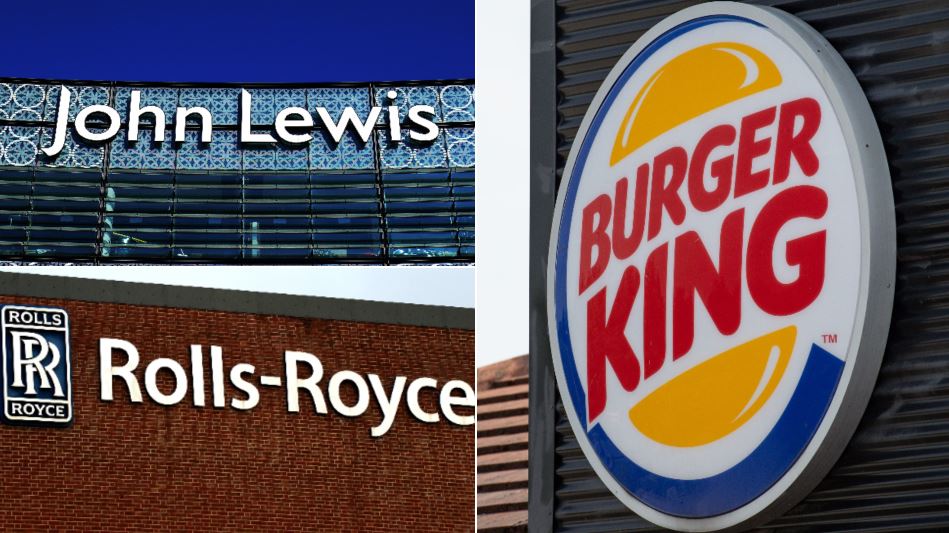
Thousands more jobs are at risk of being lost in the UK, as John Lewis, Burger King and Rolls Royce all announced plans to scale back on staff.

At least 5,900 jobs today have been slashed from three major UK employers.

The losses come despite the Chancellor announcing a £30bn spending stimulus designed to protect workers.

So far today:

  • Department chain John Lewis announced it will close eight of its department stores, putting 1,300 jobs at risk

  • Burger King said it could could close one in ten branches, putting 1,600 on the line

  • 3,000 British workers have applied for voluntary redundancy at Rolls-Royce after the luxury car manufacturer announced 9,000 job cuts worldwide

  • Boots have announced 4,000 job cuts to offset impact of coronavirus

Chancellor Rishi Sunak warned further job losses could be on the horizon despite announcing schemes such as the Jobs Retention Bonus designed to protect furloughed staff. The Jobs Retention Bonus, a scheme awarding £1,000 to employers who bring back furloughed staff, has been hailed by many as innovative but critics say it is not enough. Mr Sunak, defending the sum, said he believes it will make a "significant difference".

Despite the announcement yesterday, John Lewis said it will shut two full-size department stores in Birmingham and Watford, four At Home shops in Croydon, Newbury, Swindon and Tamworth, as well as two travel hub outlets at Heathrow and St Pancras. It said the eight shops were already "financially challenged" before the pandemic, which has ramped up the shift towards online shopping. The group estimated that between 60% and 70% of John Lewis sales are set to be made online this year and next, compared with 40% before the coronavirus crisis.

John Lewis is weighing up which stores to close Credit: Jacob King / PA

Sharon White, chairman of the John Lewis Partnership, said: "Closing a shop is always incredibly difficult and today's announcement will come as very sad news to customers and partners. "However, we believe closures are necessary to help us secure the sustainability of the partnership - and continue to meet the needs of our customers however and wherever they want to shop. "Redundancies are always an absolute last resort and we will do everything we can to keep as many partners as possible within our business."

At Rolls-Royce, two-thirds of the 3,000 staff which have applied for voluntary redundancy will leave the company by the end of August. The engine marker said its organisation plans were designed to save around £1.3bn a year before tax and includes cutting 17% of its total workforce. Chief executive Warren East said: "These are exceptional times. The Covid-19 pandemic has created a historic shock in civil aviation which will take several years to recover. "We started this year with positive momentum and strong liquidity and acted swiftly to conserve cash and cut costs to protect Rolls-Royce during the pandemic.

Around 3,000 UK staff at Rolls Royce have applied for voluntary redundancy. Credit: PA Images.

"We are taking steps to resize our Civil Aerospace business to adapt to lower medium-term demand from customers and help secure our future. "This means we have had to take the very difficult decision to lose people who have helped us become the company we are and who have been proud to work for Rolls-Royce." At Burger King, the firm's UK boss warned one in 10 of its outlets could close due to the impact of the coronavirus pandemic. So far, just 370 of its 350 branches in the UK have reopened. Chief executive Alasdair Murdoch told the BBC's Newscast the economic damage stemming from the crisis could ultimately force the company to permanently close up to 10% of its stores.

Burger King said one in 10 of its stores could close due to the impact of coronavirus. Credit: PA

He told Newscast: "We don't want to lose any (jobs). We try very hard not to, but one's got to assume somewhere between 5% and 10% of the restaurants might not be able to survive. "It's not just us - I think this applies to everyone out there in our industry." Chancellor Rishi Sunak on Wednesday unveiled a £30 billion support package to help boost the nation's economic recovery, which included plans to subsidise restaurant bills throughout August to encourage people to dine out. However Mr Murdoch added that Government schemes do not do enough to compensate restaurants for the combination of fixed costs and lost sales throughout the pandemic, telling Newscast: "I don't think you can ever get over the top of this problem."

Let's block ads! (Why?)


https://news.google.com/__i/rss/rd/articles/CBMiXGh0dHBzOi8vd3d3Lml0di5jb20vbmV3cy8yMDIwLTA3LTA5L2pvaG4tbGV3aXMtYnVyZ2VyLWtpbmctcm9sbHMtcm95Y2Utam9iLWxvc3Nlcy11ay1lY29ub2150gEA?oc=5

2020-07-09 09:42:00Z
52780906214019

Coronavirus: Taxes will rise to pay for virus, IFS think tank warns - BBC News

Taxpayers face a day of reckoning when the government's massive coronavirus support measures have to be paid off, experts warn.

The Institute of Fiscal Studies think tank says the economy will remain in a "support and recovery" phase for some time, but higher taxes are inevitable.

On Wednesday, the chancellor unveiled another £30bn of support, bringing the total cost to £190bn.

But it was revealed the UK's tax authority queried its value for money.

The most senior civil servant at HM Revenue and Customs (HMRC) wrote to Chancellor Rishi Sunak about the value of two measures in his summer statement - the Job Retention Bonus and the eating out support.

'No normal recession'

Wednesday's additional spending announced by Mr Sunak is worth nearly £3,000 for every person in the UK - and more than the entire planned health budget for 2020-21.

It also means that the cost of the crisis so far has risen by more than 40% since last month, when the government's spending watchdog, the Office for Budget Responsibility, estimated it at £133bn.

On Thursday, in its analysis of the latest measures, the IFS predicted that government borrowing would surge to about £350bn this year. In March, the government forecast a deficit of about £50bn to £60bn this year.

The IFS said it expected further spending support in the autumn Budget, perhaps through targeted tax cuts.

However, IFS director Paul Johnson said: "Let's hold in the back of our minds that a reckoning, in the form of higher taxes, will come eventually.

"This is no normal recession. It's the deepest in history," Mr Johnson said. The IFS said annual borrowing as a share of the economy was on course to be its highest outside wartime in more than 300 years.

There are some things no chancellor can prepare for - such as what to do if your economy wipes out 18 years' gains in two months of lockdown.

His solution was to temporarily deep freeze the economy, and pump money into crisis response. And the thawing process needs more funds, to prevent long term damage.

Now economists are talking about a deficit, a shortfall of way more than the £300bn previously expected. It's equivalent to a bigger slice of the economy than at any time since the Second World War.

And it could get bigger; if more is needed to support the recovery - or in the event of a severe second wave.

But it's a cost worth bearing if it carries the economy through a devastating crisis, safeguard the damage to output and jobs - and ensure taxes get paid.

For at some point, there will have to be a discussion about how we pay this back.

The government is currently borrowing record amounts on the financial markets to plug the gap - but that may not be enough. There may have to be tax hikes, possibly less generous rises in pensions.

But it may be a while until the economy is robust enough to bear that.

'Value for money issue'

Of the policy measures announced in Wednesday's summer statement, the biggest was the plan to pay employers £1,000 for every furloughed worker they retain past January. The total bill could rise as high as £9.4bn, but only if every furloughed worker keeps their job.

But Mr Johnson said there was a "value for money issue" about the scheme.

"A lot, probably a majority, of the job retention bonus money will go in respect of jobs that would have been, indeed already have been, returned from furlough anyway," he said. And he said much of the planned cuts in VAT and stamp duty "will be deadweight".

It has also emerged that the UK tax authority had some doubts. Jim O'Hara, HMRC's permanent secretary, wrote to the chancellor earlier this week about the Job Retention Bonus and Eat Out To Help Out policies.

On both, he said, advice received by HMRC and the Treasury "highlights uncertainty around the value for money" of the proposals.

However, the correspondence showed the chancellor said the plans should go ahead because there was a "compelling case".

Businessman Charlie Mullins, founder of Pimlico Plumbers, also questioned if the job retention bonus was money well spent, as he thought some firms would only retain staff until they get the cash.

"Firms will either want their staff back, or they won't. I just feel some employers will take advantage of this scheme," he told the BBC.

Media playback is unsupported on your device

Meanwhile, Torsten Bell, chief executive of the Resolution Foundation think tank, said the financial cost of the crisis, at £190bn so far, was "approaching the amount we spend on the day-to-day running of our NHS, schools and colleges each year".

He welcomed the focus on supporting young people and sectors most affected by lockdown, but added: "The scale of support... risks falling short of what will be required. The chancellor is taking quite a gamble on the strength of the recovery in the months ahead."

Let's block ads! (Why?)


https://news.google.com/__i/rss/rd/articles/CBMiLGh0dHBzOi8vd3d3LmJiYy5jby51ay9uZXdzL2J1c2luZXNzLTUzMzQ3ODUz0gEwaHR0cHM6Ly93d3cuYmJjLmNvLnVrL25ld3MvYW1wL2J1c2luZXNzLTUzMzQ3ODUz?oc=5

2020-07-09 10:10:31Z
52780908842890

Burger King could permanently close restaurants with 1,600 jobs at risk - Metro.co.uk

Shoppers maintain the British government's current social distancing guidelines and stand two metres (2M) apart as they queue to enter a Burger King fast Food store (R) and Next Store (L) in Cardiff on June 22, 2020, as some non-essential retailers in Wales are able to reopen from their enforced coronavirus shutdown. - Various stores and outdoor attractions in Wales are set to open Monday for the first time in nearly three months, as the government continues to ease its coronavirus lockdown, but pubs and restaurants must remain closed, and people must still stay 'local', where possible. (Photo by GEOFF CADDICK / AFP) (Photo by GEOFF CADDICK/AFP via Getty Images)
Up to 1,600 jobs are at risk at Burger King with the chain warning some restaurants may not survive the pandemic (Picture: Getty)

Burger King UK’s boss has warned that up to 1,600 jobs could be lost as a result of the coronavirus pandemic.

Only about 370 of the restaurant chain’s 530 UK stores have reopened since the nation went into lockdown.

Chief executive Alasdair Murdoch told the BBC’s Newscast the economic damage stemming from the crisis could ultimately force the company to permanently close up to 10% of its stores.

He said: ‘We don’t want to lose any (jobs). We try very hard not to, but one’s got to assume somewhere between 5% and 10% of the restaurants might not be able to survive.

Advertisement

Advertisement

Advertisement

‘It’s not just us – I think this applies to everyone out there in our industry.’

Visit our live blog for the latest updates: Coronavirus news live

Chancellor Rishi Sunak on Wednesday unveiled a £30 billion support package to help boost the nation’s economic recovery, which included plans to subsidise restaurant bills throughout August to encourage people to dine out.

But Mr Murdoch said that Government schemes ‘do not do enough’ to compensate restaurants for the combination of fixed costs and lost sales throughout the pandemic.

He said: ‘I don’t think you can ever get over the top of this problem.’

Mr Sunak has urged people to dine out and embrace post-lockdown freedoms as he warned that jobs are at risk if economic activity does not return to normal.

He said he was ‘anxious’ about the state of the UK’s economy which is ‘entering into a very significant recession’ because of the coronavirus crisis but that he is hoping to ‘safely reopen’ more of the country in order to kickstart the economy.

He told Sky News today: ‘We have to rediscover behaviours that we’ve essentially unlearned over the last few months.

‘But unless activity returns to normal, those jobs are at risk of going which is why we acted in the way that we did.’

Get in touch with our news team by emailing us at webnews@metro.co.uk.

For more stories like this, check our news page.

Advertisement

Advertisement

Let's block ads! (Why?)


https://news.google.com/__i/rss/rd/articles/CBMiXWh0dHBzOi8vbWV0cm8uY28udWsvMjAyMC8wNy8wOS9idXJnZXIta2luZy1tYXktZm9yY2VkLXBlcm1hbmVudGx5LWNsb3NlLXJlc3RhdXJhbnRzLTEyOTY1ODM5L9IBYWh0dHBzOi8vbWV0cm8uY28udWsvMjAyMC8wNy8wOS9idXJnZXIta2luZy1tYXktZm9yY2VkLXBlcm1hbmVudGx5LWNsb3NlLXJlc3RhdXJhbnRzLTEyOTY1ODM5L2FtcC8?oc=5

2020-07-09 07:33:00Z
52780906214019

Chancellor warns of 'difficult times ahead' despite stimulus package - Sky News

[unable to retrieve full-text content]

  1. Chancellor warns of 'difficult times ahead' despite stimulus package  Sky News
  2. Chancellor gives diners 50% off on eating out  BBC News
  3. Rishi Sunak: Three things to know from chancellor's speech - BBC News  BBC News
  4. Everything hinges on restoring confidence  Telegraph.co.uk
  5. Not everything is as it seems in Rishi Sunak’s mini-budget – beware the small print  The Independent
  6. View Full coverage on Google News

https://news.google.com/__i/rss/rd/articles/CBMiK2h0dHBzOi8vd3d3LnlvdXR1YmUuY29tL3dhdGNoP3Y9eDdmaWVTTGQ4YzDSAQA?oc=5

2020-07-09 07:29:53Z
52780898176939