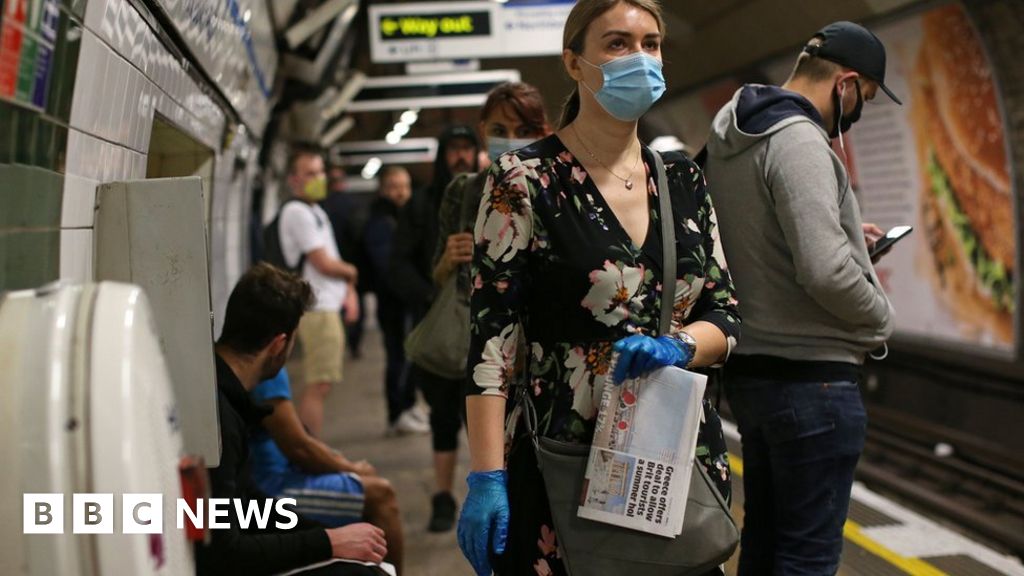
In the most recent week performance in terms of numbers not engaging and numbers of contacts reached both dropped a little.
Baroness Dido Harding, the head of the service, said variability form week to week was to be expected.
She said she was happy with the performance so far, saying it would improve in the coming weeks and months and would play a vital role in "curbing" the spread of the virus.
The service has once again not been able to provide details for how quickly people are being contacted following a positive result.
Government advisers believe contacts need to be found within 48 hours for the service to be most effective.
Public 'must play its part'
Prof Keith Neal, an expert in infectious diseases from the University of Nottingham, said the biggest issue lay with the attitude of the public.
He said the numbers coming forward for testing was thought to be lower than the actual number who are infected, while the fact that one in four people who test positive do not engage with the system was "worryng."
"These can only be sorted by members of the public as they require individuals to take the appropriate actions to reduce spread."
It comes as the NHS Test and Trace programme has started trialling walk-in testing centres. The pilots are being held in London, Newcastle, Rochdale and Slough.
They involve buildings as well as open-air locations, including a basketball court.
Currently, testing is available at hospitals, mobile testing units, regional drive-through centres, and via a postal service.
Scotland, Northern Ireland and Wales run their own tracing services.
MILLIONS of antibody tests bought by the British government “can’t be trusted” despite Prime Minister Boris Johnson describing them as “game changing”.
Doctors have now questioned how good the tests are and what the results actually mean.
The antibody tests had been labelled as a 'game changer' by the Prime Minister Credit: EPA
Last month the government purchased 10 million of the test kits from Abbott and Roche after studies from Public Health England found they were effective.
Now in a letter to the British Medical Journal (BMJ) a group of physicians and senior clinical academics have claimed there is no valid clinical reason for the large scale testing which is being carried out.
Baroness Dido Harding, who heads up the NHS test-and-trace-programme said not enough is known about the level of protection such tests provide.
This is while Professor Jon Deeks, who led the first systematic review of studies on Covid antibody tests said: "We don't have much data and we can't trust any of it."
So far in the UK over 43,000 people have died from the virus, but experts argue the antibody tests “do not indicate immunity”.
They said the concept of so-called immunity passports which would allow people to work have also not yet been established.
Reader in microbial pathogenesis at the University of Bath Andrew Preston however said the idea of the antibody tests being used to create these immunity passports was “attractive”, but said using them would be “some way off”.
The tests, they say, have been rolled out at an unprecedented pace and scale without the correct assessment.
What people really want to know from these tests is - am I safe from infection?
Al EdwardsAssociate professor in Biomedical Technology at Reading University
Before purchasing the tests from Roche the government had reportedly sent £16 million on tests that were later found to be ineffective.
Roche has not revealed the details of the UK deal.
They also highlighted that there is no performance data to indicate how effective the tests are for high risk patients such as those in the BAME community or elderly patients.
The NHS has been pushed to the brink due to the Covid-19 pandemic and the experts claim that this push to introduce non-evidence based tests is an “inefficient use of scarce resources”.
2
"We would like to see a carefully developed and clearly articulated strategy for serological testing, with clear scientific or clinical aims (or both) as part of a unified Covid-19 response strategy," they said.
This is while it might not just be the accuracy of the tests that is concerning.
Sheila Bird from Edinburgh University's College of Medicine and Veterinary Medicine said there are several issues with PHE’s evaluation of the tests.
She said these include the use of repeat samples, the absence of data on sex and age as well as the quality of the samples.
Roche Diagnostics UK told the BMJ that they are rolling out the tests as a “crucial next step” in understanding the spread of the virus, adding that the tests would provide greater confidence and reassurance as the UK moves into the next stages of the pandemic.
'PARTY' CARNAGE
Thug brandishes SWORD at police & patrol car trashed as party turns to riot
LET'S FLY!
Brits can fly to France, Italy & Spain NEXT WEEK as 1st air bridges are revealed
SAVED THEIR SKIN
Topless sunbather rescues family-of-three from rip current at nudist beach
OUTDOOR BOOZING
New law to allow drinking in streets & car parks to help pubs bounce back
JOBS MISERY
Quarter of furloughed workers 'likely to lose their jobs when scheme ends'
SLAMBORGHINI
Driver crashes £200k Lamborghini 20 MINUTES after picking it up from showroom
A PHE spokesperson said: "Our evaluations have been completed in record time using the samples and tests that were available to us. We are confident that the volume of samples and methodology was of a high standard."
Al Edwards, associate professor in Biomedical Technology at Reading University said: "What people really want to know from these tests is - am I safe from infection?
"These tests, at the moment, can't answer that."
In a statement to The BMJ, the Department of Health and Social Care said: "We do not currently know how long an antibody response to the virus lasts, nor whether having antibodies means a person cannot transmit it to others."
They added that the antibody tests will play an “increasingly important role”.
I visited a coronavirus test lab to check my immunity – here’s how they REALLY work
CORONAVIRUS CRISIS - STAY IN THE KNOW
Don't miss the latest news and figures - and essential advice for you and your family.
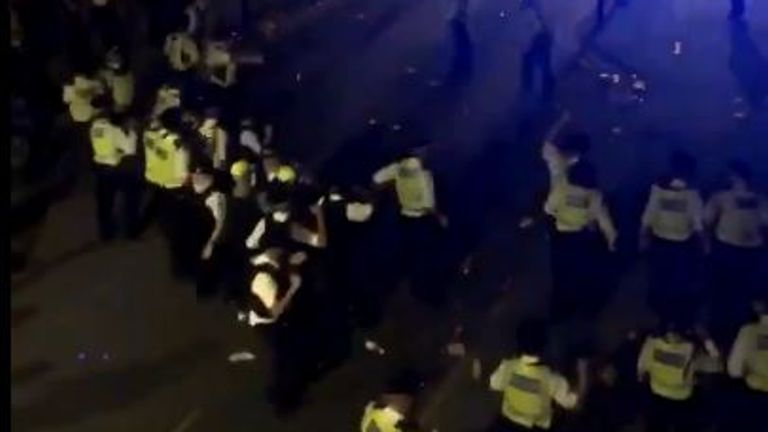
Twenty two officers have been injured and police cars smashed up during "significant disorder" following a street party in Brixton overnight.
Footage on social media showed a line of police retreating from crowds of people running at them with makeshift weapons on Cecilia Road near the Angell Town estate in Brixton on Wednesday night.
Bottles were thrown at the officers and in one video a man appeared to be brandishing a long pole at them as he said: "Back up."
Image:15 police officers were injured during the confrontation with those at a street party
Another two men were seen carrying a large wooden table before placing it on the floor and ripping the legs off then running at the police who started to run away as the crowd came towards them.
Two men could be seen on top of a police vehicle smashing in the windscreen with a table leg and their feet.
Advertisement
Another man had what appeared to be a plank of wood and was hitting the back of a police van with it before it was driven off.
After the police had gone, footage showed some of the crowd fighting each other.
More from UK
Home secretary Priti Patel called the incident "vile".
She tweeted: "These are utterly vile scenes. Just last weekend, the whole country came together to praise our heroic police officers for putting their own lives on the line to keep us safe.
"I'll be picking up with the Met Commissioner immediately."
These are utterly vile scenes.
Just last weekend, the whole country came together to praise our heroic police officers for putting their own lives on the line to keep us safe.
Mayor of London Sadiq Khan said: "I'm in touch with the Met about the completely unacceptable events in Brixton overnight.
"Violence against the police will not be tolerated. Large gatherings during COVID-19 are deeply irresponsible and risk others' lives."
A Met Police statement said officers were called to the scene on Wednesday evening after numerous calls from residents about a large unlicensed street party.
Officers tried to encourage the crowd to leave as large gatherings are not allowed due to the coronavirus lockdown, but "they did not engage with police", the statement said.
More officers were called to the scene and the group became hostile towards them and, despite a dispersal zone order being granted, the crowd remained.
None of the officers were seriously injured, but two required hospital treatment.
Four people were arrested for assault and public order offences and remain in police custody.
The crowd eventually left in the early hours of Thursday and police are now carrying out stop and search orders in the area "to prevent violence", the statement said.
Lambeth Borough Commander Colin Wingrove said: "Our role is to protect the public and ensure guidelines are adhered to in order to prevent the spread of Covid-19 protecting the NHS and save lives
"Our officers work incredibly hard to engage and explain the public health message and regulations to prevent such gatherings occurring."
He called the gatherings "unlawful" and said they pose a risk to public health.
"The violence shown towards officers is totally unacceptable and we will not tolerate it in any form," he added.
"An investigation into the incident is now taking place and those involved will be brought to justice."
Fifteen officers have been injured and police cars smashed up during "significant disorder" following a street party in Brixton overnight.
Footage on social media showed a line of police retreating from crowds of people on Cecilia Road near the Angell Town estate in Brixton on Wednesday night.
Bottles were thrown at the officers and in one video a man appeared to be brandishing a long pole at them.
Image:15 police officers were injured during the confrontation with those at a street party
Another two men were seen carrying a large wooden table before placing it on the floor and ripping the legs off then running at the police who started to run away as the crowd came towards them.
Two men could be seen on top of a police vehicle smashing in the windscreen with a table leg and their feet.
Advertisement
Another man had what appeared to be a plank of wood and was hitting the back of a police van with it before it was driven off.
After the police had gone, footage showed some of the crowd fighting each other.
More from UK
A Met Police statement said officers were called to the scene on Wednesday evening to reports of a large unlicensed street party and tried to encourage the crowd to leave as large gatherings are not allowed due to the coronavirus lockdown, but "they did not engage with police".
More officers then came down and the group became hostile towards them and despite a dispersal zone order being granted the crowd remained.
None of the officers were seriously injured, but two required hospital treatment.
Four people were arrested for assault and public order offences and remain in police custody.
The crowd eventually left in the early hours of Thursday and police are now carrying out stop and search orders in the area "to prevent violence", the statement said.
A group of senior medical experts have raised concerns about coronavirus antibody tests being carried out on NHS and care staff.
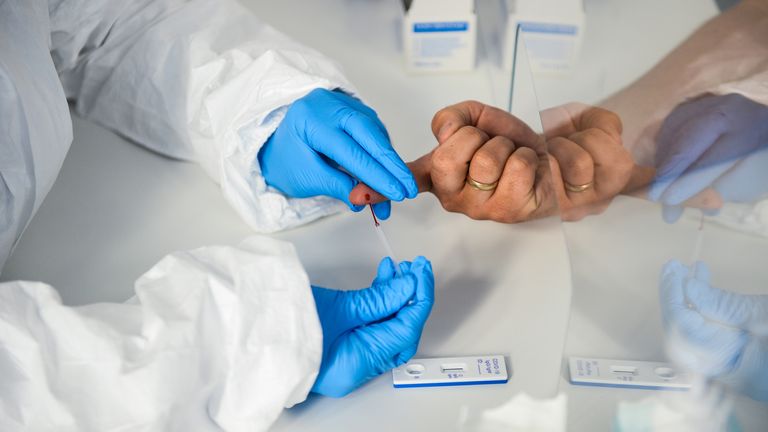
The blood tests - described by Prime Minister Boris Johnson as potentially "game-changing" - can tell whether a person has had COVID-19 in the past.
The government purchased 10 million test kits from pharmaceutical giant Abbott and Roche last month, with the first phase of the testing programme assessing NHS and care workers.
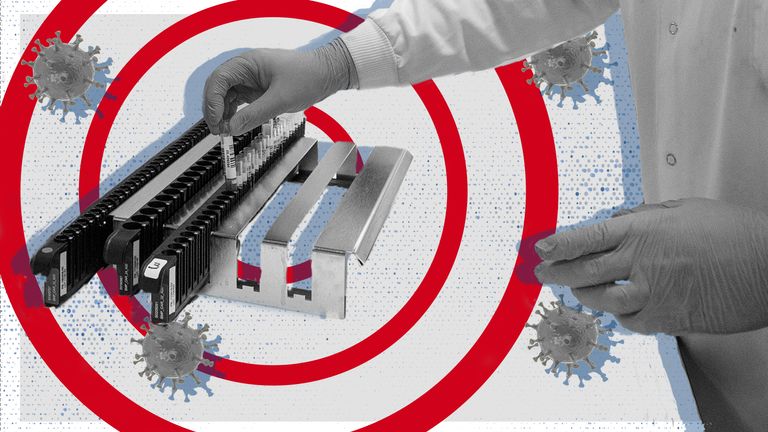
How does the COVID-19 antibody test work?
But in a letter published by the British Medical Journal, a group of academics and clinicians have voiced concerns about the performance of the tests and warned they risk "inefficient use of scarce resources".
They said that a positive or negative test result would not alter the management of a patient and added that a positive result "does not indicate immunity".
Advertisement
"The concept of 'immune passports', allowing healthcare workers or others to work, has not been established," they wrote.
"Those with a positive antibody test should still consider themselves at risk and follow infection control policies…. There is, therefore, no benefit to healthcare organisations or to others in knowing the status of employees at present."
More from Covid-19
Image:The government purchased 10 million test kits from pharmaceutical firm Abbott and Roche
The experts say the tests are being rolled out "at an unprecedented pace and scale without adequate assessment".
There is also currently no data showing the performance of tests in people at high risk including the elderly and those in black and minority ethnic groups, they add.
NHS England requires the results of antibody tests to be available within 24 hours.
But the academics warn: "Given that routine testing of patients is neither clinically urgent nor meets a clear public health need, this push to introduce a non-evidence based test for uncertain gains risks inefficient use of scarce resources."
They concluded that the "only current justification" for large-scale COVID-19 antibody testing is "for research purposes".
Can you catch COVID-19 twice?
The letter is signed by 14 medical experts including Dr Monique Andersson, consultant in infection at Oxford University Hospitals; Neil French, professor of infectious diseases and global health at the University of Liverpool; and Deenan Pillay, professor of virology at University College London.
Antibodies are produced by the immune system when it is being attacked in order to destroy substances which carry disease.
But how the immune system reacts to the COVID-19 virus remains uncertain.
The government website states that "while the results of an antibody test will not allow people to make any changes to their behaviour… there's clear value in knowing whether NHS and care workers and hospital patients and care home residents have had the virus, and in collecting data on the test results".
In a statement to The BMJ, the Department of Health and Social Care said: "We do not currently know how long an antibody response to the virus lasts, nor whether having antibodies means a person cannot transmit it to others."
But the spokesman reiterated that antibody testing "will play an increasingly important role as we move into the next phase of our response to this pandemic".
A spokesman for Roche Diagnostics UK told The BMJ that the rollout of the antibody tests to the NHS was "part of the crucial next step in understanding the spread of this virus".
Meanwhile, a Public Health England spokesman said: "Our evaluations have been completed in record time using the samples and tests that were available to us. We are confident that the volume of samples and methodology was of a high standard."
Housing Secretary Robert Jenrick texted the businessman behind a controversial planning application in November while preparing to decide whether to approve it, newly published documents show.
Messages released by Mr Jenrick show he told Richard Desmond he hoped to see him soon, after sitting next to him at a dinner the night before.
Labour said it showed "discrepancies" in Mr Jenrick's account of events.
But Downing Street said Boris Johnson now considered the matter "closed".
Amid calls from opposition MPs for a full inquiry by the cabinet secretary, the UK's top civil servant Sir Mark Sedwill said Mr Jenrick had given a "full and factual account" of his actions.
Mr Jenrick released the papers to hit back at Labour allegations of "cash for favours" in relation to his approval of a massive housing development on the site of the former Westferry Print Works in east London.
Mr Desmond made a personal donation of £12,000 to the Conservative Party 12 days after the minister overruled government planning inspectors to approve the development, in January.
Mr Jenrick's decision to approve the development was later challenged by Tower Hamlets Council, forcing the secretary of state to say what he did was "unlawful by reason of apparent bias". It is now being handled by another minister.
Mr Jenrick insists he had no knowledge of Mr Desmond's donation and that his decision to overrule the inspectors was "not unusual" and motivated by a desire to see more homes built.
The documents include personal correspondence between the minister and Mr Desmond, owner of property developers Northern & Shell, in the run-up to the decision on 14 January.
They show that in the aftermath of a fundraising dinner on 18 November, in which Mr Jenrick sat next to the businessman, Mr Desmond requested a meeting with the minister and suggested he visit the site on the Isle of Dogs.
Media playback is unsupported on your device
Mr Jenrick asked a member of his staff to arrange it, emails show. However the next day Mr Jenrick said by text that they shouldn't meet again to avoid "any appearance of being influenced".
The arranged meeting appears to have been cancelled nearly a month later because Mr Jenrick had to be in Parliament for the Queen's Speech.
Mr Desmond, the former owner of Express newspapers, had been lobbying for the proposed 1,500-home development to be approved before the local council, Tower Hamlets, introduced a levy to pay for local services.
Mr Desmond sent a text to Mr Jenrick saying, in apparent reference to Tower Hamlets' Labour council, "we don't want to give Marxists loads of doe (sic) for nothing".
Internal emails from the Ministry of Housing suggest Mr Jenrick was "flagging" the project with his officials, warning them there was "sensitivity with timing", and asking them to advise him before Christmas.
In one document, a civil servant said the secretary of state wanted the development signed off the following day, adding "on timing, my understanding is that SoS is/was insistent that decision issued this week ie tomorrow - as next week the viability of the scheme is impacted by a change in the London CIL [a planning charge] regime".
The documents released make clear that Mr Jenrick supported the housing project, in the face of opposition from his officials.
Mr Jenrick also released a letter to the chair of the housing communities and local government select committee revealing that he informed civil servants of the dinner with Mr Desmond a month later, in December.
He wrote: "On my first full day in office after my re-appointment, I told my private office I had met Mr Desmond for dinner, that he had raised the application and that I said I could not discuss,"
'Explosive'
Labour said the "explosive revelations" suggested Mr Jenrick "rushed through" the application so that Mr Desmond's company could avoid the levy.
The opposition says Mr Jenrick also overruled his advisers to reduce the amount of affordable housing required in the development, potentially saving Mr Desmond a further £106m.
"The documents clearly show that Mr Jenrick did not notify officials immediately after his meeting with Mr Desmond," shadow communities secretary Steve Reed said. "Rather than 'closing down' the discussion as he claims, he initiated contact with Mr Desmond by text message the following day."
He said he was "far from satisfied" with Mr Jenrick's answers, claiming the text exchanges with Mr Desmond were "highly inappropriate" and "not in the spirit of the ministerial code of conduct".
"The housing secretary needs to explain these discrepancies as a matter of urgency: the public must be reassured that there is not one rule for the Conservatives and their wealthy donors and another rule for everyone else," he added.
Speaking in the Commons before the documents were released, Mr Jenrick said the accusations were "not simply wrong but actually outrageous", adding that the decision had been made on its merits after a thorough process, but he admitted "things could and should have been done differently".
"On reflection, I should have handled the communication differently," he said.
'Promotional video'
Tower Hamlets councillors asked the High Court in April to order the government to disclose emails and memos around the deal.
Rather than doing this, Mr Jenrick's lawyers conceded the timing of his decision "would lead the fair-minded and informed observer to conclude that there was a real possibility" that he had been biased.
Mr Desmond told The Sunday Times last weekend that he had shown Mr Jenrick a promotional video for the scheme on his mobile phone during the fundraiser at the Savoy Hotel.
When pressed by the SNP's communities spokesman David Linden about Mr Desmond's claims, Mr Jenrick said: "He did bring out his iPhone and showed me some images of the development."
But the minister said he had told Mr Desmond "it was not appropriate to discuss the matter and I couldn't comment on it".