Sabtu, 06 Juni 2020

North West and South West may have to STAY in lockdown as Matt Hancock suggests local restrictions after R - The Sun

THE North West and South West of England may have to stay in lockdown for longer than other parts of the UK, it was suggested last night.

Matt Hancock raised the prospect of localised restrictions yesterday - hinting that areas hit harder by coronavirus could face tougher measures than others.

⚠️ Read our coronavirus live blog for the latest news & updates

 The R-rate has crept up above one in the North West and is at 1 in the South West of England

5

The R-rate has crept up above one in the North West and is at 1 in the South West of England
 Matt Hancock last night raised the prospect of the North West and South West of England going back into full lockdown
Matt Hancock last night raised the prospect of the North West and South West of England going back into full lockdownCredit: Crown Copyright

The crucial coronavirus R rate has crept back up above one in the North West and South West of England, latest figures show.

The Government has stressed throughout the pandemic that the R rate must remain below one in order to avoid a second peak of the virus.

If it rises above this level, the disease can spread exponentially, infecting more and more people.

R RATE RISES

New research by Public Health England and Cambridge University suggests the reproduction rate is 1.01 in the North West and 1.0 in the South West.

There is also evidence to suggest the value has risen in all regions, saying it was probably due to increasing mobility and mixing between households in public and work settings.

And as the nation awaits a further easing of lockdown measures - including pubs and restaurants reopening - the setback could mean tougher restrictions being enforced on local areas.

Speaking at last night's Downing Street briefing, Health Secretary Matt Hancock said the Government was "seeking to take a more local approach" to tackling outbreaks.

He added that there was a "challenge" in both the North West and the South West of England regarding the spread of the disease.

Now, that doesn't take away from the need to make sure that we spot and crackdown on localised outbreaks when they come.

Matt Hancock

But he noted: "It is very important that you look at all of these different studies in the round.

"The study you mentioned is an important one but the overall assessment which is brought together by SAGE which advises the Chief Medical Officer is what I look at.

"So we referred to the Office for National Statistics study that ... is based on data rather than modelling but what I do is look at all of these different studies and the overall view of SAGE is that the R is between 0.7 and 0.9 and that it is higher in the South West of England and the North West of England but it remains below one in each area.

"Now, that doesn't take away from the need to make sure that we spot and crackdown on localised outbreaks when they come."

'SIGNIFICANT ISSUE OF DISORDER'

Mr Hancock's comments come after documents from the Scientific Advisory Group for Emergencies (SAGE) warned last week that localised lockdowns could cause a "significant issue of public disorder". 

In the documents, Professor Clifford Stott of Keele University (a professor specialising in hooliganism and riots) and the security sub-group of scientists, wrote: "Restrictions imposed in the UK during the epidemic have not led to conflict thus far because they have been perceived as fair (for the most part)."

"Any sense of inequality arising from the imposition of selective measures would likely lead to civil disorder and feed the propaganda of extremist groups and hostile states.

"Households within local areas may also fear retaliation if cases within a neighbourhood prevent release and may conceal cases as a result."

The scientists also warned that local lockdowns will ruin the sense of community that Brits have felt, and kill the spirit of "we're all in this together".

Cutting up parts of towns of cities would shatter Government support for the measures, and "could lead to significant public disorder", the documents warned.

Using other measures to halt the spread of the bug, Mr Hancock has said there is a huge package of work underway by the NHS "to get transmission of coronavirus in hospital right down".

In recent weeks it's been noted that the R rate is likely to be higher in care home settings, creating pockets of higher transmission which could push the average up.

Sir Patrick Vallance, the Government's chief scientific adviser, said yesterday that the R rate for England was between 0.7 and 1 but remained between 0.7 and 0.9 for the UK as a whole.

The R-number is the average number of people that will contract coronavirus from an infected person.

 A regional breakdown of the R-rate with blue lines showing when interventions were introduced - lockdown on March 23 and the relaxation of measures on May 11

5

A regional breakdown of the R-rate with blue lines showing when interventions were introduced - lockdown on March 23 and the relaxation of measures on May 11
 This regional breakdown shows how the R-rate has gone above 1 in the North West and is at 1 in the South West of England

5

This regional breakdown shows how the R-rate has gone above 1 in the North West and is at 1 in the South West of England

What is the R rate?

R0, or R nought, refers to the average number of people that one infected person can expect to pass the coronavirus on to.

Scientists use it to predict how far and how fast a disease will spread - and the number can also inform policy decisions about how to contain an outbreak.

For example, if a virus has an R0 of three, it means that every sick person will pass the disease on to three other people if no containment measures are introduced.

It's also worth pointing out that the R0 is a measure of how infectious a disease is, but not how deadly.

If R is one or higher, the virus will spread exponentially through the population.

An R number of less than one indicates the virus is in decline.

The R rate is so important given the implications it could have for lockdown measures. If it rises above one - a sign the epidemic is growing - tougher restrictions may be reintroduced.

There is a time lag in the calculations, with the latest R value relating to what was happening two to three weeks ago.

'Downward trajectory'

Sir Patrick said the prevalence of Covid-19 was on a "downward trajectory" in the UK, adding: "The prevalence of coronavirus, according to the ONS, is at 0.1 per cent, with 53,000 people with Covid-19 in the past two weeks."

He said the incidence rate was at 0.7 per cent per week, which meant there were "roughly" 39,000 new coronavirus cases each week.

Sir Patrick said: "The latest R-value calculation is between 0.7 and 0.9 for the UK as a whole, it may be a little bit higher in England it may be between 0.7 and 1, and there is a bit of regional variation."

He said there could be "some places" where the R-value is very close to one.

 According to SAGE the R value is between 0.7 and 0.9 in the majority of the UK
According to SAGE the R value is between 0.7 and 0.9 in the majority of the UK

5

5

PHE said latest estimates, worked out in conjunction with Cambridge University's MRC Biostatistics Unit, show it is highly likely that outside the North West and South West, the R value is below one in each other region of England.

Advisers believe the prevalence of Covid-19 is on a "downward trajectory", with figures from the Office for National Statistics showing there were 53,000 people with the disease in the past two weeks.

While there could be some areas of England where the R value is very close to one, scientific advisers said community transmission and the number of cases were down.

It is vital that everyone continues with social distancing, practising good hand hygiene and must remain at home and order a test if they have symptoms

Dr Yvonne DoylePHE's medical director

In a statement regarding the estimates for regional R numbers, Dr Yvonne Doyle, PHE's medical director, said: "Our estimates show that the regional R numbers have increased although they remain below one for most of England - this is to be expected as we gradually move out of lockdown.

"It is vital that everyone continues with social distancing, practising good hand hygiene and must remain at home and order a test if they have symptoms."

But experts not involved with the work have cast their doubts over the findings.

Prof Sheila Bird, former Programme Leader, MRC Biostatistics Unit, University of Cambridge, who was not involved in this work, said: "The findings are the opposite of reassuring.

“In no region of England is the effective reproduction number assuredly below 1 with regions’ median estimates ranging from 0.89 to 1.01.

"No wonder members of SAGE are worried."

For the North West, the median R number is marginally above 1, showing the epidemic could potentially still be growing

Colin CoxCumbria's director of public health

Colin Cox, Cumbria's director of public health, said: "The R number is very significant and something we have to pay close attention to.

"For the North West, the median R number is marginally above 1, showing the epidemic could potentially still be growing.

"This really underlines the importance of people maintaining social distancing and continuing to follow Government guidance as lockdown restrictions begin to ease.

"We will be monitoring the R number very carefully and a tightening of lockdown restrictions could be possible if the R number increases.

"This is something we all want to avoid, so we cannot be complacent."

Local lockdowns

Boris Johnson's plans to reduce the severity of restrictions allow for more localised lockdowns to be enforced to prevent the spread.

One crucial means of suppressing transmission is the NHS test and trace system, which seeks to track down people who have come into contact with an infected individual, and tell them to isolate.

Downing Street was forced to defend the system after the Guardian reported that the scheme's chief operating officer, Tony Prestedge, told staff it would not be at full speed until as late as October.

Ministers have been unable to say how many people have been traced under the system, but the Prime Minister's official spokesman said: "Thousands of people who have tested positive have been contacted in a matter of days and their close contacts successfully traced, using both online services and over the phone."

The lockdown is being eased across the UK, with Mr Johnson starting to send pupils back to school and permitting outdoor gatherings of up to six from Monday in England.

While the number of new infections appeared to be going down, Government scientific advisers believe the R rate is between 0.7 and 1 in England in their latest estimate.

The PHE and Cambridge modelling seeks to predict where it could stand now, and their estimate for Friday put the North West on 1.01 and the South West on 1.00.

The figure was lowest in the Midlands at 0.9 and stood at 0.95 in London.

It comes after the number of people with Covid-19 in England has fallen to around 5,600 new infections a day from around 8,000 reported last week, figures show.

The Office for National Statistics (ONS) published data on how many people at any one time are infected with Covid-19 based on swab results from households across the country.

The ONS said "modelling of the trend over time shows evidence that the number of people in England testing positive has decreased in recent weeks".

There were an estimated 39,000 new Covid-19 infections per week in England between April 26 and May 30, equating to an incidence rate per week of 0.07 new cases per 100 people.

CORONAVIRUS CRISIS - STAY IN THE KNOW

Don't miss the latest news and figures - and essential advice for you and your family.

Sir Patrick Vallance and Chris Whitty asked about potential relaxing of two-metre coronavirus social distancing rule

Let's block ads! (Why?)


https://news.google.com/__i/rss/rd/articles/CBMiUWh0dHBzOi8vd3d3LnRoZXN1bi5jby51ay9uZXdzLzExNzk4MTQ2L25vcnRoLXdlc3Qtc291dGgtd2VzdC1sb2NhbGlzZWQtbG9ja2Rvd25zL9IBVWh0dHBzOi8vd3d3LnRoZXN1bi5jby51ay9uZXdzLzExNzk4MTQ2L25vcnRoLXdlc3Qtc291dGgtd2VzdC1sb2NhbGlzZWQtbG9ja2Rvd25zL2FtcC8?oc=5

2020-06-06 12:39:46Z
52780834019038

Coronavirus: North-west England schools delay reopening - BBC News

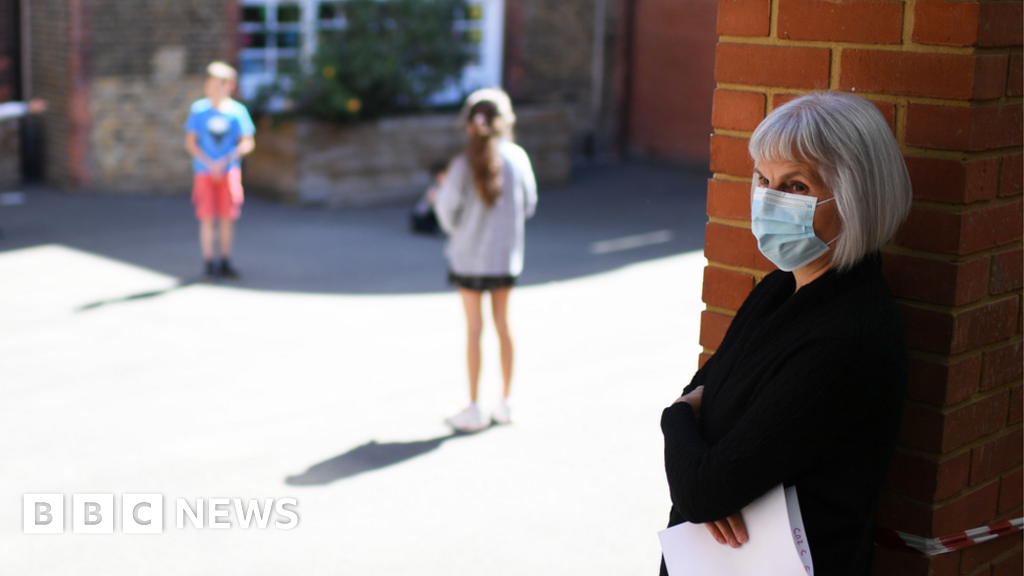
Many schools in north-west England will delay reopening at least until 22 June over concerns the coronavirus infection rate is on the rise.

Schools in Blackburn said they would not reopen on Monday, as the government has urged, while Tameside Council "strongly" advised schools not to do so.

Wirral Council also urged schools to "pause and consider" reopening plans.

Health Secretary Matt Hancock said "there is a challenge" in the region.

Some scientists say the R number is creeping up across the country and may have surpassed one - the point at which the epidemic takes off again - in the region.

Data from Public Health England, released on Friday, gave an R value of 1.01 for the North West and 1.0 for the South West, with all other regions below 1.

If the R is one or higher, the virus will spread exponentially through the population, while a value less than one indicates the virus is in decline.

Colin Cox, director of public health in Cumbria, also warned on Friday people should not be "complacent" and lockdown restrictions could be tightened if the number continues to rise.

Dr Jeanelle de Gruchy, Tameside council's public health director, has written to all head teachers "to strongly advise them to delay the wider reopening until there is further assurance that the Covid 19 infection rate is reducing".

In a statement, the authority said: "This follows new data published [on Friday] showing that the regional R rate has risen above 1, as well as local information that infection rates remain higher and health services are stretched."

Dr Paul Birrell, from a team at Public Health England (PHE) and the University of Cambridge, said the North West - with 4,170 infections a day - was "more worrying" compared to other regions.

The government has suggested an introduction of "local lockdown" measures to fight any flare-ups in particular areas.

But Greater Manchester Mayor Andy Burnham questioned whether such measures are workable, calling them a "recipe for chaos".

Both he and Liverpool City Region Mayor Steve Rotheram have said lockdown restrictions were being lifted too soon and were driven from London, with other regions not being listened to.

Councils in Gateshead, Hartlepool and Liverpool announced in May that they would not reopen schools on 1 June as advised by the government.

Wirral Council Leader Pat Hackett also urged people to "stay at home as much as possible" after popular areas were "jam-packed" with visitors during the warm weather last weekend.

Let's block ads! (Why?)


https://news.google.com/__i/rss/rd/articles/CBMiOWh0dHBzOi8vd3d3LmJiYy5jby51ay9uZXdzL3VrLWVuZ2xhbmQtbWFuY2hlc3Rlci01Mjk0Nzc1M9IBPWh0dHBzOi8vd3d3LmJiYy5jby51ay9uZXdzL2FtcC91ay1lbmdsYW5kLW1hbmNoZXN0ZXItNTI5NDc3NTM?oc=5

2020-06-06 11:12:36Z
52780834019038

Brexit ultimatum: UK given until October 31 to agree to 'full legal text' on future trade - Express

talks have been at a standstill for months and chief negotiator Michel Barnier once again said there had been "no progress" following a fourth round of negotiations this week. German MEP David McAllister, who leads the European Parliament's UK Coordination Group, warned London has until October 31 to agree to a "full legal text" if they want a deal to be in place by the end of the transition period in December. Speaking to the BBC Today programme, Mr McAllister said: "We have considerable differences on fair competition – the so-called level playing field – fisheries, police and judicial cooperation and governance issues.

"What we now need to concentrate on is how can we move forward given the UK’s continued refusal to extend the transition period?

"This means we need a full legal text by October 31 at the latest."

Mr McAllister insisted an upcoming meeting between Boris Johnson and the Commission and Council presidents, Ursula von der Leyen and Charles Michel, is "crucial" to the future agreement between the UK and the EU.

He continued: "That’s why this high-level conference in June is so important.

"At this high-level conference, both parties will have to assess the progress that has been made so far but certainly agree together on how to proceed in the next upcoming weeks and moths.

"That’s very crucial."

Michel Barnier on Friday accused the UK of "backtracking" from the commitments Boris Johnson signed the UK up to in the political declaration in December.

In a sign of apparent frustration from the Frenchman, Mr Barnier urged the British team to "read" the declaration as a reminder of their obligations.

He continued: "We are now at an important moment for these talks. We are close to reaching the limits of what we can achieve through the format of remote formal rounds.

"If we are to make progress, it is clear that we must intensify and accelerate our work. We are discussing with the Commission how this can best be done.

“We need to conclude this negotiation in good time to enable people and businesses to have certainty about the trading terms that will follow the end of the transition period at the end of this year, and, if necessary, to allow ratification of any agreements reached.

“For our part, we are willing to work hard to see whether at least the outline of a balanced agreement, covering all issues, can be reached soon."

Mr Frost added: "Any such deal must, of course, accommodate the reality of the UK’s well-established position on the so-called ‘level playing field’, on fisheries, and the other difficult issues.”

Let's block ads! (Why?)


https://news.google.com/__i/rss/rd/articles/CBMidmh0dHBzOi8vd3d3LmV4cHJlc3MuY28udWsvbmV3cy91ay8xMjkyMTk1L0JyZXhpdC1uZXdzLWRlYWRsaW5lLVVLLUVVLXRyYWRlLWRlYWwtRGF2aWQtTWNBbGxpc3Rlci1NaWNoZWwtQmFybmllci1sYXRlc3TSAXpodHRwczovL3d3dy5leHByZXNzLmNvLnVrL25ld3MvdWsvMTI5MjE5NS9CcmV4aXQtbmV3cy1kZWFkbGluZS1VSy1FVS10cmFkZS1kZWFsLURhdmlkLU1jQWxsaXN0ZXItTWljaGVsLUJhcm5pZXItbGF0ZXN0L2FtcA?oc=5

2020-06-06 10:27:09Z
52780832811978

Coronavirus: NHS trust bosses not consulted over new face mask rules - BBC News

NHS trusts were not consulted before the government announced changes to the use of face coverings and visitor policy in English hospitals, the chief executive of NHS Providers has said.

Chris Hopson said trust leaders felt "completely in the dark" about the "significant and complex" changes.

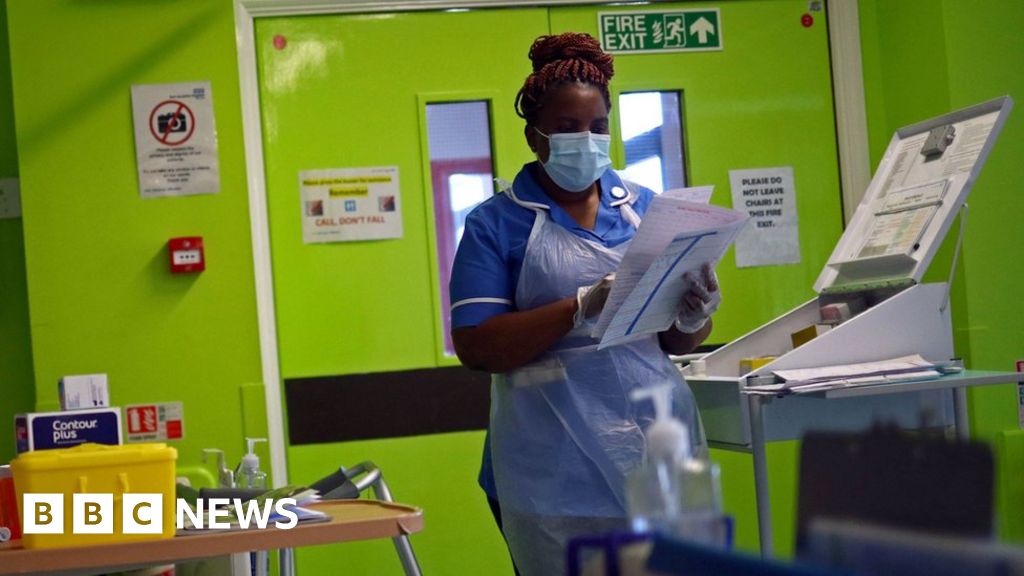
From 15 June, hospital visitors and outpatients must wear face coverings and staff must use surgical masks.

The Department of Health says masks can be provided by the hospital if needed.

A spokeswoman said that, while the public were "strongly urged" to wear a face covering while inside hospitals, no-one would be denied care.

Separately, NHS England has lifted the national suspension on hospital visiting with new guidance for NHS trusts.

The guidance, which states visiting will be subject to the discretion of individual trusts and other NHS bodies, advises measures to support visiting, such as:

  • Although only one close family member or important contact can be at a patient's bedside, if social distancing can be maintained, a second additional visitor could be permitted in certain circumstances
  • Visitors should be told in advance what to expect when they see the patient and be advised about social distancing, wearing protective kit and hand washing
  • Visitors must wear masks or face coverings at all times
  • People with coronavirus symptoms should not visit
  • Where a face-to-face visit is not practical, then a virtual visit should be supported and arranged

The Department of Health said trusts have all of next week to implement the changes and that it had made NHS England aware of the announcement before it was made public.

But Mr Hopson said the announcement by Health Secretary Matt Hancock on Friday was "rushed out" with "absolutely no notice or consultation" of NHS trust leaders.

He told BBC Radio 4's Today programme: "It's the latest in a long line of announcements that have had a major impact on the way the NHS operates, in which frontline organisations feel they've been left completely in the dark, and they're then expected to make significant and complex operational changes either immediately or with very little notice."

He said trust leaders were worried there was not enough strategy or planning and that it felt like "last minute decisions are being made on the hoof that seem overly influenced by politics and that need to fill the space of the Downing Street press conferences".

The announcement had left many unanswered questions, such as when it is appropriate for staff to wear face masks, the numbers of masks needed and how they would be distributed, he added.

Mr Hopson called for a "proper, sensible forward plan and forward strategy of what we are trying to do, where trusts are given the time and space they need to do complex and difficult things".

Earlier, NHS Providers deputy chief executive Saffron Cordery said trusts were also nervous about the imminent lifting of some patient visiting restrictions.

She said they needed time to "put in place processes and guidance to ensure that patients can receive visitors safely and while adhering to social distancing and infection control measures".

Mr Hopson's criticism was echoed by the British Medical Association (BMA), which warned there was "little detail" on how the policy would be implemented, where the masks would come from or how outpatients and visitors would be given them.

Consultants committee chairman Dr Rob Harwood said: "Given the lack of PPE supplies throughout the Covid-19 pandemic, it is absolutely crucial that the government ensures there are enough supplies of face masks for staff, and adequate provision of face coverings for outpatients and the public by the 15 June."

It comes as the UK's death toll passed 40,000 on Friday according to the latest government figures.

A total of 40,261 people have died in hospitals, care homes and the wider community after testing positive for the virus, up 357 from Thursday.

The UK is only the second country - after the US with 108,000 deaths - to pass the milestone.

Also at the Downing Street briefing, Mr Hancock appealed to people not to attend large demonstrations with more than six people, saying he was "appalled" by the killing of George Floyd in the US but "coronavirus remains a real threat".

The World Health Organization (WHO) has changed its advice on face masks, saying they should be worn by the general public in situations where social distancing is difficult, eg on public transport, in shops - particularly for over 60s and those with underlying health conditions

In other developments:

Let's block ads! (Why?)


https://news.google.com/__i/rss/rd/articles/CBMiJmh0dHBzOi8vd3d3LmJiYy5jby51ay9uZXdzL3VrLTUyOTQ2ODUw0gEqaHR0cHM6Ly93d3cuYmJjLmNvLnVrL25ld3MvYW1wL3VrLTUyOTQ2ODUw?oc=5

2020-06-06 08:33:55Z
52780834671922

Coronavirus: NHS trust bosses not consulted over new face mask rules - BBC News

NHS trusts in England were not consulted before the government announced changes to the use of face coverings in hospitals, the chief executive of NHS Providers has said.

Chris Hopson said trust leaders felt "completely in the dark" about the "significant and complex" changes.

From 15 June, hospital visitors and outpatients must wear face coverings and staff must use surgical masks.

The Department of Health says masks can be provided by the hospital if needed.

A spokeswoman said while the public were "strongly urged" to wear a face covering while inside hospitals, no-one would be denied care.

NHS England was fully aware of the announcement before it was made public; and trusts have all of next week to implement the changes, the Department of Health added.

But Mr Hopson said the announcement by Health Secretary Matt Hancock on Friday was "rushed out" with "absolutely no notice or consultation" of NHS trust leaders.

He told BBC Radio 4's Today programme: "It's the latest in a long line of announcements that have had a major impact on the way the NHS operates, in which frontline organisations feel they've been left completely in the dark, and they're then expected to make significant and complex operational changes either immediately or with very little notice."

He said trust leaders were worried there was not enough strategy or planning and that it felt like "last minute decisions are being made on the hoof that seem overly influenced by politics and that need to fill the space of the Downing Street press conferences".

The announcement had left many unanswered questions, such as when it is appropriate for staff to wear face masks, the numbers of masks needed and how they would be distributed, he added.

Mr Hopson called for a "proper, sensible forward plan and forward strategy of what we are trying to do, where trusts are given the time and space they need to do complex and difficult things".

Mr Hopson's criticism was echoed by the British Medical Association (BMA), which warned there was "little detail" on how the policy would be implemented, where the masks would come from or how outpatients and visitors would be given them.

Consultants committee chairman Dr Rob Harwood said: "Given the lack of PPE supplies throughout the Covid-19 pandemic, it is absolutely crucial that the government ensures there are enough supplies of face masks for staff, and adequate provision of face coverings for outpatients and the public by the 15 June."

It comes as the UK's death toll passed 40,000 on Friday according to the latest government figures.

A total of 40,261 people have died in hospitals, care homes and the wider community after testing positive for the virus, up 357 from Thursday.

The UK is only the second country - after the US with 108,000 deaths - to pass the milestone.

Also at the Downing Street briefing, Mr Hancock appealed to people not to attend large demonstrations with more than six people, saying he was "appalled" by the killing of George Floyd in the US but "coronavirus remains a real threat".

In other developments:

Let's block ads! (Why?)


https://news.google.com/__i/rss/rd/articles/CBMiJmh0dHBzOi8vd3d3LmJiYy5jby51ay9uZXdzL3VrLTUyOTQ2ODUw0gEqaHR0cHM6Ly93d3cuYmJjLmNvLnVrL25ld3MvYW1wL3VrLTUyOTQ2ODUw?oc=5

2020-06-06 08:32:38Z
52780834671922

'Not happening' Michel Barnier warned UK fisheries will not 'capitulate' to bloc demands - Express

on Friday announced the latest round of talks had resulted yet again in "no progress", as he noted negotiations on fishing and other key issues have remained at a stalemate. Mr Barnier has been working on behalf of European Union member states to ensure their vessels have continued access to UK fishing waters once Britain is completely out of the bloc. But Barrie Deas, the chief executive UK National Federation of Fishermen’s Organisations, renewed the industry's commitment not to "capitulate" to Brussels' demands.

Speaking to Euronews, Mr Deas said: "The EU position would really require capitulation by the UK on the issue of fisheries.

"That’s just not going to happen.

"This is an asymmetrical relationship which benefits the EU fleets and, quite unsurprisingly, they want to cling on to that."

While fishing contributes around 3 percent to the UK's overall GDP, some coastal EU nations heavily depend on the industry and have seen in Brexit a threat to the livelihood of thousands of fishermen.

At the start of the Brexit talks, Denmark pleaded with the UK to consider a good deal of fisheries as it warned of the "severe" consequences its fleets would suffer from changes to the current arrangement.

A study conducted by the University of Copenhagen released last month painted a grim picture for the future of Danish fishermen, with three different scenarios predicting losses between 66 percent to 82 percent.

Complete exclusion from UK waters was considered to be the worst-case scenario, with researchers claiming such a result would decimate Danish landing values by 57 percent and profits by more than three-quarters.

Number 10 earlier this week accused Brussels of "wishful thinking" over their belief the UK would make concessions over fisheries.

Updating the Brussels press pack on Friday, Mr Barnier confirmed the UK had refused to budge on several issues, including fisheries.

The French negotiator said: "On fisheries, the UK have not shown any true will to explore other approaches, beyond Zonal Attachment.

“I don’t think we can go on like this forever.”

But UK negotiator David Frost insisted the British team is willing to work hard to ensure a good deal is struck timely as long as Brussels recognised his commitment to deliver on his own mandate.

Responding to Mr Barnier with a letter, Mr Frost said: "For our part, we are willing to work hard to see whether at least the outline of a balanced agreement, covering all issues, can be reached soon.

"Any such deal must, of course, accommodate the reality of the UK's well-established position on the so-called 'level playing field', on fisheries, and the other difficult issues."

Let's block ads! (Why?)


https://news.google.com/__i/rss/rd/articles/CBMidmh0dHBzOi8vd3d3LmV4cHJlc3MuY28udWsvbmV3cy91ay8xMjkyMTM0L01pY2hlbC1CYXJuaWVyLW5ld3MtQnJleGl0LXRyYWRlLVVLLWZpc2hpbmdzLUVVLWZpc2hlcmllcy1EYXZpZC1Gcm9zdC1sYXRlc3TSAXpodHRwczovL3d3dy5leHByZXNzLmNvLnVrL25ld3MvdWsvMTI5MjEzNC9NaWNoZWwtQmFybmllci1uZXdzLUJyZXhpdC10cmFkZS1VSy1maXNoaW5ncy1FVS1maXNoZXJpZXMtRGF2aWQtRnJvc3QtbGF0ZXN0L2FtcA?oc=5

2020-06-06 06:48:05Z
52780832811978

Jumat, 05 Juni 2020

Coronavirus: WHO changes tact and recommends face masks where social distancing not possible - Sky News

The World Health Organisation (WHO) is now recommending the use of face masks where social distancing is not possible.

WHO director-general Tedros Adhanom Ghebreyesus announced the change in recommendation on Friday, saying the organisation is now recommending people wear masks in areas where there is widespread COVID-19 transmission.

He said people should wear them in places such as public transport or shops, where social distancing is not possible.

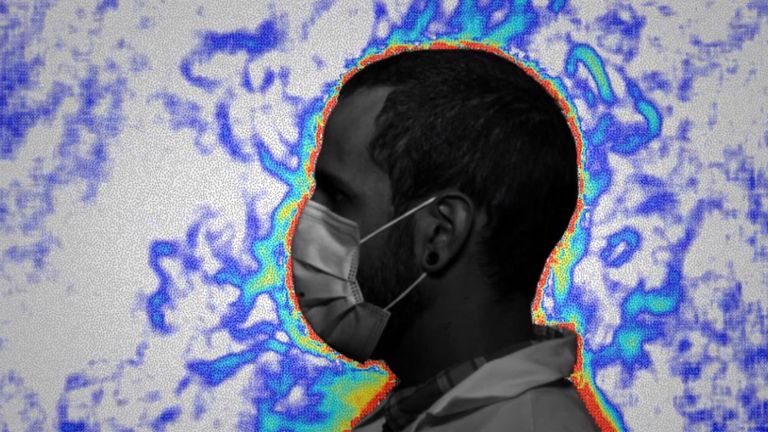
Covering the mouth and nose reduces the forward distance travelled by an exhaled breath by more than 90 per cent, a study suggests
Study into effectiveness of face masks

People over the age of 60 or those with underlying medical conditions should specifically wear a medical mask where social distancing cannot be maintained, he added.

Countries around the world have adopted the use of face masks, despite WHO previously saying they were not effective.

Britons using public transport must wear face coverings from 15 June after Boris Johnson changed his mind about their effectiveness.

Previously, the WHO only recommended healthcare workers, those with COVID-19 and their care givers wear masks.

More from Covid-19

Mr Tedros said the widespread use of face masks is still not yet supported by high quality or direct scientific evidence.

However, he said a growing amount of observational evidence from several countries who are recommending the use of face masks, plus the difficulty of social distancing in many settings, is enough for WHO to change its advice.

Medical staff members wearing PPE of gloves, eye protection, face masks and aprons, wait to test NHS workers for the novel coronavirus COVID-19, at a drive-in facility run by Wolverhampton NHS Clinical Commissioning Group, set up in a car park in Wolverhampton, central England on April 07, 2020. - British Prime Minister Boris Johnson spent the night in intensive care after being admitted with a deteriorating case of coronavirus, prompting serious concerns on Tuesday about his health and the gove
Image: Medical staff must now wear masks everywhere in hospitals

He emphasised that masks on their own will not protect people from getting COVID-19 and hand washing, social distancing and other measures are still important.

The director-general added that health workers in areas with widespread transmission should now wear medical masks in all areas of health facilities, not just where confirmed COVID-19 patients are.

Doctors working in cardiology or others wards, for example, should continue to wear a medical mask even if there are no known coronavirus patients, he said.

:: Listen to the All Out Politics podcast on Apple Podcasts, Google Podcasts, Spotify, Spreaker

The UK government has also said all staff in hospitals in England will be expected to wear surgical masks from 15 June, and all visitors and outpatients will have to wear face coverings at all times in hospital.

Evidence from the Scientific Advisory Group for Emergencies (SAGE) previously confirmed face coverings can help reduce the risk of transmission if you are suffering from coronavirus, but not showing symptoms.

NHS staff already wear face masks in clinical areas within two metres of a patient, but this new guidance applies to everyone working in all areas of a hospital.

Let's block ads! (Why?)


https://news.google.com/__i/rss/rd/articles/CBMif2h0dHBzOi8vbmV3cy5za3kuY29tL3N0b3J5L2Nvcm9uYXZpcnVzLXdoby1jaGFuZ2VzLXRhY3QtYW5kLXJlY29tbWVuZHMtZmFjZS1tYXNrcy13aGVyZS1zb2NpYWwtZGlzdGFuY2luZy1ub3QtcG9zc2libGUtMTIwMDE0NTPSAYMBaHR0cHM6Ly9uZXdzLnNreS5jb20vc3RvcnkvYW1wL2Nvcm9uYXZpcnVzLXdoby1jaGFuZ2VzLXRhY3QtYW5kLXJlY29tbWVuZHMtZmFjZS1tYXNrcy13aGVyZS1zb2NpYWwtZGlzdGFuY2luZy1ub3QtcG9zc2libGUtMTIwMDE0NTM?oc=5

2020-06-06 04:55:08Z
52780825733813