Jumat, 05 Juni 2020

Prince William reveals he is secret helpline volunteer - BBC News

The Duke of Cambridge has revealed he has been anonymously counselling people during lockdown.

He has been volunteering at Shout 85258, which offers support via text message to people in personal crisis.

Prince William said he had been answering messages after being trained by the mental health charity.

Last month he told fellow volunteers in a video call: "I'm going to share a little secret with you guys, but I'm actually on the platform volunteering."

Kensington Palace announced the prince's involvement to mark Volunteers Week, which ends on Sunday.

Those texting the round-the-clock service would not know they are talking to a member of the Royal Family - like Shout's 2,000 volunteers, William would use a pseudonym on the platform.

The Cambridges and the Duke and Duchess of Sussex helped to launch Shout 85258 last year - investing £3m in the service via their Royal Foundation.

In a little over a year since then, more than 300,000 text conversations have been had on the service.

Around 65% of those texting are aged under 25, the charity said, with many messengers seeking mental health support.

What do Shout volunteers do?

By BBC journalist and Shout volunteer Tony Smith

Training as a crisis volunteer at Shout puts William in the frontline of services for young people in distress - and it's a tough role.

CVs, as they're known, undertake special training to support those in crisis. On the Shout platform they'll encounter, and be tasked with helping, those in very real distress.

Some texters are experiencing depression or panic attacks, others are self-harming. A large proportion say they feel suicidal.

The job of the CV is to lead that texter to a cool, calm place where they may begin to establish solutions. Sometimes they'll just need to build resilience, with support from friends or family. In others, they'll be guided toward charities or NHS mental health support.

It's not unusual for a texter to be about to take his or her own life. This can lead to what Shout call an 'Active Rescue' - the CV will continue gently talking to the texter while the emergency services are called in by a supervisor.

Whether it be talking someone down from a bridge, or persuading them to put away that bottle of pills, these conversations can be gruelling and rewarding in equal measure. The fact that the second in line to the throne is now routinely helping people in such desperate situations is hugely significant - it gives Prince William a unique perspective on what young people in crisis may be going through.

Catherine's calls

The Duchess of Cambridge has also been calling those who are self-isolating or vulnerable, as part of the Royal Voluntary Service's NHS Volunteer Responders scheme.

More than 750,000 people signed up to be part of the scheme's "volunteer army" after it launched in April, but some later expressed frustration at not having been used.

Last week, the duchess thanked others who had signed up to help the scheme, calling them "the backbone of our country".

The Cambridges marked Volunteers Week by holding video calls with those helping charities in England and Wales.

Among them were those working at Conscious Youth, which helps young people from mainly black and other ethnic minority backgrounds in West Yorkshire.

During the call, Prince William joked about home-schooling his six-year-old son Prince George, saying: "I struggle with Year 2 maths."

The Cambridges also spoke to a group of neighbours in mid-Wales who have been offering help with shopping, cooking and deliveries during lockdown.

The prince told the 120 volunteers they had offered "a lifeline" to people in their community.

Let's block ads! (Why?)


https://news.google.com/__i/rss/rd/articles/CBMiJGh0dHBzOi8vd3d3LmJiYy5jb20vbmV3cy91ay01Mjk0MDc4N9IBKGh0dHBzOi8vd3d3LmJiYy5jb20vbmV3cy9hbXAvdWstNTI5NDA3ODc?oc=5

2020-06-05 21:32:09Z
52780834839796

Brexit: Who will blink first in UK-EU stand-off? - BBC News

Media playback is unsupported on your device

"Plus ça change," you could say.

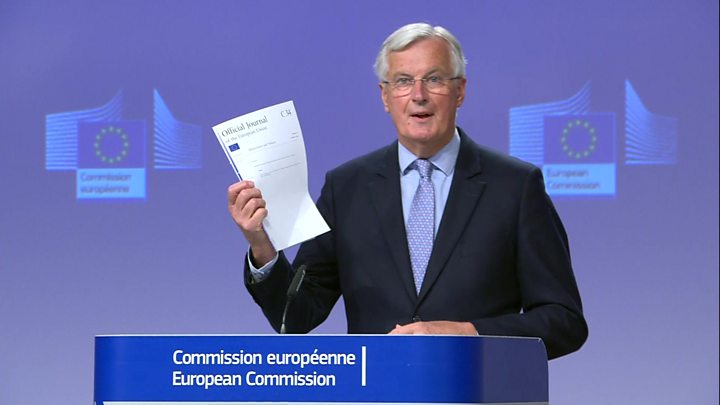
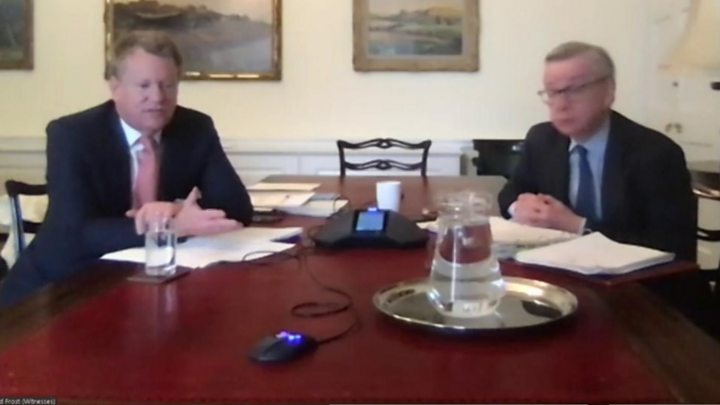
Round four of EU-UK trade talks... cue yet another downbeat assessment from both sides' chief negotiators. "We can't go on like this," lamented the EU's Michel Barnier. "Progress remains limited," noted the UK's David Frost.

But before you rush to join the "no-deal-is-now-the-most-likely-outcome" school of thought, consider this: while both sides continue to insist - loudly - that their position will not waver (on all issues linked to national sovereignty for the UK; on anything associated with the single market for the EU), those assurances could also be viewed as a message aimed at domestic audiences, while both sides consider - quietly - what compromises they might actually make.

Back in February, the UK threatened to walk away from talks this month if there were no concrete signs of progress.

And here we are, with ongoing gaping differences between the two sides - on fishing, competition regulations, the form of the deal as well as the content.

Yet the expectation now is that Boris Johnson will use an EU summit in a couple of weeks to try to publicly "reset" negotiations. Inject some dynamism into them. Or at least be seen to be doing so.

After this summit-by-video-conference with the presidents of the European Commission and the European Council, negotiating rounds are likely to be stepped up. They'll also, depending on Covid-19 restrictions, become face-to-face talks rather than screen-to screen, in the hope that could help the EU and UK better understand one another's position.

But frankly, after four rounds of negotiations, each side is already all too familiar with the attitude and intentions of the other.

What's needed now is movement. Call it blinking. Call it compromise. Call it concessions or whatever you will. Without it, there will be no deal. That much is clear.

The coronavirus turmoil has meant political leaders have rather overlooked these post-Brexit EU-UK negotiations. But they are fast reappearing on the UK's political horizon. The rest of Europe will probably sit up and take notice this autumn, with the clock ticking down to the end of the year - if the government stands firm on not extending talks beyond that date.

Brussels is already beginning to show some ankle.

Media playback is unsupported on your device

Sift carefully through Michel Barnier's rhetoric on Friday. Amongst accusatory statements and words of disappointment aimed at the UK, you'll find hints of potential EU wiggle-room: a possible softening of its demands on state aid rules and fishing quotas.

When I asked him, Mr Barnier also admitted that, if a deal were close this autumn, there would almost certainly be what he called a "dense" period of last-minute negotiations.

In other words: pressure to find compromise.

And what of Angela Merkel? Prominent UK politicians have often looked to her - and to German car manufacturers - to push for a favourable deal with the UK.

Germany will shortly take over the EU's six-month rotating presidency. Will Mrs Merkel want to "preside" over a no-deal break-up with key partner UK - something which would also blot her legacy in her last term as German Chancellor?

Perhaps more so than other EU leaders, Angela Merkel has always been focused on the bigger picture. A desire not just to keep the UK close in trade terms but also on the world stage, dominated these days by unpredictable leaders in China, Russia and the US.

But in the end her priority (often misunderstood by the aforementioned prominent UK politicians) is not lucrative trade with the UK. She prefers to protect the vastly more lucrative - certainly from Germany's perspective - single market.

Chancellor Merkel's focus now is on helping to rebuild that market after the devastation of Covid-19 - not on compromising its rules to have a favourable trade deal with an EU outsider, the UK.

So: concessions, yes. But not at any price. For now, Brussels waits for a sign that the UK too is willing to make what it calls realistic compromises.

The government recently floated the possibility of reducing its aim of 100% tariff-free trade, to 98% or 99% in order to allay EU fears of unfair competition. But Brussels dismissed the idea as not addressing its concerns.

Ultimately, the sense in Brussels is: if there is to be a deal by the end of this year, that (political) decision will be made in Downing Street. Not round the EU table.

Let's block ads! (Why?)


https://news.google.com/__i/rss/rd/articles/CBMiMGh0dHBzOi8vd3d3LmJiYy5jby51ay9uZXdzL3dvcmxkLWV1cm9wZS01Mjk0NDcwMNIBNGh0dHBzOi8vd3d3LmJiYy5jby51ay9uZXdzL2FtcC93b3JsZC1ldXJvcGUtNTI5NDQ3MDA?oc=5

2020-06-05 20:29:59Z
52780832811978

Coronavirus - The Latest: Friday 5 June - The Telegraph

[unable to retrieve full-text content]

  1. Coronavirus - The Latest: Friday 5 June  The Telegraph
  2. Matt Hancock warns protesters against going to George Floyd demonstrations amid Covid-19 pandemic  Daily Mail
  3. Hospital Staff, Outpatients And Visitors Must Wear Face Coverings, Matt Hancock Says  HuffPost UK
  4. Matt Hancock urges people not to attend George Floyd protests this weekend  The Independent
  5. How can you give plasma?  Express
  6. View Full coverage on Google News

https://news.google.com/__i/rss/rd/articles/CBMiK2h0dHBzOi8vd3d3LnlvdXR1YmUuY29tL3dhdGNoP3Y9YlBvUGVVX1l0Z3fSAQA?oc=5

2020-06-05 18:21:00Z
52780834239740

Hospital Staff, Outpatients And Visitors Must Wear Face Coverings, Matt Hancock Says - HuffPost UK

[unable to retrieve full-text content]

  1. Hospital Staff, Outpatients And Visitors Must Wear Face Coverings, Matt Hancock Says  HuffPost UK
  2. Coronavirus: Matt Hancock holds UK daily briefing – watch live  Guardian News
  3. Health secretary warns against joining Black Lives Matter protests amid 'horrific' coronavirus pandemic  ITV News
  4. Matt Hancock urges people not to attend George Floyd protests this weekend  The Independent
  5. Do not attend protests of over six people this weekend, government warns public  Metro.co.uk
  6. View Full coverage on Google News

https://news.google.com/__i/rss/rd/articles/CBMibGh0dHBzOi8vd3d3Lmh1ZmZpbmd0b25wb3N0LmNvLnVrL2VudHJ5L2Nvcm9uYXZpcnVzLWhvc3BpdGFsLW1hc2tzLWZhY2UtY292ZXJpbmdzX3VrXzVlZGE2NDc4YzViNmZmOTYwNDlmOWZmNtIBb2h0dHBzOi8vbS5odWZmaW5ndG9ucG9zdC5jby51ay9hbXAvZW50cnkvY29yb25hdmlydXMtaG9zcGl0YWwtbWFza3MtZmFjZS1jb3ZlcmluZ3NfdWtfNWVkYTY0NzhjNWI2ZmY5NjA0OWY5ZmY2Lw?oc=5

2020-06-05 17:15:43Z
52780834239740

Barnier accuses UK of ‘backtracking’ as Brexit talks end in stalemate - Financial Times

The latest round of talks between Britain and the EU on their future relationship ended on Friday with “no significant progress”, but afterwards both sides showed fresh signs of a willingness to compromise to get a deal.

Michel Barnier, chief EU negotiator, suggested he was willing to be flexible over a Brussels demand that Britain continue to abide by European state aid rules as part of any future trade agreement.

Meanwhile Britain repeated its offer to accept some tariffs on agricultural products, in exchange for the EU dropping demands that the UK abide by the state aid rules and stick closely to the bloc’s environmental and labour standards. Brussels has always maintained that these “level playing field” demands are key to any trade deal with Britain.

Since March UK and EU negotiators have conducted four rounds of talks, mostly by video conferencing due to the disruption from the coronavirus pandemic. But so far the two sides have made little progress and with six months to go until Britain’s Brexit transition period expires, there are growing concerns over a messy no-deal scenario at the end of the year.

Asked whether the EU would insist that the UK stick to the bloc’s state aid regime as part of the “level playing field”, Mr Barnier told reporters after the talks concluded at Friday lunchtime that his priority was to find a way to protect businesses from unfair competition.

“We need to work together to come up with the appropriate toolbox, the robust commitments,” he said. “What we care about is how effective these mechanisms will be so that they can ensure long-term, fair sustainable competition.”

Meanwhile the UK reiterated an offer to accept a less ambitious trade deal, with tariffs on “sensitive agricultural products”, in exchange for the EU dropping some of its level playing field demands.

The offer would involve British farm exports being hit by tariffs in exchange for the UK avoiding requirements that the British government sees as an affront to the country’s sovereignty. The move would be unlikely to go down well in Britain’s rural farming communities.

UK negotiators believe it might be a way to make progress but Mr Barnier last month publicly rejected the idea that tariffs could compensate for a weaker level playing field.

One British negotiating official said: “So far the idea has fallen on stony ground but it’s still in there in the discussion.”

Mr Barnier and his UK counterpart David Frost said the two sides were reaching the limit of what could be achieved with virtual negotiations.

“The truth is that there was no substantial progress,” Mr Barnier said. “We can only take note that there has been no substantial progress since the beginning of these negotiations, and that we cannot continue like this forever.”

Brussels has warned that an agreement must be found by October for a deal to be ratified before the transition period ends on December 31, while Britain wants to wrap up negotiations over the summer. “October will be too late,” said one British official.

Despite the suggestion of a compromise on state aid, Mr Barnier said no headway had been made this week on the level playing field issue.

The two sides also remain far apart on fishing rights, with the UK resistant to granting the EU long-term guaranteed access to its waters, and the two sides at loggerheads over how to share out fishing rights for stocks that straddle the maritime border.

In a sign of the stark divide between the two sides, Mr Barnier hit out at the UK for what he said was Britain’s retreat from a political declaration that Mr Johnson agreed with EU leaders last year — a document that set out shared principles for the future relationship between the UK and the EU.

“We cannot and we will not accept this backtracking on the political declaration,” Mr Barnier said, claiming that Britain was abandoning the document’s provisions on everything from the level playing field to the fight against money laundering. Mr Frost denied the claims.

Attention will now shift to high-level talks set to take place later this month between Boris Johnson, the UK’s prime minister, European Commission president Ursula von der Leyen and other EU institutional chiefs.

Let's block ads! (Why?)


https://news.google.com/__i/rss/rd/articles/CBMiP2h0dHBzOi8vd3d3LmZ0LmNvbS9jb250ZW50L2JmM2RmNWM1LWRlZTItNDA3MS1iMjAxLTMyMTMwMTExY2UxY9IBP2h0dHBzOi8vYW1wLmZ0LmNvbS9jb250ZW50L2JmM2RmNWM1LWRlZTItNDA3MS1iMjAxLTMyMTMwMTExY2UxYw?oc=5

2020-06-05 16:39:16Z
52780832811978

UK coronavirus death toll passes 40,000 as 357 more people die from bug - The Sun

THE number of coronavirus deaths in the UK passed the 40,000 mark today after 357 more died from the bug. 

The Department of Health confirmed 40,261 have now died across all settings in the UK, including care homes, hospitals and the wider community.

⚠️ Read our coronavirus live blog for the latest news & updates

 A man wears a mask on the London Underground
A man wears a mask on the London UndergroundCredit: AFP or licensors

A total of 283,311 have now tested positive for Covid-19 - up 1,650 from yesterday.

Today's rise in deaths is almost double yesterday's jump, when 176 fatalities were recorded.

It is similar, however, to the death rates recorded on Wednesday (359) and Tuesday (324) this week.

The rise today is slightly bigger than last Friday's (324) and the Friday before that (351) - although it remains smaller than every previous Friday for the last seven weeks.

It is also almost three times lower than the death rate recorded on Friday April 10 (980) when the virus was at its peak.

LIVES LOST

In England, 27,282 have now died from coronavirus in hospitals - up 123 from yesterday's toll.

Patients in English hospitals were aged between 38 and 105 years old - and all but one had underlying health conditions.

Today's rise in England was the second lowest rise recorded on a Friday for the last 11 weeks.

The figure was only smaller on May 22, when 121 deaths were announced.

In Scotland another 14 deaths were confirmed today, bringing the overall death toll in Scotland to 2,409.

In Wales, four more fatalities were recorded, bringing the total tally in Wales to 1,383.

Northern Ireland confirmed one more death today, meaning 536 have now died there.

It comes as

The true toll of the crisis is considered, however, to be even greater.

The Office for National Statistics revealed today that a total of 46,000 people have died during the pandemic - although 30 per cent of those did not have the virus.

The Office for National Statistics said 12,900 of the 46,380 “excess” deaths registered between March 7 and May 1 in England and Wales were due to other causes.

Excess deaths refers to the number of deaths that is above the average total for this period in the previous five years.

GLOBAL TALLY

The UK currently has the second highest official coronavirus death toll in the world after the US - where 108,211 people have died from the bug.

According to the John Hopkins University, the UK is followed by Brazil (34,021), Italy (33,689) and France (29,068).

It is however difficult to draw direct comparisons between countries where population sizes vary and countries record Covid-19 data in different ways.

Today, new data showed the crucial R rate has risen back above one in some parts of England.

Research by Public Health England and Cambridge University suggested the reproduction rate is 1.01 in the North West and 1.0 in the South West.

Although the Government's scientific advisers believe the rate of coronavirus transmission is yet to breach the crucial value, despite evidence showing it is very close in some regions.

MASKING THE ISSUE

In a bid to halt the spread, the Government announced yesterday that wearing face masks on public transport would be made mandatory from June 15.

Passengers without a face covering will not be allowed to board or told to get off at the next stop.

The only people who will be exempt from the rule are babies, disabled people and anyone with breathing difficulties.

Some of the UK's top doctors have warned masks should also be compulsory in shops, restaurants and pubs.

The British Medical Association (BMA) added the risk of the virus would be "much less" if the public wears face coverings straight away instead of waiting for the mid-June start date.

Dr Chaand Nagpaul, BMA council chair, said: "These important measures should not be restricted to public transport but to all areas where social distancing is not always possible - the risk will be much less if the public adopts this now - not mid-June."

TRACK AND TRACE

The Government has been trying to stop the bug in its tracks by using track and trace methods - however the NHS system may not be fully up and running until September or October, it has been revealed.

According to The Guardian, a video recorded on May 27, the day before the rollout of the scheme, chief operating officer of the scheme, Tony Prestedge, said: “We know it will be imperfect, we know it will be clunky but we ask you to help us improve the service.

"I am sure when Dido [Harding, chief executive of scheme] announces this service later she will make clear that it is an imperfect service at launch that we will improve over time and make it world-class by the time that we are moving towards the September or October time.”

Until then, many Brits continue to be at risk, with those with high blood pressure at double the risk of dying from Covid-19.

Researchers looked at nearly 3,000 patients admitted to a Wuhan hospital between February and March - and found that nearly half of patients who had died from Covid -19 had high blood pressure.

Study lead Professor Fei Li said those with high blood pressure “should take good care of themselves and they need more attention if they are infected”.

CORONAVIRUS CRISIS - STAY IN THE KNOW

Don't miss the latest news and figures - and essential advice for you and your family.

To receive The Sun's Coronavirus newsletter in your inbox every tea time, sign up here.
To follow us on Facebook, simply 'Like' our Coronavirus page.
Get Britain's best-selling newspaper delivered to your smartphone or tablet each day - find out more.


We pay for your stories! Do you have a story for The Sun Online news team? Email us at tips@the-sun.co.uk or call 0207 782 4368 . You can WhatsApp us on 07810 791 502. We pay for videos too. Click here to upload yours.

Let's block ads! (Why?)


https://news.google.com/__i/rss/rd/articles/CBMiVGh0dHBzOi8vd3d3LnRoZXN1bi5jby51ay9uZXdzLzExNzg5NjcwL2Nvcm9uYXZpcnVzLWRlYXRocy1wYXNzLW5ldy1kZWFkbHktbWlsZXN0b25lL9IBWGh0dHBzOi8vd3d3LnRoZXN1bi5jby51ay9uZXdzLzExNzg5NjcwL2Nvcm9uYXZpcnVzLWRlYXRocy1wYXNzLW5ldy1kZWFkbHktbWlsZXN0b25lL2FtcC8?oc=5

2020-06-05 16:24:46Z
52780834025472

Coronavirus: UK is second nation to report more than 40,000 deaths - BBC News

The UK has become only the second country to report more than 40,000 coronavirus deaths, according to the latest government figures.

A total of 40,261 people have died in hospitals, care homes and the wider community after testing positive for the virus, up 357 from Thursday.

Only the US, with more than 108,000 deaths, has recorded a greater loss of life in the pandemic so far.

But experts have warned full global comparisons may take months.

Italy, previously Europe's worst-hit country, has recorded 33,600 deaths from those who tested positive for the virus.

Brazil has also seen fatalities rising fast, with more than 34,000 people having died after contracting the virus and daily death tolls of over 1,000 on some days.

This death toll is only one way the UK government counts the coronavirus death toll, focusing on people who have died after a positive Covid-19 test.

Figures published by the UK statistics agencies on Tuesday show an even higher toll. Up to the week ending 22 May, 48,106 people had died in the UK with Covid-19 mentioned on their death certificate.

The crisis may have contributed to a greater loss of life from other causes too, with 61,895 more deaths recorded than would be expected for this time of year, between the beginning of the outbreak and May 22.

The Office of National Statistics has said this may be due to a delay in care for other conditions, such as dementia, asthma and diabetes. Others may be unidentified coronavirus cases, it said.

The UK's population of older people has been worst affected by Covid-19, with over-80s being 70 times more likely to die than people under 40.

Concerns have also been raised over the impact on ethnic minority communities, with people with Bangladeshi ethnicity more than twice as likely to die from coronavirus than white Britons, taking age and sex into account.

But the death rate is falling, with the most recent review of death certificates showing the lowest number of coronavirus-related deaths since March.

The first death from Covid-19 in the UK was reported three months ago, on 2 March.

The BBC has been collecting their personal stories - like that of Adam Brown, a 30-year-old with learning disabilities who died on 29 April.

"Despite the wonderful doctors', nurses', consultants' best and desperate efforts, even going over and above to save our son's life, Adam died alone and afraid, from the coronavirus," said his mother, Maureen.

"We love and miss him so much, as our whole lives have always revolved around him."

Please enable JavaScript or upgrade your browser to see this interactive

Let's block ads! (Why?)


https://news.google.com/__i/rss/rd/articles/CBMiJmh0dHBzOi8vd3d3LmJiYy5jby51ay9uZXdzL3VrLTUyOTI1NzE20gEqaHR0cHM6Ly93d3cuYmJjLmNvLnVrL25ld3MvYW1wL3VrLTUyOTI1NzE2?oc=5

2020-06-05 14:49:45Z
CBMiJmh0dHBzOi8vd3d3LmJiYy5jby51ay9uZXdzL3VrLTUyOTI1NzE20gEqaHR0cHM6Ly93d3cuYmJjLmNvLnVrL25ld3MvYW1wL3VrLTUyOTI1NzE2