Jumat, 05 Juni 2020

Everyone MUST wear face masks on public transport from June 15 — or face fines - The Sun

BRITS have been ordered to wear face masks on buses and trains — with fines for refusing.

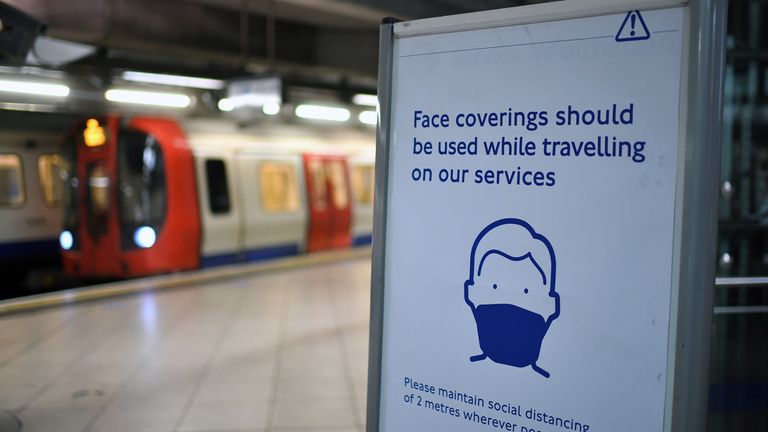
Ministers will make it a “condition of carriage” for face coverings to be worn on public transport from June 15 in a bid to slash the spread of coronavirus.

⚠️ Read our coronavirus live blog for the latest news & updates

 London Mayor Sadiq Khan had been pushing to make face coverings compulsory on tubes and buses in the capital

6

London Mayor Sadiq Khan had been pushing to make face coverings compulsory on tubes and buses in the capitalCredit: Getty Images - Getty
 Brits could face fines if they don't wear face coverings on transport

6

Brits could face fines if they don't wear face coverings on transportCredit: Garrett White - The Sun

Passengers without a face mask will not be allowed to board or told to get off at the next stop.

British Transport Police will have powers allowing them to issue on-the-spot fines to rule breakers. Young children, the disabled and those with breathing difficulties will be exempt.

So far, face masks on public transport have been only a suggestion.

But The Sun reported in April the growing consensus on their effectiveness in helping to reduce the virus’s spread.

And with more and more data suggesting the same, ministers are keen to enforce widespread use, especially with the numbers of businesses and schools reopening set to rise.

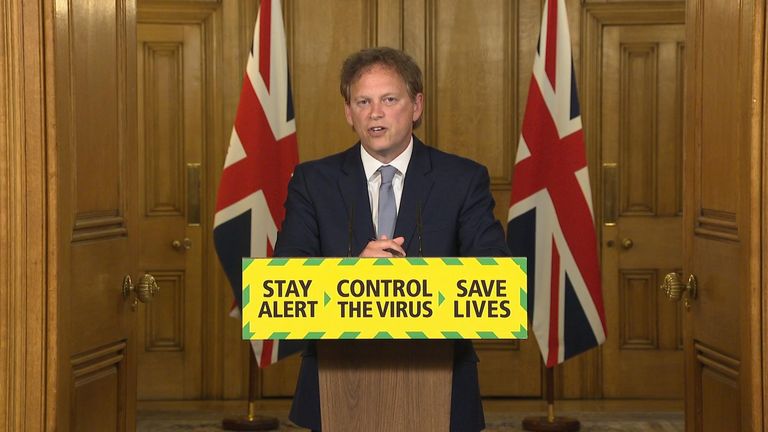
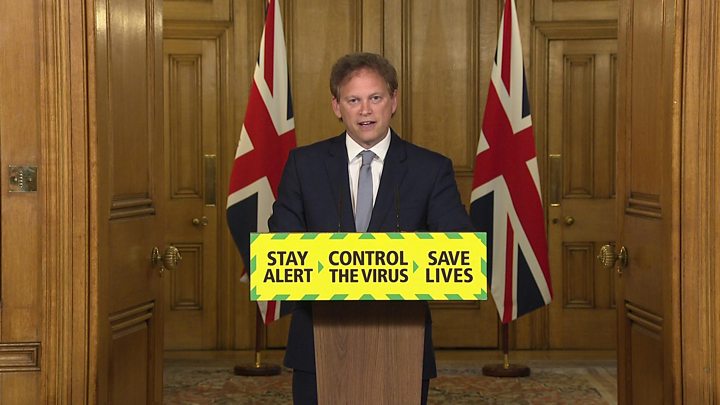
At Thursday's Downing Street briefing, Transport Secretary Grant Shapps said people in England will be “required to wear face coverings” on public transport both to ­protect themselves and others from mid-June.

 Grant Shapps revealed the news at Thursday's briefing

6

Grant Shapps revealed the news at Thursday's briefing

He said: “Face coverings will become mandatory on public transport.

“That doesn’t mean surgical masks, which we must keep for clinical settings.

"It means the kind of face covering you can ­easily make at home.

“We are doing what many other countries have asked transport users to do.

"We need to ensure every precaution is taken on buses, trains, aircraft and on ferries with more people using transport.

“The evidence suggests wearing face coverings offers some protection against the spread of the virus.

"This will mean that you can be refused travel. If you don’t comply, you can be fined.

“Alongside transport operators, this will be enforced by the British Transport Police if necessary.

"You cannot travel unless you wear a face covering. There will also be other powers, ultimately it could lead to fines.”

6

It comes as:

Masking the mouth and nose reduces the risk of asymptomatic carriers — who are infected but showing no symptoms — from passing on the bug.
A DIY face-covering can be used — even just a scarf or a thin cloth mask. ­

Private hire taxis and minicabs are also included in the ­measures.

But the rules do not cover bus stops, railway stations and other terminals.

 Brits have been told to wear one if they are within 2m of others - but they were not previously compulsory

6

Brits have been told to wear one if they are within 2m of others - but they were not previously compulsoryCredit: Getty Images - Getty

Sir Peter Hendy, chairman of Network Rail, said: “We are expecting staff to wear face ­coverings themselves.

"This is about people (using public transport) being sensible.
“We’re just saying, please wear them, it’s good for you and good for protecting others.

"I’m not expecting a huge upsurge in railway staff having to police this.”

A study for the World Health Organization this week found using a face mask cuts the risk of catching Covid by four-fifths.

Experts say universal uptake could help Brits safely “resume normal activities” and “protect people in crowded settings”.

Linda Bauld, Professor of Public Health at Edinburgh University, called it a “sensible step” that could reassure commuters.

Meanwhile, a study claims Brits could hug family and friends without risking a second peak if everyone stayed two metres from strangers.

Researchers from the University of Oxford say existing social distancing rules are unnecessarily strict and are damaging the nation’s health and economy.

They say it is possible to loosen the guidelines while still keeping coronavirus under control.

The study recommends creating social bubbles or small groups of contacts who could be treated as if they lived in the same household and not have to stick to the two-metre rule.

6

Nicola Sturgeon says Scotland considering FORCING people to wear masks in shops

CORONAVIRUS CRISIS - STAY IN THE KNOW

Don't miss the latest news and figures - and essential advice for you and your family.

Grant Shapps confirms fines will be issued for not wearing face coverings while using public transport


Let's block ads! (Why?)


https://news.google.com/__i/rss/rd/articles/CBMiVWh0dHBzOi8vd3d3LnRoZXN1bi5jby51ay9uZXdzLzExNzg0Mzg4L2ZhY2UtbWFza3MtbWFuZGF0b3J5LXB1YmxpYy10cmFuc3BvcnQtZW5nbGFuZC_SAVlodHRwczovL3d3dy50aGVzdW4uY28udWsvbmV3cy8xMTc4NDM4OC9mYWNlLW1hc2tzLW1hbmRhdG9yeS1wdWJsaWMtdHJhbnNwb3J0LWVuZ2xhbmQvYW1wLw?oc=5

2020-06-05 08:45:21Z
52780832216880

Virus cases down to 5,600 a day, says ONS survey - BBC News

The number of people infected with coronavirus in homes in England has fallen to 5,600 a day, from 8,000 last week.

The estimate is based on swab tests of 19,000 people in 9,000 households by the Office for National Statistics.

Some scientists have said reaching a low level of cases was key to easing the lockdown further.

Test and trace programmes were introduced in England and Scotland last week to track contacts of new cases.

The ONS study of adults and children in private households suggests that there are 39,000 new infections a week in England.

It estimates that one in 1,000 people have coronavirus in the community, not counting those staying in hospitals or care homes.

This is down from last week's estimate of one in 400.

The estimates for England are based on a small number of positive swab tests - 21 people in 15 households - so there is some margin for error in the figures.

But because everyone in the households is tested, whether they have symptoms or not, the results are thought to be a more accurate picture of how many people are current infected by the virus.

Let's block ads! (Why?)


https://news.google.com/__i/rss/rd/articles/CBMiKmh0dHBzOi8vd3d3LmJiYy5jby51ay9uZXdzL2hlYWx0aC01MjkzMzgwNNIBLmh0dHBzOi8vd3d3LmJiYy5jby51ay9uZXdzL2FtcC9oZWFsdGgtNTI5MzM4MDQ?oc=5

2020-06-05 08:50:54Z
52780833544455

Coronavirus: People should start wearing face masks now - and not just on public transport, doctors say - Sky News

Plans to make face coverings compulsory on public transport do not go far enough, the British Medical Association has warned.

From 15 June, bus and train commuters in England could be refused travel if they fail to comply with the measures - or face a fine.

But according to the BMA, this should be extended to all areas where social distancing is not possible.

Grant Shapps still
Face coverings to be compulsory on public transport

BMA council chair Dr Chaand Nagpaul also questioned why the introduction of these measures has been delayed - adding that the risk posed by coronavirus would be "much less" if the public starts wearing face coverings immediately.

He said: "The BMA recently advocated the wearing of face coverings by the public several weeks ago in areas where they cannot socially distance and believes it is right that people should be required to wear face coverings on public transport.

"Given there remains a considerable risk of infection, with thousands of new cases every day, wearing masks can reduce the spread of the virus.

"Not only will this afford greater protection to the public, importantly it will protect the lives of the staff working on public transport who, as evidence suggests, are at greater risk of infection."

More from Covid-19

Dr Nagpaul has also called for the government to provide a supply of face coverings to the public, and offer advice on how they can be used correctly.

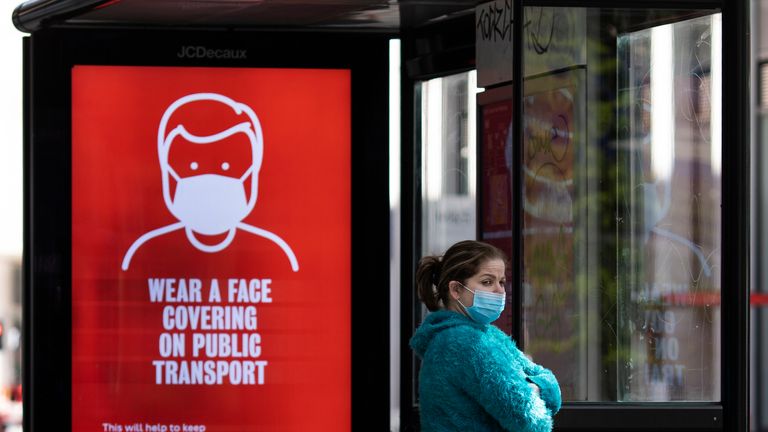
LONDON, ENGLAND  - MAY 18: A woman wearing a face mask stands at a bus stop next to a sign about wearing face masks on public transport on May 18, 2020 in London, England. The British government has started easing the lockdown it imposed two months ago to curb the spread of Covid-19, abandoning its 'stay at home' slogan in favour of a message to 'be alert', but UK countries have varied in their approaches to relaxing quarantine measures. (Photo by Dan Kitwood/Getty Images)
Image: At present, passengers do not face fines if they fail to wear a face covering on buses and trains

Face coverings can include scarves, a piece of cloth or a mask - and certain travellers, such as young children and people with disabilities or breathing difficulties, will be exempt.

At the moment, passengers are advised to wear a face covering but are not prevented from boarding transport without one.

Announcing the plans, Transport Secretary Grant Shapps said "we need to ensure every precaution is taken" as England relaxes the lockdown further, and passenger numbers start to increase once again.

The government says face coverings are "marginally beneficial as a precautionary measure".

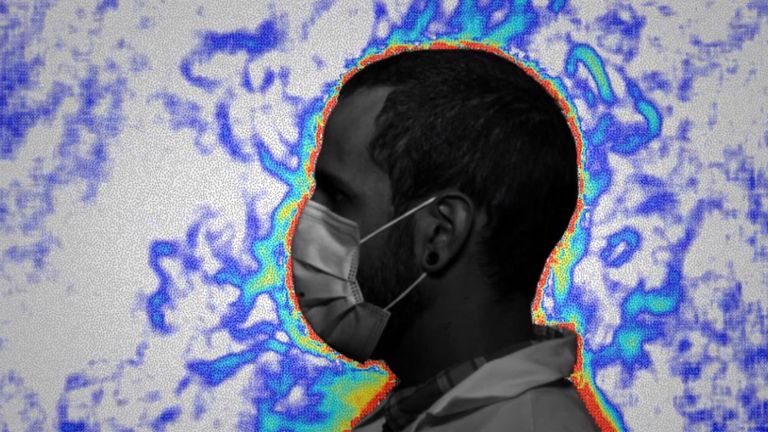
Covering the mouth and nose reduces the forward distance travelled by an exhaled breath by more than 90 per cent, a study suggests
Study into effectiveness of face masks

It's coronavirus guidance states: "Evidence suggests that wearing a face covering does not protect you.

"However, if you are infected but have not yet developed symptoms, it may provide some protection for others you come into close contact with."

According to official advice, surgical masks should be reserved for people who need them for protection while at work.

London mayor Sadiq Khan, who has been lobbying ministers to make face coverings mandatory, said the government has "finally seen sense".

He added that there is "a large body of evidence" that they can help stop the spread of the coronavirus.

London underground
Image: London mayor Sadiq Khan says the government 'has finally seen sense'

Asked why face-coverings were being made comulsory on public transport but not in other settings, such as supermarkets, Mr Shapps told Sky News: "The big difference on public transport is that you'll likely to be stuck in a space for a longer period of time, whereas in a supermarket you might go past somebody quite quickly.

"So it is also a factor of the amount of time you spend with somebody.

"On public transport you could be there for 10 to 20 minutes, half an hour or longer, so that actually becomes more important.

"It has been quite a marginal scientific argument, on balance we think that now the trains, buses, trams and aircrafts are likely to be more congested than before, it's a sensible, additional precuationary measure.

"But certainly not a magic, silver bullet thing to do.

"It's also important to note, when you wear a mask, you're actually protecting those around you a bit, as well as yourself.

"So it's quite a public-spirited, altruistic thing to do as well."

:: Listen to the Daily podcast on Apple Podcasts, Google Podcasts, Spotify, Spreaker

Shadow transport secretary Jim McMahon said it was "another example of the government being slow to act", adding: "Two months ago, Labour immediately backed the mayor of London's call for face coverings on public transport to be compulsory.

"Yet only now Tory ministers are acting."

Transport unions echoed the criticism of the government - describing the measures as "long overdue".

RMT general secretary Mick Cash said: "We fear this announcement is being driven not by safety concerns but by the premature easing of the lockdown which is swelling passenger numbers and making social distancing on transport increasingly impossible."

Let's block ads! (Why?)


https://news.google.com/__i/rss/rd/articles/CBMicWh0dHBzOi8vbmV3cy5za3kuY29tL3N0b3J5L2Nvcm9uYXZpcnVzLXBsYW5zLWZvci1tYW5kYXRvcnktZmFjZS1jb3ZlcmluZ3MtZG9udC1nby1mYXItZW5vdWdoLWRvY3RvcnMtc2F5LTEyMDAwNzY40gF1aHR0cHM6Ly9uZXdzLnNreS5jb20vc3RvcnkvYW1wL2Nvcm9uYXZpcnVzLXBsYW5zLWZvci1tYW5kYXRvcnktZmFjZS1jb3ZlcmluZ3MtZG9udC1nby1mYXItZW5vdWdoLWRvY3RvcnMtc2F5LTEyMDAwNzY4?oc=5

2020-06-05 06:19:42Z
52780832216880

Kamis, 04 Juni 2020

Coronavirus: Widen rules on where face coverings must be used, say UK doctors - BBC News

Doctors have urged the government to make face coverings compulsory in all places where social distancing is not possible, not just on public transport.

All passengers on public transport in England must wear a covering from 15 June, the government said on Thursday.

But the British Medical Association, the doctors' union, said masks "should not be restricted" to transport.

It also said the risk from coronavirus would be "much less" if the rule started now, not later in the month.

Face coverings - which can be homemade - must be worn on buses, trams, trains, coaches, aircraft and ferries.

Passengers will not be allowed to travel without one, and if they do not wear one they could be fined.

People in Scotland and Northern Ireland are currently recommended to wear coverings in places where social distancing is more difficult. The Welsh government says it is a matter of personal choice.

Transport Secretary Grant Shapps said the new measure comes as passenger numbers are expected to increase when lockdown measures are eased further.

From 15 June in England, secondary schools and colleges will open to some students, while shops can reopen if they put social distancing rules in place.

Doctors' warning

The BMA recommended that people consider wearing masks in places where they cannot socially distance back in April.

Speaking after the government made them compulsory, BMA council chair Dr Chaand Nagpaul said: "These important measures should not be restricted to public transport but to all areas where social distancing is not always possible - the risk will be much less if the public adopts this now - not mid-June."

Dr Nagpaul also said the government should ensure the public are supplied with face coverings, as well as providing advice on how to wear them correctly.

A further 1,806 cases were confirmed in the UK on Thursday. The number of people who have died with the virus rose by 176, taking the total number of deaths to 39,904.

Earlier, Scotland's First Minister Nicola Sturgeon said her government was considering whether to make it mandatory to wear face coverings in some situations.

At the daily briefing on Thursday, Mr Shapps that people in England should wear the kind of face covering that could be made at home, to keep surgical masks for medical and care staff.

They should cover the mouth and nose and can be as simple as a scarf or bandanna tied snugly behind the head.

Media playback is unsupported on your device

Transport operators will be able to issue penalty fines for those who do not follow the rules, in a similar way to people who travel without a ticket. Officers from the British Transport Police will help to enforce the measures.

Mr Shapps also stressed that social distancing and regular hand washing were still the most important measures to prevent the disease spreading.

Very young children, disabled people and those with breathing difficulties would be exempt from the face covering rule, he said.

Media playback is unsupported on your device

The World Health Organization (WHO) currently says only two groups of people should wear protective masks, those who are sick and showing symptoms, or those caring for people suspected to have virus.

The WHO does not usually recommend them for the public because they can be contaminated by other people's coughs and sneezes or when putting them on or off, or they might offer a false sense of security.

But that doesn't mean they have no benefit at all for the general public - it is just that the scientific evidence is weak.

'A potentially useful extra tool'

Research on face coverings has been described as "slim" by many authorities, and for health professionals there's always been the fear of a rush to snap up medical-grade masks.

But studies in laboratories have shown not only how far droplets can be spread by coughs but also how various kinds of materials can dramatically reduce how many of those droplets do get through.

For the US government, the deciding factor was the risk of the virus being spread by people who do not realise they are carrying it.

For others, it's been a sense of altruism: A homemade mask will not do a great job of protecting you but may reduce the chances of you infecting others.

And if enough people follow that advice, the risks of the infection spreading are brought down.

There have been passionate disagreements over this within the world of science.

And even advocates would agree that the public wearing masks will not defeat the virus on its own; but it's a potentially useful extra tool as we come out of lockdown.

Unions had been pushing for compulsory face coverings after dozens of transport workers died after contracting Covid-19.

Mick Whelan, general secretary of the train drivers' union Aslef, said it was a "sensible step".

However, Mick Cash, of the Rail, Maritime and Transport union, said the new rules were "long overdue".

"We fear this announcement is being driven not by safety concerns but by the premature easing of the lockdown which is swelling passenger numbers and making social distancing on transport increasingly impossible," he said.

Shadow transport secretary Jim McMahon said it was "another example of the government being slow to act", after Labour backed London Mayor Sadiq Khan's call for face masks two months ago.

How to make your own face mask

Don't have a bandana? Click here to find out how to make other face masks.

Let's block ads! (Why?)


https://news.google.com/__i/rss/rd/articles/CBMiJmh0dHBzOi8vd3d3LmJiYy5jby51ay9uZXdzL3VrLTUyOTMwMjQ10gEqaHR0cHM6Ly93d3cuYmJjLmNvLnVrL25ld3MvYW1wL3VrLTUyOTMwMjQ1?oc=5

2020-06-05 04:58:54Z
52780832216880

Coronavirus: Widen rules on where face coverings must be used, say UK doctors - BBC News

Doctors have urged the government to make face coverings compulsory in all places where social distancing is not possible, not just on public transport.

All passengers on public transport in England must wear a covering from 15 June, the government said on Thursday.

But the British Medical Association, the doctors' union, said masks "should not be restricted" to transport.

It also said the risk from coronavirus would be "much less" if the rule started now, not later in the month.

Face coverings - which can be homemade - must be worn on buses, trams, trains, coaches, aircraft and ferries.

Passengers will not be allowed to travel without one, and if they do not wear one they could be fined.

People in Scotland and Northern Ireland are currently recommended to wear coverings in places where social distancing is more difficult. The Welsh government says it is a matter of personal choice.

Transport Secretary Grant Shapps said the new measure comes as passenger numbers are expected to increase when lockdown measures are eased further.

From 15 June in England, secondary schools and colleges will open to some students, while shops can reopen if they put social distancing rules in place.

Doctors' warning

The BMA recommended that people consider wearing masks in places where they cannot socially distance back in April.

Speaking after the government made them compulsory, BMA council chair Dr Chaand Nagpaul said: "These important measures should not be restricted to public transport but to all areas where social distancing is not always possible - the risk will be much less if the public adopts this now - not mid-June."

Dr Nagpaul also said the government should ensure the public are supplied with face coverings, as well as providing advice on how to wear them correctly.

A further 1,806 cases were confirmed in the UK on Thursday. The number of people who have died with the virus rose by 176, taking the total number of deaths to 39,904.

Earlier, Scotland's First Minister Nicola Sturgeon said her government was considering whether to make it mandatory to wear face coverings in some situations.

At the daily briefing on Thursday, Mr Shapps that people in England should wear the kind of face covering that could be made at home, to keep surgical masks for medical and care staff.

They should cover the mouth and nose and can be as simple as a scarf or bandanna tied snugly behind the head.

Media playback is unsupported on your device

Transport operators will be able to issue penalty fines for those who do not follow the rules, in a similar way to people who travel without a ticket. Officers from the British Transport Police will help to enforce the measures.

Mr Shapps also stressed that social distancing and regular hand washing were still the most important measures to prevent the disease spreading.

Very young children, disabled people and those with breathing difficulties would be exempt from the face covering rule, he said.

Media playback is unsupported on your device

The World Health Organization (WHO) currently says only two groups of people should wear protective masks, those who are sick and showing symptoms, or those caring for people suspected to have virus.

The WHO does not usually recommend them for the public because they can be contaminated by other people's coughs and sneezes or when putting them on or off, or they might offer a false sense of security.

But that doesn't mean they have no benefit at all for the general public - it is just that the scientific evidence is weak.

'A potentially useful extra tool'

Research on face coverings has been described as "slim" by many authorities, and for health professionals there's always been the fear of a rush to snap up medical-grade masks.

But studies in laboratories have shown not only how far droplets can be spread by coughs but also how various kinds of materials can dramatically reduce how many of those droplets do get through.

For the US government, the deciding factor was the risk of the virus being spread by people who do not realise they are carrying it.

For others, it's been a sense of altruism: A homemade mask will not do a great job of protecting you but may reduce the chances of you infecting others.

And if enough people follow that advice, the risks of the infection spreading are brought down.

There have been passionate disagreements over this within the world of science.

And even advocates would agree that the public wearing masks will not defeat the virus on its own; but it's a potentially useful extra tool as we come out of lockdown.

Unions had been pushing for compulsory face coverings after dozens of transport workers died after contracting Covid-19.

Mick Whelan, general secretary of the train drivers' union Aslef, said it was a "sensible step".

However, Mick Cash, of the Rail, Maritime and Transport union, said the new rules were "long overdue".

"We fear this announcement is being driven not by safety concerns but by the premature easing of the lockdown which is swelling passenger numbers and making social distancing on transport increasingly impossible," he said.

Shadow transport secretary Jim McMahon said it was "another example of the government being slow to act", after Labour backed London Mayor Sadiq Khan's call for face masks two months ago.

How to make your own face mask

Don't have a bandana? Click here to find out how to make other face masks.

Let's block ads! (Why?)


https://news.google.com/__i/rss/rd/articles/CBMiJmh0dHBzOi8vd3d3LmJiYy5jby51ay9uZXdzL3VrLTUyOTMwMjQ10gEqaHR0cHM6Ly93d3cuYmJjLmNvLnVrL25ld3MvYW1wL3VrLTUyOTMwMjQ1?oc=5

2020-06-05 04:32:55Z
52780832216880

Coronavirus: Widen rules on where face coverings must be used, say UK doctors - BBC News

Doctors have urged the government to make face coverings compulsory in all places where social distancing is not possible, not just on public transport.

All passengers on public transport in England must wear a covering from 15 June, the government said on Thursday.

But the British Medical Association, the doctors' union, said masks "should not be restricted" to transport.

It also said the risk from coronavirus would be "much less" if the rule started now, not later in the month.

Face coverings - which can be homemade - must be worn on buses, trams, trains, coaches, aircraft and ferries.

Passengers will not be allowed to travel without one, and if they do not wear one they could be fined.

People in Scotland and Northern Ireland are currently recommended to wear coverings in places where social distancing is more difficult. The Welsh government says it is a matter of personal choice.

Transport Secretary Grant Shapps said the new measure comes as passenger numbers are expected to increase when lockdown measures are eased further.

From 15 June in England, secondary schools and colleges will open to some students, while shops can reopen if they put social distancing rules in place.

Doctors' warning

The BMA recommended that people consider wearing masks in places where they cannot socially distance back in April.

Speaking after the government made them compulsory, BMA council chair Dr Chaand Nagpaul said: "These important measures should not be restricted to public transport but to all areas where social distancing is not always possible - the risk will be much less if the public adopts this now - not mid-June."

Dr Nagpaul also said the government should ensure the public are supplied with face coverings, as well as providing advice on how to wear them correctly.

A further 1,806 cases were confirmed in the UK on Thursday. The number of people who have died with the virus rose by 176, taking the total number of deaths to 39,904.

Earlier, Scotland's First Minister Nicola Sturgeon said her government was considering whether to make it mandatory to wear face coverings in some situations.

At the daily briefing on Thursday, Mr Shapps that people in England should wear the kind of face covering that could be made at home, to keep surgical masks for medical and care staff.

They should cover the mouth and nose and can be as simple as a scarf or bandanna tied snugly behind the head.

Media playback is unsupported on your device

Transport operators will be able to issue penalty fines for those who do not follow the rules, in a similar way to people who travel without a ticket. Officers from the British Transport Police will help to enforce the measures.

Mr Shapps also stressed that social distancing and regular hand washing were still the most important measures to prevent the disease spreading.

Very young children, disabled people and those with breathing difficulties would be exempt from the face covering rule, he said.

Media playback is unsupported on your device

The World Health Organization (WHO) currently says only two groups of people should wear protective masks, those who are sick and showing symptoms, or those caring for people suspected to have virus.

The WHO does not usually recommend them for the public because they can be contaminated by other people's coughs and sneezes or when putting them on or off, or they might offer a false sense of security.

But that doesn't mean they have no benefit at all for the general public - it is just that the scientific evidence is weak.

'A potentially useful extra tool'

Research on face coverings has been described as "slim" by many authorities, and for health professionals there's always been the fear of a rush to snap up medical-grade masks.

But studies in laboratories have shown not only how far droplets can be spread by coughs but also how various kinds of materials can dramatically reduce how many of those droplets do get through.

For the US government, the deciding factor was the risk of the virus being spread by people who do not realise they are carrying it.

For others, it's been a sense of altruism: A homemade mask will not do a great job of protecting you but may reduce the chances of you infecting others.

And if enough people follow that advice, the risks of the infection spreading are brought down.

There have been passionate disagreements over this within the world of science.

And even advocates would agree that the public wearing masks will not defeat the virus on its own; but it's a potentially useful extra tool as we come out of lockdown.

Unions had been pushing for compulsory face coverings after dozens of transport workers died after contracting Covid-19.

Mick Whelan, general secretary of the train drivers' union Aslef, said it was a "sensible step".

However, Mick Cash, of the Rail, Maritime and Transport union, said the new rules were "long overdue".

"We fear this announcement is being driven not by safety concerns but by the premature easing of the lockdown which is swelling passenger numbers and making social distancing on transport increasingly impossible," he said.

Shadow transport secretary Jim McMahon said it was "another example of the government being slow to act", after Labour backed London Mayor Sadiq Khan's call for face masks two months ago.

How to make your own face mask

Don't have a bandana? Click here to find out how to make other face masks.

Let's block ads! (Why?)


https://news.google.com/__i/rss/rd/articles/CBMiJmh0dHBzOi8vd3d3LmJiYy5jby51ay9uZXdzL3VrLTUyOTMwMjQ10gEqaHR0cHM6Ly93d3cuYmJjLmNvLnVrL25ld3MvYW1wL3VrLTUyOTMwMjQ1?oc=5

2020-06-05 03:32:40Z
52780832216880

Coronavirus: Widen rules on where face coverings must be used, say UK doctors - BBC News

Doctors have urged the government to make face coverings compulsory in all places where social distancing is not possible, not just on public transport.

All passengers on public transport in England must wear a covering from 15 June, the government said on Thursday.

But the British Medical Association, the doctors' union, said masks "should not be restricted" to transport.

It also said the risk from coronavirus would be "much less" if the rule started now, not later in the month.

Face coverings - which can be homemade - must be worn on buses, trams, trains, coaches, aircraft and ferries.

Passengers will not be allowed to travel without one, and if they do not wear one they could be fined.

People in Scotland and Northern Ireland are currently recommended to wear coverings in places where social distancing is more difficult. The Welsh government says it is a matter of personal choice.

Transport Secretary Grant Shapps said the new measure comes as passenger numbers are expected to increase when lockdown measures are eased further.

From 15 June in England, secondary schools and colleges will open to some students, while shops can reopen if they put social distancing rules in place.

Doctors' warning

The BMA recommended that people consider wearing masks in places where they cannot socially distance back in April.

Speaking after the government made them compulsory, BMA council chair Dr Chaand Nagpaul said: "These important measures should not be restricted to public transport but to all areas where social distancing is not always possible - the risk will be much less if the public adopts this now - not mid-June."

Dr Nagpaul also said the government should ensure the public are supplied with face coverings, as well as providing advice on how to wear them correctly.

A further 1,806 cases were confirmed in the UK on Thursday. The number of people who have died with the virus rose by 176, taking the total number of deaths to 39,904.

Earlier, Scotland's First Minister Nicola Sturgeon said her government was considering whether to make it mandatory to wear face coverings in some situations.

At the daily briefing on Thursday, Mr Shapps that people in England should wear the kind of face covering that could be made at home, to keep surgical masks for medical and care staff.

They should cover the mouth and nose and can be as simple as a scarf or bandanna tied snugly behind the head.

Media playback is unsupported on your device

Transport operators will be able to issue penalty fines for those who do not follow the rules, in a similar way to people who travel without a ticket. Officers from the British Transport Police will help to enforce the measures.

Mr Shapps also stressed that social distancing and regular hand washing were still the most important measures to prevent the disease spreading.

Very young children, disabled people and those with breathing difficulties would be exempt from the face covering rule, he said.

Media playback is unsupported on your device

The World Health Organization (WHO) currently says only two groups of people should wear protective masks, those who are sick and showing symptoms, or those caring for people suspected to have virus.

The WHO does not usually recommend them for the public because they can be contaminated by other people's coughs and sneezes or when putting them on or off, or they might offer a false sense of security.

But that doesn't mean they have no benefit at all for the general public - it is just that the scientific evidence is weak.

'A potentially useful extra tool'

Research on face coverings has been described as "slim" by many authorities, and for health professionals there's always been the fear of a rush to snap up medical-grade masks.

But studies in laboratories have shown not only how far droplets can be spread by coughs but also how various kinds of materials can dramatically reduce how many of those droplets do get through.

For the US government, the deciding factor was the risk of the virus being spread by people who do not realise they are carrying it.

For others, it's been a sense of altruism: A homemade mask will not do a great job of protecting you but may reduce the chances of you infecting others.

And if enough people follow that advice, the risks of the infection spreading are brought down.

There have been passionate disagreements over this within the world of science.

And even advocates would agree that the public wearing masks will not defeat the virus on its own; but it's a potentially useful extra tool as we come out of lockdown.

Unions had been pushing for compulsory face coverings after dozens of transport workers died after contracting Covid-19.

Mick Whelan, general secretary of the train drivers' union Aslef, said it was a "sensible step".

However, Mick Cash, of the Rail, Maritime and Transport union, said the new rules were "long overdue".

"We fear this announcement is being driven not by safety concerns but by the premature easing of the lockdown which is swelling passenger numbers and making social distancing on transport increasingly impossible," he said.

Shadow transport secretary Jim McMahon said it was "another example of the government being slow to act", after Labour backed London Mayor Sadiq Khan's call for face masks two months ago.

How to make your own face mask

Don't have a bandana? Click here to find out how to make other face masks.

Let's block ads! (Why?)


https://news.google.com/__i/rss/rd/articles/CBMiJmh0dHBzOi8vd3d3LmJiYy5jby51ay9uZXdzL3VrLTUyOTMwMjQ10gEqaHR0cHM6Ly93d3cuYmJjLmNvLnVrL25ld3MvYW1wL3VrLTUyOTMwMjQ1?oc=5

2020-06-05 03:01:27Z
52780832216880