Minggu, 17 Mei 2020

Coronavirus: UK daily death figure dips to lowest since day after lockdown - BBC News

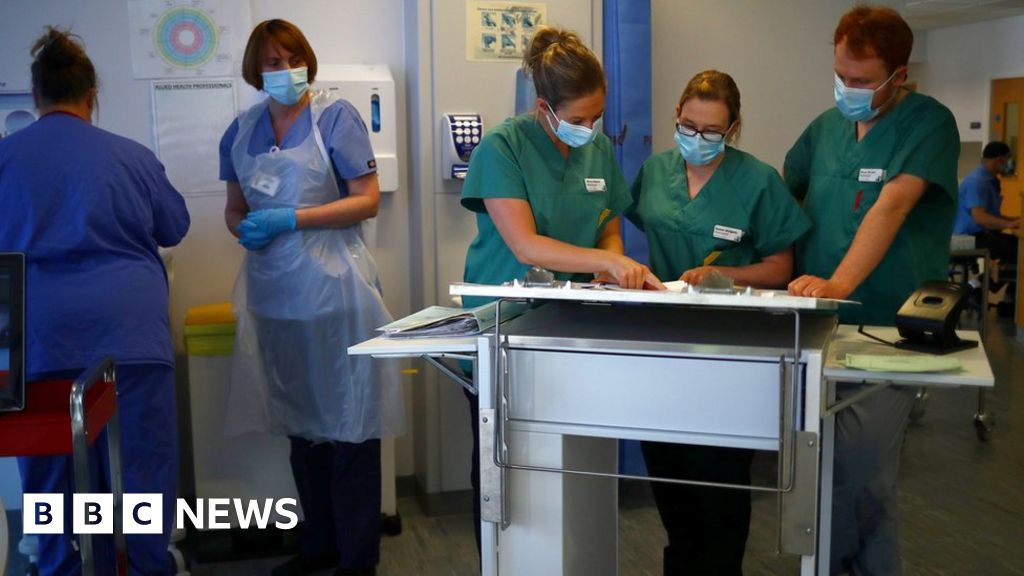
The UK's daily figure for coronavirus deaths has dropped to 170 - the lowest since the day after lockdown began.

The announcement comes a week after the first easing of restrictions in England - and while numbers are typically lower on Sundays, the figure is almost 100 fewer than the 268 reported a week ago.

But the overall death toll remains the highest in Europe, and is now 34,636.

Meanwhile in Spain, the daily number of deaths dropped below 100 for the first time since its lockdown started.

The UK death numbers announced on Sundays and Mondays are typically lower than the other five days of the week, due to fluctuations in how quickly deaths are reported by hospitals and care homes.

Sunday's figure is the lowest since 24 March, when 149 deaths were reported. The evening before that, Prime Minister Boris Johnson had introduced the lockdown.

Spain, which introduced a strict lockdown on 14 March, announced 87 new deaths on Sunday. At its peak on 2 April, there were 961 deaths in a 24-hour period.

Italy has also reported its lowest figure since its lockdown began, with a total of 145.

Liker other government ministers during the week, Business Secretary Alok Sharma said the country was moving towards level three of the coronavirus alert system, which would see the gradual relaxation of restrictions, but "to definitively conquer this disease we need to find a safe workable vaccine".

Speaking at Sunday's Downing Street briefing, he said the clinical trial for a Covid-19 vaccine at the University of Oxford was progressing well and announced £93m to speed up a new vaccine research lab.

The government has already invested £47m in the Oxford vaccine and Mr Sharma committed to a further £84m of new funding.

He added that pharmaceutical firm AstraZeneca had finalised a "global licensing agreement" with Oxford and the government.

It means if the trial is successful, 30 million doses will be available for the UK by this September, as part of a 100 million-dose agreement.

Mr Sharma said this would put the UK at the front of the queue for getting the vaccine.

Business Secretary Alok Sharma says research to find a vaccine for coronavirus is progressing at unprecedented speed and with the UK leading it, British people should be at the front of the queue for getting the jab.

Pharmaceutical giant AstraZeneca has signed a licensing agreement to make 30 million doses available by this September.

But that's incredibly ambitious and is conditional on immunisation actually working.

Experts admit an effective coronavirus vaccine may never be found. Trials are under way with volunteers being vaccinated.

It will take months to be sure of success.

That's why researchers are also backing another horse - finding existing drugs and therapies that can be used to improve the survival odds of patients who become extremely ill with coronavirus.

The business secretary also said the opening of the UK's first vaccine manufacturing innovation centre is expected to take place in the summer of 2021, a year ahead of schedule, after the government's funding pledge.

"The centre, which is already under construction, will have capacity to produce enough vaccine doses to serve the entire UK population in as little as six months," he said.

"But if, and it is a big if, a successful vaccine is available later this year, we will need to be in a position to manufacture it at scale and quickly. So whilst assent is being built, the government will establish a rapid deployment facility thanks to a further investment of £38m."

In other developments:

Let's block ads! (Why?)


https://news.google.com/__i/rss/rd/articles/CBMiJmh0dHBzOi8vd3d3LmJiYy5jby51ay9uZXdzL3VrLTUyNjk5NDgz0gEqaHR0cHM6Ly93d3cuYmJjLmNvLnVrL25ld3MvYW1wL3VrLTUyNjk5NDgz?oc=5

2020-05-17 19:06:36Z
52780790028800

Gove calls on councils to think again over schools stand-off - Financial Times

The UK government remains locked in a stand-off with teaching unions and local authorities who are resisting reopening schools at the beginning of June as part of plans to ease the lockdown.

Michael Gove, the Cabinet Office minister, on Sunday weighed into the dispute calling on those authorities against the plans, to “look to their responsibilities”.

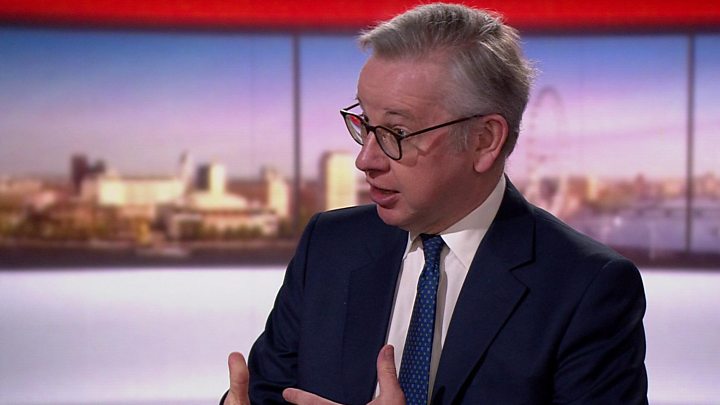
Speaking on the BBC’s Andrew Marr show, he also acknowledged that the contact-tracing system central to relaxing restrictions, would not be ready by mid-May as originally promised.

In a sign that the consensus over schools policy is fraying, both Liverpool and Hartlepool city councils have warned it is too soon to open classes for more pupils.

Mr Gove said: “You can never eliminate risk” of contracting coronavirus unless you kept the public “perpetually imprisoned”. Addressing local authorities, he said: “I respectfully ask them to think again. The clear scientific and clinical advice is that it is safe to have schools reopen, accompanied with social distancing.

“If you really care about children, you’ll want them to be in schools. You will want them to be learning. You will want them to have new opportunities,” he said.

The government issued advice last Monday that nurseries could bring back all children on June 1, while primary schools would take back children in reception, Year 1 and Year 6, with children in small classrooms observing social distancing modelled on the approach Denmark has taken.

However, local authorities, teaching unions and the British Medical Association have all raised safety concerns for teachers and pupils.

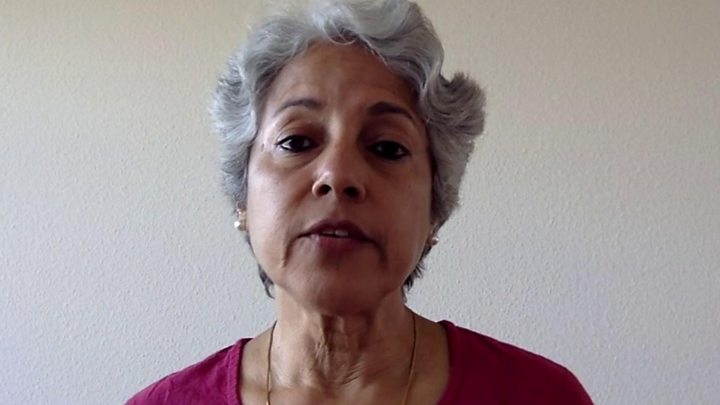
Dr Soumya Swaminathan, chief scientist at the World Health Organisation, told the BBC that evidence showed children were “less capable” of spreading the disease. “What we have seen in countries where schools have remained open is that there have not been big outbreaks in schools,” she said. 

Meanwhile Mr Gove announced on Sunday that the UK government had recruited 17,000 people to form England’s army of contact-tracers seeking to contain the spread of coronavirus as lockdown restrictions are eased.

Speaking on Friday, Northern Ireland secretary Brandon Lewis said that only 1,500 contact-tracers had been recruited at the start of the week. 

But Mr Gove told Sky News’s Sophy Ridge on Sunday programme that ministers were on course to reach their target of recruiting 18,000.

The tracers, due to start work on Monday, are a crucial pillar of the government’s “test, track and trace” strategy, which ministers hope will help prevent a second wave of infections when schools and more workplaces reopen in June.

Health secretary Matt Hancock has said the programme should be primed to launch by mid-May. However, Mr Gove confirmed on Sunday that the system would only be ready by the end of this month.

Alok Sharma, business secretary, insisted later on Sunday that the safety of children and teachers was “absolutely paramount”. However, he was unable to guarantee the contact-tracing system would be in place by 1 June.

Asked at the daily Downing Street briefing if the programme would be up and running in time for schools reopening, he only replied that safety measures had been set out for schools to keep people safe.

Mr Sharma announced on Sunday that an additional £84m had been made available to universities racing to develop a coronavirus vaccine.

He said AstraZeneca and Oxford university had finalised a “global licensing agreement” to mass produce and manufacture a vaccine. If successful, he said the pharmaceuticals group would work to make 30m doses available for use in the UK by September.

Let's block ads! (Why?)


https://news.google.com/__i/rss/rd/articles/CBMiP2h0dHBzOi8vd3d3LmZ0LmNvbS9jb250ZW50LzNhMjRkMGRhLTRjMmYtNGZlOC04MmM3LWU2YzNhZmU5Mzk3NNIBP2h0dHBzOi8vYW1wLmZ0LmNvbS9jb250ZW50LzNhMjRkMGRhLTRjMmYtNGZlOC04MmM3LWU2YzNhZmU5Mzk3NA?oc=5

2020-05-17 18:26:45Z
52780791206473

Coronavirus vaccine for 30 million Britons by September if trial succeeds - Sky News

Plans are in place to roll out a COVID-19 vaccine to 30 million people by September if trials are successful, business secretary Alok Sharma has said.

It comes as the UK announced a further 170 deaths of people with coronavirus - the lowest since the day after lockdown began.

Speaking at Sunday's Downing Street press conference, which was delayed due to technical difficulties, the cabinet minister said work by the University of Oxford to find an effective drug was "progressing well".

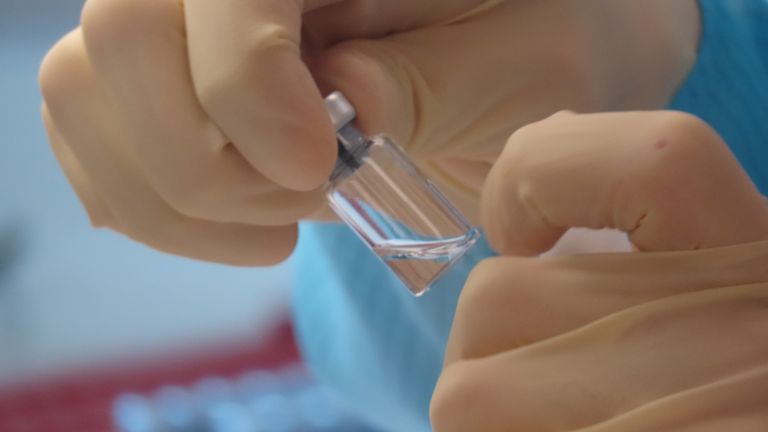
A scientist cleans vaccine vials
Image: The government has committed more than a quarter of a billion pounds towards developing a vaccine

But while pointing out the government had now committed more than a quarter of a billion pounds towards developing a COVID-19 vaccine in the UK, Mr Sharma warned there was no certainty one would ever be found.

Mr Sharma said: "In order to definitively conquer this disease we need to find a safe, workable vaccine.

"Last month I announced a new vaccine task force to co-ordinate the efforts of Government, academia and industry in the critical mission to find a vaccine.

"I'm very proud of how quickly our scientists and researchers have come together in their efforts developing a vaccine that will combat coronavirus."

More from Covid-19

A sign is seen at an AstraZeneca site in Macclesfield
Image: The pharmaceutical giant AstraZeneca had finalised a 'global licensing agreement' with Oxford University

He added: "The first clinical trial of the Oxford vaccine is progressing well with all phase one participants having received their vaccine dose on schedule earlier this week.

"The speed at which Oxford University has designed and organised these complex trials is genuinely unprecedented."

Niall Paterson stands in for Sophy Ridge
Sophy Ridge On Sunday highlights

The secretary of state also said Imperial College London was "making good progress" and would look to move into clinical trials for a vaccine by mid-June, with larger scale trials in October.

So far the Government had invested £47m in the Oxford and Imperial vaccine programmes, and announced a further £84m in new funding "to help accelerate their work", he said.

Mr Sharma added: "This new money will help mass-produce the Oxford vaccine so that if current trials are successful we have dosages to start vaccinating the UK population straight away."

He said the pharmaceutical giant AstraZeneca had finalised a "global licensing agreement" with Oxford University with government support, and added: "This means that if the vaccine is successful AstraZeneca will work to make 30 million doses available by September for the UK as part of an agreement for over 100 million doses in total."

He said "the UK will be first to get access" but that the government would also ensure that "we're able to make the vaccine available to developing countries at the lowest possible cost".

:: Listen to Sophy Ridge on Sunday on Apple podcasts, Google podcasts, Spotify, Spreaker

Mr Sharma also announced the UK's first vaccines manufacturing innovation centre is expected to open in summer 2021, a year ahead of plan, after receiving an extra £93m in government cash.

He said: "The centre, which is already under construction, will have capacity to produce enough vaccine doses to serve the entire UK population in as little as six months."

But with no guarantee of a successful vaccine being found, he also stressed the need to look at other drug treatments for those who get the virus.

He reported that six drugs have entered initial live clinical trials, which could be expanded if the results were positive.

Let's block ads! (Why?)


https://news.google.com/__i/rss/rd/articles/CBMiemh0dHBzOi8vbmV3cy5za3kuY29tL3N0b3J5L2Nvcm9uYXZpcnVzLWNvdmlkLTE5LXZhY2NpbmUtZm9yLTMwLW1pbGxpb24tYnktc2VwdGVtYmVyLWlmLXRyaWFsLXN1Y2NlZWRzLXNheXMtc2hhcm1hLTExOTkwMDM50gF-aHR0cHM6Ly9uZXdzLnNreS5jb20vc3RvcnkvYW1wL2Nvcm9uYXZpcnVzLWNvdmlkLTE5LXZhY2NpbmUtZm9yLTMwLW1pbGxpb24tYnktc2VwdGVtYmVyLWlmLXRyaWFsLXN1Y2NlZWRzLXNheXMtc2hhcm1hLTExOTkwMDM5?oc=5

2020-05-17 17:29:57Z
52780790028800

BREAKING: UK plans to roll out vaccine by fall if trials succeed as COVID-19 deaths rise by 170 - Sky News

[unable to retrieve full-text content]

  1. BREAKING: UK plans to roll out vaccine by fall if trials succeed as COVID-19 deaths rise by 170  Sky News
  2. Plans in place to potentially make 30m coronavirus vaccines for UK public by September if trials successful  ITV News
  3. Scientist says a coronavirus vaccine in just 12 months is 'fake news' | 60 Minutes Australia  60 Minutes Australia
  4. Coronavirus vaccine ‘could be ready by September’ as UK experts lead way for a cure  The Sun
  5. University announces vaccine partnership  Cherwell Online
  6. View Full coverage on Google News

https://news.google.com/__i/rss/rd/articles/CBMiK2h0dHBzOi8vd3d3LnlvdXR1YmUuY29tL3dhdGNoP3Y9cnJ1SjBlZlQtRVXSAQA?oc=5

2020-05-17 15:59:38Z
52780790028800

Coronavirus: Schools safe to reopen, Michael Gove insists - BBC News

Media playback is unsupported on your device

Michael Gove has insisted England's schools are safe to reopen, but acknowledged that "you can never eliminate risk".

Mr Gove told the BBC's Andrew Marr Show the key was to make schools safe with smaller classes and staggered arrivals.

The government has set out plans to begin a phased reopening of primary schools in England from next month.

Labour's Angela Rayner urged the government to publish the scientific advice guiding those plans for 1 June.

She said that if the government could ensure that tracking and tracing were properly in place, that would "reassure parents".

Teaching unions, backed by the British Medical Association, have raised concerns about safety.

Speaking to Andrew Marr, Mr Gove could not guarantee that teachers and pupils would not catch coronavirus.

But the former education secretary said the UK can "learn" from children returning to schools in other European countries, such as Denmark.

"The only way ever to ensure that you never catch coronavirus is to stay at home completely. But there is always, always, always, in any loosening of these restrictions, a risk of people catching the coronavirus," the Cabinet Office minister said.

"You can never eliminate risk," he said. "It is the case that it is extremely unlikely that any school is likely to be the source of a Covid outbreak."

There is a great deal of clinical evidence that shows children tend not to become severely ill from Covid-19.

This week the Office for National Statistics published the first results of a survey of coronavirus tests on a representative sample of the population in England.

It showed that children are just as likely to get the virus as any other age group.

The critical question, therefore, is how likely are they to spread it - and so far scientists simply don't know.

The very early data from countries which have opened schools to a degree indicate that they have not become infection hotspots - but it's early days and the data is currently too scant to give definitive reassurances that children do not pass on the virus.

Under government plans, children in Reception, Year 1 and Year 6 in England will return to school on 1 June.

Education Secretary Gavin Williamson said on Saturday that the government's approach was based on the "best scientific advice, with children at the very heart of everything we do".

Shadow education secretary Angela Rayner told Andrew Marr: "I urge the government to publish the science and to ensure testing and tracing is in place to safeguard.

"Councils want to make sure their citizens are safe. I support them in trying to do that."

Some local authorities in the north of England have challenged the government's timetable, with Liverpool and Hartlepool councils saying schools will not reopen at the start of next month as coronavirus cases continue to rise locally.

Greater Manchester mayor Andy Burnham said there had been a lack of consultation with regions about schools reopening and urged the government to work with local authorities, telling BBC Breakfast: "There are different issues in different places."

Responding to concerns raised by local authorities, Mr Gove said: "If you really care about children, you will want them to be in school, you will want them to be learning, you will want them to have new opportunities, so... look to your responsibilities."

What do teachers and parents think?

Teachers and parents are have warned that there will be "no chance" of maintaining a social distance in the classroom when schools return.

Moyna Edmondson, a head teacher for an independent nursery school in Kent, has 35 children aged three and four who attend her school. She said staff will be exposed to, potentially, about 70 parents.

"It makes a total mockery of the seven weeks I have spent keeping myself and my family isolated and safe. There will just be no chance of social distancing," she said.

However, Zenam, a teacher at a private nursery in Birmingham, is in favour of schools reopening - as long as class sizes are limited and areas disinfected.

"Children are missing out on their education," she said.

Similarly, Wieslaw Kwit, from London, is eager for his seven-year-old son to return to the classroom. He said schools should reopen "immediately" otherwise children "will have huge gaps in education".

But Valerie Brooker, from Surrey, is worried about sending her two daughters, aged 10 and 15 - both of whom have underlying health conditions - back to school.

"I think sending our children back to school at time is absurd," she said. "We are just reopening schools way too soon."

World Health Organisation (WHO) chief scientist Dr Soumya Swaminathan told Andrew Marr that children are "less capable" of spreading the virus, and are at "very low risk" of getting ill from the disease.

"What we have seen in countries where schools have remained open is that there have not been big outbreaks in schools," Dr Swaminathan said.

She added that most outbreaks have been associated with events "where a lot of people gather, not in regular classrooms".

Media playback is unsupported on your device

Meanwhile, schools in Wales will not reopen on 1 June, while those in Scotland and Northern Ireland may not restart before the summer holidays.

In other developments:

Let's block ads! (Why?)


https://news.google.com/__i/rss/rd/articles/CBMiLWh0dHBzOi8vd3d3LmJiYy5jby51ay9uZXdzL2VkdWNhdGlvbi01MjY5NzQ4ONIBMWh0dHBzOi8vd3d3LmJiYy5jby51ay9uZXdzL2FtcC9lZHVjYXRpb24tNTI2OTc0ODg?oc=5

2020-05-17 14:35:11Z
52780791206473

Boris Johnson vows to ‘gradually make it easier to see family and friends’ as UK meets 3 of 5 tests to relax l - The Sun


BORIS Johnson has vowed to make it "gradually easier to see family and friends" over time - as he revealed that three out of five tests have been met to ease the lockdown rules.

The PM urged Brits to be patient, stressing that it was only by sticking with it that the people of Britain can get the rewards of seeing loved ones in time.

⚠️ Read our coronavirus live blog for the latest news & updates

 Boris Johhnson said he wanted to make it easier to see friends and family

5

Boris Johhnson said he wanted to make it easier to see friends and familyCredit: Getty Images - Getty

Writing in the Mail on Sunday today, the PM said: "If we all stick at it, then we’ll be able, gradually, to get rid of the complexities and the restrictions and make it easier and simpler for families to meet again.

"But we must move slowly, and at the right time."

And the Prime Minister revealed that of the five lockdown tests "three have been met and progress is being made on the remaining two".

Officials said that they were confident that the NHS can cope, there was a sustained and consistent fall in the death rate, and the rate of infection is also decreasing.

The two remaining tests are making sure that there are enough tests and PPE to meet future demand, and being confident any tweaks would not overwhelm the NHS either.

Under Government plans, Boris wants to open schools and non-essential shops from June 1 onwards, if the rate of infection is low enough.

And from the start of July, ministers are planning to try and open up even more services - possibly including restaurants, cafes and cinemas.

But Boris admitted that "we have to acknowledge we may need to live with this virus for some time to come" and life was far off returning to normal again.

New rules to get Britain back to work in the coming weeks urge Brits to wear masks on public transport,  and to keep two metres apart as much as possible.

Last week lifted some lockdown restrictions - allowing people to exercise more and see one person at a distance.

The PM said he could understand why some people are frustrated with the different new rules, but trusted in the "good sense" of the public.

Brits are able to have cleaners over to work in their homes and have people over to view properties on the market - but still can't see friends and family.

People can meet in pairs outside as long as they stay two metres apart - but can't see both parents at the same time.

And people in England are now allowed to go on day trips across the country, but cannot cross into Wales and Scotland where different rules are in place.

"I understand that people will feel frustrated with some of the new rules," he admitted.

"I recognise what we are now asking is more complex than simply staying at home - but this is a complex problem and we need to trust in the good sense of the British people."

This weekend Brits flocked to parks, beaches and other open spaces to make the most of their new freedoms.

 Families build sandcastles on the beach in Dorset

5

Families build sandcastles on the beach in DorsetCredit: Alamy Live News
 Joggers and cyclists on Wimbledon Common this morning during the first weekend after strict lockdown measures were eased in England

5

Joggers and cyclists on Wimbledon Common this morning during the first weekend after strict lockdown measures were eased in EnglandCredit: Rex Features

5

However, beauty spots including the Lake District urged people to continue to stay away and not overwhelm local areas.

As the country enters its ninth week of lockdown on Monday, Boris stressed: "We have achieved a lot together so far. Let’s not throw it all away now.

"In return for the small freedoms we are now allowing ourselves, we must stay alert.

"We must do so in the knowledge that our self-discipline will, eventually, lead to the return of our much-missed normality."

5

CORONAVIRUS CRISIS - STAY IN THE KNOW

Don't miss the latest news and figures - and essential advice for you and your family.

To receive The Sun's Coronavirus newsletter in your inbox every tea time, sign up here.
To follow us on Facebook, simply 'Like' our Coronavirus page.
Get Britain's best-selling newspaper delivered to your smartphone or tablet each day - find out more.

Brits urged to stay away from beauty spots after Boris Johnson allows travel for unlimited exercise in new lockdown plan

Let's block ads! (Why?)


https://news.google.com/__i/rss/rd/articles/CBMiU2h0dHBzOi8vd3d3LnRoZXN1bi5jby51ay9uZXdzLzExNjQzMTU3L2JvcmlzLWpvaG5zb24tZnJpZW5kcy1mYW1pbHktdGVzdHMtbG9ja2Rvd24v0gFXaHR0cHM6Ly93d3cudGhlc3VuLmNvLnVrL25ld3MvMTE2NDMxNTcvYm9yaXMtam9obnNvbi1mcmllbmRzLWZhbWlseS10ZXN0cy1sb2NrZG93bi9hbXAv?oc=5

2020-05-17 13:59:59Z
52780786237428

Boris Johnson vows to ‘gradually make it easier to see family and friends’ as UK meets 3 of 5 tests to relax l - The Sun


BORIS Johnson has vowed to make it "gradually easier to see family and friends" over time - as he revealed that three out of five tests have been met to ease the lockdown rules.

The PM urged Brits to be patient, stressing that it was only by sticking with it that the people of Britain can get the rewards of seeing loved ones in time.

⚠️ Read our coronavirus live blog for the latest news & updates

 Boris Johhnson said he wanted to make it easier to see friends and family

5

Boris Johhnson said he wanted to make it easier to see friends and familyCredit: Getty Images - Getty

Writing in the Mail on Sunday today, the PM said: "If we all stick at it, then we’ll be able, gradually, to get rid of the complexities and the restrictions and make it easier and simpler for families to meet again.

"But we must move slowly, and at the right time."

And the Prime Minister revealed that of the five lockdown tests "three have been met and progress is being made on the remaining two".

Officials said that they were confident that the NHS can cope, there was a sustained and consistent fall in the death rate, and the rate of infection is also decreasing.

The two remaining tests are making sure that there are enough tests and PPE to meet future demand, and being confident any tweaks would not overwhelm the NHS either.

Under Government plans, Boris wants to open schools and non-essential shops from June 1 onwards, if the rate of infection is low enough.

And from the start of July, ministers are planning to try and open up even more services - possibly including restaurants, cafes and cinemas.

But Boris admitted that "we have to acknowledge we may need to live with this virus for some time to come" and life was far off returning to normal again.

New rules to get Britain back to work in the coming weeks urge Brits to wear masks on public transport,  and to keep two metres apart as much as possible.

Last week lifted some lockdown restrictions - allowing people to exercise more and see one person at a distance.

The PM said he could understand why some people are frustrated with the different new rules, but trusted in the "good sense" of the public.

Brits are able to have cleaners over to work in their homes and have people over to view properties on the market - but still can't see friends and family.

People can meet in pairs outside as long as they stay two metres apart - but can't see both parents at the same time.

And people in England are now allowed to go on day trips across the country, but cannot cross into Wales and Scotland where different rules are in place.

"I understand that people will feel frustrated with some of the new rules," he admitted.

"I recognise what we are now asking is more complex than simply staying at home - but this is a complex problem and we need to trust in the good sense of the British people."

This weekend Brits flocked to parks, beaches and other open spaces to make the most of their new freedoms.

 Families build sandcastles on the beach in Dorset

5

Families build sandcastles on the beach in DorsetCredit: Alamy Live News
 Joggers and cyclists on Wimbledon Common this morning during the first weekend after strict lockdown measures were eased in England

5

Joggers and cyclists on Wimbledon Common this morning during the first weekend after strict lockdown measures were eased in EnglandCredit: Rex Features

5

However, beauty spots including the Lake District urged people to continue to stay away and not overwhelm local areas.

As the country enters its ninth week of lockdown on Monday, Boris stressed: "We have achieved a lot together so far. Let’s not throw it all away now.

"In return for the small freedoms we are now allowing ourselves, we must stay alert.

"We must do so in the knowledge that our self-discipline will, eventually, lead to the return of our much-missed normality."

5

CORONAVIRUS CRISIS - STAY IN THE KNOW

Don't miss the latest news and figures - and essential advice for you and your family.

To receive The Sun's Coronavirus newsletter in your inbox every tea time, sign up here.
To follow us on Facebook, simply 'Like' our Coronavirus page.
Get Britain's best-selling newspaper delivered to your smartphone or tablet each day - find out more.

Brits urged to stay away from beauty spots after Boris Johnson allows travel for unlimited exercise in new lockdown plan

Let's block ads! (Why?)


https://news.google.com/__i/rss/rd/articles/CBMiU2h0dHBzOi8vd3d3LnRoZXN1bi5jby51ay9uZXdzLzExNjQzMTU3L2JvcmlzLWpvaG5zb24tZnJpZW5kcy1mYW1pbHktdGVzdHMtbG9ja2Rvd24v0gFXaHR0cHM6Ly93d3cudGhlc3VuLmNvLnVrL25ld3MvMTE2NDMxNTcvYm9yaXMtam9obnNvbi1mcmllbmRzLWZhbWlseS10ZXN0cy1sb2NrZG93bi9hbXAv?oc=5

2020-05-17 13:42:18Z
52780786237428