The spread of the coronavirus disease (COVID-19) in London
LONDON (Reuters) - Britain said on Sunday it was pledging 200 million pounds ($248 million) to the World Health Organisation (WHO) and charities to help slow the spread of the coronavirus in vulnerable countries and so help prevent a second wave of infections.
More than 1.6 million people are reported to have been infected by the novel coronavirus globally and deaths have topped 100,000 according to a Reuters tally.
Infections have been reported in 210 countries since the first cases were identified in China in December last year and British aid minister Anne-Marie Trevelyan said assisting the poorest nations now would help prevent the virus returning to the United Kingdom.
Britain has reported almost 10,000 deaths from the coronavirus so far, the fifth highest national number globally.
"While our brilliant doctors and nurses fight coronavirus at home, we’re deploying British expertise and funding around the world to prevent a second deadly wave reaching the UK," Trevelyan said in a statement.
"Coronavirus does not respect country borders so our ability to protect the British public will only be effective if we strengthen the healthcare systems of vulnerable developing countries too."
The British government said 130 million pounds would go to United Nations' agencies, with 65 million for the WHO. Another 50 million pounds would go to the Red Cross to help war-torn and hard to reach areas, and 20 million pounds going to other organisations and charities.
The cash would help areas with weak health systems such as war-ravaged Yemen, which reported its first case on Friday, and Bangladesh, which is hosting 850,000 Rohingya refugees in crowded camps, it said.
Britain's support for the WHO contrasts with the view of U.S. President Donald Trump who has criticised its handling of the COVID-19 pandemic with suggestions his administration might re-evaluate U.S. funding
"The United Kingdom’s generous contribution is a strong statement that this is a global threat that demands a global response," Tedros Adhanom Ghebreyesus, WHO's Director General said.
"We are all in this together, which means protecting health around the world will help to protect the health of people in the UK."
(Reporting by Michael Holden; editing by Guy Faulconbridge)
LONDON (Reuters) - Britain’s COVID-19 death toll neared 10,000 on Saturday after health officials reported another 917 hospital deaths, while one senior minister said Prime Minister Boris Johnson will need time off as he recovers from being seriously ill with the virus.
Britain has now reported 9,875 deaths from the coronavirus pandemic, the fifth highest national number globally. Saturday’s increase was the second day running that the number of deaths had increased by more than 900.
Almost 80,000 people in Britain have tested positive for the virus, among them Johnson, who is in the early stages of recovery on a hospital ward after spending three nights in intensive care.
Downing Street said Johnson “continues to make very good progress”, but interior minister Priti Patel said it was vital he took time to fully recover.
“The message to the prime minister is that we want him to get better and he needs some time and some space to rest, recuperate and recover,” Patel said.
“And the whole of cabinet would support that message,” she told a news conference in Downing Street.
Foreign minister Dominic Raab is currently deputising for the prime minister.
Johnson’s office said on Friday that he was back on his feet and British newspapers reported he was watching films and reading letters sent to him by his fiancee Carrie Symonds, who is pregnant and who herself has suffered COVID-19 symptoms.
The government’s main focus in recent days has been trying to ensure Britons comply with stay-home orders and a ban on social gatherings, especially over a sunny Easter weekend.
FILE PHOTO: A sign of support for British Prime Minister Boris Johnson, who has been in hospital since Monday as the spread of the coronavirus disease (COVID-19) continues, in Swynnerton, Britain, April 9, 2020. REUTERS/Carl Recine/File Photo
Police said only a small minority of people were ignoring the message and early data showed officers in England and Wales had issued 1,084 on-the-spot fines so far for people breaking the restrictions. Police powers to enforce came in on March 26 - after the start of lockdown measures
‘NO MAGICAL SOLUTION’
However, the government has come under increasing pressure to detail how long the strict curbs on movement will last, with the shutdown meaning many businesses are unable to operate.
Ministers have said Britain needs to pass the peak of the outbreak before any changes can be made. Health minister Matt Hancock said that although the rise in numbers of hospital admissions had started to flatten out, the judgement was they had not reached that point.
“There is no magical solution that doesn’t require difficult decisions,” said Stephen Powis, the medical director of the National Health Service in England.
“This was never going to be a sprint over a few weeks; this is going to be longer, it is going to be a marathon.”
There was mounting criticism on Saturday from doctors and nurses who said they were having to treat patients without proper personal protective equipment (PPE) such as masks and gloves.
Some 19 health care workers including 11 doctors have died after testing positive for the coronavirus.
The British Medical Association, which represents doctors, said medics were facing a “heart-breaking” decision over whether to treat patients without proper protection and so put themselves at risk.
Slideshow (3 Images)
The Royal College of Nursing said it was getting calls about shortages, saying some staff were “petrified”.
Hancock said 761 million items of PPE had been delivered to the National Health Service but there were issues in ensuring it reached the people who needed it.
“I’m sorry if people feel that there have been failings,” Home Secretary Patel said.
Editing by Toby Chopra, David Evans and Frances Kerry
LONDON (Reuters) - Britain’s COVID-19 death toll neared 10,000 on Saturday after health officials reported another 917 hospital deaths, while one senior minister said Prime Minister Boris Johnson will need time off as he recovers from being seriously ill with the virus.
Britain has now reported 9,875 deaths from the coronavirus pandemic, the fifth highest national number globally. Saturday’s increase was the second day running that the number of deaths had increased by more than 900.
Almost 80,000 people in Britain have tested positive for the virus, among them Johnson, who is in the early stages of recovery on a hospital ward after spending three nights in intensive care.
Downing Street said Johnson “continues to make very good progress”, but interior minister Priti Patel said it was vital he took time to fully recover.
“The message to the prime minister is that we want him to get better and he needs some time and some space to rest, recuperate and recover,” Patel said.
“And the whole of cabinet would support that message,” she told a news conference in Downing Street.
Foreign minister Dominic Raab is currently deputising for the prime minister.
Johnson’s office said on Friday that he was back on his feet and British newspapers reported he was watching films and reading letters sent to him by his fiancee Carrie Symonds, who is pregnant and who herself has suffered COVID-19 symptoms.
The government’s main focus in recent days has been trying to ensure Britons comply with stay-home orders and a ban on social gatherings, especially over a sunny Easter weekend.
FILE PHOTO: A sign of support for British Prime Minister Boris Johnson, who has been in hospital since Monday as the spread of the coronavirus disease (COVID-19) continues, in Swynnerton, Britain, April 9, 2020. REUTERS/Carl Recine/File Photo
Police said only a small minority of people were ignoring the message and early data showed officers in England and Wales had issued 1,084 on-the-spot fines so far for people breaking the restrictions. Police powers to enforce came in on March 26 - after the start of lockdown measures
‘NO MAGICAL SOLUTION’
However, the government has come under increasing pressure to detail how long the strict curbs on movement will last, with the shutdown meaning many businesses are unable to operate.
Ministers have said Britain needs to pass the peak of the outbreak before any changes can be made. Health minister Matt Hancock said that although the rise in numbers of hospital admissions had started to flatten out, the judgement was they had not reached that point.
“There is no magical solution that doesn’t require difficult decisions,” said Stephen Powis, the medical director of the National Health Service in England.
“This was never going to be a sprint over a few weeks; this is going to be longer, it is going to be a marathon.”
There was mounting criticism on Saturday from doctors and nurses who said they were having to treat patients without proper personal protective equipment (PPE) such as masks and gloves.
Some 19 health care workers including 11 doctors have died after testing positive for the coronavirus.
The British Medical Association, which represents doctors, said medics were facing a “heart-breaking” decision over whether to treat patients without proper protection and so put themselves at risk.
Slideshow (3 Images)
The Royal College of Nursing said it was getting calls about shortages, saying some staff were “petrified”.
Hancock said 761 million items of PPE had been delivered to the National Health Service but there were issues in ensuring it reached the people who needed it.
“I’m sorry if people feel that there have been failings,” Home Secretary Patel said.
Editing by Toby Chopra, David Evans and Frances Kerry
The growth in the total number of new deaths has stalled in the last four days.
In other some other countries that implemented lockdown, the numbers of reported deaths stopped growing about three weeks into lockdown.
But it is too soon to know for sure whether we have reached that point.
There have been reporting lags at weekends and it is possible that a Bank Holiday weekend will include deaths that go unreported until next week.
The government is urging people to stay at home over Easter to curb the spread of the virus, despite warm and sunny weather across parts of the UK.
At the Downing Street briefing, NHS England medical director Stephen Powis said: "It is a bank holiday weekend, it is a time of year when typically we would be celebrating or getting together with relatives and close friends.
"But I'm afraid this year it has to be, for all of us, a stay-at-home Easter."
Police have issued more than 1,000 fines to people not following social distancing measures, according to early figures released at the government briefing.
Martin Hewitt, chair of the National Police Chiefs Council, said most spoken to by officers had understood the rules but a "small minority" had refused to comply.
Also at the briefing, Home Secretary Priti Patel said people suffering from domestic abuse during the lockdown would still be able to get support from the police.
For those people, Ms Patel said, "Home is not the safe haven that it should be."
She said she had worked with law enforcement, charities, schools, businesses and councils to address the issue.
"Anyone in immediate danger should call 999 and press 55 on a mobile if you are unable to talk," she said.
"Our outstanding police will still be there for you."
Mr Johnson, 55, had three nights in intensive care before returning to a ward on Thursday.
No 10 said he was receiving daily updates and pregnancy scans from his fiancee, Carrie Symonds, and had been passing the time with films and sudoku.
For several weeks the government and NHS leaders have insisted there are enough stocks of personal protective equipment (PPE) and that the problem lay in the distribution from warehouses to the front line.
Some hospitals have reported receiving higher consignments of gloves, masks, gowns and aprons. But doctors and nurses have continued to report shortages.
Care homes, pharmacies, GP practices and community health teams feel they are at the back of the queue for equipment to protect staff who may come into contact with patients who have Covid-19.
There has also been confusion over how safety guidelines should apply.
Matt Hancock has admitted there are global supply problems and says it is a "Herculean effort" to get deliveries to health workers and a "huge task" to keep it going. He set out a series of measures to step up provision of equipment.
He may be given credit for acknowledging the scale of the problem. But NHS and care staff won't take much notice of plans until they are reflected in reality on the ground. Some are also irritated at the suggestion that PPE is a "precious resource" and should only be used when it is needed.
In other developments:
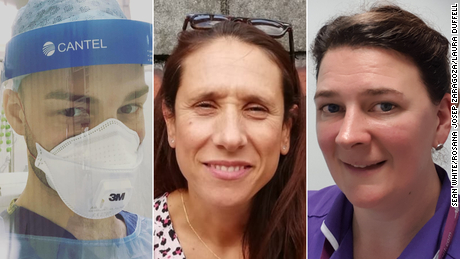
"Much-loved" nurse Julie Omar, 52, has become one of the latest NHS workers to die with symptoms of Covid-19. The trauma and orthopaedics nurse, who worked for Worcestershire Acute Hospitals NHS Trust, died at home on Friday
The news came shortly after the death of another nurse, 47-year-old Leilani Dayrit, in Rugby. Mary Dayrit, 19, said her mother was "selfless until the very end"
Police have apologised after a man was threatened with spray and arrested in Manchester as he dropped off food for vulnerable relatives
Ministers have agreed to give £200m to developing countries in a bid to prevent "future waves" of coronavirus infections hitting the UK
The World Health Organization has warned of a "deadly resurgence" in infections if restrictions are lifted too early.
Across the nation, tributes have been flooding in for health workers who reportedly died from coronavirus-related complications. Some of them came from minority black or Asian communities, according to media reports.
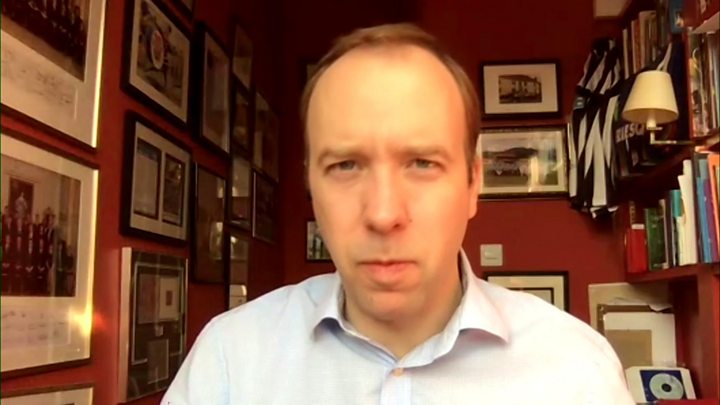
On Saturday, Health Secretary Matt Hancock addressed the fact that a number of health workers who have died from coronavirus were from "minority ethnic backgrounds," saying on BBC Breakfast he found it "really upsetting."
In an interview with the British daily The Guardian, the head of the the doctors' union, the British Medical Association (BMA), called for a government investigation into whether minorities were more vulnerable to Covid-19.
"At face value, it seems hard to see how this can be random," Dr. Chaand Nagpaul said in reference to the first 10 doctors in the UK to be named as having died from coronavirus-related symptoms coming from minority backgrounds, according to The Guardian.
"We have heard the virus does not discriminate between individuals but there's no doubt there appears to be a manifest disproportionate severity of infection in BAME [black and minority ethnic] people and doctors. This has to be addressed -- the government must act now," he told The Guardian.
Covid-19 has ripped through families and grounded the UK economy, and questions are mounting in the British media as to whether it is having a disproportionate effect on minority groups in Britain.
But unlike the US -- where data released by Chicago and Michigan authorities showed a clear racial disparity in coronavirus victims -- the picture is not that clear in the UK. Experts say there are many unknowns: mainly that British health authorities are not reporting race in statistics on confirmed cases or fatalities.
This public data deficit has not only left communities in the dark, it has failed to highlight the structural inequalities or health factors that might be at play behind the mounting deaths: be it geography, poverty or genetic disposition.
"The UK ought to be good at collecting data," Sunder Katwala, the director of British Future, a think tank that focuses on identity, told CNN.
Experts say Britain has a strong tradition of research on the social determinants of health and health inequalities, and is among the few countries in Europe that collects race data.
But officials dropped the ball in making that information public, Katwala said. "I think with the sheer pressure of this crisis -- of realizing how big it is and the economic impacts -- it feels like policymakers have been slightly slow to work on this dimension."
The National Health Service (NHS) has been collating race and socio-economic information from Covid-19 cases, Sarah MacLennan, NHS England spokesperson told CNN. Data teams will then look at how "socio-economic aspects and housing conditions" affect the spread of the virus, she said.
No timeline was provided on when those data points would be released to the public.
On Friday, the UK had the fifth highest number of coronavirus-related deaths in the world, with 8,958 fatalities and 74,605 confirmed cases, according to Johns Hopkins University figures.
First signs
Early research this month by Intensive Care National Audit and Research Centre (ICNARC), into confirmed Covid-19 cases admitted to critical care units in England, Wales and Northern Ireland, indicates that ethnic minorities may be over-represented when compared to the general population. The data is not from all critical care units in those regions.
Figures released on April 10 found that as many as a third of 3,370 coronavirus patients receiving critical care came from Black and Minority Ethnic (BME) backgrounds -- nearly three times the 13% proportion of ethnic minorities in the UK population, according to the 2011 census.
These are cities that have large minority populations, suggesting that geography has left minorities even more exposed.
Studies show these communities, particularly people of Asian backgrounds, "have higher rates of cardiovascular disease, diabetes and high blood pressure, which has been shown in China and Italy [Covid-19 cases] to be associated with more severe disease," University of Leicester professor Kamlesh Khunti told CNN.
Black people of West African descent also have an increased risk of strokes and hypertension, conditions that can exacerbate coronavirus symptoms, compared to the general population, according to Keith Neal, emeritus professor of the Epidemiology of Infectious Diseases at the University of Nottingham.
Knowing that the virus typically affects older people more seriously, comparing ICNARC's findings to the over-65 population of each minority group could make "that figure [of disproportionality] even worse," Neal added.
Poverty linked to poor health
These danger signs also point to long-standing structural inequalities in Britain. "Members of minorities in Britain are more likely to be living in poverty, they're more likely to be in overcrowded houses," Kate E Pickett, a professor of Epidemiology at the University of York and co-founder of the Equality Trust, told CNN.
"So there are the reasons why the spread might be happening more rapidly in those groups where their baseline health is worse" and their ability to social distance is low, she said.
Zubaida Haque, the deputy director of the race and equality think tank Runnymede Trust, said, "It's not your race, per se, which makes you vulnerable to Covid-19.
"It's what your experience of being that color or ethnicity means, in terms of health outcomes and we know through a government commissioned review that if you are poorer, have high rates of child poverty, have insecure work -- all of those factors are linked to poor health outcomes," she said.
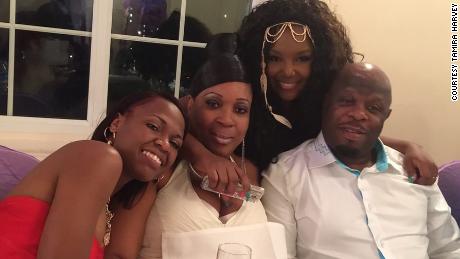
That includes Ear, Nose and Throat consultant Dr. Amged el-Hawrani, health care assistant Thomas Harvey and Dr. Alfa Sa'adu, who died from coronavirus-related complications.
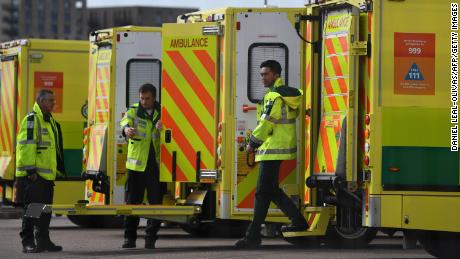
Harvey's daughter Tamira alleged that London's Goodmayes Hospital failed to provide necessary personal protective equipment (PPE) to her father. And just a few days before Harvey's death, emergency services "refused" to come to take him to hospital, Tamira said, despite family concerns that he wasn't "breathing properly."
The NHS trust responsible for the hospital where Thomas Harvey worked told CNN that there were no symptomatic patients when he went off work sick and that it has been following national PPE guidance. The London Ambulance Service did not respond to his daughter's allegations that they "refused" to come once.
Cultural factors
Cultural factors could have also come into play. "One explanation to why Italy was badly hit is it had more of a culture of multigenerational family living households," Katwala said, a trend "more true of some minority communities in the UK than the general population."
In Derby, a multiracial city of nearly 250,000, local Nazir Hussain said announcements of coronavirus-related deaths have become a daily occurrence among its Asian population.
Hussain, a committee member at Derby Jamia Mosque said the community was braced for the worst, and had prepared 300 graves in the event of more deaths. The fear is the older generation, many of whom live in big multigenerational households, may be more vulnerable to the virus, he said.
Dominic Rech and Martin Goillandeau contributed to this report.
LONDON (Reuters) - Prime Minister Boris Johnson was back on his feet in his recovery from COVID-19 on Friday, while his fellow Britons were told to resist the temptation of going out in the spring sunshine over Easter as the coronavirus death toll rose to nearly 9,000.
A sign of support for British Prime Minister Boris Johnson, who has been in hospital since Monday as the spread of the coronavirus disease (COVID-19) continues, in Swynnerton, Britain, April 9, 2020. REUTERS/Carl Recine
The prime minister’s rapid health decline shook the country earlier this week, but he came out of three nights of intensive care at St Thomas’ Hospital on Thursday. He was admitted to the hospital on Sunday after his symptoms persisted.
A spokesman for Johnson said the prime minister, 55, was back on a hospital ward as he continued his recovery, which was said to be at an early stage.
“I was told he was waving his thanks to all of the nurses and doctors he saw as he was moved from the intensive care unit back to the ward,” the spokesman said. “The hospital said that he was in extremely good spirits last night.”
His Downing Street office said later that Johnson had been able to do short walks, between periods of rest, as part of the care he was receiving.
“He has spoken to his doctors and thanks the whole clinical team for the incredible care,” a spokesman said.
Johnson was the first world leader to be hospitalised with the coronavirus, forcing him to hand control to foreign minister Dominic Raab just as Britain’s coronavirus outbreak worsened drastically.
In the prime minister’s absence, the government must consider if and when it can end restrictions on movement. Raab said on Thursday it was too early to make a decision because the country had not yet reached the peak of the outbreak.
The UK coronavirus death toll rose by 980 to 8,958 people as of 1600 GMT on April 9, health minister Matt Hancock said on Friday - the fifth highest in the world.
Although Johnson’s condition was improving, it was unclear how long he would be incapacitated.
His spokesman said his recovery was only just beginning and he would take advice from his medical team.
“He must rest up,” his father, Stanley Johnson, told BBC radio. “You cannot walk away from this and go straight back to Downing Street and pick up the reins without a period of readjustment.”
Johnson’s pregnant fiancee, Carrie Symonds, who has also had coronavirus symptoms, tweeted a rainbow picture - in support of healthcare workers - along with hand-clapping emojis.
LENGTHY LOCKDOWN
The government says it will have a better idea by next week of whether the lockdown has succeeded in reducing infections and hospital admissions.
“We’ve started already to see plateauing,” said epidemiologist Neil Ferguson, a professor at Imperial College in London, who has helped to shape the government’s response.
It will take several more days for the pace of deaths to drop and more weeks to draw definitive conclusions that could allow restrictions to be lifted, he added to BBC radio.
Britons are putting up with a third week of stringent restrictions, during which police have assumed new powers to fine people who leave home unless on essential work or seeking food and medicines.
The four-day Easter break began on Friday with bright sunshine, and authorities were on the lookout for those tempted out to see family and friends.
Scotland’s chief medical officer has already resigned after flouting her own advice to stay at home, and a senior minister was under pressure on Friday after newspapers said he travelled to a second home outside London and visited his parents.
Slideshow (11 Images)
“For clarity - my parents asked me to deliver some essentials - including medicines,” housing minister Robert Jenrick tweeted in defence, adding that he had left London to return to his family home.
“We are confident that he complied with the social distancing rules,” Johnson’s spokesman said.
Reporting by Michael Holden; Editing by Andrew Cawthorne, David Goodman and Frances Kerry
LONDON — The eight men moved to Britain from different corners of its former empire, all of them doctors or doctors-to-be, becoming foot soldiers in the effort to build a free universal health service after World War II.
Now their names have become stacked atop a grim list: the first, and so far only, doctors publicly reported to have died after catching the coronavirus in Britain’s aching National Health Service.
For a country ripped apart in recent years by Brexit and the anti-immigrant movement that birthed it, the deaths of the eight doctors — from Egypt, India, Nigeria, Pakistan, Sri Lanka and Sudan — attest to the extraordinary dependence of Britain’s treasured health service on workers from abroad.
It is a story tinged with racism, as white, British doctors have largely dominated the prestigious disciplines while foreign doctors have typically found work in places and practices that are apparently putting them on the dangerous front lines of the coronavirus pandemic.
“When people were standing on the street clapping for N.H.S. workers, I thought, ‘A year and a half ago, they were talking about Brexit and how these immigrants have come into our country and want to take our jobs,’” said Dr. Hisham el-Khidir, whose cousin Dr. Adil el-Tayar, a transplant surgeon, died on March 25 from the coronavirus in western London.
“Now today, it’s the same immigrants that are trying to work with the locals,” said Dr. el-Khidir, a surgeon in Norwich, “and they are dying on the front lines.”
By Tuesday, 7,097 people had died in British hospitals from the coronavirus, the government said on Wednesday, a leap of 938 from the day before, the largest daily rise in the death toll.
And the victims have included not just the eight doctors but a number of nurses who worked alongside them, at least one from overseas. Health workers are stretched thin as hospitals across the country are filled with patients, including Prime Minister Boris Johnson, who this week was moved into intensive care with the coronavirus.
Britain is not the only country reckoning with its debt to foreign doctors amid the terror and chaos of the pandemic. In the United States, where immigrants make up more than a quarter of all doctors but often face long waits for green cards, New York and New Jersey have already cleared the way for graduates of overseas medical schools to suit up in the coronavirus response.
That was true for Dr. el-Tayar, 64, the oldest son of a government clerk and a housewife from Atbara, Sudan, a railway city on the Nile.
He had 11 siblings, and one left a special impression: Osman, a brother, who became ill as a child and died without suitable medical treatment. Though Dr. el-Tayar rarely spoke of his brother’s death, he gave the same name to his oldest son.
“In my mind, I think that’s what led him to medicine,” Dr. el-Khidir said. “He didn’t want anyone else in his family to feel that.”
Dr. Adil El-Tayar
After graduating from the University of Khartoum, Dr. el-Tayar decided to help address a tide of kidney disease sweeping across sub-Saharan Africa. So he moved to Britain in the early 1990s to train as a specialist transplant surgeon. He returned to Sudan around 2010 and helped set up a transplant program there.
But the deteriorating political situation in Sudan and the recent birth of a son persuaded Dr. el-Tayar to settle back in Britain, where he went to work once again for the health service. Having lost his status as a senior doctor when he left for Sudan, he had taken up work filling in at a surgical assessment unit in Herefordshire, northwest of London, examining patients coming through the emergency room.
It was there that his family believes Dr. el-Tayar, working with only rudimentary protective gear, contracted the virus. Sequestered in the western London home where he loved sitting next to his 12-year-old son, he became so short of breath recently that he could not string together a sentence. While on a ventilator, his heart failed him.
Had the health service started screening hospital patients for the virus sooner or supplied doctors with better protective gear, Dr. el-Tayar might have lived, said his cousin, Dr. el-Khidir.
“In our morbidity analyses, we go through each and every case and ask, ‘Was it preventable? Was it avoidable?’” he said. “I’m trying to answer this question with my cousin now. Even with all the difficulties, I’ve got to say the answer has to be yes.”
Analysts warn that doctor shortages across countries ravaged by the coronavirus will worsen as the virus spreads. While ventilators may be the scarcest resource for now, a shortage of doctors and nurses trained to operate them could leave hospitals struggling to make use even of what they have.
By recruiting foreign doctors, Britain saves the roughly $270,000 in taxpayer money that it costs to train doctors locally, a boon to a system that does not spend enough on medical education to staff its own hospitals. That effectively leaves Britain depending on the largess of countries with weaker health care systems to train its own work force.
Even so, the doctors are hampered by thousands of dollars in annual visa fees and, on top of that, a $500 surcharge for using the very health service they work for.
Excluded from the most prestigious disciplines, immigrant doctors have come to dominate so-called Cinderella specialties, like family and elderly medicine, turning them into pillars of Britain’s health system. And unlike choosier Britain-born doctors, they have historically gone to work in what one lawmaker in 1961 called “the rottenest, worst hospitals in the country,” the very ones that most needed a doctor.
Those same places are now squarely in the path of the virus.
“Migrant doctors are architects of the N.H.S. — they’re what built it and held it together and worked in the most unpopular, most difficult areas, where white British doctors don’t want to go and work,” said Dr. Aneez Esmail, a professor of general practice at the University of Manchester. “It’s a hidden story.”
When Dr. el-Tayar moved to Britain in the 1990s, he was following a pipeline laid by the family of another doctor who has now died after contracting the coronavirus: Dr. Amged el-Hawrani, 55.
An ear, nose and throat specialist, Dr. el-Hawrani was about 11 when his father, a radiologist, brought the family in 1975 from Khartoum to Taunton, a town in southwestern England, and then Bristol, a bigger city nearby.
Dr. Amged el-HawraniCredit...University Hospitals of Derby and Burton NHS Foundation Trust/Agence France-Presse — Getty Images
Many Sudanese doctors at the time were burnishing their skills in Britain before returning home or moving to Persian Gulf countries for higher wages. But Dr. el-Hawrani’s family turned their home into a staging post for Sudanese doctors interested in longer-term stays, hosting their families during exams or house hunts.
“The more the merrier,” said Amal el-Hawrani, a younger brother of Dr. el-Hawrani. “My mum always liked that.”
Being British-Sudanese in the 1980s was not easy. Race riots flared in cities across the country. Mosques were scarce. Dr. el-Hawrani went to school almost exclusively with white British classmates.
The young doctor quietly stood up for his family: When someone once tried to kill a 100-year-old fern in their garden by cutting out a ring of bark, Dr. el-Hawrani snapped off branches and nailed them across the gap so that nutrients could get across.
Still, discrimination bothered him. When it came time to follow his father into medicine, Dr. el-Hawrani told his brother that he “wanted to be an orthopedic surgeon but felt that maybe because of certain prejudices he didn’t get it.”
His resolve only grew stronger after an older brother, Ashraf, a fellow doctor, died at 29 of causes related to asthma. Dr. el-Hawrani discovered his brother’s body.
Before Dr. el-Hawrani’s death, on March 28, he had finally come around to the idea that his only son, Ashraf, named in his brother’s memory, would study English instead of the family trade. Ashraf said in a statement that his father “was dedicated towards his family.”
“Now he has to make his decisions about which university to go to on his own,” Amal el-Hawrani said of Ashraf. “He was expecting to have his father’s help.”
The coronavirus has taken a devastating toll on migrant doctors across Britain, leaving at least six others dead: Dr. Habib Zaidi, 76, a longtime general practitioner from Pakistan; Dr. Alfa Sa’adu, 68, a geriatric doctor from Nigeria; Dr. Jitendra Rathod, 62, a heart surgeon from India; Dr. Anton Sebastianpillai, in his 70s, a geriatric doctor from Sri Lanka; Dr. Mohamed Sami Shousha, 79, a breast tissue specialist from Egypt; and Dr. Syed Haider, in his 80s, a general practitioner from Pakistan.
Barry Hudson, a longtime patient of Dr. Zaidi in southeastern England, recalled their exam table conversations about England’s cricket team.
“He was a big figure in the community,” Mr. Hudson said. “He had a proper doctor’s manner. He didn’t rush anybody.”
Dr. Habib ZaidiCredit...NHS Southend CCG
For families that love to gather, grieving at a distance has been wrenching.
Dr. el-Tayar was buried beside his father and grandfather in Sudan, as he had wanted. But because only cargo planes were flying there, his wife and children could not accompany the coffin.
At Dr. el-Hawrani’s burial, an imam said a prayer before a small, spread-out crowd, and the doctor’s four living brothers and son lowered his coffin into the ground. Then they dispersed.
His brother, Amal el-Hawrani, permitted himself a single intimacy: a hug with his mother, because “I couldn’t turn that away,” he said.
Then she returned to her home in Bristol, along with a son who had visited Dr. el-Hawrani in the hospital. Fearful of passing on the virus, he had to forbid her from his room to keep her from bringing in food.