Kamis, 30 Januari 2020

European legislators bid emotional farewell to Britain - Al Jazeera English

European politicians joined hands and tearfully sang Auld Lang Syne - a Scottish song traditionally used to mark farewells - following their final vote to accept the United Kingdom's departure from the European Union.

After 621 to 49 MEPs voted to approve the Withdrawal Agreement on Wednesday, President of the EU Parliament David Sassoli held a farewell ceremony the UK's departing politicians, allowing them to make one last farewell speech in a reception space in the parliamentary building.

More:

Although mostly good-natured, there were shouts of "shame on you" and "sore loser" from the crowd as different MEPs took to the podium.

Packing boxes had been placed outside the offices of British MEPs as the legislature took the final steps in a withdrawal process that has taken more than three and half years since the Brexit referendum saw a narrow 52-48 margin of victory for "Brexiters".

British MEP Nigel Farage, a hard right figure who led an unofficial campaign to leave the bloc, boasted of the benefits of populism before eventually being cut off in a pugnacious, flag-waving speech.

He had earlier reportedly been forced to pack up his office - only to unpack it again so he could pose with his boxes for photographers.

Farage described the current global political climate as "globalism against populism", adding: "You may loathe populism, but I tell you a funny thing, it is becoming very popular.

"No more financial contributions, no more European Court of Justice, no more common fisheries policy, no more being talked down to, no more being bullied."

In response to MEPs who expressed a hope that the UK would one day return to the EU fold, he said: "Once we have left, we are never coming back and the rest, frankly is detail."

He added: "What we have proved is that the British are too big to bully, thank goodness."

"We don't need a European Commission, we don't need a European Court, we don't need EU institutions and all of this power and I can promise you that in UKIP and indeed in the Brexit Party, we love Europe, we just hate the European Union.

"It's as simple as that. I hope this is the beginning of the end of this project, it's a bad project. It's undemocratic, in fact, it's anti-democratic. It gives people power without accountability."

Sit down, put your flags away - you're leaving, take them with you if you're leaving now. Goodbye.

Deputy Speaker Mairead McGuinness to Nigel Farage

Deputy Speaker Mairead McGuinness unceremoniously cut off his microphone, telling him: "Sit down, put your flags away - you're leaving, take them with you if you're leaving now. Goodbye."

The European Parliament defended the bloc's motivations, while honouring the 75th anniversary of the liberation of Auschwitz.

"Europe rose with the intention never again to give quarter to absolute evil," said European Commission President Ursula von der Leyen.

"It didn't start in Auschwitz. It started much earlier in people's mind. It started with the weakening of the ability to be angry at the denigration that other people fell victim to.

"Europe rose with the firm will never again to give any quarter to absolute evil.

"Europe knows like no other continent, do not let it take root. Never, ever again."

The EU Parliament building was packed with politicians, press and spectators before the final vote.

Crowds of international news crews lined the walkways between the parliamentary buildings trying to flag down passing MEPs and diplomats for interviews.

Belgium MEP Guy Verhofstadt added: "It's a sad issue. Sad to see a nation leaving, a great nation that has given us all so much economically, culturally, politically, even its own blood in two world wars.

"It's sad to see a country leaving that twice liberated us, twice gave its own blood."

A series of UK MEPs rose to make their farewell speeches, including Sinn Fein's Martina Anderson, furious at Northern Ireland being dragged out of the Union "against our will".

Many said they expected the UK to eventually return to the EU fold, vowing to build a good relationship between the UK and the EU.

The Green Party's Molly Scott Cato provoked the strongest reaction, receiving a standing ovation as she made a tearful farewell.

"Now is not the time to campaign to rejoin - but we must keep the dream alive, especially for young people who are overwhelmingly pro-EU," she said.

"I hold in my heart that one day I will be in this chamber, celebrating our return to the heart of Europe."

Michel Barnier, the EU's chief Brexit negotiator, spoke to the chamber in French, saying: "The UK had a referendum and the majority, democratically, chose to leave the European Union.

"It's something we have always been sorry about, something we continue to be sorry about but it is something we have to respect."

He listed all the work that lays ahead before the eventual relationship between the UK and the EU is established, saying it must be conducted with "patience and respect".

Barnier, famous for his reluctance to speak in any other language but his own, finished in English with the words: "In this new beginning, I would really and sincerely like to wish the UK well."

The UK will officially leave the EU at 23:00 GMT on Friday.

Let's block ads! (Why?)


https://news.google.com/__i/rss/rd/articles/CBMib2h0dHBzOi8vd3d3LmFsamF6ZWVyYS5jb20vbmV3cy8yMDIwLzAxL2V1cm9wZWFuLWxlZ2lzbGF0b3JzLWJpZC1lbW90aW9uYWwtZmFyZXdlbGwtYnJpdGFpbi0yMDAxMjkxOTA4NTczMDIuaHRtbNIBc2h0dHBzOi8vd3d3LmFsamF6ZWVyYS5jb20vYW1wL25ld3MvMjAyMC8wMS9ldXJvcGVhbi1sZWdpc2xhdG9ycy1iaWQtZW1vdGlvbmFsLWZhcmV3ZWxsLWJyaXRhaW4tMjAwMTI5MTkwODU3MzAyLmh0bWw?oc=5

2020-01-30 07:36:00Z
52780580075194

Rabu, 29 Januari 2020

Coronavirus: Britons on Wuhan flights to be quarantined - BBC News

Hundreds of British citizens being flown back to the UK from Wuhan on Thursday will be put in quarantine for two weeks.

It comes as British Airways suspends all direct flights to and from mainland China because of the coronavirus outbreak.

Australia, Japan, the US and EU nations are also repatriating citizens.

The virus has caused more than 130 deaths, spreading across China and to at least 16 other countries.

The UK government plans to fly 200 British citizens out from Wuhan, the centre of the new coronavirus outbreak, on Thursday.

BBC health editor Hugh Pym said that Health Secretary Matt Hancock has instructed officials to put them in quarantine for two weeks - possibly at a UK military facility.

Sources told the BBC the returning Britons will be given the best possible medical care and advice.

Those returning from other parts of China will not be affected, but have been advised to "self-isolate" for 14 days.

Australia plans to quarantine its 600 returning citizens for two weeks on Christmas Island - some 2,000km (1,200 miles) from the mainland.

British Airways, which operates daily flights to Shanghai and Beijing from Heathrow, announced the suspension of flights to and from mainland China "with immediate effect" until 31 January while it assesses the situation.

A statement said: "We apologise to customers for the inconvenience, but the safety of our customers and crew is always our priority."

Other airlines, including United Airlines, Air Canada and Cathay Pacific Airways, have already cancelled some flights to China.

What's happening to people stuck in Wuhan?

Some Britons in Wuhan said they had not been told about the quarantine plan, with one man having refused his place on the flight for fear of spreading the disease.

Kharn Lambert told the BBC's Victoria Derbyshire programme that the embassy said it is their own responsibility to arrange transport home and isolate themselves.

"I don't want to put the health of regular, everyday British citizens at risk," he said.

British lecturer Yvonne Griffiths, who is currently in a hotel in Wuhan, said she was told in the early hours of Wednesday morning that there would be a flight from Wuhan airport to the UK.

"We have to be there six to seven hours before the flight leaves, and we would have a screening from some health people here in Wuhan, and if we are not showing any symptoms then we'll be able to board that plane," she said.

"If we were to be suffering temperature or any other symptoms, breathing problems, then there seems to be a possibility of quarantining at this end."

Another British man, Jeff Siddle, from Northumberland, said that he and his daughter had been offered seats on a flight on Thursday - but not his wife, who's a Chinese national. China is not allowing its citizens to leave the country.

What's the latest on the virus itself?

Media playback is unsupported on your device

The number of deaths from the virus has risen to 132 in China, the Chinese National Health Commission (NHC) said on Wednesday.

Four cases have been confirmed in Germany, making it the second European country to report cases, after France.

The United Arab Emirates has also confirmed its first cases of the virus in a family who recently returned to the UAE from Wuhan.

EPA

Coronavirus in ChinaSource: China National Health Commission as of the end of 28 January; WHO

An expert from the NHC said it could take 10 more days for the outbreak to peak.

Like the similar Sars and influenza viruses, the new coronavirus is a particular risk for elderly people and those with pre-existing illnesses.

The sharp rise in cases is in part attributed to increased awareness, monitoring and testing in recent days.

One theory is that the virus, which can cause severe acute respiratory infection, may have emerged from illegally traded wildlife at a seafood market in Wuhan, the capital of Hubei province.

There is no specific cure or vaccine. A number of people, however, have recovered after treatment.

Which other airlines are suspending flights?

United Airlines has cancelled 24 US flights to Beijing, Hong Kong and Shanghai between 1 and 8 February because of a sharp drop in demand.

Cathay Pacific said it would cut flights to China from 30 January to the end of March, while Air Canada has also reduced its number of flights.

Indonesia's Lion Air said it would be temporarily suspending flights from Saturday, affecting dozens of flights on routes to 15 Chinese cities.

Russia's Ural Airlines said it had suspended some services to Europe popular with Chinese tourists, including Paris and Rome, because of the outbreak.

Other airlines are introducing measures aimed at reducing the chances of spreading the virus.

Taiwan's China Airlines said it was encouraging passengers to bring their own beverage bottles, while Singapore Airlines was among those allowing crew to wear masks on China flights.

Who else is being evacuated?

New Zealand will cooperate with Canberra to bring its 53 citizens home alongside the Australian evacuees.

Some 200 Japanese nationals have been flown from Wuhan and have landed at Tokyo's Haneda airport.

Around 650 others said they wanted to be repatriated, and the Japanese government said new flights were being planned.

According to Japanese media, several of the returnees were suffering from fever or coughs. All will be taken to hospital, regardless of whether they are showing symptoms.

Media playback is unsupported on your device

Also on Wednesday, 240 Americans - including workers the local US consulate - left the city.

According to CNN, the evacuees might have to stay in isolation in an airport hangar for up to two weeks.

Separately, two aircraft to fly EU citizens home were scheduled, with 250 French nationals leaving on the first flight.

South Korea said some 700 of its citizens would leave on four flights this week. Both Malaysia and the Philippines also said they would evacuate their citizens in and around Wuhan.

Meanwhile, Hong Kong announced plans to slash cross-border travel between the city and mainland China.

Learn more about the new virus

Media playback is unsupported on your device

Have you been affected by any of the issues raised? Are you in Wuhan or have you visited recently? You can share your experience by emailing haveyoursay@bbc.co.uk.

Please include a contact number if you are willing to speak to a BBC journalist. You can also contact us in the following ways:

Let's block ads! (Why?)


https://news.google.com/__i/rss/rd/articles/CBMiJGh0dHBzOi8vd3d3LmJiYy5jb20vbmV3cy91ay01MTI5MjU5MNIBKGh0dHBzOi8vd3d3LmJiYy5jb20vbmV3cy9hbXAvdWstNTEyOTI1OTA?oc=5

2020-01-29 10:36:53Z
52780579291157

UK man found dead in ICE custody in Florida - BBC News

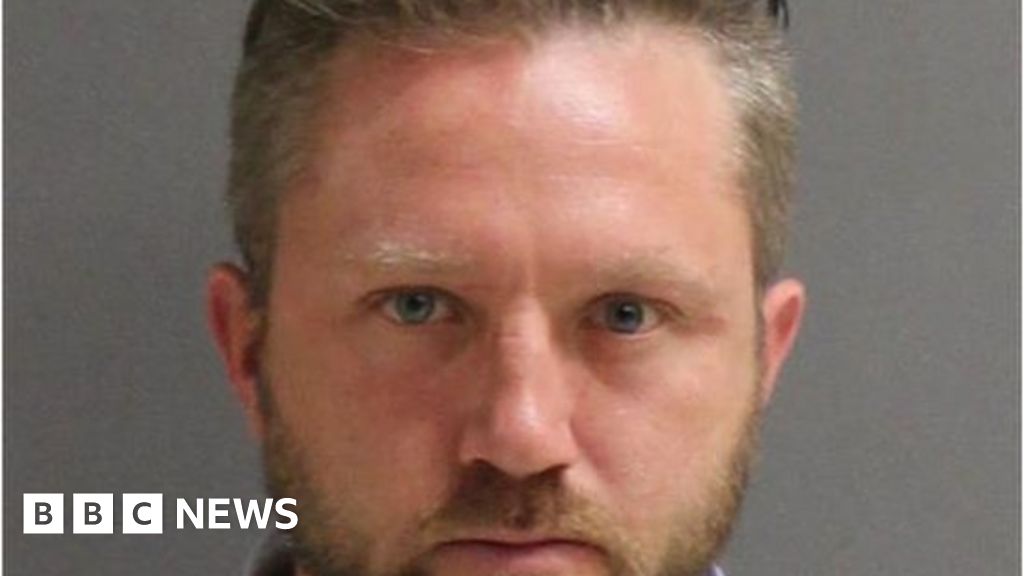
A British man has died in Florida while in the custody of US Immigration and Customs Enforcement (ICE), the agency confirmed to the BBC.

Ben James Owen, 39, was found unresponsive in his cell on 25 January and is believed to have taken his own life.

Owen was arrested on 12 January on several charges including aggravated stalking and domestic assault.

ICE said the cause of death was still under investigation.

Owen entered the US lawfully but overstayed his visa, which was valid until 10 December 2019. He was awaiting deportation proceedings at the time of his death, ICE told the BBC.

He was arrested in Port Orange, Florida and charged with felony aggravated stalking, false imprisonment, domestic assault and violating the conditions of his pre-trial release. He was then transferred to ICE custody on 15 January.

Owen was also awaiting trial on a different domestic battery charge from November 2019.

ICE said his next of kin had been notified of his death, as well as the Department of Homeland Security and the UK consulate. The agency said that members of its senior leadership would conduct a "comprehensive review" of the incident.

"ICE is firmly committed to the health and welfare of all those in its custody and is undertaking a comprehensive agency-wide review of this incident, as it does in all such cases," the agency said in a statement.

"Fatalities in ICE custody, statistically, are exceedingly rare and occur at a fraction of the national average for the US detained population," it added.

According to agency data, eight individuals died last year while in ICE custody. Owen's death was the third apparent detainee suicide since October - the beginning of the current fiscal year.

The agency has faced criticism and calls for investigations into conditions at its facilities. A report last July from the Homeland Security Office of Inspector General warned of "dangerous overcrowding" at the US-Mexico border, noting that some adults were held for up to a week in facilities that were standing room only.

President Donald Trump has made immigration a key part of his re-election bid, leading to a rise in ICE detentions. At the southern border, US border patrol apprehended more than 850,000 migrants in 2019 - the highest annual number in the last decade.

Last year, more than 50,000 individuals were detained. The average length of stay in ICE custody also rose from previous years, leading to serious overcrowding issues in ICE detention facilities.

Let's block ads! (Why?)


https://news.google.com/__i/rss/rd/articles/CBMiMWh0dHBzOi8vd3d3LmJiYy5jb20vbmV3cy93b3JsZC11cy1jYW5hZGEtNTEyODQzMjnSATVodHRwczovL3d3dy5iYmMuY29tL25ld3MvYW1wL3dvcmxkLXVzLWNhbmFkYS01MTI4NDMyOQ?oc=5

2020-01-29 07:53:49Z
CBMiMWh0dHBzOi8vd3d3LmJiYy5jb20vbmV3cy93b3JsZC11cy1jYW5hZGEtNTEyODQzMjnSATVodHRwczovL3d3dy5iYmMuY29tL25ld3MvYW1wL3dvcmxkLXVzLWNhbmFkYS01MTI4NDMyOQ

UK man found dead in ICE custody in Florida - BBC News

A British man has died in Florida while in the custody of US Immigration and Customs Enforcement (ICE), the agency confirmed to the BBC.

Ben James Owen, 39, was found unresponsive in his cell on 25 January and is believed to have taken his own life.

Owen was arrested on 12 January on several charges including aggravated stalking and domestic assault.

ICE said the cause of death was still under investigation.

Owen entered the US lawfully but overstayed his visa, which was valid until 10 December 2019. He was awaiting deportation proceedings at the time of his death, ICE told the BBC.

He was arrested in Port Orange, Florida and charged with felony aggravated stalking, false imprisonment, domestic assault and violating the conditions of his pre-trial release. He was then transferred to ICE custody on 15 January.

Owen was also awaiting trial on a different domestic battery charge from November 2019.

ICE said his next of kin had been notified of his death, as well as the Department of Homeland Security and the UK consulate. The agency said that members of its senior leadership would conduct a "comprehensive review" of the incident.

"ICE is firmly committed to the health and welfare of all those in its custody and is undertaking a comprehensive agency-wide review of this incident, as it does in all such cases," the agency said in a statement.

"Fatalities in ICE custody, statistically, are exceedingly rare and occur at a fraction of the national average for the US detained population," it added.

According to agency data, eight individuals died last year while in ICE custody. Owen's death was the third apparent detainee suicide since October - the beginning of the current fiscal year.

The agency has faced criticism and calls for investigations into conditions at its facilities. A report last July from the Homeland Security Office of Inspector General warned of "dangerous overcrowding" at the US-Mexico border, noting that some adults were held for up to a week in facilities that were standing room only.

President Donald Trump has made immigration a key part of his re-election bid, leading to a rise in ICE detentions. At the southern border, US border patrol apprehended more than 850,000 migrants in 2019 - the highest annual number in the last decade.

Last year, more than 50,000 individuals were detained. The average length of stay in ICE custody also rose from previous years, leading to serious overcrowding issues in ICE detention facilities.

Let's block ads! (Why?)


https://news.google.com/__i/rss/rd/articles/CBMiMWh0dHBzOi8vd3d3LmJiYy5jb20vbmV3cy93b3JsZC11cy1jYW5hZGEtNTEyODQzMjnSATVodHRwczovL3d3dy5iYmMuY29tL25ld3MvYW1wL3dvcmxkLXVzLWNhbmFkYS01MTI4NDMyOQ?oc=5

2020-01-29 04:33:36Z
CBMiMWh0dHBzOi8vd3d3LmJiYy5jb20vbmV3cy93b3JsZC11cy1jYW5hZGEtNTEyODQzMjnSATVodHRwczovL3d3dy5iYmMuY29tL25ld3MvYW1wL3dvcmxkLXVzLWNhbmFkYS01MTI4NDMyOQ

UK man found dead in ICE custody in Florida - BBC News

A British man has died in Florida while in the custody of US Immigration and Customs Enforcement (ICE), the agency confirmed to the BBC.

Ben James Owen, 39, was found unresponsive in his cell on 25 January and is believed to have taken his own life.

Owen was arrested on 12 January on several charges including aggravated stalking and domestic assault.

ICE said the cause of death was still under investigation.

Owen entered the US lawfully but overstayed his visa, which was valid until 10 December 2019. He was awaiting deportation proceedings at the time of his death, ICE told the BBC.

He was arrested in Port Orange, Florida and charged with felony aggravated stalking, false imprisonment, domestic assault and violating the conditions of his pre-trial release. He was then transferred to ICE custody on 15 January.

Owen was also awaiting trial on a different domestic battery charge from November 2019.

ICE said his next of kin had been notified of his death, as well as the Department of Homeland Security and the UK consulate. The agency said that members of its senior leadership would conduct a "comprehensive review" of the incident.

"ICE is firmly committed to the health and welfare of all those in its custody and is undertaking a comprehensive agency-wide review of this incident, as it does in all such cases," the agency said in a statement.

"Fatalities in ICE custody, statistically, are exceedingly rare and occur at a fraction of the national average for the US detained population," it added.

According to agency data, eight individuals died last year while in ICE custody. Owen's death was the third apparent detainee suicide since October - the beginning of the current fiscal year.

The agency has faced criticism and calls for investigations into conditions at its facilities. A report last July from the Homeland Security Office of Inspector General warned of "dangerous overcrowding" at the US-Mexico border, noting that some adults were held for up to a week in facilities that were standing room only.

President Donald Trump has made immigration a key part of his re-election bid, leading to a rise in ICE detentions. At the southern border, US border patrol apprehended more than 850,000 migrants in 2019 - the highest annual number in the last decade.

Last year, more than 50,000 individuals were detained. The average length of stay in ICE custody also rose from previous years, leading to serious overcrowding issues in ICE detention facilities.

Let's block ads! (Why?)


https://news.google.com/__i/rss/rd/articles/CBMiMWh0dHBzOi8vd3d3LmJiYy5jb20vbmV3cy93b3JsZC11cy1jYW5hZGEtNTEyODQzMjnSATVodHRwczovL3d3dy5iYmMuY29tL25ld3MvYW1wL3dvcmxkLXVzLWNhbmFkYS01MTI4NDMyOQ?oc=5

2020-01-29 03:55:19Z
CBMiMWh0dHBzOi8vd3d3LmJiYy5jb20vbmV3cy93b3JsZC11cy1jYW5hZGEtNTEyODQzMjnSATVodHRwczovL3d3dy5iYmMuY29tL25ld3MvYW1wL3dvcmxkLXVzLWNhbmFkYS01MTI4NDMyOQ

Selasa, 28 Januari 2020

U.K. Allows Huawei to Build Parts of 5G Network, Defying Trump - The Wall Street Journal

Britain is upgrading its network technology for the rollout of 5G. Photo: Danny Lawson/Zuma Press

LONDON—The U.K. government has given the green light for Huawei Technologies Co. to build part of its next-generation 5G cellular network, dismissing calls from the Trump administration to boycott the Chinese telecom-equipment vendor over security fears.

The government said Huawei would be given permission to build noncritical parts of the country’s 5G network. Britain’s National Security Council concluded that the security risks the Chinese company presented could be managed. Huawei officials have repeatedly denied claims that its equipment could be used by the Chinese state to spy on countries or incapacitate key infrastructure.

The decision is a major setback for American-led efforts to clamp down on the use of Huawei products, and could embolden other countries to follow the U.K.’s lead. Germany is expected to make a decision on whether to allow Huawei to build sections of its own 5G network later this year.

U.S. officials visited London recently to reiterate their fears that the use of Huawei would strengthen China’s attempt to gain a stranglehold on the global telecom-equipment market. In recent days, President Trump, Treasury Secretary Steven Mnuchin and Secretary of State Mike Pompeo have warned U.K. officials of what they describe as the dangers of allowing telecom companies to use Huawei equipment.

SHARE YOUR THOUGHTS

Do you think the U.K.’s decision will affect its relationship with the U.S.? Join the conversation below.

A senior Trump administration official said the U.S. was disappointed by the U.K.’s decision and looked forward to working with Britain to find a way to exclude “untrusted vendor components” from 5G networks.

The U.K.’s decision doesn’t give Huawei a full pass: The country will ban the company’s equipment from centralized parts of the 5G infrastructure that route data across the network, as well as sensitive locations such as near military and nuclear installations. Huawei will only be allowed to provide more peripheral equipment—such as base stations and antennae that connect the core to consumers’ devices—that is viewed as less of a security risk. The decision also limits the market share of the Chinese company to no more than 35%.

“High risk vendors have never been—and never will be—in our most sensitive networks,” said Ciaran Martin, the chief executive of Britain’s National Cyber Security Center.

Huawei Vice President Victor Zhang said he was reassured by the British government’s decision. “This evidence-based decision will result in a more advanced, more secure and more cost-effective telecoms infrastructure that is fit for the future,” he said.

For Britain, the choice follows months of prevarication. As the country prepares to quit the European Union this week, the government is loath to antagonize either the U.S. or China, with which it wants to bolster trading relations. Meanwhile, Prime Minister Boris Johnson wants to ensure that Britain has access to cutting-edge telecom equipment, seen as vital for powering everything from driverless cars to virtual-reality headsets. A key plank of the government’s vision after Brexit is to turn Britain into a high-tech research hub. That can’t be achieved without a quick 5G rollout.

Still, the choice risks angering U.S. officials, led by Mr. Trump, who have lobbied the U.K. not to use Huawei. Mr. Pompeo took to Twitter over the weekend to warn the British government over Huawei. Mr. Trump and Mr. Johnson discussed the issue last week by telephone.

“It’s critical that we have infrastructure that’s protected,” said Mr. Mnuchin in a speech in the U.K. over the weekend. “These national security issues go beyond the traditional aspects.”

U.S. officials have warned that backing Huawei could affect trade talks with the U.K., which are expected to get under way in earnest next month. They also warned that intelligence sharing with the U.K. may be restricted, a threat that British officials believe is overblown.

British security officials have long pointed to a practical problem with banning Huawei: The company is already embedded in British telecom infrastructure that will form the base of the 5G network. Ripping it out would cost billions of dollars and set back the rollout of the new network by years. A dearth of competitors to Huawei also means the country has few other options.

Huawei has emerged as the world’s biggest maker of telecom gear, including base stations, switches and routers. It competes chiefly with Sweden’s Ericsson AB and Finland’s Nokia Corp. and benefits from Chinese state subsidies.

It is currently the telecom-equipment market leader in the U.K., according to a government report published in 2019. The British government in 2018 estimated that Huawei’s market share for 4G networks in the U.K. was around 35%. That figure rises to 45% for ultrafast fiber networks. The U.K.’s largest telecom provider, BT Group PLC, is a longtime Huawei customer and has already started rolling out its 5G network using the company’s equipment.

In an interview with The Wall Street Journal, Huawei’s Ren Zhengfei discusses how his company will navigate the trade war, concerns over whether its equipment could be used to spy for Beijing and his road trip across America. Photo: Anthony Kwan for The Wall Street Journal

Britain has already taken steps to mitigate the risk that Huawei presents. A research lab overseen by U.K. officials but funded by Huawei studies the equipment for security issues. In 2018 and 2019, it highlighted major quality and security issues with Huawei’s engineering. Last year, the oversight committee said it could offer only “limited assurance” that risks to U.K. national security from Huawei were sufficiently mitigated. A major problem was that the lab was vetting software that was different from that running in equipment across the country.

The debate over Huawei has sown division among senior British lawmakers over what the country’s strategic priorities should be. Australia, another British ally, has already banned Huawei. Some British lawmakers had argued the U.K. should follow suit, worried that sovereignty could be surrendered to China.

“Is the risk worth it?” said Tom Tugendhat, a lawmaker in Mr. Johnson’s ruling Conservative Party. “If even the communist party in Vietnam reject it…perhaps we should be aware of strangers and the gifts they bear.”

Technology in Your Inbox

A weekly digest of tech reviews, headlines, columns and your questions answered by WSJ’s Personal Tech gurus. Sign up.

Write to Max Colchester at max.colchester@wsj.com

Copyright ©2019 Dow Jones & Company, Inc. All Rights Reserved. 87990cbe856818d5eddac44c7b1cdeb8

Let's block ads! (Why?)


https://news.google.com/__i/rss/rd/articles/CBMiV2h0dHBzOi8vd3d3Lndzai5jb20vYXJ0aWNsZXMvdS1rLWFsbG93cy1odWF3ZWktdG8tYnVpbGQtcGFydHMtb2YtNWctbmV0d29yay0xMTU4MDIxMzMxNtIBAA?oc=5

2020-01-28 14:10:00Z
CAIiEMyH16Kg9zfw7N-nsRFX8xEqGAgEKg8IACoHCAow1tzJATDnyxUw-aS0AQ

UK will allow Huawei to help build its 5G network despite US pressure - CNN

The announcement follows months of public debate in the United Kingdom over how to respond to concerns raised by the US government about potential national security risks posed by Huawei components and the threat of Chinese cyber attacks.
America can't afford to lose to China in the 5G race
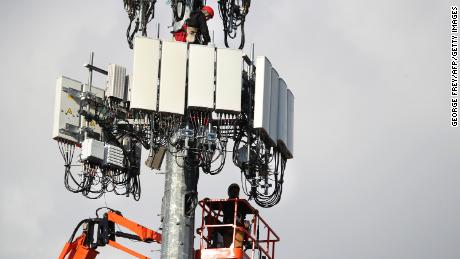
UK mobile operators will be able to use Huawei equipment in their 5G networks but the company will be excluded from "security critical" core areas, according to a statement from the government.
The Trump administration had been pressing for a total ban on Huawei products, alleging that Beijing could use the equipment for snooping. It had warned that US-UK intelligence sharing could be put at risk.
Under Chinese law, Chinese companies can be ordered to act under the direction of Beijing. Huawei has consistently denied that it would help the Chinese government to spy.
Prime Minister Boris Johnson has come under intense pressure, including from within his party, to agree to the US demands on Huawei. He discussed the issue with President Donald Trump in a phone call on Friday. US Secretary of State Mike Pompeo tweeted Sunday that Britain faced a "momentous" decision on 5G.
Huawei already has a significant presence in UK wireless networks, and has been operating under supervision by government security agencies since 2003.
"We've always treated them as a 'high risk vendor' and have worked to limit their use in the UK and put extra mitigations around their equipment and services," Ian Levy, technical director of the National Cyber Security Centre, said in a blog post.
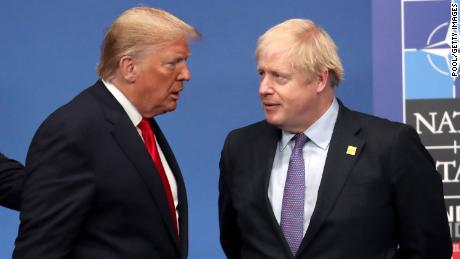
US President Donald Trump and British Prime Minister Boris Johnson at a NATO summit.
In a statement, the company said it was "reassured" that it would be able to continue working with its UK customers on 5G, albeit in a restricted role.
"We agree a diverse vendor market and fair competition are essential for network reliability and innovation, as well as ensuring consumers have access to the best possible technology," said Victor Zhang, a vice president at Huawei.
The issue demonstrates how a conflict between the United States and China over the future of technology is forcing other countries to take sides, especially when it comes to advancements that could affect national security.
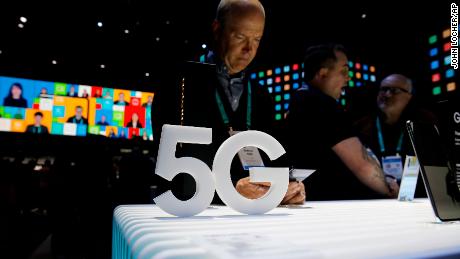
5G allows greater and faster data processing, and is seen as an integral component of new interconnected technologies such as automated vehicles and smart appliances. Johnson's government has pledged to bring 5G to the entire country by 2025.
Huawei, which is a leader in 5G technology and also one of the world's biggest sellers of smartphones, has seen its business targeted in a concerted campaign by the United States. But its products are often described as superior and cheaper than those sold by European rivals Nokia (NOK) and Ericsson (ERIC). Some experts say that Huawei owes part of its success to favorable loans from the Chinese state, an assertion the company disputes.
The big differences between 4G and 5G
The UK government said "high risk vendors" like Huawei will be excluded from all safety critical infrastructure, security critical "core" functions of the network and sensitive locations such as military sites and nuclear power stations.
The company will also be limited to supplying 35% of network equipment and base stations, or carrying 35% of network traffic.
"The government is certain that these measures, taken together, will allow us to mitigate the potential risk posed by the supply chain and to combat the range of threats, whether cyber criminals, or state sponsored attacks," the Department for Digital, Culture, Media and Sport said in a statement.

Trump administration 'disappointed'

Britain, which will leave the European Union on Friday, faced a tough choice on whether to use the company's products. In recent years, it has courted investment from China, but it has a very close relationship with the United States and is banking on a new trade deal with Washington after Brexit. Allowing Huawei into its 5G networks could make such an agreement harder to get.
The Trump administration said Tuesday it was "disappointed" with the decision.
A senior administration official told CNN Business the United States will continue to press "all countries" to avoid using Huawei wireless gear.
"There is no safe option for untrusted vendors to control any part of a 5G network," the official said. "We look forward to working with the UK on a way forward that results in the exclusion of untrusted vendor components from 5G networks."
Three members of the US Senate, which plays a role in approving trade deals, made the stakes clear in a letter to Johnson on Monday.
Marco Rubio, Tom Cotton and John Cornyn told Johnson that while they did not want to "threaten" a free trade deal or to review how the countries share intelligence, the facts on Huawei "are clear."
"We hope that your government will make the right decision and reject Huawei's inclusion in its 5G infrastructure," the Republican senators wrote.
— Brian Fung in Washington contributed to this article.

Let's block ads! (Why?)


https://news.google.com/__i/rss/rd/articles/CBMiO2h0dHBzOi8vd3d3LmNubi5jb20vMjAyMC8wMS8yOC90ZWNoL2h1YXdlaS01Zy11ay9pbmRleC5odG1s0gE_aHR0cHM6Ly9hbXAuY25uLmNvbS9jbm4vMjAyMC8wMS8yOC90ZWNoL2h1YXdlaS01Zy11ay9pbmRleC5odG1s?oc=5

2020-01-28 14:29:00Z
CAIiEKok6CAp01KSsYZKS5S0h6EqGQgEKhAIACoHCAowocv1CjCSptoCMPrTpgU