Selasa, 28 Januari 2020

Brexit: Tears and relief as the UK's MEPs bid farewell - BBC News

As the clock strikes 23:00 GMT on Friday, 31 January, the 73 MEPs who represent Great Britain and Northern Ireland in the European Parliament will bid farewell to their roles.

For some of them, there is only delight and relief as the UK approaches Brexit. For others, there have been tears and goodbye hugs.

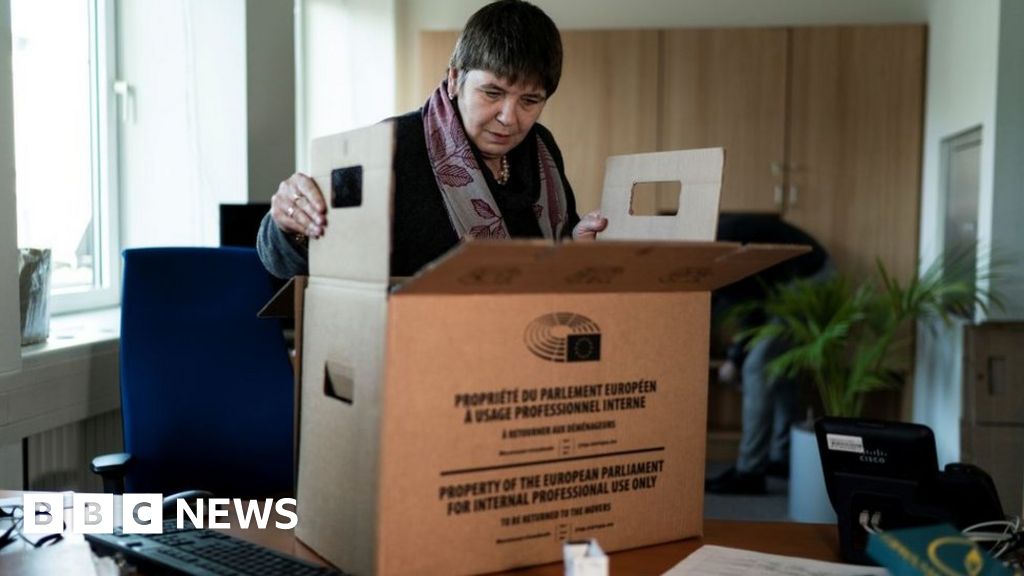
"How I am feeling is how somebody feels when you have a redundancy and a bereavement at the same time," says Green MEP Molly Scott Cato, who has represented south-west England since 2014.

It's been a tearful goodbye and a "grim, grim week", she says, during a break from packing up her Strasbourg office.

But, in contrast, Brexit could not have come soon enough for Jake Pugh.

"We are delighted," says the Brexit Party MEP for Yorkshire and the Humber. "We were hired to be fired."

He is one of 29 Brexit Party MEPs who were elected in last May's European elections - a vote many considered as confirmation of the UK's desire to leave the EU.

The poll had also brought hope, however, for pro-EU Liberal Democrat MEPs who also enjoyed a successful campaign, winning 16 seats. They entered the parliament wearing yellow "stop Brexit" t-shirts.

Nine months on there remains a clear divide over Brexit among the MEPs, but the politicians appear united about a feeling of pride at what they have achieved.

"There has been so much warmth and comradeship," says Labour's Seb Dance of his final week in Strasbourg. "Most people are pretty sad about the whole thing."

The Labour MEP for London had previously campaigned for another vote on the UK's membership of the EU.

'Truly grateful'

Speaking to the BBC as he dashes between trains in Paris, he says he is proud of the things that "never got the headlines" during his six years in the role.

He highlights his involvement in the European Parliament's special inquiry committee into the Volkswagen emissions scandal.

Ms Scott Cato says she is proud of her work on the issue of sustainable finance and new EU restrictions on the use of antibiotics in farms.

The European Parliament is a "real parliament", she says, expressing her frustration with the UK's first-past-the-post system - which means that parties like hers struggle to get people elected in Westminster.

"We don't get the parliamentary representation we should have."

Green Party colleague Magid Magid says there is a sense of sadness, but he feels "truly grateful and humble for this amazing opportunity".

Mr Pugh says he "fully recognises there are MEPs with different political outlooks who are sad to be leaving" but, he says, the EU "has some real issues".

"However cynical I was about the EU before I got here, it is way worse than I thought," he says.

The Eurozone is a "disaster", he says, and MEPs in Brussels and Strasbourg "are very remote from their electorate".

Brexit is "really good news for the younger generation", he says, adding that he has pursued Brexit for them, so young people can enjoy the same freedom he had growing up.

It's clear that view is shared among his colleagues, a number of whom shared their delight on Twitter at leaving the parliament building in Strasbourg for the final time.

Belinda de Lucy says leaving no more taxpayers' money will be wasted "on this ridiculous vanity project", while Ben Habib says he will not give the parliament "a second thought" after leaving.

'Amazing journey'

"I'm actually just relieved that a democratic mandate's been realised," Brexit Party MEP Claire Fox says.

"I won't miss being in this institution... but of course I have been privileged and enjoyed being here for this historic moment."

And John Longworth, the former Brexit Party MEP turned Conservative, says that his time in the European Parliament has "reinforced" his view that the "whole set-up is bizarre, bureaucratic and wasteful".

They say that they are proud at having achieved what they set out to do - Brexit.

But even arch-Brexiteer Nigel Farage - who has been an MEP for south-east England since 1999 - called his time in European Parliament "an amazing journey".

He told his LBC radio show he will miss the "drama" and being "shouted at by (European Parliament Brexit co-ordinator) Guy Verhofstadt" and "mocked by hundreds many times over".

Colleagues 'in tears'

The UK's newly vacated parliament seats will be spread out among the EU's 27 remaining countries - Spain and France will gain five more seats in a process that takes into account the population of a country.

From Friday, the UK MEPs will no longer have to regularly do the four and a half hour journey from London to Strasbourg, via Paris, or the two-hour trip to Brussels.

But many of the pro-EU MEPs are hoping that they can keep the close ties formed with the bloc.

"We have built up relationships with colleagues, lots of them were in tears - not just Brits," Labour's Richard Corbett says.

It has been a sad and emotional time, he adds. But this is also tinged with "a lot of anger and frustration".

Wednesday will be the final time that the UK's MEPs sit in Brussels - when the Parliament is expected to rubber-stamp Boris Johnson's withdrawal deal taking the UK out of the EU.

As a party is held in London's Parliament Square to celebrate Brexit on Friday, a vigil is expected to be held in Brussels.

Some MEPs will then move on to other jobs - the Brexit Party's Jake Pugh says he will return to his business. Others are not sure yet what they will do, but are keen to maintain European relationships.

Labour's Seb Dance says he has a "few ideas" but "nothing 100%", adding "I'm just really proud to have been an MEP".

Let's block ads! (Why?)


https://news.google.com/__i/rss/rd/articles/CBMiLWh0dHBzOi8vd3d3LmJiYy5jb20vbmV3cy91ay1wb2xpdGljcy01MTE0MDI5OdIBMWh0dHBzOi8vd3d3LmJiYy5jb20vbmV3cy9hbXAvdWstcG9saXRpY3MtNTExNDAyOTk?oc=5

2020-01-28 07:14:03Z
CBMiLWh0dHBzOi8vd3d3LmJiYy5jb20vbmV3cy91ay1wb2xpdGljcy01MTE0MDI5OdIBMWh0dHBzOi8vd3d3LmJiYy5jb20vbmV3cy9hbXAvdWstcG9saXRpY3MtNTExNDAyOTk

Senin, 27 Januari 2020

Varadkar: EU will have stronger team in trade talks with UK - BBC News

Media playback is unsupported on your device

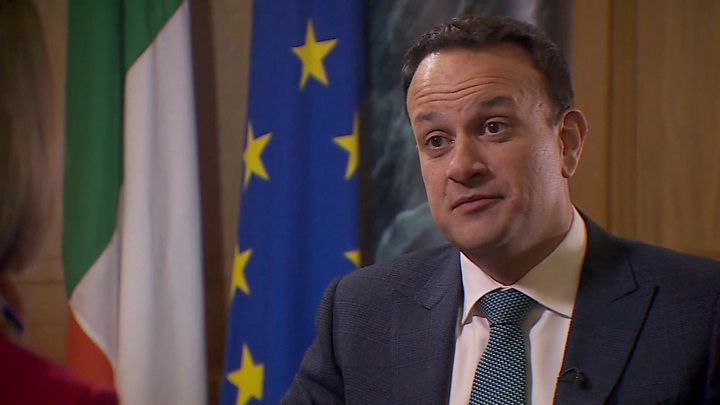
Irish Prime Minister Leo Varadkar has suggested the EU will be the "stronger team" in post-Brexit trade talks with the UK.

Comparing negotiations to a football match, he suggested the EU would be at an advantage due to its larger population and market.

The taoiseach also warned reaching agreement would become harder if the UK sought to diverge from EU rules.

Mr Varadkar held talks with EU chief negotiator Michel Barnier on Monday.

Speaking after the meeting, Mr Barnier told reporters the two sides faced "the risk of a cliff edge" if trade terms were not agreed by the end of the year.

He cautioned that a "very short time" remained to "rebuild" the UK-EU relationship before the post-Brexit transition period was due to end in December.

It has been confirmed that from the UK side, talks will be led by a 40-person "task force" headed by the PM's Europe adviser David Frost.

In an interview earlier with BBC political editor Laura Kuenssberg, Mr Varadkar said striking a deal in this timeframe was possible but would be "difficult".

He said it was likely the scope of the eventual agreement meant it would have to be approved by national parliaments in each EU country.

"That's where it gets messy. That's where one country can hold things up, or two countries can," he said.

He pledged the EU would not be "dragging its feet," but added: "My assessment is that it is more likely that we will need an extension in order to finalise a free trade agreement and future economic partnership than not need it."

Prime Minister Boris Johnson has insisted he is not open to any extension.

Mr Varadkar, the leader of the Fine Gael party, is fighting his first election campaign as taoiseach. Ireland heads to the polls on 8 February.

Media playback is unsupported on your device

The taoiseach told the BBC: "The European Union is a union of 27 member states. The UK is only one country. And we have a population and a market of 450 million people.

"The UK, it's about 60[m]. So if these were two teams up against each other playing football, who do you think has the stronger team?"

He also cautioned the UK against trying to negotiate individual deals covering different sectors of the economy.

"The final deal, the new relationship will have to be comprehensive," he said.

"When I hear people talk about piecemeal, it sounds a bit like cake and eat," he said, adding: "That isn't something that will fly in Europe."

"You may have to make concessions in areas like fishing in order to get concessions from us in areas like financial services."

'Genuine concern'

Mr Varadkar said there was "genuine concern" across Europe that the UK would seek to "undercut" EU standards after Brexit.

"When I meet Prime Minister Johnson he says, no, absolutely not - that's not the kind of United Kingdom that I want to lead as prime minister."

But he added: "We want that written down in law, we want that in a treaty."

The EU has said it needs such guarantees because of the "geographic proximity and economic interdependence" of its economy to that of the UK.

Mr Varadkar said both sides would have to agree a "common set of minimum standards" for an agreement to be possible.

This is likely to be a contentious area of talks, with British ministers having insisted the UK should have the right to move away from EU regulations.

Another potential flashpoint could be access to fishing waters, which both sides have pledged to sort out before the end of June.

Leaked slides from an EU presentation last Friday said the bloc would be aiming for the same level of access to British fishing stocks it has now, and would not sign a wider trade deal until fishing access has been agreed.

But the UK government insists it will "take back control" of its waters.

A leaked slide presentation from a meeting last Friday has revealed more of the EU's objectives in the upcoming trade talks.

Diplomats from national governments agreed that commitments by the UK to maintaining a level playing field - i.e. not undercutting other EU nations for competitive advantage - are a "precondition" for a deal. There should also be a role for the European Court of Justice in any deal to protect EU law.

The EU will pursue what it calls a "comprehensive approach" to the negotiations and there will be "trade-offs between chapters" i.e. give-and-take across different areas of the deal.

The EU will expect to be treated as a single bloc, so the UK will not, for example, be able to offer something to Germany that it doesn't offer to everyone else. In case of future disputes with the UK, there would be the possibility for "cross-retaliation" where a disagreement in one sector sees the EU retaliating in another.

EU sources say they want to build a relationship with the UK that is balanced and sustainable, where neither side "feels taken for a ride".

Let's block ads! (Why?)


https://news.google.com/__i/rss/rd/articles/CBMiLWh0dHBzOi8vd3d3LmJiYy5jb20vbmV3cy91ay1wb2xpdGljcy01MTI2MDI4MtIBMWh0dHBzOi8vd3d3LmJiYy5jb20vbmV3cy9hbXAvdWstcG9saXRpY3MtNTEyNjAyODI?oc=5

2020-01-27 11:22:46Z
CBMiLWh0dHBzOi8vd3d3LmJiYy5jb20vbmV3cy91ay1wb2xpdGljcy01MTI2MDI4MtIBMWh0dHBzOi8vd3d3LmJiYy5jb20vbmV3cy9hbXAvdWstcG9saXRpY3MtNTEyNjAyODI

Varadkar: EU will have stronger team in trade talks with UK - BBC News

Media playback is unsupported on your device

Irish Prime Minister Leo Varadkar has suggested the EU will be the "stronger team" in post-Brexit trade talks with the UK.

Comparing negotiations to a football match, he suggested the EU would be at an advantage due to its larger population and market.

The taoiseach also warned reaching agreement would become harder if the UK sought to diverge from EU rules.

Mr Varadkar held talks with EU chief negotiator Michel Barnier on Monday.

Speaking after the meeting, Mr Barnier told reporters the two sides faced "the risk of a cliff edge" if trade terms were not agreed by the end of the year.

He cautioned that a "very short time" remained to "rebuild" the UK-EU relationship before the post-Brexit transition period was due to end in December.

In an interview earlier with BBC political editor Laura Kuenssberg, days before Britain is due to leave the EU, Mr Varadkar also warned against any attempt by the UK to get a "piecemeal" deal with the EU.

"When I hear people talk about piecemeal, it sounds a bit like cake and eat," he said.

"That isn't something that will fly in Europe."

Mr Varadkar, the leader of the Fine Gael party, is fighting his first election campaign as taoiseach. Ireland heads to the polls on 8 February.

He told the BBC: "The European Union is a union of 27 member states. The UK is only one country. And we have a population and a market of 450 million people.

"The UK, it's about 60[m]. So if these were two teams up against each other playing football, who do you think has the stronger team?"

The UK government aims to secure a "zero tariff, zero quota" free trade deal with the EU by the end of the year, Brexit Secretary Stephen Barclay has said.

But Mr Varadkar questioned that timetable, disagreeing with Boris Johnson's suggestion there is "bags of time" to sign an agreement, warning "it will be difficult to do this."

He warned there might have to be an extension to the next phase of the Brexit process, beyond the end of this year, to finalise a trade deal.

However, the Irish prime minister vowed to work "night and day" to try and get it done, adding: "We won't be dragging our feet."

In order to get a trade deal, there would need to be legal assurances the UK would not undercut the EU, he said, and everyone would have to agree to a "common set of minimum standards" that would have to be "high standards".

Border row

The taoiseach also suggested the UK had misread the first phase of Brexit, saying many people in Westminster and Britain "don't understand Ireland".

The future of the Irish Border after Brexit was central to the first phase of negotiations.

The backstop was key to this, having been designed to ensure there would be no border posts or barriers between Northern Ireland and the Republic of Ireland after the UK leaves the EU.

On taking over as PM, Mr Johnson renegotiated Theresa May's Brexit deal, replacing the backstop with new customs arrangements that would allow the UK to strike and implement its own trade deals with different countries.

Mr Varadkar said he did trust Mr Johnson, but it is in "black-and-white" that there will be have to be some checks on goods going from Great Britain into Northern Ireland, despite the PM's repeated insistence to the contrary.

He said he had been genuinely fearful the UK might have to leave the EU without a deal, but a meeting with Mr Johnson on the Wirral last autumn had provided the "crucial moment" for a breakthrough.

The two leaders sat in a room, without their staff present, "talking turkey" until they found a way they could move forward, Mr Varadkar said.

"I knew when I was leaving Liverpool Airport that things were looking promising again", he said.

Let's block ads! (Why?)


https://news.google.com/__i/rss/rd/articles/CBMiLWh0dHBzOi8vd3d3LmJiYy5jb20vbmV3cy91ay1wb2xpdGljcy01MTI2MDI4MtIBMWh0dHBzOi8vd3d3LmJiYy5jb20vbmV3cy9hbXAvdWstcG9saXRpY3MtNTEyNjAyODI?oc=5

2020-01-27 11:14:00Z
CBMiLWh0dHBzOi8vd3d3LmJiYy5jb20vbmV3cy91ay1wb2xpdGljcy01MTI2MDI4MtIBMWh0dHBzOi8vd3d3LmJiYy5jb20vbmV3cy9hbXAvdWstcG9saXRpY3MtNTEyNjAyODI

The backlash against Meghan and Stormzy shows that Britain is in denial about racism - CNN

People from ethnic minority backgrounds make up 19.5% of the population of England and Wales. But some people who identify with this community say that when they call out their experiences of racism, they are shut down. By white British people.
"The white person in this debate always centers it on themselves," author and broadcaster Afua Hirsch told CNN. "It would make more sense if somebody said: I haven't got a lived experience of racism. I would like to understand your perspective."
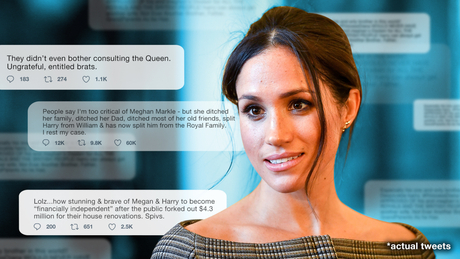
From as early as November 2016, Kensington Palace issued statements about the "abuse and harassment" that British media directed at Meghan, noting both the "racial undertones" and the "outright sexism and racism" she experienced as a result. When the Duke and Duchess of Sussex announced their shock decision to scale back their royal duties barely three years later, it was little wonder why.
But many of those who have dared to point out that racism is a factor in the Sussexes' recent move have been publicly slammed for doing so. On the BBC political debate show Question Time, university lecturer Rachel Boyle, who identifies as black, said the UK press "have torn [Meghan] to pieces" because of racism.
Her claims were deemed as "boring" by white panelist and actor Laurence Fox. He then said that Boyle was "being racist" after she described him as a "white privileged male." The audience applauded Fox, and the pair's altercation trended on Twitter.
Hirsch, a former barrister who is of African heritage, was abused online after writing an opinion piece for the New York Times on the racism directed towards Meghan. She was also berated on TV by Piers Morgan, host of the popular breakfast TV show Good Morning Britain.
"I am often requested to go into spaces where I'm the only person of color on TV debates and primetime shows," Hirsch told CNN, describing the experience as "entertainment" for viewers.
"[They] expect me to single-handedly show them what is racist, prove that racism exists. That in itself is a manifestation of white privilege."
Appearing on the This Morning TV show, lawyer and activist Shola Mos-Shogbamimu was asked to give examples of racism in the UK; she explained that it was "exhausting" having to keep proving that racism exists.
But Hirsch believes it is important to keep educating people.
"People think racism is when somebody has in their mind that they hate people of color. [They] will say, 'I don't have a racist bone in my body,' while perpetrating racist narratives. This is an opportunity to show people what racism can look like."
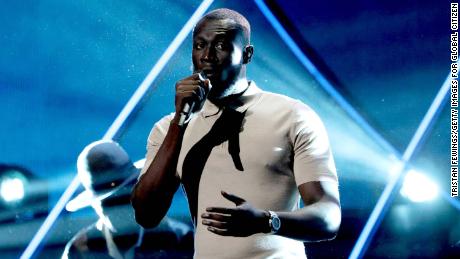
In December, successful British rapper Stormzy came under fire when, after an Italian newspaper asked him if the UK was still racist today, he replied "definitely, 100%."
The musician added that racism in the country had worsened under the leadership of Prime Minister Boris Johnson, who has previously been criticized for making racist remarks.
Rapper Stormzy came under fire when he said the UK was racist, "definitely 100%."
Stormzy's comments were misinterpreted by a number of media outlets who suggested he had said that the UK was 100% racist.
Broadcaster ITV News later issued an apology for its characterization of the story, but the incident has added to a simmering debate on race that was already in full force.
While the musician got some support on Twitter, a derogatory hashtag soon took over.
In contrast, white English football coach and former player Gary Neville was showered with praise when he called out the problem with racism in football, around the same time as Stormzy expressed his views.
Some experts make the point that support from people in influential positions can encourage others to listen and to pay attention to an issue.
"What we really need is allyship," Frank Starling, global VP of WERKIN, a London-based tech company that advises organizations on inclusivity, told CNN. "People that understand that they may have a privilege or a voice over others and they're willing to share that platform ... It's definitely not just the responsibility of the victims ... to solve these challenges."
Harassment and victimization are a daily occurrence for many people from black, Asian and other minority ethnic backgrounds -- and not just from ordinary people on the street.
In 1999, an inquiry into the murder of black teenager Stephen Lawrence, and the botched investigation that followed, found that there was "institutional racism" in the police.
Two decades on, black people in England and Wales are still 40 times more likely than white people to be stopped and searched under so-called "section 60" checks that allow police to search a person without suspicion, according to a 2019 report by civil rights charity Liberty.
Growing up in the 1980s, Starling said he would wear smart shirts instead of casual clothing at the weekend, after he was stopped by the police multiple times.
Even today, he says he is careful about what he wears on a wintry morning. "Because I've grown up in a society where the idea of wearing a hoodie as a black man may make people feel fear, I'm concerned about that," he told CNN.

'Racism is not a matter of opinion'

The UK is often praised as a melting pot of cultures. But research shows that multiculturalism is now under attack.
Omar Khan, director of the race equality think tank Runnymede Trust, points to a report that found 71% of people from ethnic minorities who were surveyed in early 2019 reported having experienced racial discrimination, compared with 58% before Britain's 2016 vote to leave the European Union.
Online racism has more than doubled to 51% since two years before the Brexit vote, according to the survey by Opinium. The same survey found that the number of people from ethnic minority groups reporting rants and negative comments about immigration or racist comments made to sound like jokes rose by about 50%.
Even the United Nations has said more needs to be done about racism in the UK, including Brexit-era hate crimes.
"I got more racism last year than in the previous 25 years, all of it online on Twitter," Sunder Katwala, director of think tank British Future, told CNN. "We should protect free speech, but not racist abuse."
Social media squabbles also distract from the real problem.
"The racist stereotypes about different ethnic groups are always predictable," Omar Khan said, explaining that the roots of racism in the UK can be traced back to the days of the British Empire.
"They are part of our wider intellectual and cultural heritage," he said. "Frankly, it's embarrassing we still don't recognize this, and instead prefer social media or personality spats instead of actually tackling racism and its consequences."
Coming or going, Meghan gets the blame -- and it's because of her race
Starling said that an overall lack of diverse representation in influential positions is a major reason why certain perspectives are less accepted.
Recent research reveals that members of ethnic minority groups only make up 6% of top management positions in the UK and the UK journalism industry is 94% white and 55% male.
While diversity in parliament has improved in recent years, in September 2019, just over 8% of members of the House of Commons were from non-white ethnic backgrounds.
Representation is not always welcome, though. Amnesty International's analysis of tweets mentioning female MPs in the lead-up to the 2017 general election found that almost a third of abusive tweets reviewed were targeting one woman: Diane Abbott, the black high-profile shadow home secretary.
British society is known for its traditional "stiff upper lip" and "reserved" attitude, but Starling says it must tackle this issue, regardless of how uncomfortable it might be to do so.
"Being called racist indicates that we might be a bad person," he says. "We might hold a bias and that's really scary and very uncomfortable."
But uncovering unconscious bias, innate stereotypes about certain groups of people that we are unaware of, is in dire need of discussion, he says.
Someone's lived experience of racism, though, should not be open to debate. "Racism is not a matter of opinion," says Khan, "but of evidence and reality."
In fact, like Meghan and Harry, Hirsch says some people subjected to racial discrimination are considering leaving the country too. "I'm not saying people should leave... [But] I don't feel this is a healthy place to be right now."

Let's block ads! (Why?)


https://news.google.com/__i/rss/rd/articles/CBMiVWh0dHBzOi8vd3d3LmNubi5jb20vMjAyMC8wMS8yNi91ay91ay1tZWdoYW4tc3Rvcm16eS1yYWNpc20tZGVuaWFsLWludGwtZ2JyL2luZGV4Lmh0bWzSAVlodHRwczovL2FtcC5jbm4uY29tL2Nubi8yMDIwLzAxLzI2L3VrL3VrLW1lZ2hhbi1zdG9ybXp5LXJhY2lzbS1kZW5pYWwtaW50bC1nYnIvaW5kZXguaHRtbA?oc=5

2020-01-27 07:23:00Z
CAIiEEG0w6Mez4xFRDzhdgAqwNoqGQgEKhAIACoHCAowocv1CjCSptoCMPrTpgU

Minggu, 26 Januari 2020

The backlash against Meghan and Stormzy shows that Britain is in denial about racism - CNN

People from ethnic minority backgrounds make up 19.5% of the population of England and Wales. But some people who identify with this community say that when they call out their experiences of racism, they are shut down. By white British people.
"The white person in this debate always centers it on themselves," author and broadcaster Afua Hirsch told CNN. "It would make more sense if somebody said: I haven't got a lived experience of racism. I would like to understand your perspective."
From as early as November 2016, Kensington Palace issued statements about the "abuse and harassment" that British media directed at Meghan, noting both the "racial undertones" and the "outright sexism and racism" she experienced as a result. When the Duke and Duchess of Sussex announced their shock decision to scale back their royal duties barely three years later, it was little wonder why.
But many of those who have dared to point out that racism is a factor in the Sussexes' recent move have been publicly slammed for doing so. On the BBC political debate show Question Time, university lecturer Rachel Boyle, who identifies as black, said the UK press "have torn [Meghan] to pieces" because of racism.
Her claims were deemed as "boring" by white panelist and actor Laurence Fox. He then said that Boyle was "being racist" after she described him as a "white privileged male." The audience applauded Fox, and the pair's altercation trended on Twitter.
Hirsch, a former barrister who is of African heritage, was abused online after writing an opinion piece for the New York Times on the racism directed towards Meghan. She was also berated on TV by Piers Morgan, host of the popular breakfast TV show Good Morning Britain.
"I am often requested to go into spaces where I'm the only person of color on TV debates and primetime shows," Hirsch told CNN, describing the experience as "entertainment" for viewers.
"[They] expect me to single-handedly show them what is racist, prove that racism exists. That in itself is a manifestation of white privilege."
Appearing on the This Morning TV show, lawyer and activist Shola Mos-Shogbamimu was asked to give examples of racism in the UK; she explained that it was "exhausting" having to keep proving that racism exists.
But Hirsch believes it is important to keep educating people.
"People think racism is when somebody has in their mind that they hate people of color. [They] will say, 'I don't have a racist bone in my body,' while perpetrating racist narratives. This is an opportunity to show people what racism can look like."
In December, successful British rapper Stormzy came under fire when, after an Italian newspaper asked him if the UK was still racist today, he replied "definitely, 100%."
The musician added that racism in the country had worsened under the leadership of Prime Minister Boris Johnson, who has previously been criticized for making racist remarks.
Rapper Stormzy came under fire when he said the UK was racist, "definitely 100%."
Stormzy's comments were misinterpreted by a number of media outlets who suggested he had said that the UK was 100% racist.
Broadcaster ITV News later issued an apology for its characterization of the story, but the incident has added to a simmering debate on race that was already in full force.
While the musician got some support on Twitter, a derogatory hashtag soon took over.
In contrast, white English football coach and former player Gary Neville was showered with praise when he called out the problem with racism in football, around the same time as Stormzy expressed his views.
Some experts make the point that support from people in influential positions can encourage others to listen and to pay attention to an issue.
"What we really need is allyship," Frank Starling, global VP of WERKIN, a London-based tech company that advises organizations on inclusivity, told CNN. "People that understand that they may have a privilege or a voice over others and they're willing to share that platform ... It's definitely not just the responsibility of the victims ... to solve these challenges."
Harassment and victimization are a daily occurrence for many people from black, Asian and other minority ethnic backgrounds -- and not just from ordinary people on the street.
In 1999, an inquiry into the murder of black teenager Stephen Lawrence, and the botched investigation that followed, found that there was "institutional racism" in the police.
Two decades on, black people in England and Wales are still 40 times more likely than white people to be stopped and searched under so-called "section 60" checks that allow police to search a person without suspicion, according to a 2019 report by civil rights charity Liberty.
Growing up in the 1980s, Starling said he would wear smart shirts instead of casual clothing at the weekend, after he was stopped by the police multiple times.
Even today, he says he is careful about what he wears on a wintry morning. "Because I've grown up in a society where the idea of wearing a hoodie as a black man may make people feel fear, I'm concerned about that," he told CNN.

'Racism is not a matter of opinion'

The UK is often praised as a melting pot of cultures. But research shows that multiculturalism is now under attack.
Omar Khan, director of the race equality think tank Runnymede Trust, points to a report that found 71% of people from ethnic minorities who were surveyed in early 2019 reported having experienced racial discrimination, compared with 58% before Britain's 2016 vote to leave the European Union.
Online racism has more than doubled to 51% since two years before the Brexit vote, according to the survey by Opinium. The same survey found that the number of people from ethnic minority groups reporting rants and negative comments about immigration or racist comments made to sound like jokes rose by about 50%.
Even the United Nations has said more needs to be done about racism in the UK, including Brexit-era hate crimes.
"I got more racism last year than in the previous 25 years, all of it online on Twitter," Sunder Katwala, director of think tank British Future, told CNN. "We should protect free speech, but not racist abuse."
Social media squabbles also distract from the real problem.
"The racist stereotypes about different ethnic groups are always predictable," Omar Khan said, explaining that the roots of racism in the UK can be traced back to the days of the British Empire.
"They are part of our wider intellectual and cultural heritage," he said. "Frankly, it's embarrassing we still don't recognize this, and instead prefer social media or personality spats instead of actually tackling racism and its consequences."
Coming or going, Meghan gets the blame -- and it's because of her race
Starling said that an overall lack of diverse representation in influential positions is a major reason why certain perspectives are less accepted.
Recent research reveals that members of ethnic minority groups only make up 6% of top management positions in the UK and the UK journalism industry is 94% white and 55% male.
While diversity in parliament has improved in recent years, in September 2019, just over 8% of members of the House of Commons were from non-white ethnic backgrounds.
Representation is not always welcome, though. Amnesty International's analysis of tweets mentioning female MPs in the lead-up to the 2017 general election found that almost a third of abusive tweets reviewed were targeting one woman: Diane Abbott, the black high-profile shadow home secretary.
British society is known for its traditional "stiff upper lip" and "reserved" attitude, but Starling says it must tackle this issue, regardless of how uncomfortable it might be to do so.
"Being called racist indicates that we might be a bad person," he says. "We might hold a bias and that's really scary and very uncomfortable."
But uncovering unconscious bias, innate stereotypes about certain groups of people that we are unaware of, is in dire need of discussion, he says.
Someone's lived experience of racism, though, should not be open to debate. "Racism is not a matter of opinion," says Khan, "but of evidence and reality."
In fact, like Meghan and Harry, Hirsch says some people subjected to racial discrimination are considering leaving the country too. "I'm not saying people should leave... [But] I don't feel this is a healthy place to be right now."

Let's block ads! (Why?)


https://news.google.com/__i/rss/rd/articles/CBMiVWh0dHBzOi8vd3d3LmNubi5jb20vMjAyMC8wMS8yNi91ay91ay1tZWdoYW4tc3Rvcm16eS1yYWNpc20tZGVuaWFsLWludGwtZ2JyL2luZGV4Lmh0bWzSAVlodHRwczovL2FtcC5jbm4uY29tL2Nubi8yMDIwLzAxLzI2L3VrL3VrLW1lZ2hhbi1zdG9ybXp5LXJhY2lzbS1kZW5pYWwtaW50bC1nYnIvaW5kZXguaHRtbA?oc=5

2020-01-26 07:05:00Z
CAIiEEG0w6Mez4xFRDzhdgAqwNoqGQgEKhAIACoHCAowocv1CjCSptoCMPrTpgU

Brexit: US 'wants to reach trade deal with UK this year' - BBC News

The US wants to agree a post-Brexit trade deal with the UK this year, the country's treasury secretary has said.

After meeting Chancellor Sajid Javid in London, Steve Mnuchin said he believed the UK could negotiate trade deals with the US and EU at the same time.

"I'm quite optimistic," he told a Chatham House think tank event.

After Brexit happens on 31 January, the UK will be free to negotiate and sign new trade deals with countries with no existing EU deals - like the US.

At the same time, the UK will also be negotiating a free trade deal with the EU to ensure that UK goods are not subject to tariffs and other trade barriers once the Brexit transition period ends on 31 December.

'Top of the list'

Mr Mnuchin, who met Mr Javid for breakfast on Saturday morning and posted an image of them on Instagram, said the US was "prepared to dedicate a lot of resources" to securing a trade deal with the UK this year.

He said: "We've said that our goal - your goal - is trying to get both of these trade agreements done this year. And I think from a US standpoint we are prepared to dedicate a lot of resources.

"If the UK and US have very similar economies with a big focus on services, and I think this will be a very important relationship."

Mr Mnuchin added President Donald Trump had previously said the UK would "be at the top of the list" for a deal.

'Discriminatory' tech tax

He also reiterated the US's objections to a new tax on the revenues of big tech firms, calling it "discriminatory".

He told the audience at Chatham House it was "not appropriate" and has "violations to our tax treaties and other issues".

"So, we're working through that and I think we have a good outcome of trying to give some room now in 2020 to continue these discussions."

Mr Javid intends to introduce a 2% levy on the revenues of search engines, social media platforms and online marketplaces which derive value from UK users.

He has said the digital services tax will only be a temporary measure until an international agreement is in place on how to deal with online giants such as Google and Facebook.

Earlier this week, Mr Mnuchin threatened new tariffs on UK carmakers after the chancellor defied US pressure to cancel the tax.

The issue of whether Chinese telecoms giant Huawei should have a role in the UK's 5G network was also raised.

The US recently warned the British government it "would be madness" to use Huawei technology in the UK's 5G network.

A decision is expected imminently on whether to allow Huawei to supply some "non-core" parts for the UK network.

Mr Mnuchin said "active discussions" about that were ongoing with UK government and others.

He also said his criticisms of climate activist Greta Thunberg earlier this week had been meant as a "joke".

Let's block ads! (Why?)


https://news.google.com/__i/rss/rd/articles/CBMiLWh0dHBzOi8vd3d3LmJiYy5jb20vbmV3cy91ay1wb2xpdGljcy01MTI1MDIzNdIBMWh0dHBzOi8vd3d3LmJiYy5jb20vbmV3cy9hbXAvdWstcG9saXRpY3MtNTEyNTAyMzU?oc=5

2020-01-26 00:18:41Z
52780571703225

Sabtu, 25 Januari 2020

Article 13: UK will not implement EU copyright law - BBC News

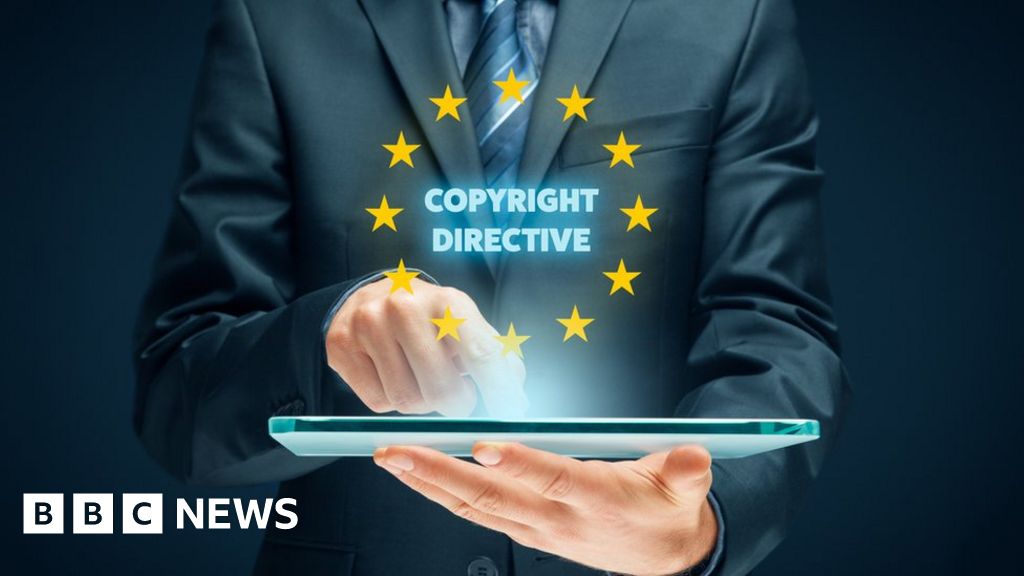
Universities and Science Minister Chris Skidmore has said that the UK will not implement the EU Copyright Directive after the country leaves the EU.

Several companies have criticised the law, which would hold them accountable for not removing copyrighted content uploaded by users, if it is passed.

EU member states have until 7 June 2021 to implement the new reforms, but the UK will have left the EU by then.

The UK was among 19 nations that initially supported the law.

That was in its final European Council vote in April 2019.

'Terrible for the internet'

Copyright is the legal right that allows an artist to protect how their original work is used.

The EU Copyright Directive that covers how "online content-sharing services" should deal with copyright-protected content, such as television programmes and movies.

It refers to services that primarily exist to give the public access to "protected works or other protected subject-matter uploaded by its users", such as Soundcloud, Dailymotion and YouTube.

It was Article 13 which prompted fears over the future of memes and GIFs - stills, animated or short video clips that go viral - since they mainly rely on copyrighted scenes from TV and film.

Critics claimed Article 13 would make it nearly impossible to upload even the tiniest part of a copyrighted work to Facebook, YouTube, or any other site.

However, specific tweaks to the law in 2019 made memes safe "for purposes of quotation, criticism, review, caricature, parody and pastiche".

Prime Minister Boris Johnson criticised the law in March, claiming that it was "terrible for the internet".

Google had campaigned fiercely against the changes, arguing they would "harm Europe's creative and digital industries" and "change the web as we know it".

YouTube boss Susan Wojcicki had also warned that users in the EU could be cut off from the video platform.

Kathy Berry, a professional support lawyer at Linklaters, welcomed the government's stance on the law, claiming it will "allow the UK to agree to more tech-friendly copyright provisions in free trade deals with other countries".

The law sparked suggestions from its biggest critics that it would end up "killing memes and parodies," despite it permitting the sharing of memes and GIFs.

Let's block ads! (Why?)


https://news.google.com/__i/rss/rd/articles/CBMiLGh0dHBzOi8vd3d3LmJiYy5jb20vbmV3cy90ZWNobm9sb2d5LTUxMjQwNzg10gEwaHR0cHM6Ly93d3cuYmJjLmNvbS9uZXdzL2FtcC90ZWNobm9sb2d5LTUxMjQwNzg1?oc=5

2020-01-25 06:07:46Z
CBMiLGh0dHBzOi8vd3d3LmJiYy5jb20vbmV3cy90ZWNobm9sb2d5LTUxMjQwNzg10gEwaHR0cHM6Ly93d3cuYmJjLmNvbS9uZXdzL2FtcC90ZWNobm9sb2d5LTUxMjQwNzg1