Selasa, 11 Juni 2019

Tory leadership: Final 10 contenders named in race to No 10 - BBC News

Media playback is unsupported on your device

The final candidates for the Tory leadership race have been confirmed, with 10 running to become the next PM.

Jeremy Hunt, Dominic Raab, Matt Hancock and Michael Gove - who launched their campaigns ahead of the nomination deadline - are all on the final list.

Conservative MPs will now take part in a series of votes to whittle the candidates down to the final two.

The two MPs will then face the wider Tory membership to decide on the next leader of their party, and the country.
Media playback is unsupported on your device

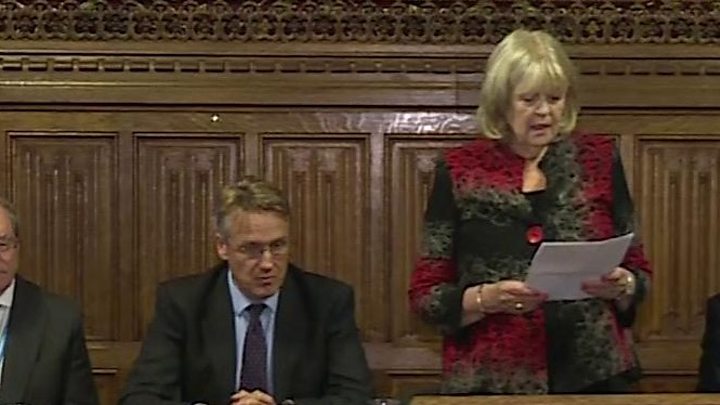
Vice chairman of the party's backbench 1922 committee Dame Cheryl Gillan announced the list.

The candidates are:

  • Environment Secretary Michael Gove
  • Health Secretary Matt Hancock
  • Former Chief Whip Mark Harper
  • Foreign Secretary Jeremy Hunt
  • Home Secretary Sajid Javid
  • Former Foreign Secretary Boris Johnson
  • Former Leader of the House Andrea Leadsom
  • Former Work and Pensions Secretary Esther McVey
  • Former Brexit Secretary Dominic Raab
  • International Development Secretary Rory Stewart

To be allowed to run, the MPs needed to have a proposer, a seconder and the support of six other members.

Sam Gyimah, the only contender backing another referendum on Brexit, withdrew from the race shortly after nominations closed, saying there was not enough time to build support.
Media playback is unsupported on your device

Mrs May officially stepped down as the leader of the Conservative Party last week, but will remain as prime minister until her successor is chosen.

A raft of candidates with different appeal

Analysis by Ben Wright, BBC political correspondent

What are Tory MPs looking for in their next leader?

Someone who can win a general election and protect their seats, certainly. Someone who has a plausible plan for Brexit. Someone to breathe life into a glum and dejected party.

If parliamentary sparkle was the main qualification Michael Gove would probably romp this race - but after destroying the candidacy of Boris Johnson last time and recent revelations about his use of cocaine, his reputation has been harmed.

Mr Johnson is divisive among colleagues and his personal life has long been messy, but he remains one of the most recognisable and charismatic politicians in the country.

Jeremy Hunt has a focused, managerial manner, Dominic Raab has the intensity of a karate-chopping former lawyer and Sajid Javid has climbed to the top of the Tory party.

Esther McVey built a career in television that led to politics, Andrea Leadsom is making a second tilt at No 10, and Rory Stewart's social media campaign has brought him attention and plaudits from outside Conservative circles.

But in this contest, it's the judgement of Conservative MPs and party members that matters.

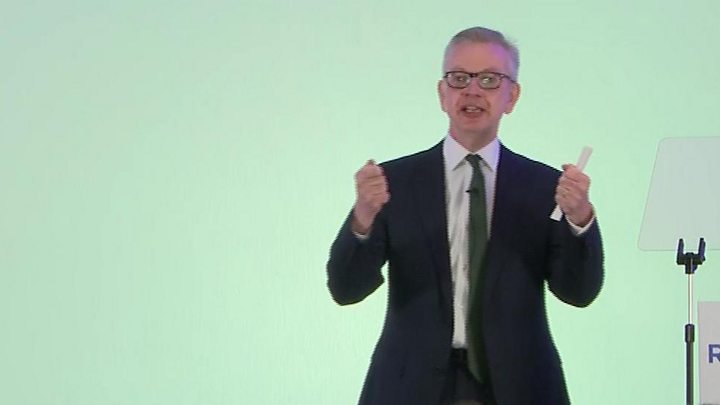
Environment Secretary Mr Gove, who has faced calls to drop out of the race after he admitted using cocaine several times more than 20 years ago, repeated at his campaign launch that he regrets "his past mistakes".

His speech focused on the policies he would introduce as leader, including the creation of a "national cyber crime task force" and more protection for the armed forces from legal challenges.
Media playback is unsupported on your device

He said he wants to "ensure that our NHS is fully-funded, properly funded" and that funding is protected under law.

In a swipe at Boris Johnson's earlier tax policy pledge to cut income tax bills for people earning more than £50,000 a year, he said: "One thing I will never do as PM is use our tax and benefits system to give the already wealthy another tax cut."

He also said the party leader needs to be someone who has been "tested in the heat of battle" and not one who has been "hiding in their bunker".

Mr Johnson has so far not conducted any broadcast interviews about his campaign.
Media playback is unsupported on your device

On Brexit, Mr Gove said it was "not enough to believe in Brexit you've also got to be able to deliver it", insisting he has "a proper plan".

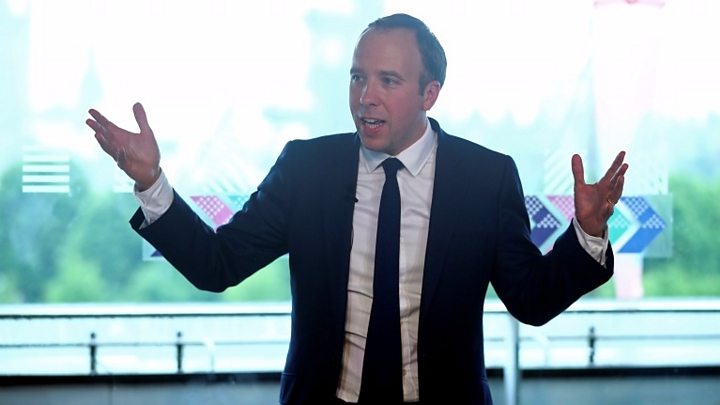
Earlier, Health Secretary Matt Hancock told his launch the Conservatives and the country "need a fresh start", announcing one of his key pledges - to increase the national living wage to more than £10 an hour.

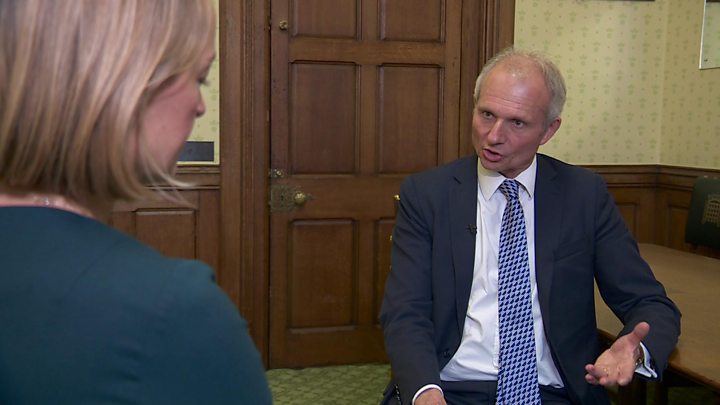
He has also won a high-profile backer, with the de facto deputy prime minister, David Lidington, pledging his support.

Mr Lidington told the BBC's Laura Kuenssberg that his colleague had "no baggage" from the 2016 Brexit referendum and had a clear vision for the future of the country.

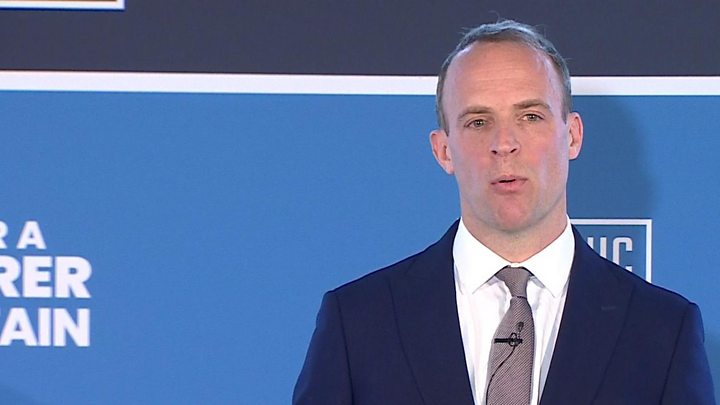
Ex-Brexit Secretary Dominic Raab said he was "a committed Brexiteer" who could be trusted to secure the UK's departure. He also unveiled plans to redirect £500m a year from the aid budget to create an international wildlife fund.
Media playback is unsupported on your device

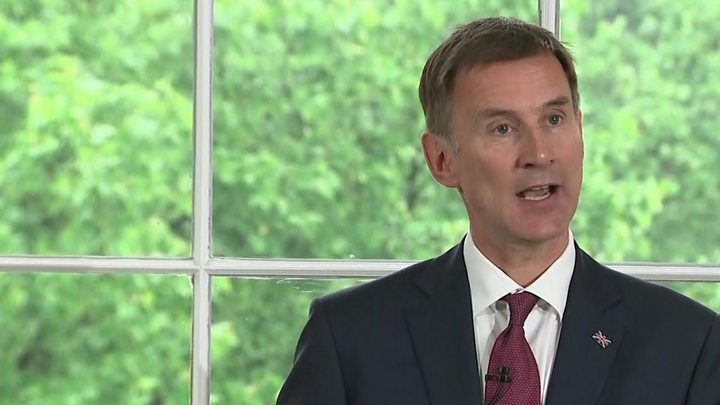
Foreign Secretary Mr Hunt, meanwhile, said a "very smart" approach was needed to break the Brexit impasse, saying an "experienced, serious leader" was needed, not "empty rhetoric".

He also attempted to end criticism of his stance on abortion by insisting he would not try to change the law if chosen as PM.

It was announced earlier that two cabinet ministers - Brexiteer Penny Mordaunt and Remainer Amber Rudd - back Mr Hunt.

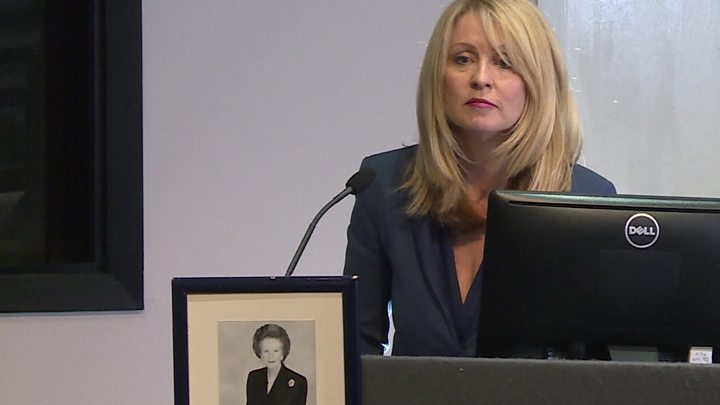
Former Work and Pensions Secretary Esther McVey outlined her campaign at a think tank event, saying "we have nothing to fear" from a no-deal Brexit, and pledging to give a pay rise to public sector workers.
Media playback is unsupported on your device

International Development Secretary Rory Stewart faced callers' questions during a live phone-in on BBC Radio 4's World at One.

He called for compromise over Brexit, and said he would give Parliament "a final chance" to vote through the existing deal that Mrs May negotiated with the EU.

But he ruled out supporting a further referendum, arguing "it wouldn't resolve anything".
Media playback is unsupported on your device

Elsewhere:

  • Home Secretary Sajid Javid picked up further support, with ministers Caroline Nokes and Victoria Atkins choosing to back him after Scottish Tory leader Ruth Davidson announced her support on Saturday
  • Mark Harper and Andrea Leadsom also plan campaign launches.
  • Earlier, Mrs Leadsom said she would find a way to bring about a "managed exit" from the EU, even without a deal

Whereas candidates in the past would have only needed two MPs supporting them, senior Tories decided to change the rules earlier this month in an effort to speed up the contest.

All 313 Conservative MPs will vote for their preferred candidate in a series of ballots held on 13, 18, 19 and 20 June to whittle down the contenders one by one until only two are left.

Due to another rule change, candidates will need to win the votes of at least 16 other MPs in the first ballot and 32 colleagues in the second to proceed.

The final two will be put to the 160,000 or so members of the wider Conservative Party in a vote from 22 June, with the winner expected to be announced about four weeks later.

On Tuesday 18 June BBC One will be hosting a live election debate between the Conservative MPs who are still in the race.

If you would like to ask the candidates a question live on air, use the form below. It should be open to all of them, not a specific politician.

If you are reading this page on the BBC News app, you will need to visit the mobile version of the BBC website to submit your question on this topic.

Let's block ads! (Why?)


https://www.bbc.com/news/uk-politics-48584011

2019-06-11 05:32:19Z
CBMiLWh0dHBzOi8vd3d3LmJiYy5jb20vbmV3cy91ay1wb2xpdGljcy00ODU4NDAxMdIBMWh0dHBzOi8vd3d3LmJiYy5jb20vbmV3cy9hbXAvdWstcG9saXRpY3MtNDg1ODQwMTE

Tory leadership: Final 10 contenders named ahead of race to No 10 - BBC News

Media playback is unsupported on your device

The final candidates for the Tory leadership race have been confirmed, with 10 running to become the next PM.

Jeremy Hunt, Dominic Raab, Matt Hancock and Michael Gove - who launched their campaigns ahead of the nomination deadline - are all on the final list.

Conservative MPs will now take part in a series of votes to whittle the candidates down to the final two.

The two MPs will then face the wider Tory membership to decide on the next leader of their party, and the country.

Media playback is unsupported on your device

Vice chairman of the party's backbench 1922 committee Dame Cheryl Gillan announced the list.

The candidates are:

  • Environment Secretary Michael Gove
  • Health Secretary Matt Hancock
  • Former Chief Whip Mark Harper
  • Foreign Secretary Jeremy Hunt
  • Home Secretary Sajid Javid
  • Former Foreign Secretary Boris Johnson
  • Former Leader of the House Andrea Leadsom
  • Former Work and Pensions Secretary Esther McVey
  • Former Brexit Secretary Dominic Raab
  • International Development Secretary Rory Stewart

To be allowed to run, the MPs needed to have a proposer, a seconder and the support of six other members.

Sam Gyimah, the only contender backing another referendum on Brexit, withdrew from the race shortly after nominations closed, saying there was not enough time to build support.

Media playback is unsupported on your device

Mrs May officially stepped down as the leader of the Conservative Party last week, but will remain as prime minister until her successor is chosen.

A raft of candidates with different appeal

Analysis by Ben Wright, BBC political correspondent

What are Tory MPs looking for in their next leader?

Someone who can win a general election and protect their seats, certainly. Someone who has a plausible plan for Brexit. Someone to breathe life into a glum and dejected party.

If parliamentary sparkle was the main qualification Michael Gove would probably romp this race - but after destroying the candidacy of Boris Johnson last time and recent revelations about his use of cocaine, his reputation has been harmed.

Mr Johnson is divisive among colleagues and his personal life has long been messy, but he remains one of the most recognisable and charismatic politicians in the country.

Jeremy Hunt has a focused, managerial manner, Dominic Raab has the intensity of a karate-chopping former lawyer and Sajid Javid has climbed to the top of the Tory party.

Esther McVey built a career in television that led to politics, Andrea Leadsom is making a second tilt at No 10, and Rory Stewart's social media campaign has brought him attention and plaudits from outside Conservative circles.

But in this contest, it's the judgement of Conservative MPs and party members that matters.

Environment Secretary Mr Gove, who has faced calls to drop out of the race after he admitted using cocaine several times more than 20 years ago, repeated at his campaign launch that he regrets "his past mistakes".

His speech focused on the policies he would introduce as leader, including the creation of a "national cyber crime task force" and more protection for the armed forces from legal challenges.

Media playback is unsupported on your device

He said he wants to "ensure that our NHS is fully-funded, properly funded" and that funding is protected under law.

In a swipe at Boris Johnson's earlier tax policy pledge to cut income tax bills for people earning more than £50,000 a year, he said: "One thing I will never do as PM is use our tax and benefits system to give the already wealthy another tax cut."

He also said the party leader needs to be someone who has been "tested in the heat of battle" and not one who has been "hiding in their bunker".

Mr Johnson has so far not conducted any broadcast interviews about his campaign.

Media playback is unsupported on your device

On Brexit, Mr Gove said it was "not enough to believe in Brexit you've also got to be able to deliver it", insisting he has "a proper plan".

Earlier, Health Secretary Matt Hancock told his launch the Conservatives and the country "need a fresh start", announcing one of his key pledges - to increase the national living wage to more than £10 an hour.

He has also won a high-profile backer, with the de facto deputy prime minister, David Lidington, pledging his support.

Mr Lidington told the BBC's Laura Kuenssberg that his colleague had "no baggage" from the 2016 Brexit referendum and had a clear vision for the future of the country.

Ex-Brexit Secretary Dominic Raab said he was "a committed Brexiteer" who could be trusted to secure the UK's departure. He also unveiled plans to redirect £500m a year from the aid budget to create an international wildlife fund.

Media playback is unsupported on your device

Foreign Secretary Mr Hunt, meanwhile, said a "very smart" approach was needed to break the Brexit impasse, saying an "experienced, serious leader" was needed, not "empty rhetoric".

He also attempted to end criticism of his stance on abortion by insisting he would not try to change the law if chosen as PM.

It was announced earlier that two cabinet ministers - Brexiteer Penny Mordaunt and Remainer Amber Rudd - back Mr Hunt.

Former Work and Pensions Secretary Esther McVey outlined her campaign at a think tank event, saying "we have nothing to fear" from a no-deal Brexit, and pledging to give a pay rise to public sector workers.

Media playback is unsupported on your device

International Development Secretary Rory Stewart faced callers' questions during a live phone-in on BBC Radio 4's World at One.

He called for compromise over Brexit, and said he would give Parliament "a final chance" to vote through the existing deal that Mrs May negotiated with the EU.

But he ruled out supporting a further referendum, arguing "it wouldn't resolve anything".

Media playback is unsupported on your device

Elsewhere:

  • Home Secretary Sajid Javid picked up further support, with ministers Caroline Nokes and Victoria Atkins choosing to back him after Scottish Tory leader Ruth Davidson announced her support on Saturday
  • Mark Harper and Andrea Leadsom also plan campaign launches.
  • Earlier, Mrs Leadsom said she would find a way to bring about a "managed exit" from the EU, even without a deal

Whereas candidates in the past would have only needed two MPs supporting them, senior Tories decided to change the rules earlier this month in an effort to speed up the contest.

All 313 Conservative MPs will vote for their preferred candidate in a series of ballots held on 13, 18, 19 and 20 June to whittle down the contenders one by one until only two are left.

Due to another rule change, candidates will need to win the votes of at least 16 other MPs in the first ballot and 32 colleagues in the second to proceed.

The final two will be put to the 160,000 or so members of the wider Conservative Party in a vote from 22 June, with the winner expected to be announced about four weeks later.

On Tuesday 18 June BBC One will be hosting a live election debate between the Conservative MPs who are still in the race.

If you would like to ask the candidates a question live on air, use the form below. It should be open to all of them, not a specific politician.

If you are reading this page on the BBC News app, you will need to visit the mobile version of the BBC website to submit your question on this topic.

Let's block ads! (Why?)


https://www.bbc.com/news/uk-politics-48584011

2019-06-11 04:27:26Z
52780311293773

Tory leadership: Final 10 contenders named in race to No 10 - BBC News

Media playback is unsupported on your device

The final candidates for the Tory leadership race have been confirmed, with 10 running to become the next PM.

Jeremy Hunt, Dominic Raab, Matt Hancock and Michael Gove - who launched their campaigns ahead of the nomination deadline - are all on the final list.

Conservative MPs will now take part in a series of votes to whittle the candidates down to the final two.

The two MPs will then face the wider Tory membership to decide on the next leader of their party, and the country.

Media playback is unsupported on your device

Vice chairman of the party's backbench 1922 committee Dame Cheryl Gillan announced the list.

The candidates are:

  • Environment Secretary Michael Gove
  • Health Secretary Matt Hancock
  • Former Chief Whip Mark Harper
  • Foreign Secretary Jeremy Hunt
  • Home Secretary Sajid Javid
  • Former Foreign Secretary Boris Johnson
  • Former Leader of the House Andrea Leadsom
  • Former Work and Pensions Secretary Esther McVey
  • Former Brexit Secretary Dominic Raab
  • International Development Secretary Rory Stewart

To be allowed to run, the MPs needed to have a proposer, a seconder and the support of six other members.

Sam Gyimah, the only contender backing another referendum on Brexit, withdrew from the race shortly after nominations closed, saying there was not enough time to build support.

Media playback is unsupported on your device

Mrs May officially stepped down as the leader of the Conservative Party last week, but will remain as prime minister until her successor is chosen.

A raft of candidates with different appeal

Analysis by Ben Wright, BBC political correspondent

What are Tory MPs looking for in their next leader?

Someone who can win a general election and protect their seats, certainly. Someone who has a plausible plan for Brexit. Someone to breathe life into a glum and dejected party.

If parliamentary sparkle was the main qualification Michael Gove would probably romp this race - but after destroying the candidacy of Boris Johnson last time and recent revelations about his use of cocaine, his reputation has been harmed.

Mr Johnson is divisive among colleagues and his personal life has long been messy, but he remains one of the most recognisable and charismatic politicians in the country.

Jeremy Hunt has a focused, managerial manner, Dominic Raab has the intensity of a karate-chopping former lawyer and Sajid Javid has climbed to the top of the Tory party.

Esther McVey built a career in television that led to politics, Andrea Leadsom is making a second tilt at No 10, and Rory Stewart's social media campaign has brought him attention and plaudits from outside Conservative circles.

But in this contest, it's the judgement of Conservative MPs and party members that matters.

Environment Secretary Mr Gove, who has faced calls to drop out of the race after he admitted using cocaine several times more than 20 years ago, repeated at his campaign launch that he regrets "his past mistakes".

His speech focused on the policies he would introduce as leader, including the creation of a "national cyber crime task force" and more protection for the armed forces from legal challenges.

Media playback is unsupported on your device

He said he wants to "ensure that our NHS is fully-funded, properly funded" and that funding is protected under law.

In a swipe at Boris Johnson's earlier tax policy pledge to cut income tax bills for people earning more than £50,000 a year, he said: "One thing I will never do as PM is use our tax and benefits system to give the already wealthy another tax cut."

He also said the party leader needs to be someone who has been "tested in the heat of battle" and not one who has been "hiding in their bunker".

Mr Johnson has so far not conducted any broadcast interviews about his campaign.

Media playback is unsupported on your device

On Brexit, Mr Gove said it was "not enough to believe in Brexit you've also got to be able to deliver it", insisting he has "a proper plan".

Earlier, Health Secretary Matt Hancock told his launch the Conservatives and the country "need a fresh start", announcing one of his key pledges - to increase the national living wage to more than £10 an hour.

He has also won a high-profile backer, with the de facto deputy prime minister, David Lidington, pledging his support.

Mr Lidington told the BBC's Laura Kuenssberg that his colleague had "no baggage" from the 2016 Brexit referendum and had a clear vision for the future of the country.

Ex-Brexit Secretary Dominic Raab said he was "a committed Brexiteer" who could be trusted to secure the UK's departure. He also unveiled plans to redirect £500m a year from the aid budget to create an international wildlife fund.

Media playback is unsupported on your device

Foreign Secretary Mr Hunt, meanwhile, said a "very smart" approach was needed to break the Brexit impasse, saying an "experienced, serious leader" was needed, not "empty rhetoric".

He also attempted to end criticism of his stance on abortion by insisting he would not try to change the law if chosen as PM.

It was announced earlier that two cabinet ministers - Brexiteer Penny Mordaunt and Remainer Amber Rudd - back Mr Hunt.

Former Work and Pensions Secretary Esther McVey outlined her campaign at a think tank event, saying "we have nothing to fear" from a no-deal Brexit, and pledging to give a pay rise to public sector workers.

Media playback is unsupported on your device

International Development Secretary Rory Stewart faced callers' questions during a live phone-in on BBC Radio 4's World at One.

He called for compromise over Brexit, and said he would give Parliament "a final chance" to vote through the existing deal that Mrs May negotiated with the EU.

But he ruled out supporting a further referendum, arguing "it wouldn't resolve anything".

Media playback is unsupported on your device

Elsewhere:

  • Home Secretary Sajid Javid picked up further support, with ministers Caroline Nokes and Victoria Atkins choosing to back him after Scottish Tory leader Ruth Davidson announced her support on Saturday
  • Mark Harper and Andrea Leadsom also plan campaign launches.
  • Earlier, Mrs Leadsom said she would find a way to bring about a "managed exit" from the EU, even without a deal

Whereas candidates in the past would have only needed two MPs supporting them, senior Tories decided to change the rules earlier this month in an effort to speed up the contest.

All 313 Conservative MPs will vote for their preferred candidate in a series of ballots held on 13, 18, 19 and 20 June to whittle down the contenders one by one until only two are left.

Due to another rule change, candidates will need to win the votes of at least 16 other MPs in the first ballot and 32 colleagues in the second to proceed.

The final two will be put to the 160,000 or so members of the wider Conservative Party in a vote from 22 June, with the winner expected to be announced about four weeks later.

On Tuesday 18 June BBC One will be hosting a live election debate between the Conservative MPs who are still in the race.

If you would like to ask the candidates a question live on air, use the form below. It should be open to all of them, not a specific politician.

If you are reading this page on the BBC News app, you will need to visit the mobile version of the BBC website to submit your question on this topic.

Let's block ads! (Why?)


https://www.bbc.com/news/uk-politics-48584011

2019-06-11 03:46:22Z
CBMiLWh0dHBzOi8vd3d3LmJiYy5jb20vbmV3cy91ay1wb2xpdGljcy00ODU4NDAxMdIBMWh0dHBzOi8vd3d3LmJiYy5jb20vbmV3cy9hbXAvdWstcG9saXRpY3MtNDg1ODQwMTE
Senin, 10 Juni 2019

Michelle Obama's Team U.S.A. Takes on James Corden's Team U.K. at Dodgeball - Hollywood Reporter

The transatlantic challenge, which airs June 17, kicks off a week of London broadcasts of the CBS late-night show.

Michelle Obama will be shouting "dodge, duck, dip, dive and dodge" at her Team U.S.A. teammates as they take on James Corden's Team U.K. in a game of international dodgeball to kick off a week of London episodes of The Late Late Show.

In the episode, which airs June 17, the former First Lady leads an all-star and all-female American team that includes Melissa McCarthy, Allison Janney, Mila Kunis, Lena Waithe and Kate Hudson as they do battle with Corden's all-male team of Brits Harry Styles, Benedict Cumberbatch, Game of Thrones star John Bradley and Late Late Show bandleader and American ringer Reggie Watts.  

The transatlantic dodgeball showdown will be the highlight of four London episodes of the CBS show to be broadcast from Central Hall Westminster. Also joining Corden for sure-to-be-viral sketches and segments during his week in the U.K. will be Men in Black International star Chris Hemsworth and the cast of X-Men: Dark Phoenix, including Jessica Chastain, Michael Fassbender, James McAvoy and Sophie Turner. 

Corden will also make the short trip to Paris and present a new "Crosswalk the Musical," with a chaotic interpretation of Les Miserables in front of the iconic Arc de Triomphe. 

Other guests set for the Late Late Show's U.K. run include Jake Gyllenhaal, Michael Sheen, Louis Tomlinson, Gillian Anderson, Millie Bobby Brown, Paul Giamatti, Tom Hanks, Lily James, Ian McKellen and Simon Pegg. There will be performances from magician David Blaine and music from Little Mix and Mumford & Sons.

The Late Late Show returns to Corden's native U.K. for the third year in a row. Highlights from previous trips include a "Carpool Karaoke" segment with Paul McCartney and an Andrew Lloyd Webber edition of "Crosswalk the Musical" performed on the streets of London's West End. 

Let's block ads! (Why?)


https://www.hollywoodreporter.com/live-feed/michelle-obamas-team-usa-takes-james-cordens-team-uk-at-dodgeball-1217037

2019-06-10 13:00:00Z
CBMidWh0dHBzOi8vd3d3LmhvbGx5d29vZHJlcG9ydGVyLmNvbS9saXZlLWZlZWQvbWljaGVsbGUtb2JhbWFzLXRlYW0tdXNhLXRha2VzLWphbWVzLWNvcmRlbnMtdGVhbS11ay1hdC1kb2RnZWJhbGwtMTIxNzAzN9IBeWh0dHBzOi8vd3d3LmhvbGx5d29vZHJlcG9ydGVyLmNvbS9hbXAvbGl2ZS1mZWVkL21pY2hlbGxlLW9iYW1hcy10ZWFtLXVzYS10YWtlcy1qYW1lcy1jb3JkZW5zLXRlYW0tdWstYXQtZG9kZ2ViYWxsLTEyMTcwMzc

Biggest Meteorite Impact in the UK Found Buried in Water and Rock - Space.com

The site of the largest meteorite to hit the British Isles has finally been discovered in a remote part off the Scottish coast, 11 years after scientists first identified evidence of the massive collision.

A team of researchers from the Department of Earth Sciences at the University of Oxford located the crater around 12 miles (20 kilometers) west of the coast of Scotland, where the feature lay buried underneath water and rocks that helped preserve it all those years. The scientists published their findings today (June 9) in the Journal of the Geological Society

"The material excavated during a giant meteorite impact is rarely preserved on Earth, because it is rapidly eroded," Ken Amor, study lead author and researcher at the University of Oxford's Department of Earth Science, said in a statement. "So this is a really exciting discovery."

Related: Oldest Meteorite Collection Found in the Driest Place on Earth

A close-up of spherules that formed in the impact plume cloud and were later found in the deposit.

(Image: © University of Oxford)

The meteorite is believed to have hit our planet 1.2 billion years ago, when Scotland was a semi-arid environment located near the equator, Oxford officials said in the statement. But there would likely have been no observers of the impact, since most life on Earth was still confined to the oceans at the time while the collision took place on land. 

"It would have been quite a spectacle when this large meteorite struck a barren landscape, spreading dust and rock debris over a wide area," said Amon.

Evidence of the collision was discovered in 2008, when scientists found large traces of iridium, a chemical found in high concentrations in meteorites, in a layer of rocks near the northern town of Ullapool. 

The rocks were initially believed to have resulted from a volcanic eruption, but further analysis of their composition led scientists to their terrestrial origins. 

A microscopic view of shocked quartz, the leading proof of a large meteorite impact.

(Image: © University of Oxford)

"We're very lucky to have [the rocks] available for study, as they can tell us much about how planetary surfaces, including Mars, become modified by large meteorite strikes," John Parnell, a professor of geology at the University of Aberdeen in Scotland and co-author of the 2008 paper, said in a statement at the time. 

Using data gathered from the field, the team of scientists determined the approximate direction from which the meteorite came and thereby located the crater.  

Although thousands of meteorites hit the Earth every year, they typically leave much smaller dents. Larger impacts used to occur more frequently, but today, thousands of small fragments from meteorites that hit the Earth every year go largely unnoticed.  

Follow Passant Rabie on Twitter @passantrabie. Follow us on Twitter @Spacedotcom and on Facebook

Let's block ads! (Why?)


https://www.space.com/scotland-biggest-meteorite-crater-uk-discovery.html

2019-06-10 10:41:00Z
52780311819843

Site of biggest ever meteorite collision in the UK discovered - Phys.org

meteorite
Credit: CC0 Public Domain

Evidence for the ancient, 1.2 billion years old, meteorite strike, was first discovered in 2008 near Ullapool, NW Scotland by scientists from Oxford and Aberdeen Universities. The thickness and extent of the debris deposit they found suggested the impact crater—made by a meteorite estimated at 1km wide—was close to the coast, but its precise location remained a mystery.

In a paper published today in Journal of the Geological Society, a team led by Dr. Ken Amor from the Department of Earth Sciences at Oxford University, show how they have identified the crater location 15-20km west of a remote part of the Scottish coastline. It is buried beneath both water and younger rocks in the Minch Basin.

Dr. Ken Amor said: 'The material excavated during a giant meteorite impact is rarely preserved on Earth, because it is rapidly eroded, so this is a really exciting discovery. It was purely by chance this one landed in an ancient rift valley where fresh sediment quickly covered the debris to preserve it.

'The next step will be a detailed geophysical survey in our target area of the Minch Basin.'

Using a combination of field observations, the distribution of broken rock fragments known as basement clasts and the alignment of magnetic particles, the team was able to gauge the direction the meteorite material took at several locations, and plotted the likely source of the crater.

Dr. Ken Amor said: 'It would have been quite a spectacle when this large meteorite struck a barren landscape, spreading dust and rock debris over a wide area.'

1.2 billion years ago most of life on Earth was still in the oceans and there were no plants on the land. At that time Scotland would have been quite close to the equator and in a semi-arid environment. The landscape would have looked a bit like Mars when it had water at the surface.

Earth and other planets may have suffered a higher rate of meteorite impacts in the distant past, as they collided with debris left over from the formation of the early solar system.

However, there is a possibility that a similar event will happen in the future given the number of asteroid and comet fragments floating around in the solar system. Much smaller impacts, where the is only a few meters across are thought to be relatively common perhaps occurring about once every 25 years on average.

It is thought that collisions with an object about 1 km (as in this instance) across occur between once every 100,000 years to once every one million years—but estimates vary.

One of the reasons for this is that our terrestrial record of large impacts is poorly known because craters are obliterated by erosion, burial and plate tectonics.


Explore further

Britain’s biggest meteorite impact found

More information: Kenneth Amor et al, The Mesoproterozoic Stac Fada proximal ejecta blanket, NW Scotland: constraints on crater location from field observations, anisotropy of magnetic susceptibility, petrography and geochemistry, Journal of the Geological Society (2019). DOI: 10.1144/jgs2018-093

Michael J. Simms et al. A reassessment of the proposed 'Lairg Impact Structure' and its potential implications for the deep structure of northern Scotland, Journal of the Geological Society (2019). DOI: 10.1144/jgs2017-161

Citation: Site of biggest ever meteorite collision in the UK discovered (2019, June 10) retrieved 10 June 2019 from https://phys.org/news/2019-06-site-biggest-meteorite-collision-uk.html

This document is subject to copyright. Apart from any fair dealing for the purpose of private study or research, no part may be reproduced without the written permission. The content is provided for information purposes only.

Let's block ads! (Why?)


https://phys.org/news/2019-06-site-biggest-meteorite-collision-uk.html

2019-06-10 07:29:57Z
CAIiEA55J5y9fTf2qtql7piYBqwqFwgEKg8IACoHCAowpbDpAzCm_hwwj9kp

The Post-Brexit Paradox of ‘Global Britain’ - The Atlantic

LONDON—Brexit is an all-consuming maelstrom of political dysfunction, one that has compelled Britain’s eyes inward. Yet amid the chaos, Prime Minister Theresa May has been steadfast in her determination that the country’s international role should not succumb to the same myopic fate as its departure from the European Union has.

In the febrile early months following the June 2016 referendum when Britain voted to leave the EU, its allies were fearful that the vote would see the country’s drawbridges snapping upward. Sensing the urgent need for optimism, May and her then–foreign secretary (and now possible successor), Boris Johnson, gave bold speeches, setting out ambitions for what they called a “truly global Britain.” Conjuring an image of a triumphant, swashbuckling nation retaking its rightful place on the world stage, a global Britain embodies the promise of a Brexit dividend, one in which the country is no longer hemmed in by what Brexiteers see as a European cage.

Almost three years on—through failed parliamentary votes, cabinet resignations, and May’s announcement that she will step down as prime minister—this mantra of internationalism remains one of the few legacies of May’s premiership. So far, however, a global Britain has been nothing more than a hollow promise.

With British diplomats struggling to convince their international peers of the phrase’s fundamental purpose and meaning, a cross-party group of lawmakers leading the parliamentary Foreign Affairs Select Committee warned last year that “Global Britain” had only succeeded thus far as “a superficial rebranding exercise.”

At the heart of the global Britain promise is a great paradox: Those who are most naturally inclined to support such an idea—young, university-educated, well-traveled Britons—fundamentally resent the notion that any project forged on the back of Brexit could be truly internationalist.

Foreign policy has often served only as a sideshow to British domestic politics. However, with Brexit sparking complex new conversations about trade, diplomacy, and defense policy—as well as more elemental questions about Britain’s role in the world—foreign affairs may well become one of the most active battlegrounds of Britain’s deepening social fault lines.

And with about a dozen contenders lining up to replace May as Britain’s prime minister, the future of the ”global Britain” catchphrase and the strategy it was intended to inspire will become central to the Conservative Party’s, and the country’s, future. False silos that have long separated domestic and foreign policy will have to come down.

“Foreign policy isn’t about foreigners,” Tom Tugendhat, a Conservative member of Parliament and the chair of the Foreign Affairs Select Committee, told me. “It’s about us, and how we shape the world around us in the interest of our people, our friends and partners.”

It won’t be easy: New research I have conducted with the British Foreign Policy Group, an educational think tank, and the pollster BMG makes clear that Britain is phenomenally divided on the country’s international identity, spearheaded by a government unable to make the trade-offs necessary to truly achieve the idea of a global Britain. The notion that citizens will instinctively support the costs necessary to become a more prominent military, diplomatic, and trading power does not stand.

Political momentum is instead building behind those who see more downsides than upsides in our changing world, and for whom liberalism and internationalism inspire suspicion, mistrust, or even fear. These Britons generally have lived less mobile lives, hold identities more closely rooted in their communities, and are less bothered by events outside the confines of the nation. For example, just 6 percent of those who traveled abroad frequently last year consider immigration to be an important issue, compared with 44 percent of those who didn’t leave Britain. Among those who never stray abroad, there is, to be sure, a significant degree of distinction between people whose socioeconomic circumstances have hampered their access to international opportunities and the older, wealthier Britons who have chosen to prioritize an exclusive national identity.

May herself supported remaining in the EU ahead of the 2016 referendum. But after the vote, while many of her colleagues in the Conservative Party espoused a so-called Liberal Leave argument—that Brexit would allow Britain to secure new free trade deals and to better work with fast-growing developing countries—she recognized the role that concerns about the economic and social consequences of globalization had played during the referendum. At the first Conservative Party conference following the vote, she spoke to the growing reticence toward internationalism and the clamor for a strong expression of national pride, telling the audience, “If you believe you are a citizen of the world, you are a citizen of nowhere.”

This extraordinary moment broke with 20 years of political consensus behind a form of loose cosmopolitanism, beginning with Tony Blair’s election victory in 1997, signifying the radical early ambitions of May’s premiership. It also pitted her government’s two core messages against each other—at once pushing for a global Britain while denouncing globalism. Ultimately, her efforts to promote a global Britain without the support of global citizens were always doomed to fail.

In a divided Brexit Britain, only one issue provides space for common ground: trade. Those who voted to leave the EU and those who cast ballots to remain differ on many issues—only a quarter of Leave voters support increases to Britain’s overseas spending, and Remain supporters are twice as likely to care about climate change and global conflicts—but all agree that trade should be at the heart of the country’s global priorities.

Although Matthew Elliott, who led the Vote Leave campaign, recognizes that the “liberal, internationalist, free-trading” argument for Brexit was not the primary driving force for core Leave voters, he told me he was certain that it was decisive in persuading swing voters. In this way, the Leave campaign was incredibly effective at mustering diverse constituencies to support the vision of a sovereign, global Britain, unshackled from the EU.

Nonetheless, there is little appetite to stomach the compromises of free trade: Only 26 percent of Leave voters we surveyed would be willing to accept any increases in immigration from, for example, India, one of Britain’s priority markets—even if they were crucial to securing a free-trade agreement.

It can be difficult to reconcile the pulsating tribalism of post-referendum Britain with the immense popularity of the flagrant internationalism promoted by the successive Blair governments. At the 2005 Labour Party Conference in Brighton, the then–prime minister forcefully rebuked the growing disquiet around globalization, announcing, “You might as well debate whether autumn should follow summer”.

Blair’s political fortunes were not evergreen, though. His decisions on economic policy, immigration, and the Iraq War would crucially challenge the public’s trust in an increasingly connected world order and the institutions that seek to uphold it. As Britons cast ballots more than a decade later in the EU referendum, voters had begun to reject the sense of inevitability they had been sold around the nation’s trajectory. Indeed, by 2016, Blair would launch his own policy institute in London, its mission—“Making globalisation work for the many”—hinting at a degree of regret.

Westminster will undoubtedly continue to debate Blair’s legacy for many years to come. It is clear, however, that no other leader in this political generation is likely to inherit the fortuitous climate for internationalism that he enjoyed.

With the clock ticking on May’s premiership, the paradox of a global Britain she unwittingly exposed will need to be reconciled by her successor. The candidates jostling to replace her as the Conservative Party leader and, by extension, prime minister, appear committed to championing a global Britain, but have not yet articulated any means of persuading the large swaths of the country skeptical of internationalism to fall in line.

If her successor calls for a general election and the opposition Labour Party comes to power, it will face its own reckoning around the discord between its membership’s broad support for international institutions and its leadership’s radical positions on unilateral nuclear disarmament, NATO, and the military.

For now, however, the challenge falls to the party that has made itself the party of Brexit and a global Britain, without delivering either.

We want to hear what you think about this article. Submit a letter to the editor or write to letters@theatlantic.com.

Let's block ads! (Why?)


https://www.theatlantic.com/international/archive/2019/06/post-brexit-paradox-theresa-may-global-britain/591244/

2019-06-10 05:00:00Z
CAIiENR39vf3ySwvZOVkzUvUMIgqFggEKg0IACoGCAowm_EEMKAiMMSWmwM